1471
Lenses / Re: To IS or not?
« on: September 27, 2012, 11:25:32 AM »
I haven't shot IS lenses for awhile now. I've managed ok.
This section allows you to view all posts made by this member. Note that you can only see posts made in areas you currently have access to.
If you're buying vintage lenses, read this first:
http://www.similaar.com/foto/lenstests/lenstestsc.html
and once that's clear, start the buying madness
http://www.similaar.com/foto/lenstests/lenstestsa.html
http://www.similaar.com/foto/lenstests/bokehtests.html
Hi! I knew some lenses wouldn't keep the pace of modern digital sensors, but I'm also sure the good ones would still be good. As I said, my 25-years-old nifty fifty is so much better than any modern MK2 I've seen.I would like to get a setup of old, possibly all-metal, manual focus fast primes.
I am a child of the AF generation, so I'm very little experienced in this sense and I don't know which ones are worth having nowadays.
I'm interested in 20-28mm, 30-40mm, 50-60mm, 85-100mm and 135mm. A standard setup.
Please share your opinions with me. Doesn't matter about brands, as long as they can be adapted and that it makes sense to buy them price-wise.
Thank you!
Contax-Zeiss Primes have less issues being fitted to EOS camera than the FD lenses. Plus, They're awesome.
Do you have any direct experience?
D800. Its the name of the camera on everyones mouths these days. In all the blogs. In all the reviews. Its the thing raving Nikon fans rave about. Canon's taken a solid back seat to Nikon these days, particularly to the D800. I've said many times that Canon cameras have some pretty amazing highlight recovery, as Canon tends to tune their sensors response to favor highlights (either intentfully or simply as a byproduct of their manufacturing process, I can't say...although I'm inclined to think its intentional given Canon popularity among wedding photographers.)
I regularly repeat that anecdote in many of my posts...but I just came across a couple accidental overexposures of some of my own photos that I think clearly demonstrate the point. While out photographing birds with a rental Canon EF 300mm f/2.8 L II IS and Canon EF 2x TC III, I kept coming across dragonflys. A telephoto lens with a TC is a great way to photograph some frame-filling insect "macros" (more like pseudomacro) without scaring the subject off. I accidentally set my exposure wrong and totally blew the first few shots:
The exposure should have been around 1/1000s @ f/8 ISO 100 (which I proved with some subsequent shots, which ended up being 1/1000s @ f/7.1 ISO 160)...so my exposure above was almost four stops overexposed. Thanks to the power of Lightroom 4.1 and its amazing highlight recovery, the above image, with -4 EV exposure correction and 60% highlight recovery, turned into this:
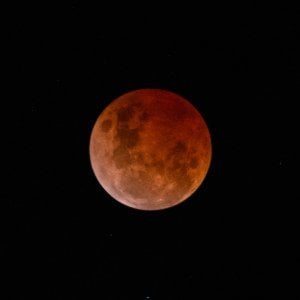
I'd experienced Canon's amazing highlight headroom when photographing the moon. I REALLY push my moon exposures...to the point where once exposed the moon looks like a nearly uniform almost-white disc in the in-camera preview. Once imported, its clear that there are actually few parts of the moon that are actually white. I'd never actually overexposed something so much that on import it really DID look almost entirely white. The histogram of the dragonfly was all bunched up in two peaks near the very far right...with a small gap between the second peak and the actual right edge...a gap maybe 1 or 2 pixels wide. With 100% highlight recovery in LR 4.1, even the specular highlights on the wings still retain a lot of detail:
Since this image started out way overexposed, there is zero color or pattern noise in the shadows. There is also minimal random (photon shot) noise in the shadows as well...they look as clean as a D800 at ISO 100! ;-)
So, the next time someone tells you Canon sensors suck...send em here. While Canon sensors may not be able to achieve 13.2 stops of DR or allow noiseless shadow recovery like the D800 can, they really do know how to pack in the highlights, and maintain full color fidelity while recovering. The next time you need low noise shadows...expose to the right....then, try exposing farther to the right.

Hey,
I am not a professional photographer, but I would like to buy a nice portrait lens. I have a full frame body (1ds mk3) so I am considering the following lenses:
Canon 85 1.8
Sigma 85 1.4
Zeiss 85 1.4
Which would you recommend and why? Do you think it is better to go with the 135L ?
85L is over my budget and is to slow...
Thanks
Tomaz
Good news from the Photokina.
B+W announce two new GND (grey) filters that can be used with the Cokin Z-Pro and Lee filter holder.
number 701 (- 1 stop soft)
number 702 (- 2 stop soft)
Glas with MRC sealing, 10x15 cm, delivered in a tin box
Press text:
B + W graduated neutral density filters are often used in landscape photography in order to avoid an overexposure of the sky with a correct exposure of the ground. As in overexposured areas of the picture image information is normally lost the effect of this filter can hardly be simulated by electronic image processing.
The filters are coloured neutral gray with a smooth transition into the neutral filter half. With screwed filter the rotatable mount allows an exact horizontal alignment.
The glass substrate of the B+W ND filters 701 and 702 are absolutely plane and parallel and finely polished. This guarantees a long lasting high optical quality. By means of thin layer technology the ND gradient is evaporated. The below values refer to the darkest filter glass parts:
701 +1 stop (50% transmission)
702 +2 stop (25% transmission)
The graduated ND filters are provided with a high quality MRC coating. MRC (Multi Resistant Coating) coated filters have an MC layer ensuring a high transmission and maximum anti-reflective surface. Furthermore, MRC is dirt and water repellent and makes cleaning much more easier.
So, here I am with a 60D (great camera), and several lenses I've invested in over the period I've gotten into photography. While I've gotten great shots and achieved results with what I currently have, I do have some money saved up and I'm currently evaluating options, including perhaps stepping up to a better body. Ever since I've started, the ratio of money I've spent on bodies (T2i-> 60D) vs. lenses (24-105,17-50 Tamron-> 17-55 2.8, 35 1.4,70-200 f4-> 70-200 2.8 II, 70-300 L,85 1.8, 100 L Macro, 40 2.8 ) is obviously heavily biased in favor of the glass. (Also have a 580ex II flash unit) I've been starting to think about perhaps paying more attention to the other end to get the best IQ that I can.
Couple of notes:
1) Hobbyist (not a pro, don't make $$ off this stuff so don't need top-performing equipment, nor do I have that kind of money to spend)
2) General photographer here (i.e. don't specialize in anything particular, although I'll tell you what I do NOT do: studio work/portraits, weddings, tripod work. Have done parties though, probably the closest thing to a wedding-type setting)
I've been debating whether to step up to FF - I have to say I've really become accustomed to and utilized the reach of APS-C on the 60D (and the T2i before it) with lenses like the 70-300L and I love how far back I can stand at events and still get nice close-up shots. I've shot some ice-skating performances - reach has come in handy there as well. On the flip side, when shooting an event (book) signing with the 60D and 70-200 2.8 I often find 70mm to be too long when I have an opportunity to get to the table, and I have to back up. However, the 200mm end is nice during the actual reading when I can be in the back of the room and still get closeups. And, at events where I have the 70-300 people on occasion will ask for group shots and 70 is too long on the 1.6x camera. There are times where I've been wanting more in terms of IQ, especially indoors where I dislike using flash and have to crank up ISO. Also, outdoor landscape shots (even with a quality lens like the 24-105), while not bad, don't seem as sharp as they could be. I looked at some sample landscape shots from a 5D in a review the other day and was blown away at how much more detail was in the images.
I've heard about this new 6D, and it got me thinking whether it is worth it. In many ways, though, it's not a TRUE upgrade to a 60D because it does step back in a few respects and step forward in others. The 5D3, OTOH, is a definite upgrade but after handling one yesterday at the store, although I was amazed and couldn't put the thing down, I'm wondering whether it is really a tad too much camera for what I do (coming from the 60D, it seems so complicated!). But, I feel like the 6D is the opposite- might leave me wanting just that little bit more, although I'm tempted to wait for a review first. As an aside, I've also been eyeing the new EOS M as an eventual replacement for my SD950IS P&S...want a capable compact camera to complement the DSLR and be able to get good shots in venues, etc.
So- what to do? This is something I might do over the next few weeks or months. There's this 6D...the prospect of a possible 7D Mark II next year, the 5D3 now (although a bit cost prohibitive, I CAN squeeze it out if I can get a good deal for under $3K). Only issue would be the 17-55 (only EF-S lens I have) which I'd have to give up for a 24-70 that is 2x the price...and no IS...although I would like to keep the 60D if I can as a 2nd body.
You guys have helped me out before...I'd appreciate any thoughts, etc.
Sad. But at least it appears that Velvia 100 is fine (I never liked 100F anyway), & I can still get 120 Velvia 50.
But I'm sure even those will go in the near future.
You would be right in going back to using film for landscapes. Especially Large format velvia... ahhh, Love those colors. Its a shame they don't make velvia anymore.
What? I can still buy 120 Velvia 50 for my 645 system. It wasn't discontinued in 120, was it?
Velvia on a lightbox really is something to behold. But landscapes shot with the DR of a D800 & then displayed on an 'HDR' monitor capable of a high contrast ratio would also likely be something to behold.
Meh, Use your filters. I've seen plenty of good landscapes taken with crap cameras. I could use a D30 and get a good landscape.
what does an answer like this even means?
let's all go back to film then, i've seen plenty of good landscapes taken with film cameras.
He posted a comparison between the two sensor and the Nikon/Sony one is unarguably better.
Does this means that you cannot take beautiful pictures with a 5D Mk3? NO
Does this means that for a lower price Nikon is offering a camera with a better sensor that let you take beautiful pictures easily? YES
why can't people just admit that? customers should push their brand to do better, not settle down saying "nah i don't care if the competition is offering a better product for less money, I'm happy with what I have, please next time charge me more and remove some features, I will be willing to pay for it anyway".
What does everybody think of Adobe's Creative Cloud?
Is it worth it for you?
How valuable is their storage to you?
I see for professionals how it could definitely be worthwhile but what about amateurs and hobbyists?
All these 35mm DSLR's have pretty similar IQ at reasonable ISO's.
Nikon D800 | ISO 100 | 1/100s @f/11:
Canon 5D Mk III | ISO 100 | 1/100s @f/11:
... and that's at 800px web size.
Inevitably, someone's going to wonder why I severely underexposed the photo & then lifted the exposure; rather than getting into the logic of why I did that, I'll just post the following comparison, where each camera was exposed so as to not clip the red channel in the sky near the sun. Shadows were then lifted to reasonable levels for viewing:
First, the full-frame images:
Nikon D800:
Canon 5D Mark III:
Now, let's view them side-by-side at 100%, w/ the D800 downsized to 5DIII size for easy/fair comparison:
Please view it at 100% here; else you won't fully appreciate the difference: http://cl.ly/JipE/NikonD800_vs_Canon5DIII-SunsetDR.jpg
For certain types of photography, this matters. For others, it doesn't. Beautiful photographs from the previous posters, btw. Despite the results of these comparisons I've done above, I stuck with the 5DIII for various reasons since I find it suits my people photography better right now (AF accuracy/precision, wireless RF flash, love the joystick for AF point selection, cross-type AF points, higher FPS, etc.). But I wish it had a D800 sensor for when I shoot landscapes (using over $1k worth of Singh-Ray filters for now) or for those moments when my flash mis-fired or the meter completely underexposed an image b/c of a strong backlight, or what have you, & by the time I re-adjusted I'd missed the moment (and I can't salvage the underexposed photo because of noise).
Cheers.