June 19, 2013, 05:58:45 PM

Show Posts

This section allows you to view all posts made by this member. Note that you can only see posts made in areas you currently have access to.


Messages - Forceflow

Pages: 1 2 [3] 4 5 ... 8
31
Site Information / Re: Moderators: Accidental ban of whole subnet
« on: March 23, 2013, 09:59:04 AM »
IP banning, really? Sorry to tell you, but the only thing that does is to open you up to a huge variety of DoS attacks and potentially banning regular users yet it does absolutely nothing against anybody who is determined to get into the page.

32
Portrait / Re: First paid photo shoot - DATE: 23 March 2013
« on: March 14, 2013, 09:06:38 AM »
Well, I've done a couple of wedding shoots as an unpaid amateur and so far I am still friends with all the couples. so it can be done, but never the less it WILL be stressful.

I've written a small journal about doing wedding photography as a non-pro:
http://christophmaier.deviantart.com/journal/Wedding-Photography-243847778
(If you are a deviantArt member comments are highly welcome) For all those not being part of deviantArt here is the journal:


1) Expectations of the couple:
Does the couple want professional pictures without paying the price? There is a reason why pro wedding photographers are expensive. You don't get any do-overs, no 'smile-agains' and certainly no 'lets-say-our-vows-agains'. If you miss a special event it's gone, period. Being a non-pro will most likely mean you'll miss on some things, or wont be able to capture some perfectly, that's why you do it for free (or at least much less than any pro would). If they know this and you feel that they truly understand this you are good to proceed. Now a lot of folks will tell you differently, but I have done 6 weddings now and all of them were satisfied with my work even though it was far from professional. They all knew what they were getting into when choosing me and I believed them when they said so. (Note, there are some weddings that I would not do because I know those folks just have different standards) Also, make sure you get a list from them of all the must-have events and people. Carry that list with you and cross things off as you go.
2) Equipment:
Make sure you have plenty of backup. Two bodies are an absolute must. You do not want to show up on a wedding and have your gear fail halfway through the show. Plus it's always good to have two bodies with different lenses available. The less you change lenses the more pictures you'll be able to take. (And the less danger of breaking something while juggling two lenses and a body without any place to put anything down) also, multiple memory cards are a must and it goes without saying that each body should have at least one spare battery. (And all of them should be charged the night before) You should also have at least one flash with plenty of batteries as well. I would also recommend to have a tripod ready and to make use of a second flash. Depending on the location and shooting you want to do you might want to consider a spare set of clothes as well. Sometimes you'll have to work in a field, kneel or lay down in order to get a good shot. Always good to have something else to change into then.
3) Location:
Check it out beforehand. Where is it exactly, where can you park your car and how far do you have to carry around your gear. Will there be lot's of indoor or more outdoor shooting. Where would be a good place for a group shot (make sure you know how many guests are expected) Where are some good spots for family photos (bride and groom plus parents, plus brides maids, only parents, only brides maids, etc) And where are some good locations to have some special photos taken of just the couple. (Made a lovely shot with a couple walking away from me through a wine-field and then running towards me for example) If possible try to find at least some time where you and the couple is alone. (Either before the ceremony or maybe between the ceremony and the reception)
4) Guest list:
Get a guest list beforehand and make sure you know who are the important people besides the couple. (Family, extended family, special guests) Try to get at least one shot of every guest. (See 'Guest book' for some advice on that) Have a long lens to make 'sneaky' pictures of people. The best portraits on events like that are done when people do not see you taking the picture.
5) Special Events:
Contact the best man and maid of honor to see if and what special events are planned. (Fireworks, surprise band, letting go balloons, etc) The couple will not necessarily know all the events that will need to be photographed and you might need to do some special preparations as well.
6) Guest book:
This is something I've done a couple of times and that has been very well received. It also helps immensely with keeping track of who has already been photographed as well. Get a small picture printer (Canon Selphy is my choice) and set it up somewhere on the main location. Get an empty picture frame and photograph everybody while they hold the frame. (Do try to do small groups like couples, work colleagues, families etc) Print out the photo and hand it to them together with the guest book. Idea is that they stick the photo into the book and write their wishes to the couple. Have the guest list ready and make sure people mark it when they've done it. Be aware though that you can't do this alone! You'll be busy photographing everything else, but since those pics don't need to be of the best quality it can be handed down to someone else. A good bet would be some close friends of the couple or maybe some relatives. (Cousins are a good choice as well) Do make sure that they know how to use a camera though. (Ask around in advance, but there's a good bet you'll find plenty of people glad to help and there's no need that only one person does it) This is a wonderful present to give the couple right after the wedding to take to the honeymoon.
7) Work:
Don't take the job lightly. Photographing a wedding is a lot of work. Not only is it stressful but it's also physically demanding. You will carry around a lot of gear throughout the day and you will do a lot or running around as well. Once I did a shoot outside for several hours in 38°C (100.4 ºF) Since I had to take pictures of all the folks standing in the shade I ended up standing in the sun a lot. (Luckily I had a hotel room there so I was able to change and shower during the day) So be prepared for that. Also make sure you get some food before everything start because chances are that you will not have a lot of time to eat during the event. And last but not least there will be the post-processing. Simply sifting through your images to see what is good and what is bad might take a while and then editing whatever picture you want to use will take an even longer time. Make sure you either have some free days right after the event or prepare the couple that they might need to wait a while until they see the final product. (Once I shot a wedding in both RAW and JPG and transferred all JPGs to the grooms laptop after the wedding to give them an idea of what to expect once I was done) If you regularly do a lot of pictures you might also look into something like Adobe Lightroom (or Aperture if you are a Mac user). It will let you mass edit and process photos very easily. I don't personally use it, but then I don't shoot weddings that often. It can be a real time saver though!
8) Church wedding
Should there be a religious ceremony involved make sure you know how much is allowed inside the church or wherever it is being performed. In one of my wedding shoots the priest forbid all photography during the actual ceremony. (The couple wasn't too happy about it but his house, his rules.) Also, not all couples want pictures of this moment because it can be distracting. (In order to get a good view you would have to either set up a remote camera or run around in plain view. Often also in areas that are 'off-limits' to regular folks) Talk to them about this a couple of days before the wedding so that they also have time to ask the priest what is acceptable and what is not. If you are allowed to take pictures but cannot use a flash make sure you have some fast glass available. Canon's 50mm 1.8 is a cheap but good lens to do that. Everything else will cost you a lot of money, so consider renting equipment for shoots like this. Canon's 50mm 1.4 or Sigma's 85mm 1.4 would come to mind. Else there's an amazing 50mm 1.2 from Canon, but be sure to rent them beforehand so you can actually work with them first. Shooting with such wide apertures will result in a very slim depth-of-field and it's not as easy to use! (Especially when all you normally use is an aperture of 2.8 or smaller)
9) Be the photographer
Should you be the main photographer you should have the couple announce this and set some ground rules. A lot of folks tend to be there doing photos themselves but everybody should know that you come first when it comes to the important shots. Also helps for group shots when everybody knows who to look at and who to listen to. (Had that problem recently where I was nearly drowned in other 'photographers' and everybody was looking at a different camera) The couple might also want to limit some events to be photographed just by you and ask everybody else to refrain from taking pictures. (Especially during any ceremonies things can get very distracting and noisy if a lot of people try to get some pictures) Also, especially when doing group shots do not be afraid to yell. Lot's of people make lot's of noise and the bigger the group the farther away you'll end up as well. Tell the people what you want. If some huge wrestler stands in front of the brides maids it's not going to be a good picture. Tell him to get behind the people where he can still be seen. Speaking of being seen, tell the people the simple rule, they can't see you? Then they wont be in the picture! (Amazing how many people appear to not grasp that concept)
10) Don't take one, take two!
... or more pictures. Things mess up, people look stupid and lighting might not be the best. Last wedding I did a lot of shooting with my flash, but I tried to do two shots of each photograph in quick succession so that the second shot was without the flash. (Sometimes had to do three for that) Some photos look better with flash, some without and I for once can never tell in advance what it will be. If I do portraits I very often do two shots in quick succession as well, a small change of expression sometimes makes all the difference between an average and wonderful shot. Does certainly add a whole lot of work to it though. (See point 7 ;) ) And do check your work often, you don't want to realize the day after that you had a bad setting on your camera. (Once did a whole shoot with ISO 1600 without noticing, thankfully it was just some outdoor work I did for myself, pretty much threw all of those out...)
11) Contract and model release form
Now, while this is mostly geared towards the non-pro who does it for free this should still be mentioned. A contract is never a bad thing, and as soon as money starts changing hands it's an absolute must. As the laws differ from country to country (and then even from state to state) I wont go into detail here, but only state a few points. See if there is a photography club somewhere in your are and ask them for advice on contracts. What is needed by law, what should and should not be included. Either way be sure to have a very clear description of what is expected of you. Things like pre-wedding shoots, engagement shoots, additional portraits, etc should all be written into the contract if you are expected to do them. It should also be clear if you provide full-res digital pictures or if you will provide the prints for a fee. (Something that is very often done by wedding photographers) Also the question how much editing is expected from you and if there are any must-have moments that need to be photographed in order to be paid. (And I would certainly rule out any penalty payments should something not work out) If you wish to publish the photographs you did during the wedding be sure to also get a model release form from the couple. Again, laws differ extremely so be sure to ask someone who knows the rules and regulations when it comes to release forms. In Germany for example it would not be enough to simply get the couples agreement but you would absolutely need a model release form from everybody who's picture will be published. (Minus group shots, but the definition is somewhat unclear in Germany) As a rule of thumb I simply do not publish photographs from weddings.
12) Assist in a wedding shoot (Okay, obviously not happening in this case)
Now again, as a non-pro who plans to do only a single shoot this might not be suitable. But if you plan on doing this as a pro you should absolutely try and find a pro wedding photographer who will let you tag along on a few weddings. This will certainly be the best preparation possible and depending on the deal you make with the photographer might even make you some cash.


I hope that helps. Be very, very sure about the expectations from the couple however! There are some friends of mine where I would never be the photographer because I know they would expect the full pro package. (And I know I am nowhere near good enough for that) But if their expectations match up with your skill I see no reason not to do it. (Other than the fact that it will be a lot of work and you'll pretty much miss the wedding even though you are there all the time)

33
EOS Bodies - For Stills / Re: Emergency wedding, of sorts.
« on: January 28, 2013, 03:17:50 AM »
Well, I've done a couple of wedding shoots as an unpaid amateur and so far I am still friends with all the couples. so it can be done, but never the less it WILL be stressful.

I've written a small journal about doing wedding photography as a non-pro:
http://christophmaier.deviantart.com/journal/Wedding-Photography-243847778
(If you are a deviantArt member comments are highly welcome) For all those not being part of deviantArt here is the journal:


1) Expectations of the couple:
Does the couple want professional pictures without paying the price? There is a reason why pro wedding photographers are expensive. You don't get any do-overs, no 'smile-agains' and certainly no 'lets-say-our-vows-agains'. If you miss a special event it's gone, period. Being a non-pro will most likely mean you'll miss on some things, or wont be able to capture some perfectly, that's why you do it for free (or at least much less than any pro would). If they know this and you feel that they truly understand this you are good to proceed. Now a lot of folks will tell you differently, but I have done 6 weddings now and all of them were satisfied with my work even though it was far from professional. They all knew what they were getting into when choosing me and I believed them when they said so. (Note, there are some weddings that I would not do because I know those folks just have different standards) Also, make sure you get a list from them of all the must-have events and people. Carry that list with you and cross things off as you go.
2) Equipment:
Make sure you have plenty of backup. Two bodies are an absolute must. You do not want to show up on a wedding and have your gear fail halfway through the show. Plus it's always good to have two bodies with different lenses available. The less you change lenses the more pictures you'll be able to take. (And the less danger of breaking something while juggling two lenses and a body without any place to put anything down) also, multiple memory cards are a must and it goes without saying that each body should have at least one spare battery. (And all of them should be charged the night before) You should also have at least one flash with plenty of batteries as well. I would also recommend to have a tripod ready and to make use of a second flash. Depending on the location and shooting you want to do you might want to consider a spare set of clothes as well. Sometimes you'll have to work in a field, kneel or lay down in order to get a good shot. Always good to have something else to change into then.
3) Location:
Check it out beforehand. Where is it exactly, where can you park your car and how far do you have to carry around your gear. Will there be lot's of indoor or more outdoor shooting. Where would be a good place for a group shot (make sure you know how many guests are expected) Where are some good spots for family photos (bride and groom plus parents, plus brides maids, only parents, only brides maids, etc) And where are some good locations to have some special photos taken of just the couple. (Made a lovely shot with a couple walking away from me through a wine-field and then running towards me for example) If possible try to find at least some time where you and the couple is alone. (Either before the ceremony or maybe between the ceremony and the reception)
4) Guest list:
Get a guest list beforehand and make sure you know who are the important people besides the couple. (Family, extended family, special guests) Try to get at least one shot of every guest. (See 'Guest book' for some advice on that) Have a long lens to make 'sneaky' pictures of people. The best portraits on events like that are done when people do not see you taking the picture.
5) Special Events:
Contact the best man and maid of honor to see if and what special events are planned. (Fireworks, surprise band, letting go balloons, etc) The couple will not necessarily know all the events that will need to be photographed and you might need to do some special preparations as well.
6) Guest book:
This is something I've done a couple of times and that has been very well received. It also helps immensely with keeping track of who has already been photographed as well. Get a small picture printer (Canon Selphy is my choice) and set it up somewhere on the main location. Get an empty picture frame and photograph everybody while they hold the frame. (Do try to do small groups like couples, work colleagues, families etc) Print out the photo and hand it to them together with the guest book. Idea is that they stick the photo into the book and write their wishes to the couple. Have the guest list ready and make sure people mark it when they've done it. Be aware though that you can't do this alone! You'll be busy photographing everything else, but since those pics don't need to be of the best quality it can be handed down to someone else. A good bet would be some close friends of the couple or maybe some relatives. (Cousins are a good choice as well) Do make sure that they know how to use a camera though. (Ask around in advance, but there's a good bet you'll find plenty of people glad to help and there's no need that only one person does it) This is a wonderful present to give the couple right after the wedding to take to the honeymoon.
7) Work:
Don't take the job lightly. Photographing a wedding is a lot of work. Not only is it stressful but it's also physically demanding. You will carry around a lot of gear throughout the day and you will do a lot or running around as well. Once I did a shoot outside for several hours in 38°C (100.4 ºF) Since I had to take pictures of all the folks standing in the shade I ended up standing in the sun a lot. (Luckily I had a hotel room there so I was able to change and shower during the day) So be prepared for that. Also make sure you get some food before everything start because chances are that you will not have a lot of time to eat during the event. And last but not least there will be the post-processing. Simply sifting through your images to see what is good and what is bad might take a while and then editing whatever picture you want to use will take an even longer time. Make sure you either have some free days right after the event or prepare the couple that they might need to wait a while until they see the final product. (Once I shot a wedding in both RAW and JPG and transferred all JPGs to the grooms laptop after the wedding to give them an idea of what to expect once I was done) If you regularly do a lot of pictures you might also look into something like Adobe Lightroom (or Aperture if you are a Mac user). It will let you mass edit and process photos very easily. I don't personally use it, but then I don't shoot weddings that often. It can be a real time saver though!
8) Church wedding
Should there be a religious ceremony involved make sure you know how much is allowed inside the church or wherever it is being performed. In one of my wedding shoots the priest forbid all photography during the actual ceremony. (The couple wasn't too happy about it but his house, his rules.) Also, not all couples want pictures of this moment because it can be distracting. (In order to get a good view you would have to either set up a remote camera or run around in plain view. Often also in areas that are 'off-limits' to regular folks) Talk to them about this a couple of days before the wedding so that they also have time to ask the priest what is acceptable and what is not. If you are allowed to take pictures but cannot use a flash make sure you have some fast glass available. Canon's 50mm 1.8 is a cheap but good lens to do that. Everything else will cost you a lot of money, so consider renting equipment for shoots like this. Canon's 50mm 1.4 or Sigma's 85mm 1.4 would come to mind. Else there's an amazing 50mm 1.2 from Canon, but be sure to rent them beforehand so you can actually work with them first. Shooting with such wide apertures will result in a very slim depth-of-field and it's not as easy to use! (Especially when all you normally use is an aperture of 2.8 or smaller)
9) Be the photographer
Should you be the main photographer you should have the couple announce this and set some ground rules. A lot of folks tend to be there doing photos themselves but everybody should know that you come first when it comes to the important shots. Also helps for group shots when everybody knows who to look at and who to listen to. (Had that problem recently where I was nearly drowned in other 'photographers' and everybody was looking at a different camera) The couple might also want to limit some events to be photographed just by you and ask everybody else to refrain from taking pictures. (Especially during any ceremonies things can get very distracting and noisy if a lot of people try to get some pictures) Also, especially when doing group shots do not be afraid to yell. Lot's of people make lot's of noise and the bigger the group the farther away you'll end up as well. Tell the people what you want. If some huge wrestler stands in front of the brides maids it's not going to be a good picture. Tell him to get behind the people where he can still be seen. Speaking of being seen, tell the people the simple rule, they can't see you? Then they wont be in the picture! (Amazing how many people appear to not grasp that concept)
10) Don't take one, take two!
... or more pictures. Things mess up, people look stupid and lighting might not be the best. Last wedding I did a lot of shooting with my flash, but I tried to do two shots of each photograph in quick succession so that the second shot was without the flash. (Sometimes had to do three for that) Some photos look better with flash, some without and I for once can never tell in advance what it will be. If I do portraits I very often do two shots in quick succession as well, a small change of expression sometimes makes all the difference between an average and wonderful shot. Does certainly add a whole lot of work to it though. (See point 7 ;) ) And do check your work often, you don't want to realize the day after that you had a bad setting on your camera. (Once did a whole shoot with ISO 1600 without noticing, thankfully it was just some outdoor work I did for myself, pretty much threw all of those out...)
11) Contract and model release form
Now, while this is mostly geared towards the non-pro who does it for free this should still be mentioned. A contract is never a bad thing, and as soon as money starts changing hands it's an absolute must. As the laws differ from country to country (and then even from state to state) I wont go into detail here, but only state a few points. See if there is a photography club somewhere in your are and ask them for advice on contracts. What is needed by law, what should and should not be included. Either way be sure to have a very clear description of what is expected of you. Things like pre-wedding shoots, engagement shoots, additional portraits, etc should all be written into the contract if you are expected to do them. It should also be clear if you provide full-res digital pictures or if you will provide the prints for a fee. (Something that is very often done by wedding photographers) Also the question how much editing is expected from you and if there are any must-have moments that need to be photographed in order to be paid. (And I would certainly rule out any penalty payments should something not work out) If you wish to publish the photographs you did during the wedding be sure to also get a model release form from the couple. Again, laws differ extremely so be sure to ask someone who knows the rules and regulations when it comes to release forms. In Germany for example it would not be enough to simply get the couples agreement but you would absolutely need a model release form from everybody who's picture will be published. (Minus group shots, but the definition is somewhat unclear in Germany) As a rule of thumb I simply do not publish photographs from weddings.
12) Assist in a wedding shoot (Okay, obviously not happening in this case)
Now again, as a non-pro who plans to do only a single shoot this might not be suitable. But if you plan on doing this as a pro you should absolutely try and find a pro wedding photographer who will let you tag along on a few weddings. This will certainly be the best preparation possible and depending on the deal you make with the photographer might even make you some cash.


I hope that helps. Be very, very sure about the expectations from the couple however! There are some friends of mine where I would never be the photographer because I know they would expect the full pro package. (And I know I am nowhere near good enough for that) But if their expectations match up with your skill I see no reason not to do it. (Other than the fact that it will be a lot of work and you'll pretty much miss the wedding even though you are there all the time)

34
Lighting / Re: Fastest Sync Speed
« on: January 24, 2013, 01:57:07 AM »
Uhm... what about high-speed flash synch? I don't know if Canon flashes support this, but when using my SIGMA 610 DG Super I can set it to FP mode and then use pretty much any shutter speed I want. It works like a charm in situations just like you described. I must admit I don't know what the limitations on FP mode is, but I use it to lessen the harsh shadows on bright days when working with wide open apertures.
I don't have any examples of this online right now, but if you are interested I can dig up some examples later tonight I think. Though I am sure the folks here will now what issues you might run into when doing things like that.

35
Lenses / Re: Converters on a 7D
« on: December 21, 2012, 03:38:43 AM »
If you use the sigma extender it will autofocus, but the image is degraded. On my setup the 100-400 resolves more detail without the extender, so I tend to leave the extender home.

Really? Which Extender do you use? I have the 2x and it will not focus for the live of it. (It wont even focus on my Sigma 150mm 2.8 which it really should be able to :( )

36
Macro / Re: Is no one interested in macro?
« on: December 13, 2012, 06:46:36 AM »
Haven't been shooting much lately, but here are my latest macros:


(Love the detail in the bees eyes here, make sure to view it at full size)


Click to view them much larger.

37
i do own 2 sigma 200-500/2.8 - one canon mount, one nikon mount.  did do some test shoots "canon girl vs nikon girl" a while ago, but never did release it anywhere.  i'm located nearby frankfurt/germany, if somebody wants to use or test them, just email me to doug@world2media.net

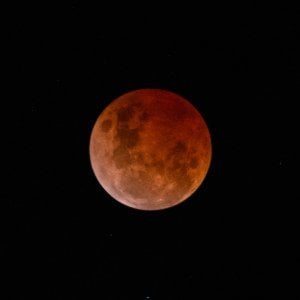
Holy crap! Frankfurt? I might take you up on that offer, I live in Mainz so it's maybe a 45 minute drive. I would LOVE to test that beast with the 2x converter on the moon. Best I've done was the 100-400 with the converter, an additional 200mm would be really cool to see.

38
Lenses / Re: Which canon macro lense 60mm, 100mm, 100mmIS, 180mm
« on: September 26, 2012, 06:55:00 AM »
That's the primary problem with 180mm.  It's too big that's why I recommended it only if you're using tripod almost all the time. :)  100mm 2.8L IS is the best option most of the time but the non-IS is still sufficient for 70% of your photos.

That's why I love my 150mm Sigma. Fast and still light enough to be hand hold for quite some time. Having OS (aka IS) and also being able to mount converters on it is then just the icing on the cake. I would really recommend everybody to have a real close look at that one when deciding which macro lens one should buy.

39
Canon General / Re: Buy canon gear from the States (for Europe)
« on: September 13, 2012, 09:34:02 AM »
I wouldn't worry about customs much, just post the flattened box, manuals, receipt etc to someone you know back home and take an old lens and carry case to bring it back in so it's not too obvious.

I would be careful about this. Customs often can in fact identify bodies via serial numbers and check their origin. Then it really doesn't matter if it looks used or even if you have already successfully taken it into and out of the country once. Every time you go through customs with that body it might be checked and then they will want to see proof that you paid taxes for it. If you cannot provide that you may be charged with tax evasion which is a SERIOUS crime in some European countries.

Chances might be low, but I find the risk of having a criminal record too big a gamble for this...

40
Software & Accessories / Re: Sharing images to a closed group of people
« on: September 07, 2012, 03:29:26 AM »
Really depends on how much data we are talking about. I think dropbox offers about 5GB of free storage now. If you can get your customer to use it you can easily share different folders with different accounts. (But that might be problematic with some companies security policies)

Personally I have set up webpages for different people to share the media with. Also has the upside that you have more options and can actually easily implement a nice looking gallery. But getting that setup for free is going to be tricky. But for a few € per month you should be able to get an okay set up.
Although normally I would not touch 1&1 with a stick I have to say their webservices are pretty good and very reliable, you might want to check them out. Their Smartweb L (3,99 per month) or 1&1 Dual Basic (6,99 per month, careful, they sponsor the first 12 months that's why it says 3,49 on the webpage) might be suitable. You wont have a lot of webspace though, so it really again depends on the amount of data you have. I am sure there are cheaper alternatives out there, but I only have 1&1 experience personally.

41
Hi!

Not sure if this is the right place, but couldn't find any subforum that really seemed to fit my question.

I just got a request from a friend who wants me to take a landscape photograph for her that will be hung up in her winery. It will be printed on semi transparent paper mounted behind a plexiglass wall and then back lit. She mentioned that people should be able to get fairly close to it and should still be able to make out details then. I currently have a 7d and figured for this I would need at least 150dpi which would result in 12 photographs. (24 if you take into consideration that images need to overlap and that you should have some room on all sides for final composition) If I go to 300dpi (which I think would be overkill) we're talking about 44 (or rather 88) photographs. (Unless my calculations are wrong of course)

Does anybody have experience with prints this large (and printed on transparent paper) Is 150dpi reasonable, way too little or too much after all because you'll never get this much detail on non-photo paper anyways?

42
Really hard to say. I've been a SLR shooter most of my life, but I have seen multiple upgrades to my equipment. I think the most difficult question to answer is how much better a picture really is. A professional that charges for his photographs might be better able to calculate this, but since I rarely do paid work it's hard to put a price on quality.

In terms of bodies I went from analog AE-1 to EOS 300D - EOS40D - EOS 7D.
Going from analog to digital my pictures didn't get better but I simply could experiment much more and thus could get learn much better. The switch from the 300D to the 40D made a big visual impact on the pure quality of my pics, but not necessarily on my photographs as a whole. (MEaning I still pretty much sucked at it) The switch from the 40D to my 7D barely made an impact on quality but simply made some shots possible that I could never do with my 40D. (Since the 7D is much faster both on fps and AF) How does this translate into money value? I have no idea.

For my lenses I made a lot of adjustments. Starting with the kit lens and later the 70-300mm canon crapzoom I moved into various variations of lenses. Again, some jumps were obvious in terms of quality. Going from the crapzoom to the Sigma 70-200 2.8 was a huge difference. Not only visually but also because the zoom was much, much faster and thus allowing me to get much better sports shots. My move from the 50mm macro to Sigmas 150mm macro did not do much in terms of image quality but again made some shots possible that I simply could not do before. The largest impact visually vise came from the Sigma 85mm 1.4 That lens again made shots possible that I couldn't do before due to the very large aperture but also produces images in a quality not possible before. (Wonderful bokeh and the such) But again, how does that translate into money?

I've seen absolutely stunning photographs done with cell phone cameras and plenty of really sucky ones taken with top of the line dSLRs. The photographer is still the most important part in taken a picture, but sometimes having the right gear will make the difference between failure and success.

43
Abstract / Re: The Randomness of Inspiration
« on: August 05, 2012, 04:07:09 AM »
This one is a macro of the side of a plastic bottle filled with apple juice taken out of the fridge:


44
Third Party Manufacturers / Re: US Travel - Check-in / Carry-on
« on: July 04, 2012, 06:09:46 AM »
I would NOT check camera gear with the airline!
I know how that stuff gets handled and depending on your airline there's a good chance it will NOT reimburse you for any damage done by them to the gear! A lot of airlines will not cover damage to 'delicate' wares unless they are specifically insured by them. Which tends to be very expensive, plus doesn't help you that much when you are in the US with broken gear!
Even if they pay for the damage right away it would not be advisable to buy replacements in the US due to customs and warranty issues when coming back into the UK.

45
Software & Accessories / Re: Battery Grip for 7D - any suggestions?
« on: June 28, 2012, 07:15:09 AM »
If the idea of spending less money on a grip is appealing to you, take a minute to imagine how exciting it would be to spend NO money.

That is a valid point, but I found that having no grip hurts my hands when I do a lot of portrait shooting. (With the 100-400 often at 300mm or something like that) I just have to bend my hand and arm very uncomfortably to hold the camera vertically and often I do not level it right resulting in slightly tilted images. (Yes that can be fixed in PS quite easily, but still it is annoying)
I've been photographing for 10+ years without one and I think it's finally time to get a grip and test that. My usual camera store has their own brand of grips at a somewhat cheaper price than the original. Since they also currently have a 15% discount offer on it I might get it on Saturday after all. We'll see.

@all: Thanks for the input and suggestions! Very helpful an informative as always :)

Pages: 1 2 [3] 4 5 ... 8