June 18, 2013, 08:08:19 PM

Show Posts

This section allows you to view all posts made by this member. Note that you can only see posts made in areas you currently have access to.


Messages - Neutral

Pages: 1 ... 4 5 [6]
76
I prefer DxO Optics Pro for managing ISO noise during RAW conversions.

DXO Pro was the best  before LR4 came out - i used it most of the time for RAW files
Now i feel that LR4 is giving better results - at least to my taste so now i am using LR4 for most of the time.  The are some different conditions when one of them gives more pleasant look.
But in general LR4 leaves more details and with just a little bit of luminance grain image is more real - does not destroy low contrast surface textures so you feel it more realistic and more "tangible". DXO at default setting smears low contrast surface texture details and gives more "plastic" look.  Especially noticable on RED channel - even if luminance and chroma sliders are set to 0  red channel details are still smeared a little bit. Turn off NR then all OK. Never observed that in LR4.
I did number of tests on this for myself and can post some results  later.
On the other hand DXO strength is lens correction modules and film pack for true film  rendering - i like that features most of all.

77
EOS Bodies - For Stills / Re: 1Dx simple DR stress test
« on: October 21, 2012, 03:19:53 PM »
If I set any periferal point as starting point then 1Dx  autofocus OK  initially but not tracking the object. This is not very convinent in many situations  when object is moving accross the frame and I want  to catch it at one side of the frame and  track it without camera movement while it crossing the frame.

What AF selection mode are you using?  You need to be in 61-pt auto selection for it to track across the frame (in AI Servo, you can still select the starting AF point in 61-pt auto).

I'm curious, does that type of tracking provide any hitrate at all? I've briefly tried it, but feel it's like the lottery... any other setting to accompanie that mode for better accuracy?

You could set it to whatever you want - second tab in AF settings is for AI Servo 1st and 2d image priority.
If you want speed compromising  focus accuracy set it close to release (at the left)  If you want focus accuracy priority (shutter is not released unless focus is achived) then set it closer to focus  - this could significanly slow down FPS.
You can do that separetely for the first shot and separately for the rest of them.
For myself I set both to focus priority  and the same for one short AF  - so I know that most of my shots will be 100% accurately focused.  And for conditions suitable for AI Servo Mode 1 I did not notice any slowness in FPS  - 1Dx AI Servo tracking is very "catchy"  - before we could see that only in astronomically expensive science installations and military tracking systems - now with increased processing power in camera that became available for us as well ))

Well, yeah, I know. I have almost no oof shots at all. But I meant when using ALL 61 points autoselect. I normally use one point and perhaps expansion. But the auto all points on the mk4 for example was an absolute joke...

Maybe I was a bit confused  what you were asking.  By "hitrate" you meant how many shots were in focus and I understood that as how FPS is affected by AI Servo.   With 61 autoselect I found some problems as well. This is actually not focus accuracy but the fact that  in this mode focusing point has auto-expansion by default  so if there are anything else in this area closer to camera then AF could switch to closer object in certain conditions.
As example recent Swimming Wold Cup - I had 70-200 and  I tried to use 61 pt autoselection with starting AF point  to follow swimmer and found that in this mode frequently get focused on the swimming lane border which falls in this area because  frame at 200mm FL was covering several lanes and closest lane border was always in the area of bottom expansion point - and it was my fault - forgot about that autoexpansion.  Whenever I used single point AF Servo  - all was perfect 100% AF hitrate.

78
EOS Bodies - For Stills / Re: 1Dx simple DR stress test
« on: October 21, 2012, 02:26:59 PM »
If I set any periferal point as starting point then 1Dx  autofocus OK  initially but not tracking the object. This is not very convinent in many situations  when object is moving accross the frame and I want  to catch it at one side of the frame and  track it without camera movement while it crossing the frame.

What AF selection mode are you using?  You need to be in 61-pt auto selection for it to track across the frame (in AI Servo, you can still select the starting AF point in 61-pt auto).

I'm curious, does that type of tracking provide any hitrate at all? I've briefly tried it, but feel it's like the lottery... any other setting to accompanie that mode for better accuracy?

You could set it to whatever you want - second tab in AF settings is for AI Servo 1st and 2d image priority.
If you want speed compromising  focus accuracy set it close to release (at the left)  If you want focus accuracy priority (shutter is not released unless focus is achived) then set it closer to focus  - this could significanly slow down FPS.
You can do that separetely for the first shot and separately for the rest of them.
For myself I set both to focus priority  and the same for one short AF  - so I know that most of my shots will be 100% accurately focused.  And for conditions suitable for AI Servo Mode 1 I did not notice any slowness in FPS  - 1Dx AI Servo tracking is very "catchy"  - before we could see that only in astronomically expensive science installations and military tracking systems - now with increased processing power in camera that became available for us as well ))

79
EOS Bodies - For Stills / Re: 1Dx simple DR stress test
« on: October 21, 2012, 02:09:06 PM »
If I set any periferal point as starting point then 1Dx  autofocus OK  initially but not tracking the object. This is not very convinent in many situations  when object is moving accross the frame and I want  to catch it at one side of the frame and  track it without camera movement while it crossing the frame.

What AF selection mode are you using?  You need to be in 61-pt auto selection for it to track across the frame (in AI Servo, you can still select the starting AF point in 61-pt auto).

So far mode 1 was working well for what was required. 
Yes I was using 61-pt autoselection - Canon AF manual is kinda Bible for me))) I studied it very carefully and for easy reference and reading put it in my tablet as well.
 Initial focusing was OK for any point but to start  tracking accross the frame  it was working only from central point.  Discovered that on shooting at Swimming Wold Cup recently  - was trying to track start of swim with HS FPS when all were jumping out and crossing the frame while flying to the water. Wanted not to move camera to produce nice multy-shot (I like that feature) with fixed backgroung but when checking shots found that focusing point stays where it was initially  for all the shots.  So had to forgot about multi-shot mode  and move camera lens to follow the jump into the water. After that did some tests and was having the same results. And I now remember seeing some post somewhwere regarding the same problem. Will do some more tests later when have time and will update on results. Unfortunatly usually getting  very tired at my work (telecomms projects and operations in a very big company - a lot of work pressure) so do not have too much relaxed time on the photography and playing with my lovely photographic toys (((

80
EOS Bodies - For Stills / Re: 1Dx simple DR stress test
« on: October 21, 2012, 01:44:00 PM »

<..>
And yes, my 40D has less obvious FPN than my 5D2 at lower ISO values.  Doesn't yours?

I have the almost same experience with my 5DM2.
I was so excited about the camera - tons of positive reviews with many exclamation marks  - so I bought it to replace my   EOS 40D as second camera to my 1Ds M3 ( which I actually  selling now after I got 1Dx).
 One of my favorites  is evening/night shooting attempting to  capture that special feeling that they carry on  but dissapointemet came after first session - and after few more attempts I end up using it as point and shoot camera in normal conditions - whenever going out with my wife or friends.  And for the rest 1Ds M3 was still mostly used camera as 5D M2 could not  even come close to what 1Ds M3 was capable of  regarding autofocus quality, ability to AF at F=8 etc.  Also 1Ds M3 images at low ISO were  looking better as well.
And for the night shots with high shadow recovery 40D images were still  looking better than 5DM2 dispite the fact that 40D resolusion is twice less than 5DM2 and older sensor
So finally I sold 5DM2 after few years of almost not using it  and now waiting for new Big Mpxl  High DR Canon camera announcement  - hope they will do something up to date regarding sensor and with 16bit ADC together with extreme low noise circuitry design will reach 15.9 stops DR ))))

81
EOS Bodies - For Stills / Re: 1Dx simple DR stress test
« on: October 21, 2012, 12:55:57 PM »
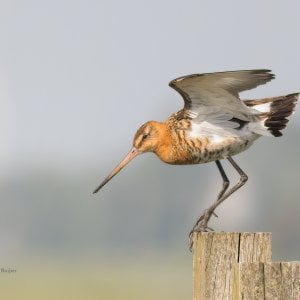
.. Here is  another example of 1Dx shot in normal daylight conditions using 70-200 2.8L IS USM II.
This  100% crop to get close-up of the subject.   Not too bad I belive for the camera and lens combination)))

Looks like the AF nailed it.

I'm curious tho, what software created the 100% crop jpg?
There appears to be a slight bit of a black halo/edge along the left side of duck's (duck's R side) white feathers where it borders with the water background.  Looks a bit like a strong unsharp mask was applied.

  It was "quick and dirty" Win 7 snipping tool to get snapshot of the portion of the screen and then save it to the JPEG to attach to the post .  Output of this tool is highly compressed and so quality is affected.
 Intention was not to show fine details on pixel level  but rather to show that in normal light conditions (and for 1Dx it is  normal contrast low light as well) 1Dx is performing very well - regarding shadows (initial post topic) and highlights as well.
  So now is the same 100% crop normally exported from LR with 100% quality with no sharpening for the screen.

 And this was casual shot  from far distance  (while I was waiting for some indoor event) - as soon as I took camera off the bag and started approching more closely then few minutes later I was stopped by security telling that to use professional camera and lens without park authorities permission is not allowed (((.

As for 1Dx autofocus - it is  exellent - almost 100% images are perfect in this respect.
Even for 85 1.2L USM II i have almost 100% of the perfectly autofocused shots at F=1.2.

  The only one thing that I found dissapointing is  that in AI Servo mode i could start object tracking only from central AF point.
   If I set any periferal point as starting point then 1Dx  autofocus OK  initially but not tracking the object. This is not very convinent in many situations  when object is moving accross the frame and I want  to catch it at one side of the frame and  track it without camera movement while it crossing the frame.
 So nothing is perfect - even 1Dx is still far away from my vision of perfect camera - but this is separate subject.

82
EOS Bodies - For Stills / Re: 1Dx simple DR stress test
« on: October 20, 2012, 03:29:22 AM »
  It is funny to see how simple "technical" post just showing  some limitations of the hardware was causing so many childish emotions.  This post was for those who are interested to see this kind of information  to be able to use it to do better what they what to do. Not everybody has 1Dx and able to check camera sensor  limitations themselves (they still awaiting on DXO results)  and  some people in process of making decision what they want for their needs.  Glad that at least one person with the mind not blured by emotions (Aglet) found that this is exact information he wanted to know .
  I do not understand why  some are so emotional about just one aspect of harware performance - this hardware is just piece of metal and  silicon  -  nothing emotional inside.
  Also it seems that some people confused between technical aspects and art aspects of using photographic tools.  Some do not see beyond borders of  their own small world - illustrated by arguments like " why on the earth you need to raise shadows  - in my world I do not do that so you MUST NOT do that because I do not do".  But there is not a one small confined world - there are many of them.

  On technical side goal of any development in this area is to make the photographic  tool to approach human eye in it's capabilities to catch the picture.
  Why ?
Extreemly simple answer -  to avoid as much of technical  work (that consume some time)  to bring captured image to what could be seen by human eye - in other words to normalize it as close as possible to humam vision.  I know a lot of people here hate word NORMALIZATION simply because they  do not understand that well (may be because they forgot what they learned in school on math how to compare fractional numbers)))).
  Then from this point (completing technical aspects of normalizing image to human vision)  art work is started - transforming real picture to imagenary vision of the artist.
  On the technical side  we are still far away from the target  and we all wish we could reach it rather earlier than later  to be able to enjoy the fruits of technical progess and use it for art work.

    As far as  1DX concerned  90% of all the tool aspects  (here we are talking about set of features and not only sensor)  is a big leap forward but 10% is something that could be worked further on and not up to the current technology level.
Here is  another example of 1Dx shot in normal daylight conditions using 70-200 2.8L IS USM II.
This  100% crop to get close-up of the subject.   Not too bad I belive for the camera and lens combination)))

83
EOS Bodies - For Stills / Re: 1Dx simple DR stress test
« on: October 19, 2012, 12:49:19 PM »
Thanks for posting.

But, again, I must ask, why on earth would one's starting point ever be that underexposed. And anyone with the slightest knowledge of photo and light would either expose correctly or over and bring down highlights. I have shot more than 14000 images with the 1d X in all sorts of scenarios, not once have I need to pull shadows by any amount under the wtf-category values...

Very simple reason - if one have some tool one need to know limits of this tool  - where is green zone where is yellow and where is red.
To know that one need to do some special tests and these tests conditions are definetely different from normal tool usage because the goal is different than goal of normal shooting.
And post title tells this very clearly - this is stress test - meaning testing something in extreme conditions - and this  is normally done in any industry.
  I just did number of tests for myself to see what are this camera possibilities in recovering shadows areas, where is the limit  and shared results for those who would be interested to see results )))
And no hidden context in that.
Knowing tool capabilities and limitation helps in using the tool in optimal way  - this is very basic.
So for 1Dx  ETR  (exposure to the right) rule is still alive - and not acually required for Nikon D800.
And in fact 1Dx is amazing camera in all areas I really enjoing using it - mentioned this in my initial post.
Regards

84
EOS Bodies - For Stills / 1Dx simple DR stress test
« on: October 19, 2012, 06:04:27 AM »
There are a lot of heated discussions about Canon versus SoNikon sensor DR performace, sensor technology, about DXO not measuring sensors correctlly in favour of Nikon  etc.
  So here is a simple DR stress test results for 1Dx shadow recovery limits for those who are interested:
  I did these tests to see  myself what is 1Dx is capable of.
Attached are 4 pictures (snapshots from LR4 screen by Win7 snipping tool):
1. 1Dx shot at ISO100 with EV = (-3 )   - showing 100% crop area shown below
2. Corrected with +3 EV in LR4, no shadow correction, no noise reduction applied
3. The same as #2 above with shadows raised to max 100%
4. The same as #3 above but with NR applied in LR  with L=40, C=40.
Results are self explanatory -  no further comments from me on this subject.
  Despite for what we see here regarding 1Dx DR  performance here my experience with 1Dx is very positive - almost perfect tool for low light sport  and events shooting.
In daylight 1Dx images also look much cleaner and having more 3D look than 1DsM3 and 5DM2 that I used before (just my personal perception)  and allow more image sharpening to be applied safely.
Also seems that 1Dx has a bit weaker anti-aliasing filter  - with extreemly sharp 24-70 2.8L II I could see moire on  some areas of ISO resolution chart  where image elements (projected on sensor)  become comparable in size with pixel size on camera sensor.  I have not observed that with other lenses including very sharp 70-200 2.8L IS II

Pages: 1 ... 4 5 [6]