


When you purchase through links on our site, we may earn an affiliate commission. Here's how it works. |
Canon has just announced that it has developed a 410MP full-frame sensor. This sensor, like its 250MP predecessor, is a sensor with two variants (color and monochrome) that would also be used in security applications. Don't expect a 400MP R5s any time soon.
What does this mean for Canon's cameras? Well, quite a bit actually. The pixel pitch of this sensor is around 1.1um, quite a bit smaller than the 4.3um pixel pitch of Canon's highest resolution mirrorless camera, the R5 Mark II, so that means that they have been working to increase the efficiency of their designs and fabrication to support pixels that are 4x smaller than they are currently doing for production cameras.
They also have had to solve latency and heat issues by simply moving 410MP at 8fps, which would be 72fps for a 45MP sensor of similar design.
It should also be noted that this is the first time Canon has developed one of these more experimental sensors for full frame, not APS-H. That's significant because it also means that Canon has reduced its fabrication costs of the full frame down to where it's nearly as inexpensive for them to produce experimental full-frame sensors as it was for APS-H sensors in the past.
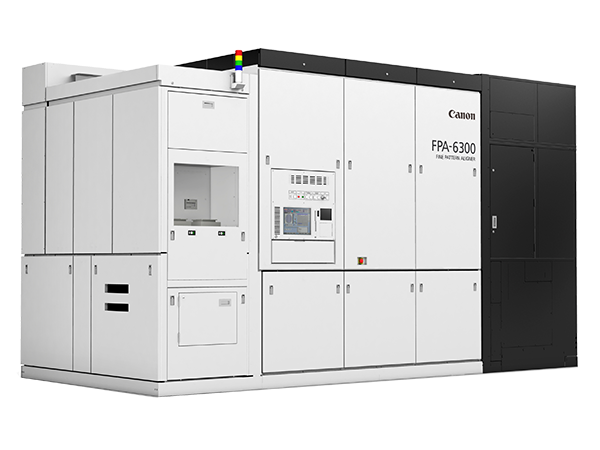
The reason APS-H was chosen in times past, was that it was the largest a traditional lithography machine could expose without switching multiple exposures together. While the world focused on ASML, Canon has quietly made unique lithography machines to allow it to more cheaply and efficiently produce full frame sensors.
When Canon first was developing CMOS full-frame sensors, it required three exposures stitched to cover the entire surface of a full-frame sensor; now, a lithography machine can do the same coverage in one exposure.
Hopefully, this is a sign that Canon is readying some sensor breakthroughs that will result in my 100MP R5s finally coming out. Alternatively, if Canon doesn't want to do that, then this pixel density would also make a 160MP APS-C camera or a 56MP 1″ sensor camera. A little crazy when you think about it.
Press Release
TOKYO, January 22, 2025— Canon Inc. announced today that it has developed a CMOS sensor with 410 megapixels (24,592 x 16,704 pixels), which is the largest number1 of pixels ever achieved in a 35 mm full-frame sensor. This sensor is expected to be used in applications that demand extreme resolution in various markets including surveillance, medicine, and industry.
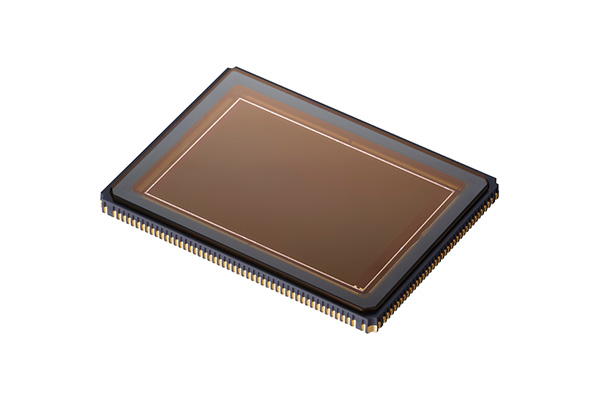
The newly developed CMOS sensor features a resolution equivalent to 24K (198 times greater than Full HD, and 12 times greater than 8K). This enables users to crop any part of the image captured by this sensor and enlarge it significantly while maintaining high resolution.
While many CMOS sensors with a super-high pixel count are medium-format or larger, this extreme resolution sensor is compacted into a 35 mm full-frame format.
This allows it to be used in combination with lenses for full-frame sensors, and it is expected to contribute to the miniaturization of shooting equipment. As data readout of a CMOS sensor tends to take longer as the number of pixels increases, achieving a CMOS sensor with a super-high pixel count requires advanced signal processing technology.
The newly developed sensor employs a back-illuminated stacked formation in which the pixel segment and signal processing segment are interlayered and also includes a redesigned circuitry pattern. As a result, the sensor is capable of achieving a super-high readout speed of 3,280 megapixels per second, delivering video at 8 frames per second2.
This sensor3 also features a “four-pixel binning” function that virtually treats four adjoining pixels as one, thereby improving sensitivity and making it possible to capture brighter images. When this function is in use, the sensor can capture 100-megapixel video at 24 frames per second.
By leveraging the technology it has accumulated over many years as a leading imaging company, Canon has developed breakthrough products including CMOS sensors with super-high pixel count and ultra-sensitivity, and SPAD sensors, which detect faint traces of light even in dark areas.
Canon will continue to advance its technology and contribute to the transformation and further development of society.
Additional information
The sensor is scheduled to be displayed at the Canon booth at SPIE Photonics West, a leading global conference for optics and photonics held in San Francisco from January 28-30, 2025.
Source: Canon Global







I haven't done the math, but does these numbers take into account that each pixel on a DualPixel sensor actually is (kind of?) two pixels?
But even though only the R5II sensor is DualPixel, it is of course still a pretty big step forward.
Incidentally, the R1 is Canon's flagship. They've said so, unambiguously. Not sure why you're confused about that...