

When you purchase through links on our site, we may earn an affiliate commission. Here’s how it works. |
While Canon’s Dual Pixel AF II system is known for accuracy and speed, its real-world performance in challenging environments rarely gets a true stress test. I put this innovative system through the most brutal focusing scenarios—low contrast, fast motion, foreground interference, and edge-of-frame compositions—to see if it lived up to the hype.
Using controlled setups, the goal was to challenge autofocus reliability where even top-tier systems often fail, offering a clear look at where Canon excels—and where it still struggles.
If you need a crash course on what the Dual Pixel CMOS AF II system is, here is a condensed explanation. This autofocus system was rolled out with the Canon EOS R5 and R6. Its big boast is that it uses every pixel on the sensor to contribute to autofocus, resulting in nearly 100% coverage of the image area.
According to Canon, this contributes to faster and more accurate focusing, particularly when tracking moving subjects. The Dual Pixel CMOS AF II system boasts up to 1,053 focus zones.
Generally, the new feature has been highly praised. The technology sounds groundbreakingly impressive- or is it just on the spec sheet? Some photographers complain that the autofocus is so advanced that it overcomplicates things, searching and missing shots when their earlier, simpler models tracked better.
I decided to take the sensor for a test run and focused on moving subjects, low-contrast scenes, and obstructions moving in and out of the scene. Here is how the Dual Pixel AF II system performed.
Test 1: Low Contrast Moving Object
My first test was designed to evaluate autofocus performance in a low-contrast, low-light scenario with a moving subject. I set the camera to AI Servo and selected the following parameters: Subject to detect – Auto, and Eye Detection – Off. Using my R5 Mark II and RF 24–70mm lens, I introduced visual complexity by placing glasses in the foreground, background, and one off-center on a rotating plate.
The focal point was placed in the zone where the rotating glass passed, to determine whether the camera could maintain focus in a low-contrast scene involving motion and three focal planes.
Out of 70 images, the system locked on and delivered a tack-sharp result 69 times. Even when partially obscured by a foreground glass, it maintained 98.6% accuracy under difficult conditions. Impressive. Test 1: A+.

Test 2: White on White With Interfering Movement in the Foreground and Background

In this test, I put a white product on a white background but used a high contrast logo to lock in my focus. I wanted to evaluate if the camera would hold the high contrast point despite movement in the foreground and background. It delivered 28 of 36 successful images for a 77.7% accuracy rate. Yes, that’s a C+ (my parents would have grounded me for that grade) but considering the harsh conditions I feel that it performed well.
Test 3: Birds in Flight
For my next test, I tackled birds in flight. I had this on my testing list because a friend of mine who is a bird photographer expressed that he often prefers his old 1DX as it could track the birds better. “Do you think that the autofocus got ‘so advanced’ that it’s almost overthinking it?” I asked. He said yes, so I took my R5 Mark II and RF 70-200mm F2.8 L IS USM Z and headed out looking for birds. This is where I found the most disappointment. I mean, even worse than that time you succumbed to one of the hair balding miracle cure infomercials.
For consecutive tests, the camera was not able to track the birds all the way across the frame. At times, it started sharp but then lost the focus 1/3rd of the way across the frame till the edge.

On another occasion it had the bird in focus, but as it flew towards me it was unable to track it until it landed on the grass. Another time, the bird was out of focus for many frames, until it flew into a high contrast area then the focus could pick it up. This is an example of how the focus kicked in only once the duck flew into a darker environment where the rim light separated him from the background.
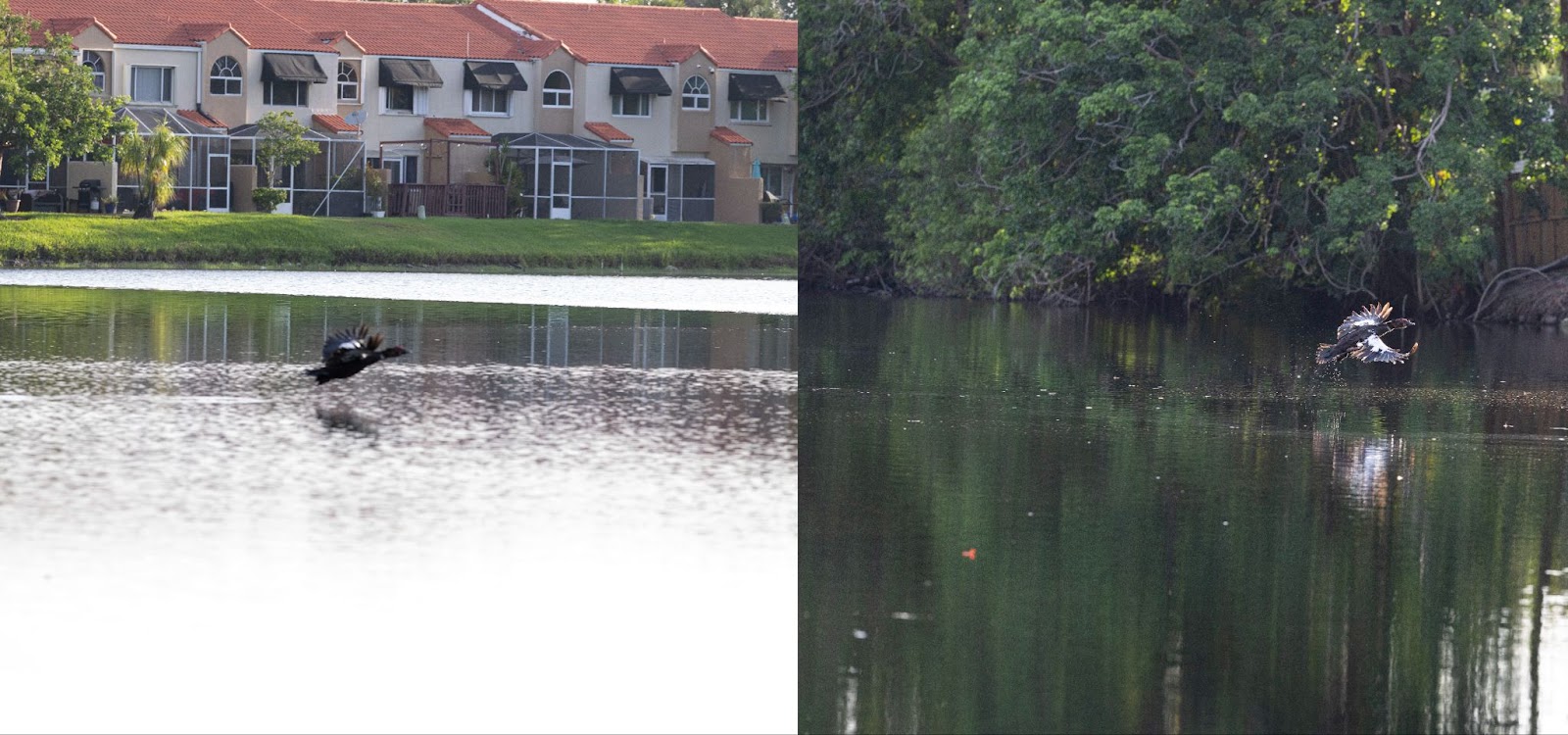
The accuracy on these tests was a disappointing 61.4% accuracy rate. When I gave it favorable conditions: contrast and a slower speed (ducks versus birds), it performed fantastically. When there was low contrast, high speed, or the bird moving toward the camera, it simply did not deliver.
On a more positive note, when the subject was not moving, the autofocus did a spectacular job of capturing a low-contrast image with astounding sharpness.

Test 4: Sports Photography
As someone who works heavily in sports photography, the most important test for me was tracking a moving subject. I had high hopes for the R5 Mark II, especially with Canon’s bold claims about its cutting-edge athlete tracking.
At the launch, Canon touted “the next-gen AF system, Dual Pixel Intelligent AF, is based on Accelerated Capture and deep learning, allowing end-users to experience tracking advancements, such as body, joint and head area estimation and focus on people other than the main subject.” Mainly, it would nail that subject. In their live YouTube launch they showed a video of a basketball player weaving in and out with the tracking sticking to him like glue. Now, it was time to see if that promo piece really lived up to its promise.
Since this article is about pushing the capabilities to the most challenging scenarios to judge its performance, I went all in. I set up a dark-skinned athlete, wearing a black shirt, in front of a black wall in low light. This would be harder than staying away from B&H on black Friday. How did it do? See for yourself.
Test 1: Athlete doing a movement through the frame left to right at medium speed: 100% accuracy. Very impressive.
Test 2: The athlete doing a movement through the frame left to right at medium speed where he turned his back to the camera. This test performed three times and yielded a 35% accuracy rate.

Test 3: Athlete moving towards the camera at medium speed. 80% accuracy rate.
Test 4: Athlete moving at medium speed in circles, 75% accuracy rate.
After my testing, I took some images for the athlete with my usual setup: two strobes cross lit. With the lighting separating the subject from the background, the auto focus performed flawlessly.
Here is the general performance I found in my testing.
When the Dual Pixel AF II Performed Well
- High contrast conditions
- Low contrast conditions with a still subject
- High-speed movement with high contrast conditions
- Edge of frame compositions
When the Dual Pixel AF II Performed Poorly
- High-speed movement in low-contrast conditions
- Subject turning away from the camera (loss of eye detection)
- Foreground interference from moving objects
Closing Thoughts
When the YouTube reveal for the R5 Mark II ended it seemed as though Canon had created the holy grail of all cameras. The claims were remarkable, and I was ready to ignore all of my accountant’s admonishments and sip the Kool-Aid. Was the Kool-Aid all it claimed to be? Yes and no.
The new autofocus lived up to the hype in many ways. Over the last six months of working with it I’ve noticed a dramatic improvement in edge-of-frame focusing. Gone are the days of having to place my subject slightly more centered than I want to ensure its sharpness.
With the newer system, the camera’s use of every pixel on the sensor allows remarkable coverage of the whole image area. It also delivered crisp, clean images when it got the shot. It performed well in low light tracking, as well as slow movement.
It fell way short for me in fast-moving and low-contrasting situations. That combination is surely the most challenging scenario, but it may be a key area for development in the next model. I mean, if they’re taking Christmas lists—add that and third-party lens compatibility. Let’s just throw it all in.
In online discussions, many photographers expressed that the best solution they found for a high tracking success rate was to custom-program buttons for scenarios they used most: auto, people, and animals. This solution reminded me of the art of prompting in AI technologies.
If the prompt is too general, it performs poorly. The more precise the prompt is, the better the delivered piece is. The autofocus technology seems to follow this pattern. It performs with higher accuracy when the tracking is set specifically on a case-by-case basis for the subject being photographed.

The Dual Pixel AF II system is a serious step forward in the auto focus technology. Is it as simple as the olden days of, let’s say the 5D Mark series, where a general autofocus did the trick- I don’t think so. It takes some learning, and knowledge on the various settings to make the most of the technology.
So no, you can’t just point and pray — but you can point, program, and nail the shot.


Also I have not personally experienced the autofocus issues others have but I do have on anomaly that happens and wondering if others have seen this. 1 out of maybe 15 times when I turn on the camera it shows an almost white screen. LIke an extreme overexposed view of what you are pointing it at. As if you the exposure is frozen in an overexposed state. I have to turn it off and on to get it to act normally.
I am shooting falcons going in an out of a metal bridge and the auto focus sticks like glue, and I have the new firmware 1.10 installed and no issues tracking fast birds. Zero, and with obstructions I have no issues. I can tell you I only use 1 single auto focusing point. Spot the tiny one that most people say is the hardest to use. I laugh inside when I hear that as I have been using single point since the 40D came out to shoot birds in flight.
Here is a special little peregrine falcon, the runt of the litter and one like no other I have seen. A very dark bird with a dark hood so I try and single this bird out for shots as it's different, and boy oh boy is this little falcon a speedster.
This should be a good example of shooting with obstructions and staying on the bird.
These images were take with a 600mm f/4 Hand held with the R5II and firmware 1.10
And I slowed the gif down a whole lot so you can see the obstructions had no effect on tracking the bird.
Cheers
https://www.canonrumors.com/forum/t...ted-by-the-latest-firmware.44491/post-1028861