

When you purchase through links on our site, we may earn an affiliate commission. Here's how it works. |
We have an interesting patent application (2026-004766) for you today. This is a patent for a Canon RF 300mm f/2.L IS USM. Now, as we have discussed previously, the 300mm f/2.8 is still noticeably missing, and while we lust for a Canon RF 300mm f2L IS USM, maybe the world needs a more affordable Canon RF 300mm f/2.8L IS USM instead. But this patent application expands on a general 300mm f/2.L IS USM and adds an Extender 1.4x.

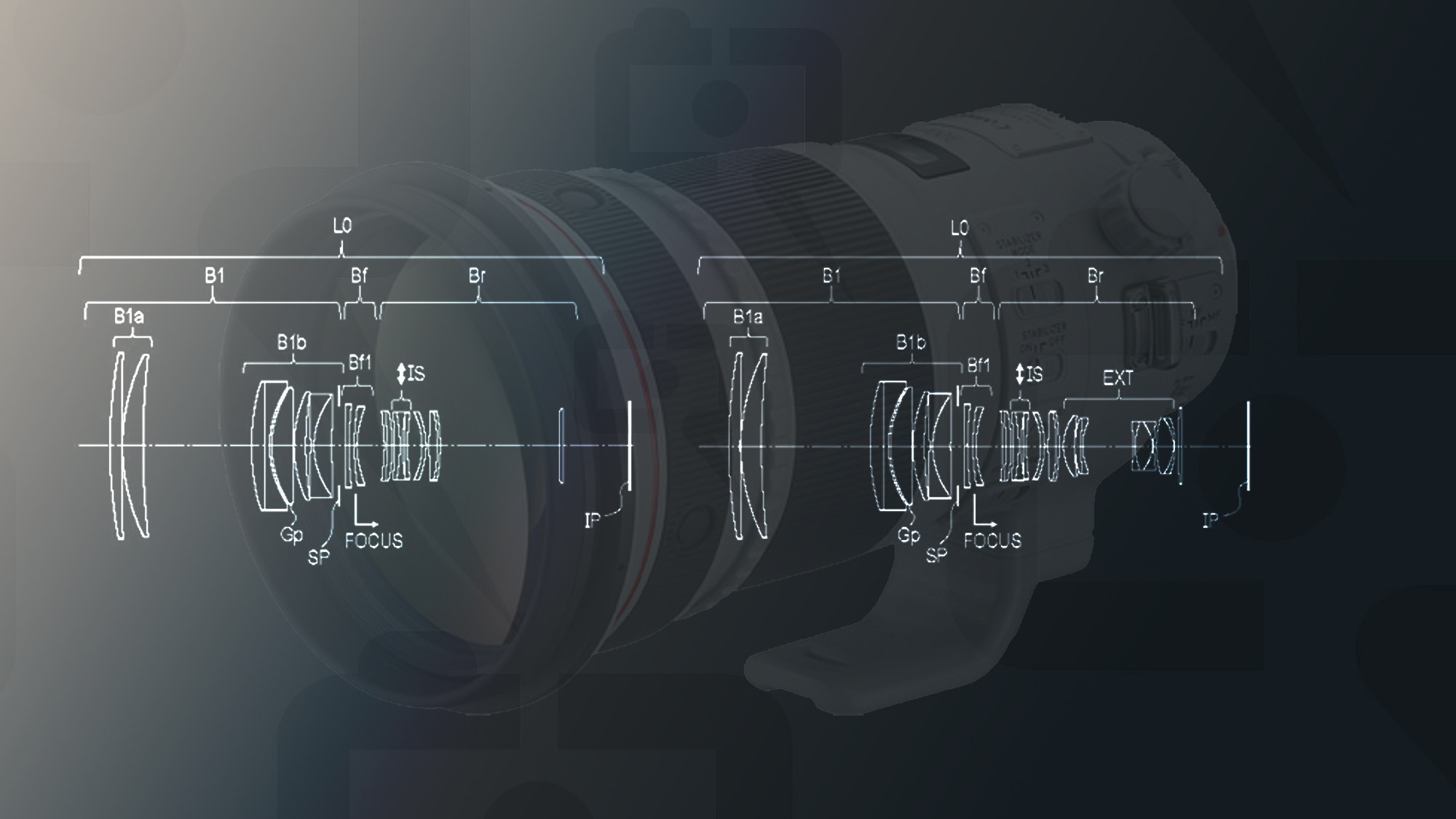
This patent application shows off three different embodiments for a Canon RF 300mm f/2.8L. Nothing really uncommon about that, but what is uncommon is the last embodiment, which shows a complex two optical groups added into the optical path, presumably any of the 300mm f/2.8L embodiments would suffice since they all have that gap in the rear of the lens between the IS and element groups and the rear element.
Canon mentions in the patent application itself that this optical group, called (EXT), is the following;
A variable magnification subgroup EXT is inserted into the subsequent lens unit Br of the optical system of Embodiment 4 to increase the focal length by approximately 1.4 times. The variable magnification subgroup EXT is removable and is inserted into the subsequent lens unit Br of Embodiment 4 between the lens closest to the image and the cemented lens second from the image side. By inserting the variable magnification subgroup EXT, a longer focal length can be obtained without changing the overall lens length.
So yes, what we have here is a Canon RF 300mm f/2.8L IS USM Extender 1.4x, which, with a flip, allows you to change your 300mm f/2.8L IS USM to a 400mm f/4L IS USM in a matter of seconds without breaking your weather sealing.
Why Not a Zoom?
Now Canon does have zoom lenses that cover the 300mm, but they don't have any that cover 300 and above with speed, and any zoom that starts with 300mm at f/2.8 isn't going to be cheap, “lightweight” and relatively inexpensive. Consider that the 100-300mm f/2.8L is $10,600, compared to the release price of the Canon EF 300mm f/2.8L IS USM II at $ 7,000. We can only imagine that a zoom starting at 300mm f/2.8 would feature an astronomical price.
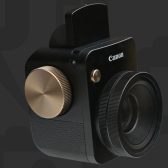
Oh, and it would maybe look something like this, though a little smaller.
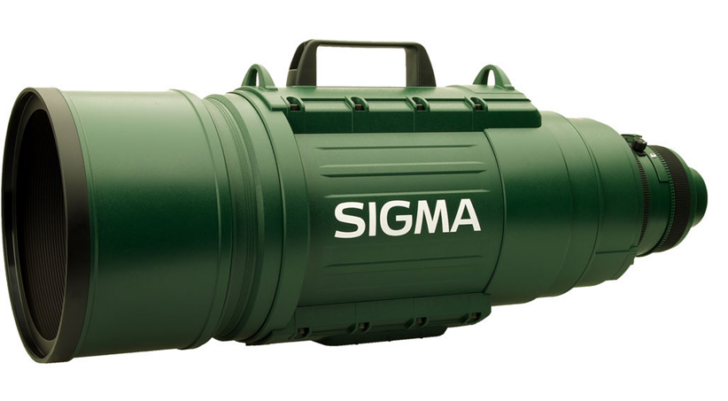
So, maybe not the best idea, but it would look awesome, so I'm here for that, but it's not exactly practical. So the economics make more sense that if you want to do a fast zoom starting at 300mm, the answer is a teleextender.
So, back to this patent.
Canon RF 300mm f/2.8L IS USM EXTENDER 1.4x
Unlike most patents that I show with lenses, this one will obviously be a little different, because it has two embodiments. one with the optics inserted and one without.
This design is also amusingly tele-extender-friendly, so if you wanted to add another tele-extender behind the one included in the lens, you are welcome to do so. Now there is a change to lens length, but I'm presuming that's just a mathematical rounding error versus the movement of an element .01mm.
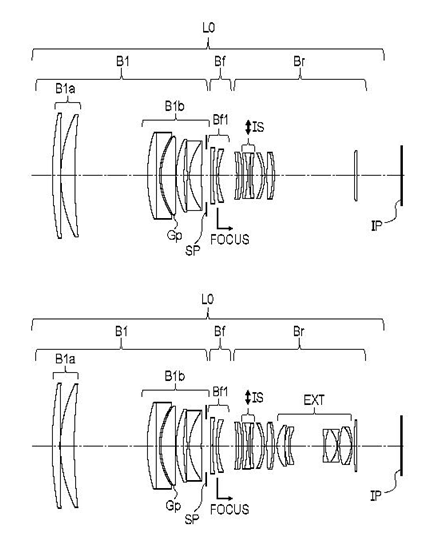
From the optical design, we can also see that, like modern Canon super telephotos, most of the weight from the elements is distributed to the center or rear of the lens for better balance, so this very much seems like a reasonable optical design for a 300mm super telephoto.
| Without Extender | With Extender | |
|---|---|---|
| Focal Length | 300.61 | 407.40 |
| F-Number | 2.91 | 4.12 |
| Half Angle Of View | 4.12 | 3.04 |
| Image Height | 21.64 | 21.64 |
| Lens Length | 296.71 | 296.72 |
| Back Focus Distance | 38.43 | 38.43 |
Mechanically, though, it will be a challenge to add a big extender housing on a relatively small lens, so this may be the only reason that this is not done. The Canon EF 200-400mm f/4L IS USM Extender 1.4x lens was 100mm longer than this lens design, so it had room for all the controls plus extender housing.
Closing Thoughts
This would be an interesting lens if Canon could shove everything into a 280mm metal package and bundle it up. The immediate ability to put a teleextender on the 300mm increases its usefulness significantly.
There have been a few super telephoto patents in the last little while, which may mean that Canon is getting serious about completing its lineup.
Another cool thing Canon could do with this patent application is actually create two Canon RF 300mm f2.8 models – one with the extender built in and the other without. Outside of the mechanical and optical assembly that gets dropped into the optical path, the two lenses would share most of the same features, except for cost and weight.
Just a Reminder!
With all patents and patent applications, I have to stress constantly – this is simply a look into Canon’s research; the only thing we can quantify accurately is that Canon is researching this. A patent application doesn’t mean they are going to release this in the next month, or even year, or even at all.






Why a 112mm front element? 300 / 2.8 = 107mm, but it’s really 300.6 / 2.91 = 103mm.
The Canon ef 300mm F2.8 II is 248mm + 44mm for focal plane or 292mm, this patent application is around the same as that, and even a few mm's longer at 297mm.
so it's the same sizing as the EF version.
Gp just indicates a positive lens, no special elements involved.
A DO'ed 300mm would be ~170-180mm if even possible, going by the same size reduction of the 400mm
Canon made a very small number of EF 300/1.8L lenses as well, but AFAIK they were only sold to horse tracks in Japan. There are photos online but I've never seen one in person.
i personally think the nikkor 7.5mm is the coolest lens ever.
but i digress.
420mm f/2.8 and 600mm f/4 at the flick of a switch
I keep suggesting this and keep hoping Canon's listening.
Also a 200mm f/1.4 with 1.4x and 2x builtin
280mm f/2.0 and 400mm f/2.8
A 300mm f2.8 with a 1.4x TC would be amazing for airshows. Good wildlife lens with the R7 II, as long as the R7 II meets our lofty expectations.
Where the 600/f4 kicks it's butt is when you put a 2x on the 600/4 and get a 1200mm f8 (which is well beyond the reach of a 400/2.8) and with a 1.4x to get a similar 800/f5.6 but with less stressed optics, AF and IS.
The problem with 400-600mm zoom designs is that you basically have a 600mm f4 that can go wider, it's not a 400/2.8 that can go longer. So you get the size and heft of the 600mm f4 and not the benefits that a 400/2.8 has. What would be cool is a 400mm f2.8 with an integrated 1.5x TC for a 600mm. The you could pop another 1.4x TC on for more reach and still ahve a small(ish) and more portable rig.
I do not understand how this calculation for front element diameter applies to a multi-element lens group. Can someone explain it to me? I have a gut feeling the focal length not being measured from the front element to the image plane factors into this.
On a related note, I do not understand what is happening here: On my EF 100mm f/2.8 macro lens (both L and non-L versions), as I focus from infinity to 1:1 magnification, the light meter indicates exactly 1/4 the transmission at 1:1 relative to infinity. Does this mean 200mm f/5.6 effective at 1:1?
Entrance pupil diameter is focal length / f-number. The entrance pupil is the optical representation of the physical aperture (iris diaphragm). The front element must be at least as large as the entrance pupil to fill the wide open aperture with light. With telephoto lens designs, the entrance pupil is located at (or just behind) the front element. That's why we typically approximate the front element diameter of telephoto and supertelephoto lenses as focal length / f-number.
For other lens designs, that approximation doesn't hold. For example (because it's the lens on the camera sitting next to me), the RF 20/1.4 has an entrance pupil diameter of 14.3 mm, but the front element of the lens a bit over 44 mm in diameter, 3 times larger than it 'needs' to be.
The effective focal length is actually getting shorter due to focus breathing, the EF 100/2.8L Macro at 1:1 frames like a lens of ~68mm. Focal length doesn't really factor into exposure, that's the point of using f-numbers (for example, a 400/2.8 is letting in a lot more light than a 100/2.8 because it has a much larger entrance pupil, but with both lenses set to f/2.8 the exposure will be the same).
At high magnifications, the effective f-number is f-number x (magnification + 1), so at 1:1 your wide open f/2.8 lens is effectively f/5.6 [2.8 x (1 + 1)].
My MP-E 65 at 5x and f/11 (a reasonable compromise between DoF and diffraction) is effectively f/66 [11 x (5 + 1)] and that is dark. That's why I typically use the MT-24EX Twin Lite with it, even in bright daylight.
Effectively you cannot have a front element that is smaller than the entrance pupal, so a 300/2 lens will always have a front element that is at least 150mm in diameter. Typically for large super tele primes like a 300/2 the front element will be pretty much exactly the minimum required size.
If front filter elements are required, the filter size will be rounded up to the next common size.
When it comes to wide angle lenses the front element is often much larger than "required" (lens design reasons), but it cannot be smaller.
If you come across a lens where the front element size isn't big enough for the claimed lens specs it means the manufacturer is doing some "optimistic rounding" of the focal length and/or maximum aperture.