
Canon Selling Well in Japan, and Three New EOS R Cameras Confirmed

Richard Cox
9 Min Read

When you purchase through links on our site, we may earn an affiliate commission. Here’s how it works.

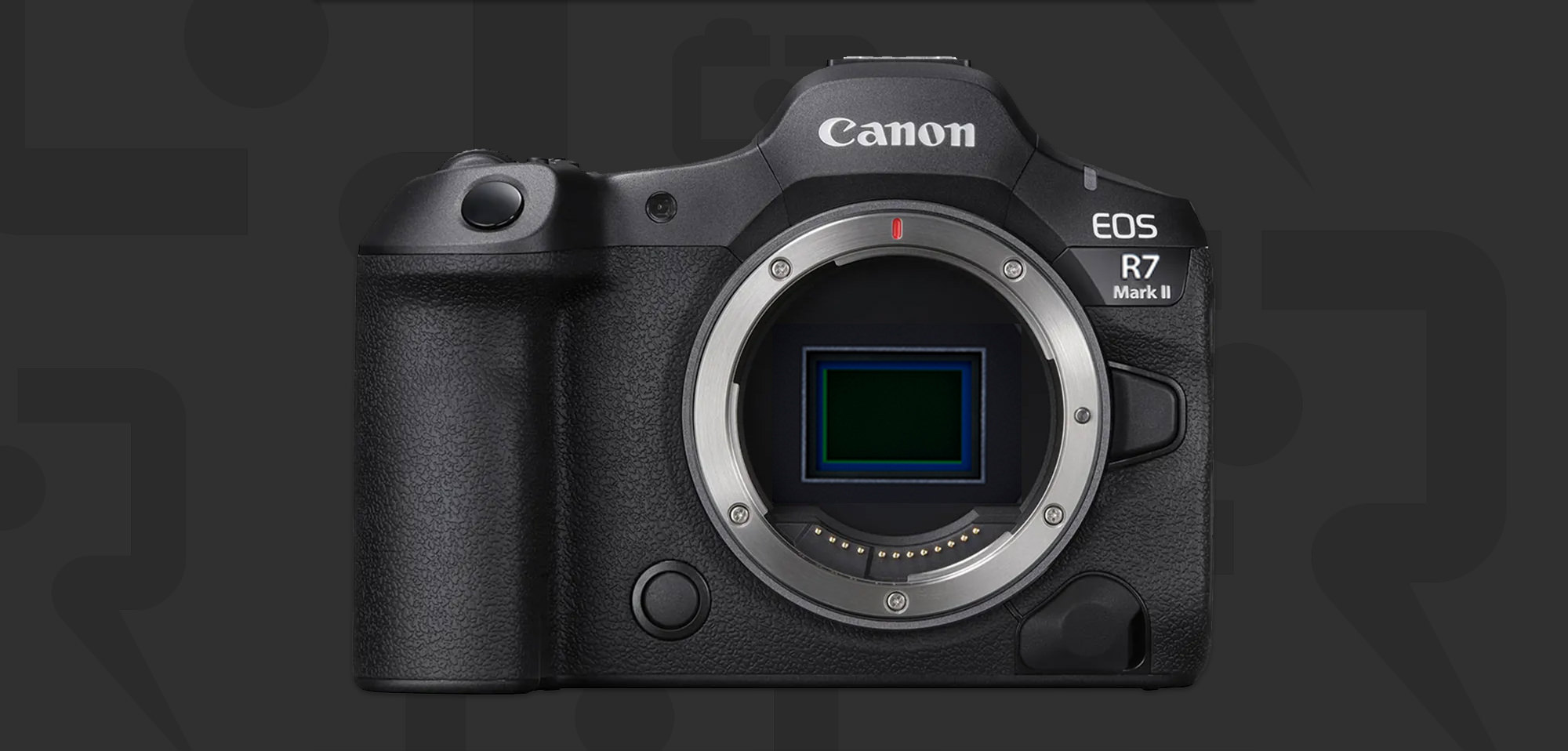
BCN released its data for November, and there are a few other interesting pieces of information that have come out lately, so I’m going to lump it all into my musings, so lets get into things and oh, we have to talk about the R3 Mark II, R7 Mark II, R10 Mark II along the way.

What is BCN and Why?

Just for those completely unfamiliar with BCN, BCN tracks sales receipts from over half of all Japanese retail stores (online storefronts and physical stores). Of any market, BCN gives us the most accurate look at what is being sold in Japan. Japan is a small market in terms of absolute sales, but it absolutely kills it when you compare its camera sales per capita. It’s also the home market for the Japanese camera manufacturers, and they all like to do well in that market. So, you personally may not care about what the Japanese are buying, but you can bet that Canon, Nikon, and Sony do.

I don’t usually report on Japan’s BCN retail market that much anymore. But I do find it curious to watch the trends because I think that tells us what Canon may do in the future. For instance, the best-selling full-frame camera was the Canon EOS R6 Mark II in Japan, and it wasn’t even close. So, it made a lot of sense that Canon would want to continue that magic by bumping out a new camera system. We don’t have much new information besides some certifications, so take this as my own personal musings based upon what we know.

November BCN Data

According to BCN, Canon took quite a few top spots in the November rankings, and the Canon EOS R6 Mark III, debuting at position 11. That is a little surprising because BCN tracks actual store sales receipts, and not the pre-orders, so the EOS R6 Mark III wasn’t available for very long in November, as it didn’t start shipping until the last week of November. Even with that, it’s the highest-selling full-frame camera in Japan for the month of November.

Watching the BCN Japanese market also indicates to me if there is a sudden shift, that Canon could be selling off inventory, perhaps because a new camera is coming out. Japanese camera purchasers love bargains and love kits with lenses. So, if a camera suddenly jumps, it’s sometimes a sign of something to come.

But for at least two months in a row, the EOS R10 RF-S18-150mm lens kit has remained the top-selling camera kit in Japan.
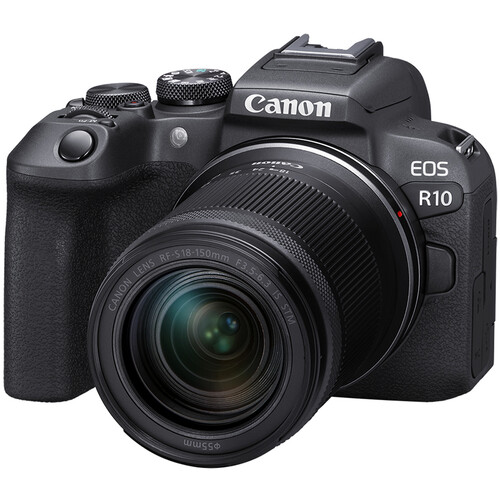
Canon EOS R10

Now, while I like the R10, it’s not what I consider Canon’s volume mover, as that would be the Canon EOS R50, which is in positions 3 and 4 of the rankings. T

This, I think, is notable and especially since the EOS R10 is now going to be approaching 4 years old with the Canon EOS R7, and we tend to ignore the R10 in the conversation of the R7. However, we shouldn’t forget the R10 in the conversation about the EOS R7 because they were both released at the same time, and far more EOS R10s are sold than EOS R7s.

Three Cameras Reach Wi-Fi Certification

Wi-Fi certification is usually our first real “alert” that Canon has a camera poised for release in the upcoming timeframe. That can stretch out into the months, though, as it’s one of the many steps a camera must go through to get certified by all the various regions, because the cameras transmit radio signals (Wi-Fi). Weibo Wi-Fi hunting guru, EM_8888 has nicely tabulated all the cameras that Canon has past and present that have been certified with the Chinese authorities.
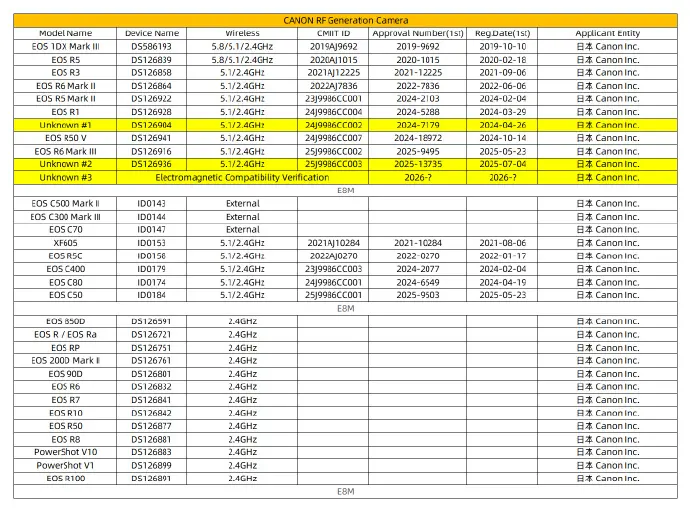
Wifi Certifications for Canon

With this, we’ve also been told that there are three cameras being Wi-Fi certified by Canon right now, with one of them featuring Wi-Fi 6, which is usually slated for Canon’s professional cameras at this time. The other two are the normal Wi-Fi 5 that we see on Canon’s consumer and prosumer camera models. You can’t really tell from the above chart, but I assume that EM_8888 has access to the internal data that Canon would have described the transmissions for certification.

The R3 came out in September 2021, so if it’s going to get a makeover, you’d assume that it would be coming sooner than later. Over 4 years is long for one of Canon’s main professional cameras.
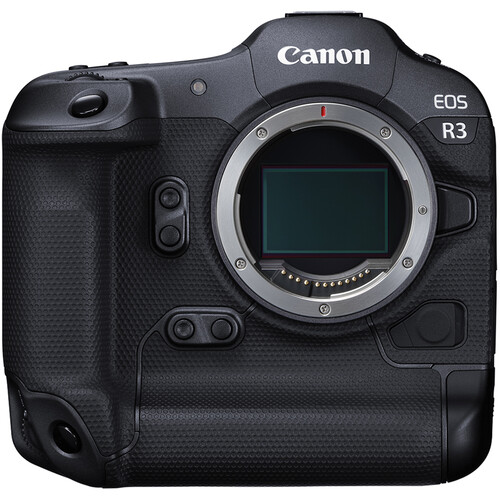
Canon EOS R3

I think the EOS R3 is in a little of a bind on what Canon really wants it to be as a camera in a future model. Is it a mini EOS R1 now, or an integrated grip EOS R5? It could go either way, and it’s going to be fun reading what the rumors are on this camera – if it does indeed come out this coming year.

Are the Other Two APS-C?

There are two more cameras, DS126904 and DS126936, that have entered Wi-Fi certification. If we look at it, the cameras due for replacement are the R10 and R7 Mark II. Since Canon released the R10 and the R7 at once on May 22, 2022, could they be looking at a repeat performance? With the R10 selling well in Japan, it would make sense for Canon to look at replacing it with a newer model and increasing both the margin and the selling price because, well, Canon.
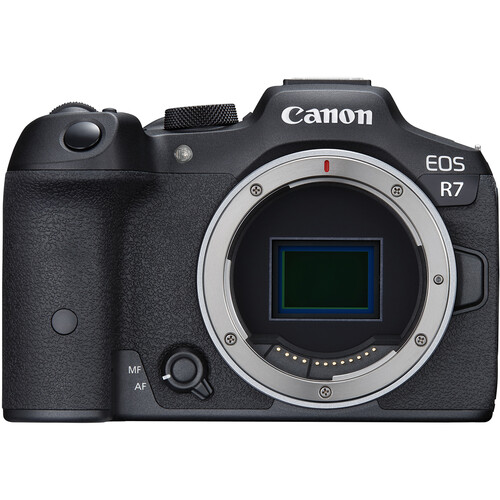
Canon EOS R7

There has been a lot of emphasis on video-related cameras lately, with the video orientated V lineup (PowerShot V1 and the EOS R50V), and without a doubt, that is bound to continue. I do hope that doesn’t come at the expense of Canon’s main camera lineup, which is more balanced for photography and video.

But There’s the EOS R100

There’s, of course, the elephant in the room (or mouse), and that’s the complete lack of EOS R100 sales in Japan. Surprisingly, on Amazon USA, the EOS R100 is the top-selling mirrorless camera; this hurts my soul. But I can’t see the R100 being replaced quite yet, as it was released in May 2023, as much as I would like to see it gone.
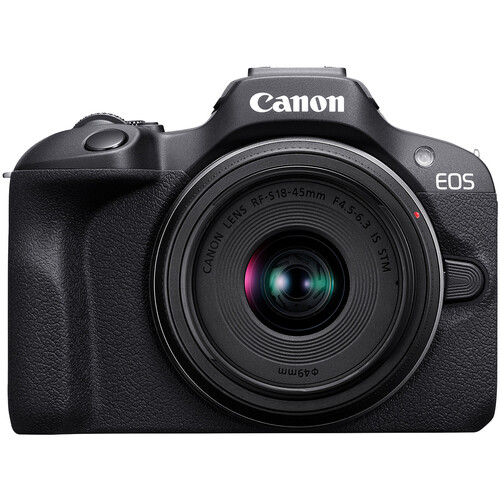
Not Richard's favorite Camera, Canon EOS R100

Don’t get me wrong, I absolutely feel that there is a need for an entry-level, cheap camera. Not everyone has a lot of money to western standards, and while a $500 camera seems cheap for most of us. We should always try to remember that there are a lot of people in the world for whom $500 is a month’s wage or more.

I would rather see the EOS R100 driven down to sub $500 and a decent entry mirrorless model come in at the R100’s introductory price. I also think this would drive a lot more unit sales, and thus a lot more lens sales to Canon. But I am not Canon’s CEO ;)

Closing Thoughts

I usually don’t give my theories and opinions on rumors and tend to these days stick with the facts and what has already been released, as Craig usually filters that information and hands it out to the masses. My style is a little different, and by all means, we know little about what is forthcoming that we can tell you at this time. Take what I’ve written as my thoughts and opinions, and not gospel. I certainly don’t want anyone selling off their EOS R7 because they think it’s coming before CP+ and holding me responsible ;)

Go to discussion...

Share This Article
Follow:
Richard has been using Canon cameras since the 1990s, with his first being the now legendary EOS-3. Since then, Richard has continued to use Canon cameras and now focuses mostly on the genre of infrared photography.

58 comments

  1. For an undefined reason, I think of the R3 as an experimental camera, a slot to incorporate new ideas that they want to try out in the buying public but not in huge quantities.
    • 0
  2. For an undefined reason, I think of the R3 as an experimental camera, a slot to incorporate new ideas that they want to try out in the buying public but not in huge quantities.
    I like that idea. But I'm not really convinced of that. Only the future will tell. if and how an R3 line will continue.
    • 0
  3. ... I would rather see the EOS R100 driven down to sub $500 and a decent entry mirrorless model come in at the R100’s introductory price. I also think this would drive a lot more unit sales, and thus a lot more lens sales to Canon. But I am not Canon’s CEO 😉
    Richard, really? 😉
    Do you think this perfectly developed and priced R100 should get a discount price?
    Wouldn't it be better to let it continue as it is and we'll praise its magnificence and value for all eternity? 😉🤢
    Surprisingly, on Amazon USA, the EOS R100 is the top-selling mirrorless camera; this hurts my soul.
    The U.S. people know best about the inner values of anything 😉
    • 0
  4. With all the talk (hopefully true) of the R7 II becoming more "premium", I could see the R10 II taking the old R7's spot, as long as the specs are decent enough and it has IBIS. Otherwise there'd be an odd gap for a camera to compete with the a6700 and whatever Fuji body (X-T5?) is in the same class.
    • 0
  5. Otherwise there'd be an odd gap for a camera to compete with the a6700 and whatever Fuji body (X-T5?) is in the same class.
    I really do wonder how much any of that matters. I remain unconvinced there is real 'competition' between brands at anything other than the entry level. Someone with a smartphone who wants to get 'a real camera' will be looking at different systems and comparing the ones they can afford. Mostly, they'll be looking to not spend more than they spent on their smartphone (the average price of a MILC shipped in 2025 is $714), which means they'll be comparing at the entry level. Once they make a choice, if they later decide to upgrade they will most likely be looking at the brand they already have so they can use the same lenses, etc.

    I think the transition from DSLR to MILC is a somewhat different situation, where users with more gear were looking at switching not just bodies but lenses, too, and that led to more system switching (mainly from Nikon to Sony, based on the market data). That transition is still ongoing, meaning some higher-end MILC sales are to people replacing a DSLR.

    Those of us engaged more on the gear side (e.g., the self-selected group of people who choose to follow rumors of upcoming cameras and lenses) and those who produce content for them (DPR, etc.) love to compare across brands. That drives a lot of discussion and more importantly ad views and clicks (i.e., revenue) but at the end of the day only a relatively small number of users with anything other than a body and a kit lens actually switch from one system to another.

    I believe that the primary target market for cameras above the entry level are in-brand buyers, so Canon (in particular, as the dominant market leader) is looking to attract owners of older Canon cameras or 'lower' Canon cameras. For example, the R6III is spec'd to attract owners of 5- or 6-series DSLRs, owners of an R6 that's now 'getting old' and owners of an R7/R10 who are looking to go to FF. The situation is a bit different for Sony and Nikon, because they don't have something like 70% of the installed base using their brand so they have to try and poach Canon users with specs, price, or both.
    • 0
  6. So much undeserved hate for a wonderful camera (you know which one I mean).
    I'm tempted to quit and join the SonyLoversForum if this doesn't stop soon! 😡
    By the way, I too could imagine an R3 II with the 45MP sensor and some updated features.
    • 0
  7. According to BCN, Canon took quite a few top spots in the November rankings, and the Canon EOS R6 Mark III, debuting at position 11. That is a little surprising because BCN tracks actual store sales receipts, and not the pre-orders, so the EOS R6 Mark III wasn’t available for very long in November, as it didn’t start shipping until the last week of November. Even with that, it’s the highest-selling full-frame camera in Japan for the month of November.

    See full article...

    It's not all that surprising. There is always a huge surge in sales in Japan when a new camera like the R6 III is released. The Z6 III was the top selling full frame camera the month it was released. Even much more expensive cameras like the R5 II often hit high in the list in the month of release. Next it will be the A7V.

    But, Japanese (and most of the rest of Asia) love small cameras and almost every month that doesn't have a new FF release, the top selling FF camera in Japan is the A7C II with a kit lens. Some months the silver one, some months the black one. The #2 FF camera will be whichever A7C II color wasn't #1.
    • 0
  8. Once they make a choice, if they later decide to upgrade they will most likely be looking at the brand they already have so they can use the same lenses, etc.
    In some cases yes. In other cases they have an APS-C camera and one or two APS-C lenses. None of that is transferable to the most likely upgrade path (full frame) for someone who is getting more serious about photography. They might choose to stay within the same brand for ergonomic reasons, or reasons of general familiarity, but they're going to have to replace their glass. With that in mind, I think many people moving from APS-C to FF do consider options across brands, the same as they did when they bought initially.
    • 0
  9. The R100 would have been the perfect entry/cheap camera if they only added a $5 touchscreen. So you don't have to click-click-click if want to change focus point, like 20 years ago on a Rebel.
    • 0
  10. ‘A lot of people’ who are middle class ie having at least some disposable income would be approaching ~800m just for IN/CH/ID. Global projections are for 4b people well before 2030.
    With >7b phone subscriptions currently, the market for upgraders is there

    A big market for all OEMs to address if they can get the pricing and feature set right and still be profitable.
    • 0
  11. I really do wonder how much any of that matters. I remain unconvinced there is real 'competition' between brands at anything other than the entry level. Someone with a smartphone who wants to get 'a real camera' will be looking at different systems and comparing the ones they can afford. Mostly, they'll be looking to not spend more than they spent on their smartphone (the average price of a MILC shipped in 2025 is $714), which means they'll be comparing at the entry level. Once they make a choice, if they later decide to upgrade they will most likely be looking at the brand they already have so they can use the same lenses, etc.

    ...

    I believe that the primary target market for cameras above the entry level are in-brand buyers, so Canon (in particular, as the dominant market leader) is looking to attract owners of older Canon cameras or 'lower' Canon cameras. For example, the R6III is spec'd to attract owners of 5- or 6-series DSLRs, owners of an R6 that's now 'getting old' and owners of an R7/R10 who are looking to go to FF. The situation is a bit different for Sony and Nikon, because they don't have something like 70% of the installed base using their brand so they have to try and poach Canon users with specs, price, or both.
    you may be right. there are next to no photography advertisements shown on mass media. i really dont remember any other than Andre Agassi's Rebel comercials. The only photography ads i see are cell phone photography/video ads. I suppose photo equipment purchases are probably driven by word of mouth and directed research. i know that folks often ask me what setup i am using and/or what setup i might recommend. usually i find out they already have a camera in the closet they dont use much because they get "snapshots" not dynamic photos. some of that is the kit lenses they get, but the truth is the real problem is training, experimentation, and practice. Buy a camera and read its manual is not it. Cell phone ads are selling: "use our phone get dynamic video or photos" and most of what they are offering is a big screen and software. we talk a lot about better capture, but cameras with much better software (maybe a bigger screen) that helps folks with suggestions for better lighting, better posses, better composition, better post processing would sell much more low-end equipment.
    • 0
  12. It's not all that surprising. There is always a huge surge in sales in Japan when a new camera like the R6 III is released. The Z6 III was the top selling full frame camera the month it was released. Even much more expensive cameras like the R5 II often hit high in the list in the month of release. Next it will be the A7V.

    But, Japanese (and most of the rest of Asia) love small cameras and almost every month that doesn't have a new FF release, the top selling FF camera in Japan is the A7C II with a kit lens. Some months the silver one, some months the black one. The #2 FF camera will be whichever A7C II color wasn't #1.
    I didn't know the Japanese had such a bad taste...🤣
    • 0
  13. I still hope Canon will break their rules that better camera needs to be bigger and only top cameras have certain features. I think that the original EOS R had the perfect body size and design, top LCD, bigger display than the R6. They could make a camera that is comfortable to hold, not too heavy or big, has nice bright LCD with thinner bezels, high-res EVF, IBIS, enough controls (both rear wheel and arrows like the 90D or Sony's) and doesn't have limited menu options and features. It's fine if it shoots less fps or has weaker video specs due to the smaller body (less efficient cooling).
    I think there are quite some people who would spend the money on the R5 but it is too heavy for them. And people who just want something nice but not necessarily big and heavy. Enthusiasts, travellers, young people,...

    I know, I'm naive.
    • 0
  14. I still hope Canon will break their rules that better camera needs to be bigger and only top cameras have certain features. I think that the original EOS R had the perfect body size and design, top LCD, bigger display than the R6. They could make a camera that is comfortable to hold, not too heavy or big, has nice bright LCD with thinner bezels, high-res EVF, IBIS, enough controls (both rear wheel and arrows like the 90D or Sony's) and doesn't have limited menu options and features. It's fine if it shoots less fps or has weaker video specs due to the smaller body (less efficient cooling).
    I think there are quite some people who would spend the money on the R5 but it is too heavy for them. And people who just want something nice but not necessarily big and heavy. Enthusiasts, travellers, young people,...

    I know, I'm naive.
    No, you are not naive.
    You simply forget that some of us have larger hands, and simply cannot get along with smaller cameras, while the opposite is not true.
    Canon should not start developing expensive cameras for a fraction of their customers. I do still own an EOS R, but it represents the absolute limit of what I can use. The 5 D IV was perfect for me while the R5 II is ok. Size matters if you dislike cramped controls. Yet, if my carrying system allowed it, I surely would get an R 3 or R 1 🙂
    Thanks God, Canon still pay lots of attention to ergonomics.
    • 0
  15. No, you are not naive.
    You simply forget that some of us have larger hands, and simply cannot get along with smaller cameras, while the opposite is not true.
    Canon should not start developing expensive cameras for a fraction of their customers. I do still own an EOS R, but it represents the absolute limit of what I can use. The 5 D IV was perfect for me while the R5 II is ok. Size matters if you dislike cramped controls. Yet, if my carrying system allowed it, I surely would get an R 3 or R 1 🙂
    Thanks God, Canon still pay lots of attention to ergonomics.
    I think it'll never happen but it would be nice if cameras could be customized by order similar to how some car manufacturers allow.

    Get yourself a 45mp sensor, integrated grip and a non-touch screen!
    • 0
  16. I didn't know the Japanese had such a bad taste...🤣
    Much of Asia prefers smaller cameras which is why APS-C and even M43 sell so well here. Smaller FF bodies make sense considering the size of the market, and I think we will see Canon and Nikon respond to that in the coming years.
    • 0
  17. I still hope Canon will break their rules that better camera needs to be bigger and only top cameras have certain features. I think that the original EOS R had the perfect body size and design, top LCD, bigger display than the R6. They could make a camera that is comfortable to hold, not too heavy or big, has nice bright LCD with thinner bezels, high-res EVF, IBIS, enough controls (both rear wheel and arrows like the 90D or Sony's) and doesn't have limited menu options and features. It's fine if it shoots less fps or has weaker video specs due to the smaller body (less efficient cooling).
    I think there are quite some people who would spend the money on the R5 but it is too heavy for them. And people who just want something nice but not necessarily big and heavy. Enthusiasts, travellers, young people,...

    I know, I'm naive.

    Due to the growth in the Asian market you are likely to see Canon and Nikon follow Sony into making smaller FF bodies going forward. Legacy markets in Europe & the US have little growth these days (or are shrinking), so makers will cater more to where new customers are.
    • 0
  18. Due to the growth in the Asian market you are likely to see Canon and Nikon follow Sony into making smaller FF bodies going forward. Legacy markets in Europe & the US have little growth these days (or are shrinking), so makers will cater more to where new customers are.

    I'm not so sure Canon will make smaller than necessary ie: Sony for them all. Even Sony's A1 / A9 are small. In other words, I want canon to make smaller cameras, but not at the expense of more comfortable ergonomic cameras.

    Canon seems to be doing quite well over here in Asia from what I could see just walking around. For instance, in Vietnam, I see an overwhelming amount of Canon mirrorless versus any other brands (as an anecdotal comparison).
    • 0

Leave a comment

Please log in to your forum account to comment