

When you purchase through links on our site, we may earn an affiliate commission. Here's how it works. |
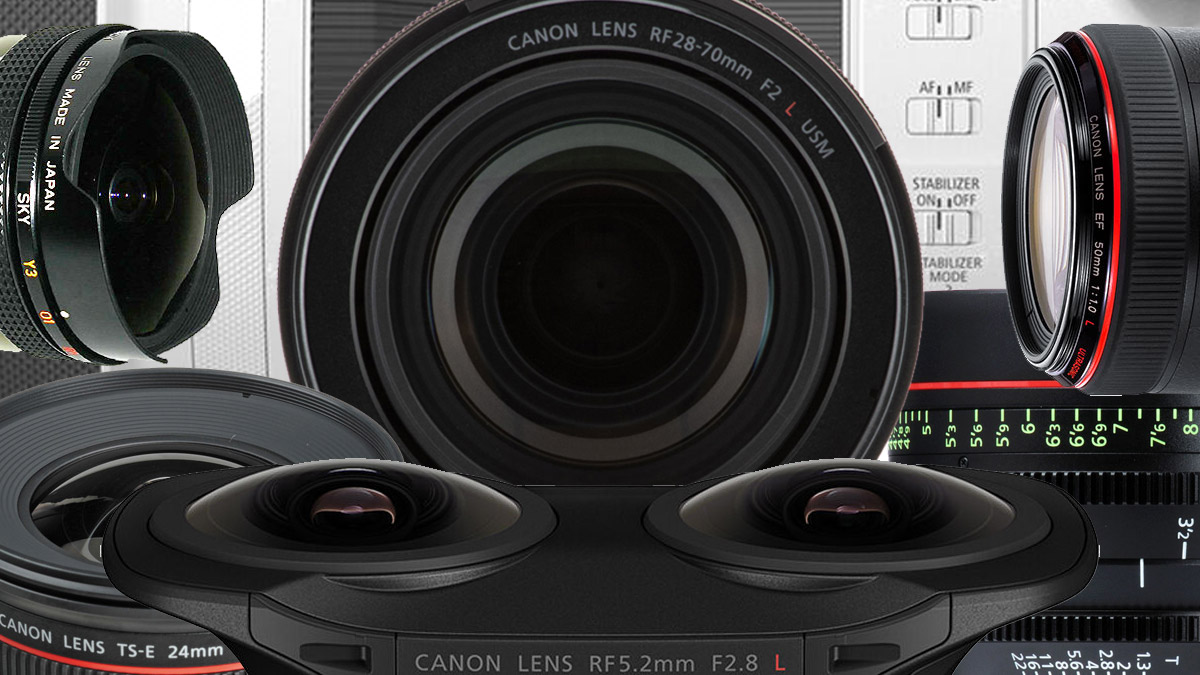
Canon Lens Acronyms and Abbreviations is a long list that spans generations of lens mounts, systems, and eras. These acronyms and abbreviations identify decades of lens evolution, from the manual film era to today's hybrid mirrorless systems.
This ended up being a lot longer than I thought, partly because I decided to add in Cinema.. Bad idea.
Make sure you check out our other Technology articles
Canon Technology Articles


Canon Electronic Mounts (EOS)
In the late 1980s, Canon took one of the biggest gambles in camera history and dumped the manual focus FD mount entirely and went ahead with the EOS (Electro-Optical System).
This bold move was one of the most successful moves in camera history, as the EOS system expanded to include over 108 different models of lenses and extenders, and surpassed 170 million units. It moved Canon from continually chasing Nikon for the professional market to becoming the undisputed leader in Cameras for enthusiasts and professionals.
The EOS umbrella now includes three different actual mounts and two additional mount variations.
EF
The EF mount, short for Electro-Focus, revolutionized Canon's system by introducing fully electronic communication between lens and body, enabling autofocus and aperture control without any mechanical connection. Launched in 1987 with the EOS 650 film SLR, it marked the end of the manual-focus era for Canon. Today, EF lenses remain an incredibly large ecosystem for photographers.
The Canon EF 50mm f/1.8 was one of the first EF lenses that was released. It was announced in March 1987 with the release of the EOS system.

EF-S
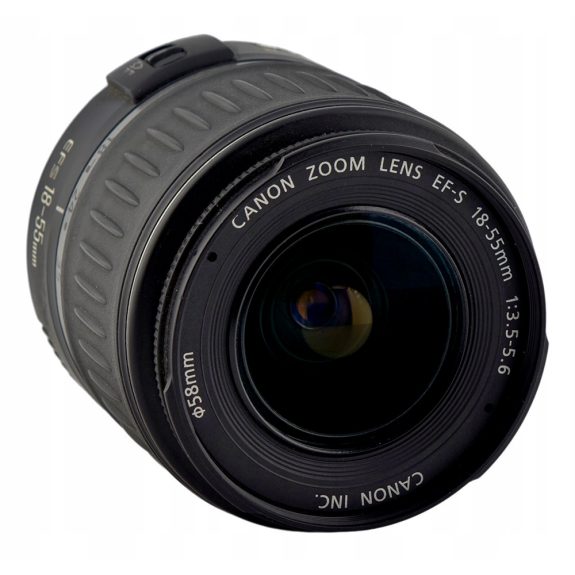
EF-S, denoting “Electro-Focus Short back focus,” optimizes lenses for APS-C sensor DSLRs by projecting a smaller image circle and allowing the lens to have more protruding rear elements to sit closer to the sensor. This allowed for lighter, more compact lens designs and was introduced in 2003 with the EOS 300D (Digital Rebel). Backward compatible with EF lenses on APS-C bodies but physically incompatible with full-frame due to rear element protrusion.
Canon released two EF-S lenses simultaneously in September 2004, the EF-S18-55mm f/3.5-5.6 and the EF-S 17-85mm f/4-5.6 IS USM.
EF-M
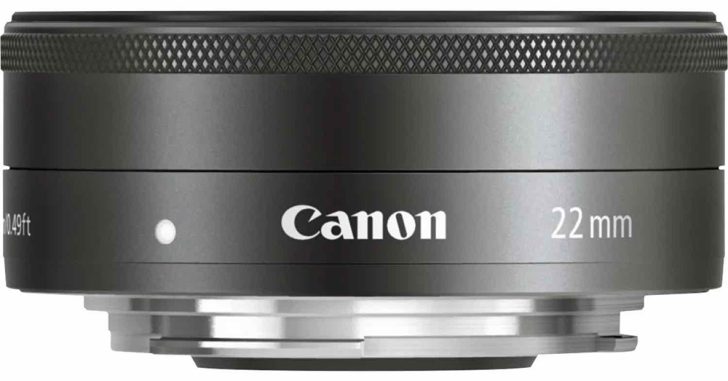
EF-M, an Electro-Focus variant for mirrorless, had a shorter 18mm flange distance, which enabled slimmer camera bodies and smaller lenses while retaining electronic AF and aperture control. EOS-M debuted in 2012 with the original EOS M. The system was quietly discontinued in favor of RF by 2023.
The EF-M 22mm f/2 STM and the EF-M18-55mm f/3.5-5.6 IS STM were originally released in October 2012 with the EOS M, forming the start of the system. The EF-M 22mm f/2 STM was a very small, affordable prime that was well-liked by EOS-M users.
RF
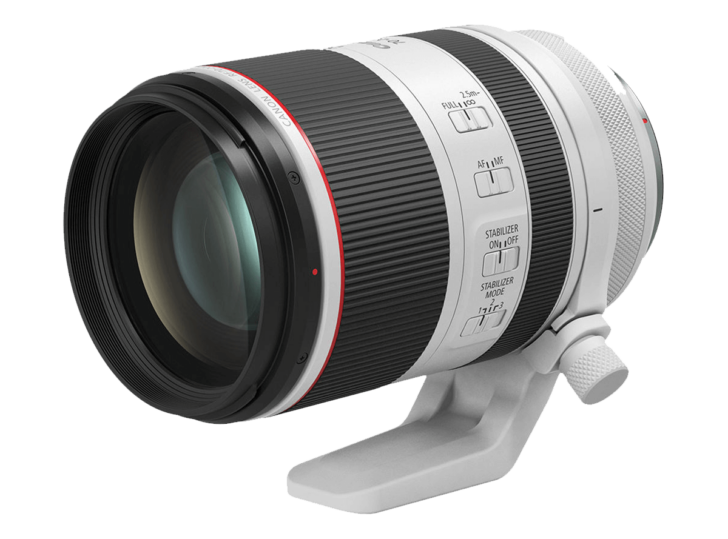
RF, Canon's full-frame mirrorless mount, stands for “Revolutionary Flange,” boasting a 20mm flange distance and wider 54mm throat diameter for larger rear elements. Unveiled in 2018 with the EOS R, it supports faster apertures and creative optics like constant f/2 zooms, with a customizable control ring for intuitive operation.
Backward compatible with EF via adapters. Over 40 RF lenses now exist.
Canon originally launched the RF system with three lenses in September 2018: the Canon RF 24-105 f/4L IS USM, the Canon RF 28-70mm f/2L USM, and the Canon RF 50mm F1.2L USM.
RF-S
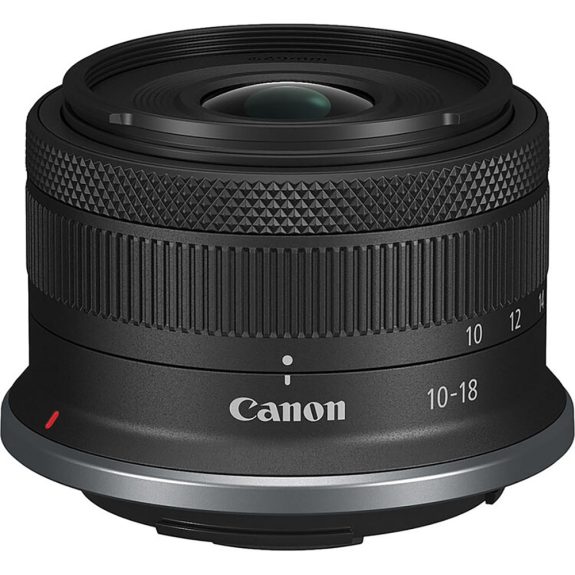
RF-S extends the RF mount to APS-C mirrorless bodies with a smaller image circle, enabling affordable, compact lenses.
There are really only a few RF-S lenses right now – it will remain to be seen if Canon seriously releases RF-S lenses, or decides that users should use the more compact full-frame primes where possible. Other manufacturers, such as Sigma, have stepped up and released RF-S lenses.
The Canon RF-S 18-150mm F3.5-6.3 IS STM and Canon RF-S 18-45mm F4.5-6.3 IS STM were announced in May 2022, with the EOS R10 and EOS R7 APS-C camera bodies.
TS-E
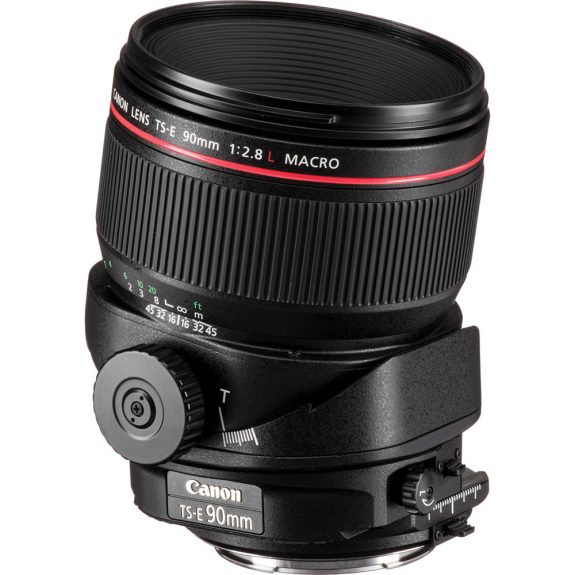
TS-E (Tilt-Shift-Electronic) lenses enable manual tilt and shift movements to manipulate perspective and focus planes, correcting distortion in architecture or creating selective sharpness for miniature effects. They use mechanical knobs for tilt and shift adjustments. TS-E lenses are excellent for landscape, and creative photography. However, they do demand some skill to use effectively.
Canon released a trio of TS-E lenses in April 1991: the TS-E 90mm f/2.8, the TS-E 45mm f/2.8, and the TS-E 24mm f/3.5L.
MP-E
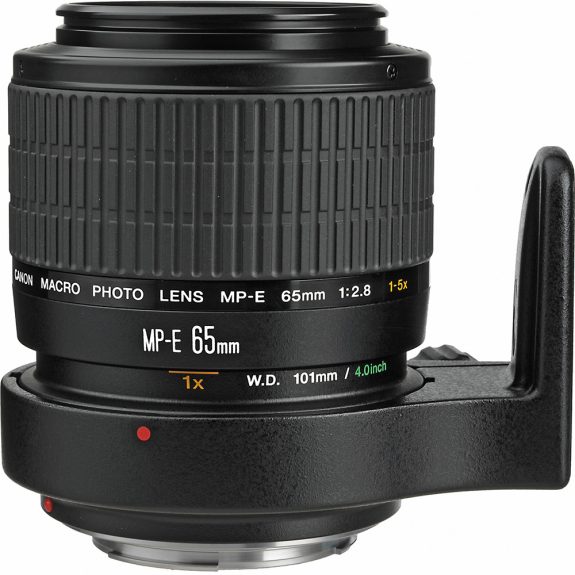
MP-E (Macro Photo Electronic) is Canon's extreme macro series for 1x to 5x magnification, enabling microscopic views of subjects like bug eyes or textures without extension tubes. Introduced in 1999 for EF, it's manual-focus only, requiring a tripod or a rail assembly for stability due to shallow depth and small aperture. The single model targeted specific scientific and artistic niches and demanded excellent technique to master this lens. But it delivered unparalleled close-ups for a lens.
The MP-E 65mm f/2.8 1-5X Macro Photo, launched in September 1999, remains the only MP-E lens that Canon has developed.
Lens Abbreviations
L
L series, denoting “Luxury,” represents Canon's professional-grade lenses with superior optics, weather sealing, and the signature red ring. Canon always meant for the L lineup to be their best, whether it was for super telephotos or normal zooms.
Canon usually threw in their best technology and their best optics at the time into these lenses, and for the most part, Canon's L lenses were without peer (sans wide angles for a while). I remember quite a few Nikon friends marvelling at how instant my Canon 24-70 f/2.L USM would focus.
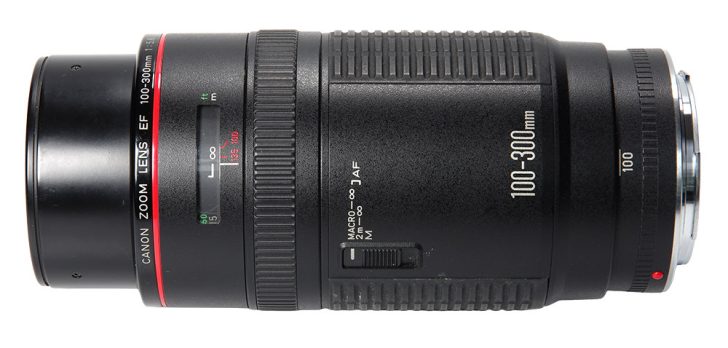
The Canon EF 100-300mm F/5.6L was Canon's first EOS-based L lens, released in June 1987.
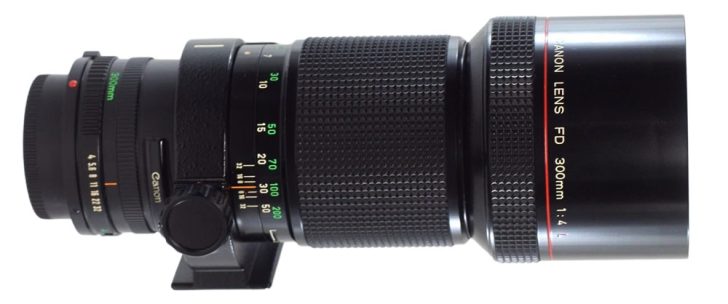
However, we have to go back much further to find Canon's first L series lens, to December 1978, to the release of Canon's FD 300mm f/4L. This was Canon's first lens with Super UD glass elements.
Macro
Macro designates lenses for close-up photography, with flat-field designs for even sharpness, and usually have excellent chromatic aberration suppression and minimize distortion. Macro lenses have opened up entirely different genres of photography and are incredibly well-adapted lenses. Longer macro lenses are also used at times as portrait lenses.
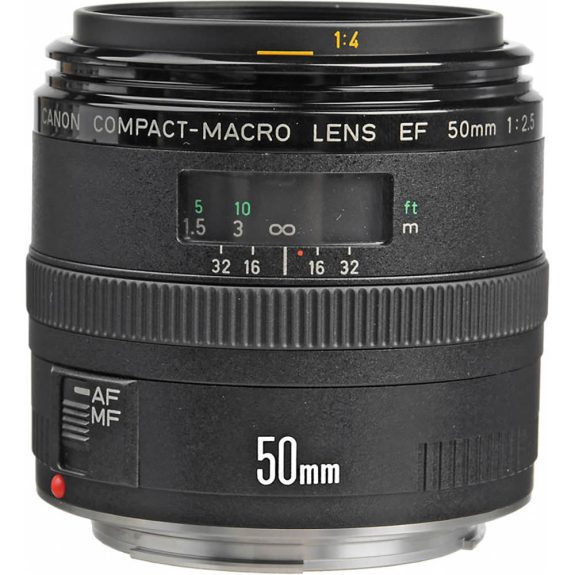
The first modern auto focus Canon EF Macro lens was the EF 50mm f/2.5 Compact Macro released in December 1987. It was only 50% macro, though, and you needed to add what they called their “life-size converter” to make it a full 100% macro
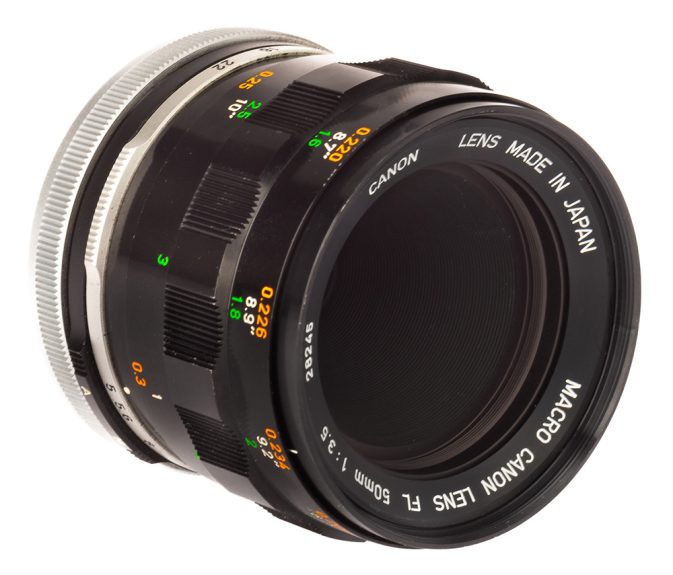
Reaching back into the distant past, Canon's first ever named macro lens was the FL 50mm f/3.5 MACRO from June 1965.
Fisheye
A Fisheye Lens is a type of ultra-wide-angle lens that distorts the scene or subject to create a hemispherical (or wide panoramic) image. It produces images with an effect similar to that when you look through a door’s peephole – warped, circular, and extremely wide.
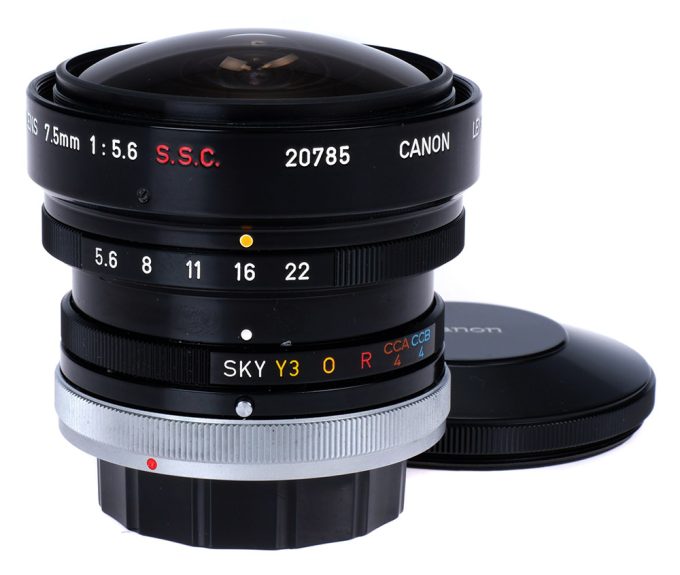
The first Canon lens with the Fisheye designation was the Fisheye FD 7.5mm f/5.6 S.S.C released in February 1973. Oddly enough, the FD fisheyes had the “fisheye” before the mount identifier, something only found with the Fisheyes. I guess Canon thought they were special.
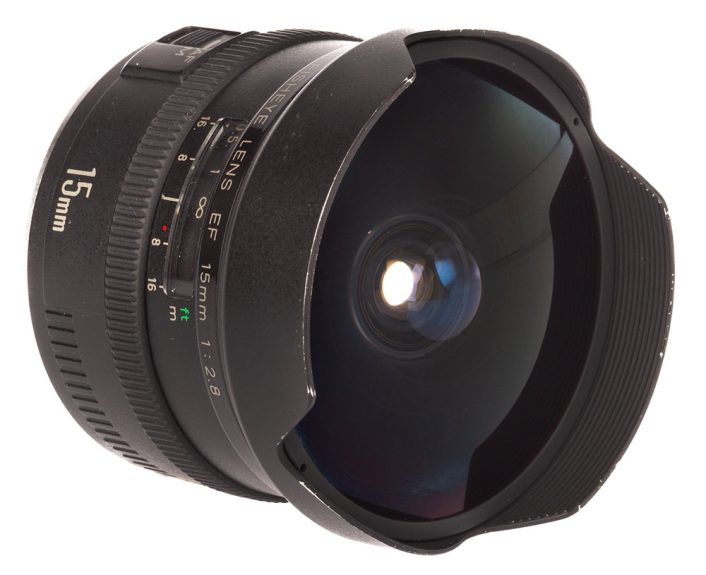
The first modern Fisheye was the Canon EF 15mm f/2.8 Fisheye released in April 1987. Was April the month of fisheyes in Canon's distant past? We must investigate.
Dual (Fisheye)
There are two Dual types of lenses, one is for fisheye optics, and the other features non-fisheye optics. But both types support capturing stereoscopic video using twin elements for 3D and Virtual Reality. These are a relatively more modern lens system for Canon, coming into being in the mirrorless RF era, even though other manufacturers did it much earlier.
The movements to focus both are extremely complex, and I have lost count of how many patents Canon has filed on these lenses. We will certainly see more in the future.
The Canon RF 5.2mm F2.8 L Dual Fisheye Lens was the first Canon dual lens, and it was released in December 2021.

Soft Focus
SF (Soft Focus) applies controlled spherical aberration for a dreamy, diffused effect in portraits, softening edges and adding halos around highlights via an adjustable ring. The only lens that Canon moved an aspherical element in the optical path to vary the spherical aberration amount being generated.
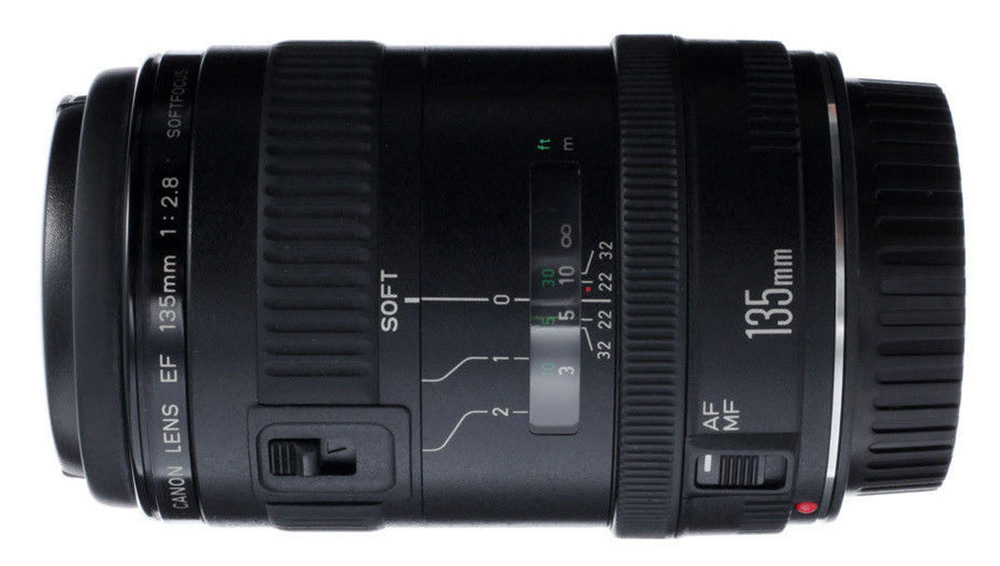
Canon released the EF 135mm f/2.8 Soft Focus way back in October 1987 at the start of the EOS journey and hasn't really returned to it. Now, Canon has gone to another method (DS), so it's unlikely we'll see this used on a lens again.
USM
USM (UltraSonic Motor) drives autofocus with ultrasonic vibrations for speed, torque, and precision. The ring type was the first version of USM, and since then, Canon has implemented various USM motor drives for autofocus.
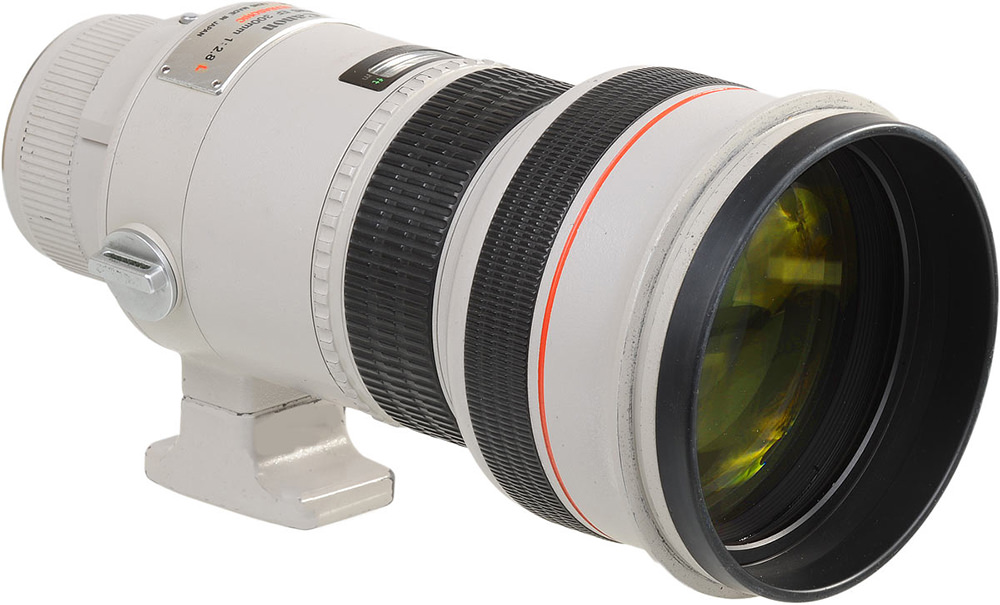
The Canon EF 300mm f/2.8L USM was the first Canon lens with USM, released in November 1987.
STM
STM (Stepper Motor) performs auto focus well with stepper motors. The motor movement is with incremental steps for fairly quiet and smooth operation. Canon brought this in as a low-cost auto focus solution for lenses that were for hybrid cameras for stills and video. Now, STM lenses are the dominant auto focus motor for Canon's consumer lenses.
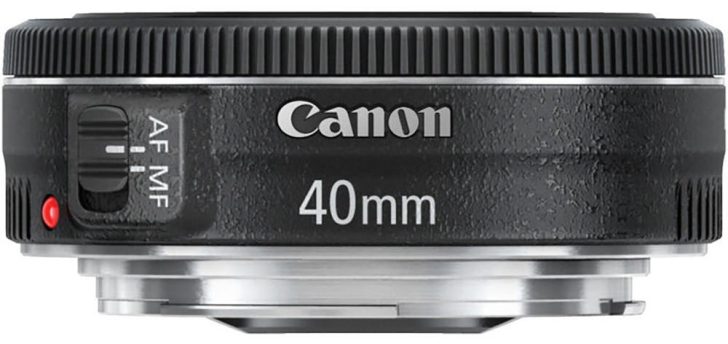
Canon EF-S 18-135mm F3.5-5.6 IS STM and the Canon EF 40mm f/2.8 STM were released in June 2012 as the first lenses with STM motors.
PZ
PZ (Power Zoom) integrates a motor for automated electronic focal length changes, or zoom. These lenses had a motor that would control the focal length on zoom lenses. Canon came out with this surprisingly early in the lifetime of the EF system, but it sat dormant until recently. They experimented with external power zoom attachments, but I don't think they were too successful.
The Canon EF 35-80mm f/4-5.6 PZ was released in March 1990 and is honestly a lens I have never heard of.

Power Zoom has made a comeback with the Canon RF-S 14-30mm f/4-6.3 IS STM PZ, which was just recently released in July 2025.
VCM
VCM stands for Voice Coil Motor, which is a simple type of electric motor that utilises magnets surrounding a coil of wire. Canon has developed a VCM for its lenses, as these types of motors are more efficient at moving heavier objects. Canon also says that it’s super-responsive and offers virtually silent autofocus. Thus, these motors are used for Canon's hybrid professional lenses.
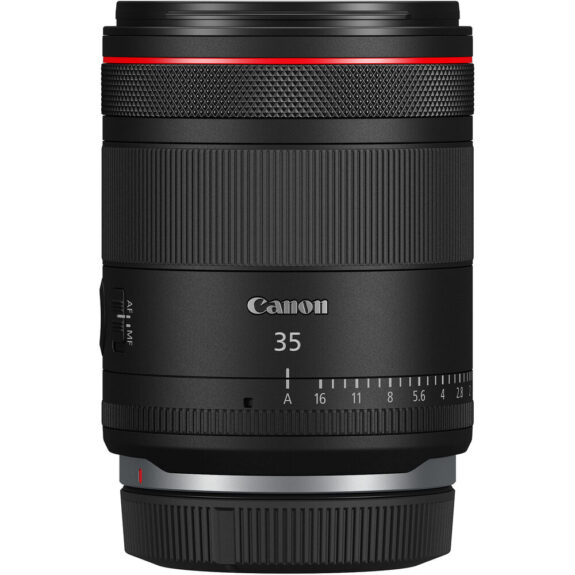
Canon RF 35mm F1.4 L VCM was announced in June 2024 as the first Canon lens with a Voice Coil motor.
Z (Power Zoom)
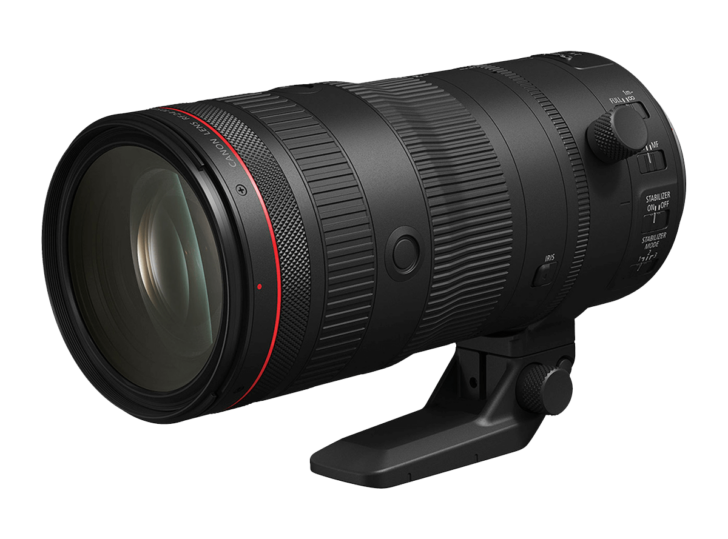
Z indicates Power Zoom compatibility with adapters like PZ-E2, allowing motorized focal adjustments for video with variable speeds and remote control. Unlike PZ, which suggests that the zoom motor is contained within the lens itself, the Z means you have to purchase the zoom adapter. Though the Zoom adapter offers far more functionality, it's expensive.

The Canon RF 24-105mm f/2.8 L IS USM Z Lens was released in November 2023 and was the first lens named with a Z.
In theory, you could argue that the EF-S18-135mm f/3.5-5.6 IS USM was the first one, but it didn't have the Z nomenclature, and since we're talking about abbreviations, the EF-S18-135mm f/3.5-5.6 IS USM will remain sad over the exclusion.
IS
IS (Image Stabilization) uses gyro sensors to shift lens groups, countering camera shake, particularly useful for handheld shooting. The inclusion of IS in camera lenses was a revolution, and now people often state “No IS, no buy” when a lens does not include IS. Now, Image Stabilization has been universally adopted by all the camera manufacturers.
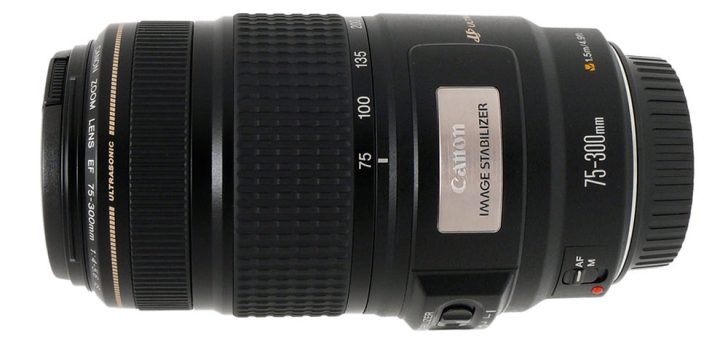
The Canon EF 75-300mm f/4-5.6 IS USM was the world's first interchangeable lens with image stabilization.
DS (Defocus Smoothing)
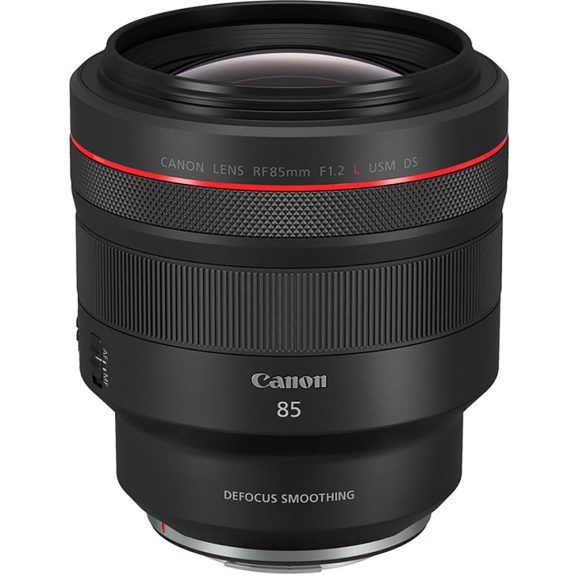
DS (Defocus Smoothing) is Canon's vapor-deposited coating technology that offers a soft and unique defocus rendering effect, in which an originally sharp outline in a defocused image is smoothly blurred. When applied to the lens element surface, the coating structure has the effect of controlling the amount of light passing through the lens and gradually decreasing the light transmittance from the center to the periphery of the lens. Basically, it's great for smooth, creamy bokeh for portraits.
The Canon RF 85mm F1.2 L USM DS was the first Canon lens with a Defocus Smoothing coating. It was released in December 2019
DO (Diffractive Optics)
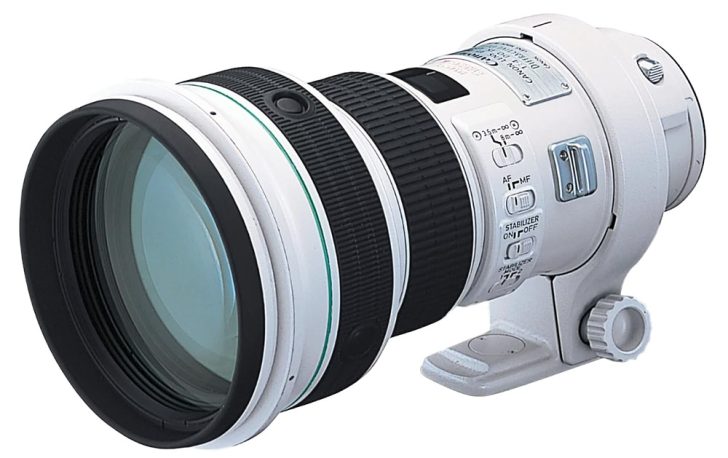
Diffractive Optics (DO) elements use microscopic gratings etched into glass to diffract light, correcting chromatic errors. Unlike refractive lenses, DO elements enable super-telephoto lenses up to 50% shorter than traditional designs. Multi-layer DO stacks gratings to minimize flare and align wavelengths.
The Canon EF 400mm F/4 DO IS USM was the first release in December 2001.
Older Legacy Lenses
FD
FD, or “Full-aperture Direct,” was Canon's manual-focus mount for 35mm SLRs, using a breech-lock mechanism for secure attachment and maximum aperture metering via mechanical coupling. It also featured Canon's first attempts at AE (automatic exposure).
It was fully introduced in 1971 with the F-1, as it replaced the FL mount. The FD mount was officially over when Canon announced the EOS system in 1987. Now that Canon has mirrorless cameras, you can use adapters to try out the older FD lenses.
The “New FD” mount came out in 1979 and simplified the mount and removed the breach lock assembly. This made it much easier to remove and replace a lens on the camera. Canon re-released around 25 lenses in the second half of 1979 with the new mounting mechanism.
According to Canon Camera Museum, the first FD lens was the Canon FD 135mm f/3.5 released even before the F-1 in July 1970, while the F-1 was released in March 1971. So this is a bit of an oddity.

The more commonly held lenses that came out with the F-1, though, included the FD 50mm f/1.4.

R
R was Canon's initial SLR mount, a bayonet design with 42mm flange distance for manual-focus 35mm cameras; the mount relied on stop-down metering. Debuting in 1959 with the Canonflex, it transitioned Canon from rangefinders to SLRs. To achieve better aperture metering, Canon moved to the FL mount.
This is not to be confused with the modern RF mount.
One of the first Canon R mount lenses was the Canon R 50mm f/1.8 released in May 1959.

FL
FL, or “Full-aperture Linkage,” was Canon's early manual-focus mount for 35mm SLRs, maintaining the 42mm flange distance of R but adding mechanical coupling for aperture metering on compatible bodies. Introduced in 1964 with the Canon FX, it supported a growing lens lineup, with basic coatings to curb flare.
One of the first FL lenses was the FL 35mm F/2.5 in March 1964.

SSC
SSC (Super Spectra Coating) is a multi-layer anti-reflective treatment on FD lenses, reducing flare and ghosting for higher contrast and color accuracy in backlit scenes.
One of the first marked lenses with SSC was the Canon FD 55mm F/1.2, released in March 1971, as you can see it on the lens itself.

However, the first named lens with S.S.C was the previously mentioned Fisheye FD 7.5mm f/5.6 S.S.C.

SC
SC (Spectra Coating) is Canon's single-layer anti-reflective coating for early FD lenses, minimizing reflections to improve contrast and reduce flare in general photography. Introduced in the early 70's with FD, it targeted budget models before SSC's multi-layer upgrade.
SC was most likely on lenses before this one, but never identified it on the lens. The first lens I could find with S.C. markings was the FD 28mm f/3.5 S.C. released in March 1973. There may be earlier ones, but blame the Canon camera museum for this.

AL
AL was used in the FD days to show that the lens has an aspherical element, thus called an Aspherical Lens (AL). Canon originally used ground aspherical lenses and, since then, has developed a total of 4 different methods of creating aspherical elements.
The first one was the FD 55mm f/1.2 AL released in March 1971.

Cinema Lenses
CN / CN-E
CN-E designates Canon's Cinema EOS lenses, optimized for professional video with consistent T-stops for accurate exposure, geared rings for follow-focus, and minimal focus breathing.
The CN-E30-300mm T2.95-3.7 L S/SP was released in March 2012.
CN-R
CN-R extends Cinema EOS primes to the RF mount, providing full-frame coverage, Cinema-based T-stops, and manual controls for video rigs.
The CN-R 85mm T1.3 L F was released in January 2024 in conjunction with the 24mm, 35mm, and 50mm focal lengths. Essentially, these were converted from the CN-E mount.

S and SP
S in CN-E denotes Super 35 sensor coverage with EF mount for EOS compatibility, while the SP denotes Super 35 coverage with PL mount. This is because Canon usually has two versions of its cinema lenses, one for the EF mount and the other for the cine standard PL mount.
The first lens I could find that used the S or SP was the CN-E 30-300mm T2.95-3.7 L S/SP released in March 2012.

KAS S
KAS S (Compact Servo System) labels mid-range CN-E zooms with integrated servo for electronic zoom/focus, lightweight for handheld cinema. How they came up with KAS S is a mystery to me but it does look a little impressive on the lens name.
The CN7 x 17 KAS S/E1 / CN7 x 17 KAS S/P1 was the first lens of this type and was released in August 2014. As you can see by the name, the “KAS S” overrides the single “S”, as it now uses E1 and P1 to designate the mount. To make life complicated, I suppose.

E1 and P1
E1 specifies EF-mount configuration in CINE-SERVO lenses, while P1 indicates PL-mount in CINE-SERVO lenses and KAS S lenses. I presume they did this because they absolutely wanted to name the servo lenses KAS S, and having S or SP in that name would be confusing. Yes, I know they could have dropped the second S from KAS S, but I don't make these decisions.
The CN7 x 17 KAS S/E1 / CN7 x 17 KAS S/P1 was the first lens of this type and was released in August 2014.
F and FP
These letters identify if the lens provides full-frame image circle coverage. The difference between simply F and FP is that the P, like in other samples, identifies the PL mount version.
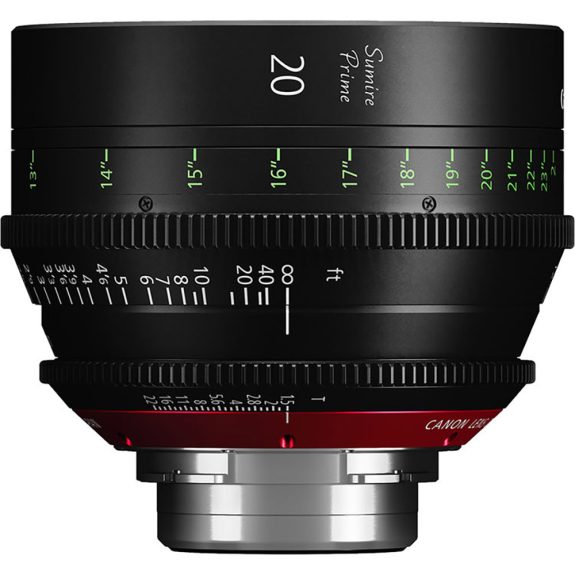
As far as I can tell, this started with the Sumire Prime lenses around April 2019, with the announcement of 7 prime lenses, including this one, the Canon CN-E20mm T1.5 FP X.
X
Apparently, this shows up with some of the Cini lenses, particularly the aforementioned Sumire primes, and means an interchangeable mount. Users can take the EF version or the PL version into Canon and get the mount swapped.
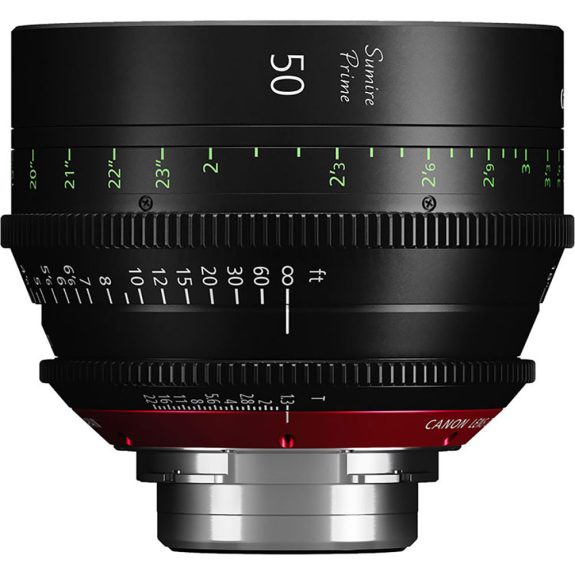
This started with the Sumire Prime lenses announced in April 2019, and included this prime, the CN-E50mm T1.3 FP X.
T
F-stop is a theoretical measurement of a lens's aperture based on focal length and the physical size of the opening. Usually, we see that with normal photograph lenses.
However, T-stop is a precise, tested measurement of the actual amount of light transmitted through the lens to the sensor.
All cinema lenses are listed with T stops and not F-stops.
CINE-SERVO
CINE-SERVO combines cinema zoom with servo drive for electronic zoom, iris, and focus, removable for rig integration in broadcast and film. These lenses are atypically big and expensive. Certainly way out of my pay grade.
I think the Canon CINE-SERVO 50-1000mm T5.0-T8.9 Lens was the first CINI-SERVO named lens developed by Canon in October 2014. Prior lenses with built-in servos were called KAS S, which were smaller lenses. If this isn't the first, it's certainly the coolest.





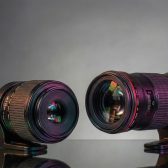

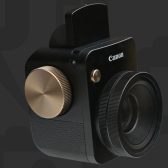

"USM" can mean several different things:
* Ring USM = Powerful Ultrasonic Motor, most useful when there's a fair bit of glass to move and you want to move it quickly, was pretty standard on most higher-end Canon lenses for a long time. Still used in RF lenses.
* Micro USM and Micro USM II = small and lower end USM motors, not much used now. The II is a shrunk version of the original.
* Nano USM = Linear Motor, the best current option on many higher-end lenses, two may be present, or can be combined with a VCM motor, or just used alone.
Really?
Dreamed up by the marketing drones not the engineers 🤪 🤣