

When you purchase through links on our site, we may earn an affiliate commission. Here's how it works. |
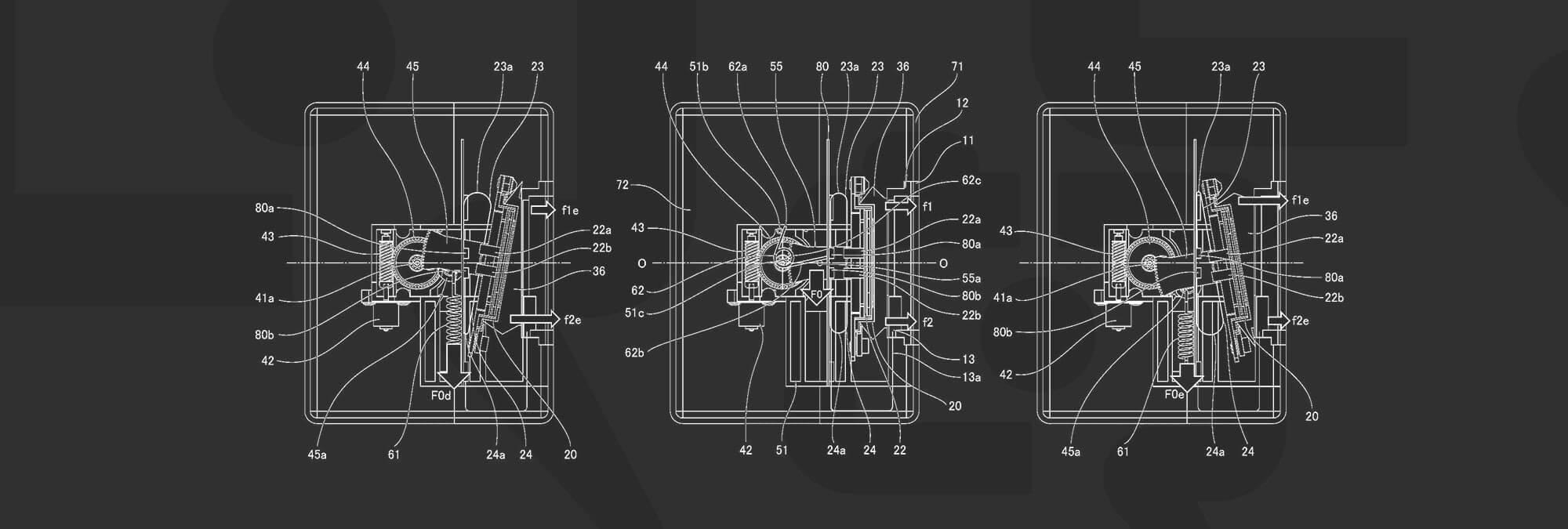
Canon has been exploring quite a bit of methods of doing tilt in a more automated fashion, from having the lens electronically controlled to this patent application (2024-057829) that has the tilt movement controlled inside the camera itself.
Canon in this patent demonstrates a technique that allows them to tilt the sensor while keeping the space required for the mechanism relatively small and compact. According to Canon;
It is an object of the present invention to provide a camera device that can suppress the influence of wiring on sensor tilt drive while suppressing the increase in size of the device.
Will this end up in a camera? To be honest it would be cool for a stills camera to have this. You could then turn any lens you wanted into a tilt lens, and I'm sure the same means could be used for shifting as well. It should be noted that Canon shows this off with a interchangeable lens camera body, but not what appears to be an actual camera. However, it's been done before where Canon shows off a camera as a nondescript box in a patent application.
But before we all await Canon's first large format camera entry – there's a good chance that this is primarily for security and surveillance cameras. The ability to tilt the plane of focus would allow for a much deeper depth of field. For instance, if the security camera was pointing down a sidewalk, it could conceivably get faces in focus from close and far distances away from the camera, even if the lens was quite fast. If you don't use tilt, then you have a much narrower depth of field where faces would be in focus. Not being in focus would dramatically impair facial recognition, etc.
Don't blame me (or Canon) for this – it's just the way the world is going is these days, whether we like it or not.
As with all patent applications, this is a peek into Canon's research. It may never end up in an actual patent or a product.
Japan Patent Application 2024-057829






That said, maybe an APS-C camera could get some shift when used with FF lenses...
But the R6II and R3 lack that feature, which makes me think it's much harder to do on FF, very likely due to the image circle issue you mention.
yes, APS-C based sensor size would also allow for more shifting.
but there was no mention of a shift, only tilt.
I personally would like shift more than tilt if they could do it.
Tilt would be no problem but the angle of view might be smaller.
I love tilt photography and would love this feature in a camera body.
In the patent application, sure. But do you read your own copy?
emphasis added.