

When you purchase through links on our site, we may earn an affiliate commission. Here's how it works. |
In this patent application (2024-043481), Canon looks to improve the molded glass aspherical lens resin. According to Canon, the resins usually have a more difficult time with high humidity, as the optical performance changes with humidity. But if they create a resin that resists high humidity, then it has a more difficult time bonding to the glass element.
So this patent application is looking at improving the composite resin elements in all environments. I could see this being used in our lenses, but also very much in security cameras that have to operate in all weather conditions.
As Canon explains in perfectly readable machine-translated patent-speak;
Since the cured products of the resin compositions disclosed in Patent Documents 1 and 2 have a high coefficient of water absorption expansion, there is a problem that, for example, the optical performance tends to change in a high humidity environment. In addition, there is a problem that materials with a low water absorption expansion coefficient do not have sufficient adhesion to a transparent substrate.
And for our amusement, the embodiment of a lens including such an element is mounted on a DSLR. Of course, that's just symbolic for a camera and has no bearing on the patent itself but I find it highly amusing that Canon is still using old images for patent embodiments.
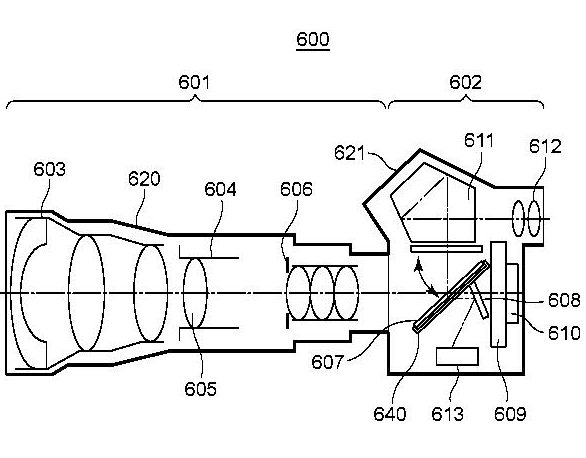
Like really Canon, you don't have an up-to-date image floating around there?
All in all, anything that Canon can do to improve the reliability of our lenses in all weather conditions is a good thing. But it does bring a point – if you are going into a high-humidity environment, take care of your lenses. Not only apparently can optical performance suffer, but no one wants mold growing. Considering my average daily humidity here floats around 80% it is certainly something I can relate to.
As with all patents, information that we are talking about may never end up in a product – and in a case like this, we'd never know it either. Our lenses would simply just get better.
Japan Patent Application 2024-043481




1 comment