

When you purchase through links on our site, we may earn an affiliate commission. Here's how it works. |
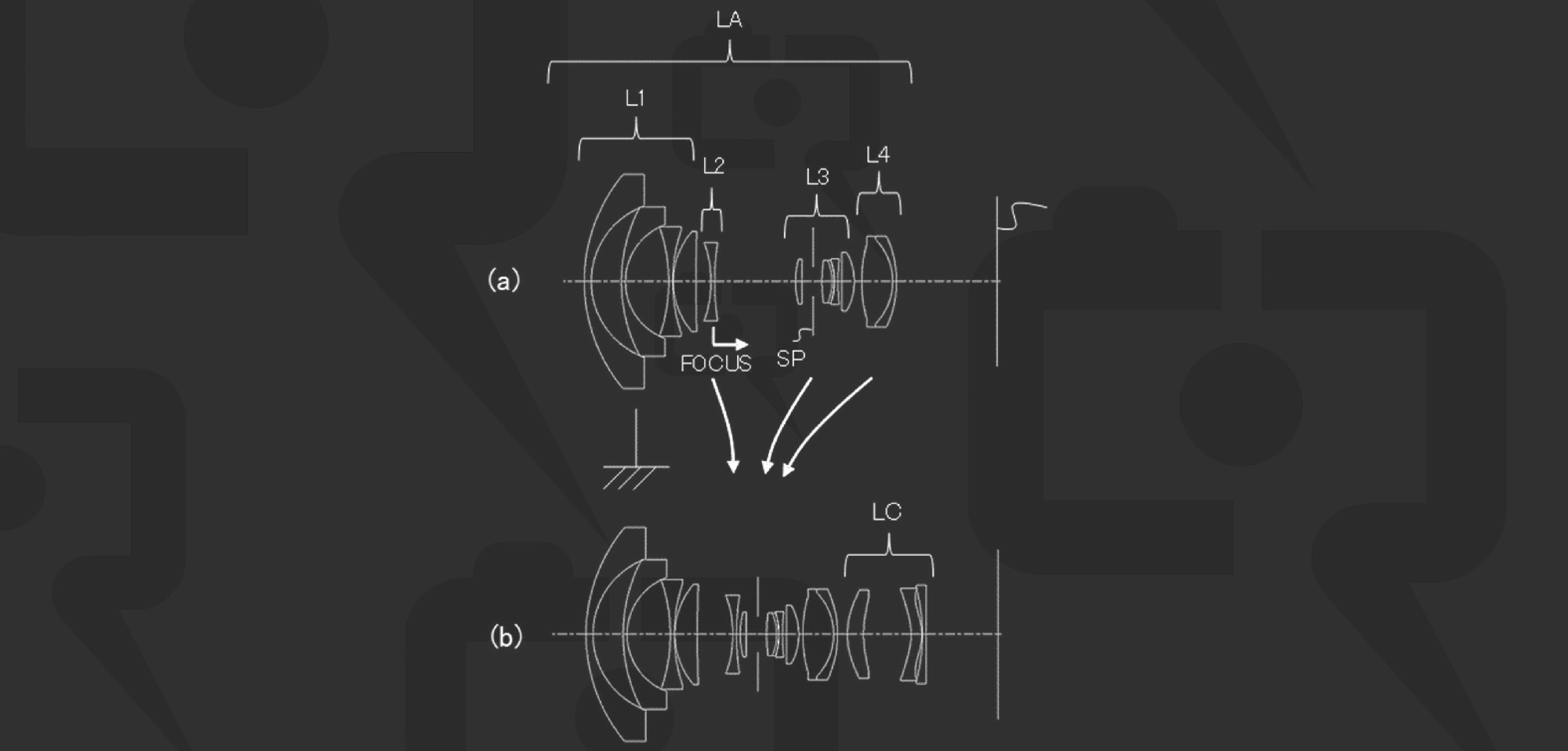
This is an interesting patent application (2025-012993) showing a strange lens configuration.
The embodiments show a potential RF fish eye zoom, even though that is not the focus of the patent application.
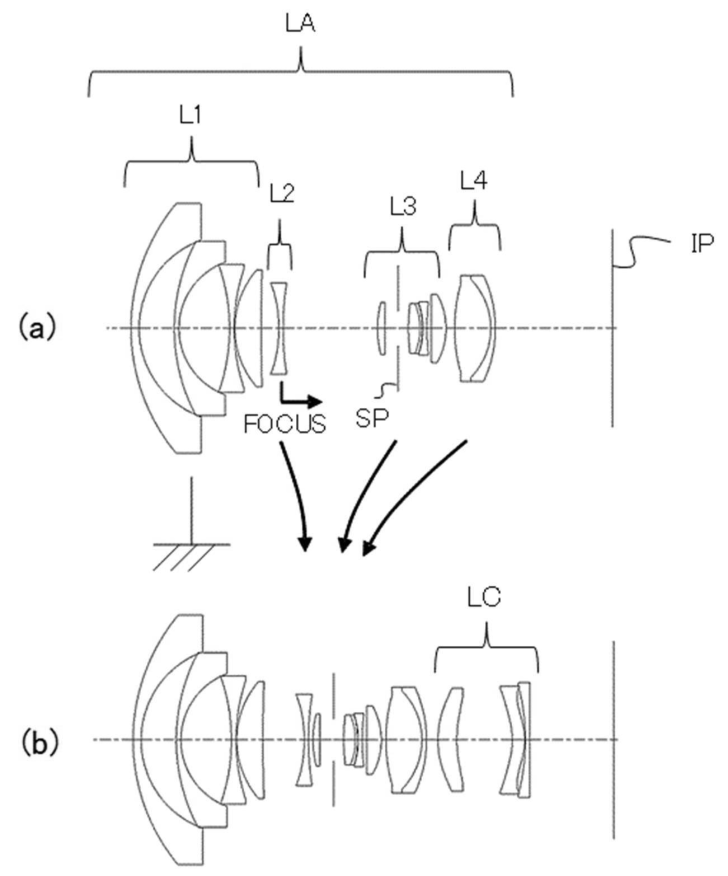
By inserting a lens grouping identified as (LC) into the lens, Canon is able to reduce the distortion. For this to work, seemingly even for a zoom fisheye lens, once the LC group is “snapped” into place, the lens acts as a prime focal lens. I'm going to call these lenses by the zoom or primary focal length(s) and add in “LC” just because I'm writing this and I'm allowed to.
This entire patent application sounds more akin to a theoretical thought experiment, but you know, stranger things have happened in Canon Land, so here we are.
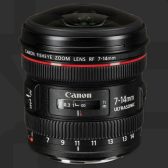
Canon RF 8-14mm F4 Fisheye LC
This is a Canon 8-14mm fisheye that, when the LC section snaps into place, you get a 15mm F4 prime out of it.
| Wide | Middle | Telephoto | With LC | |
|---|---|---|---|---|
| Focal length | 8.25 | 12.83 | 15.48 | 15.41 |
| F-Number | 4.12 | 4.12 | 4.12 | 4.12 |
| Half Angle (°) | 53.50 | 52.57 | 54.42 | 54.54 |
| Image Height | 11.15 | 16.77 | 21.64 | 21.64 |
| Lens Length | 105.00 | 105.00 | 105.00 | 105.00 |
| Back Focus | 25.50 | 35.53 | 40.85 | 18.25 |
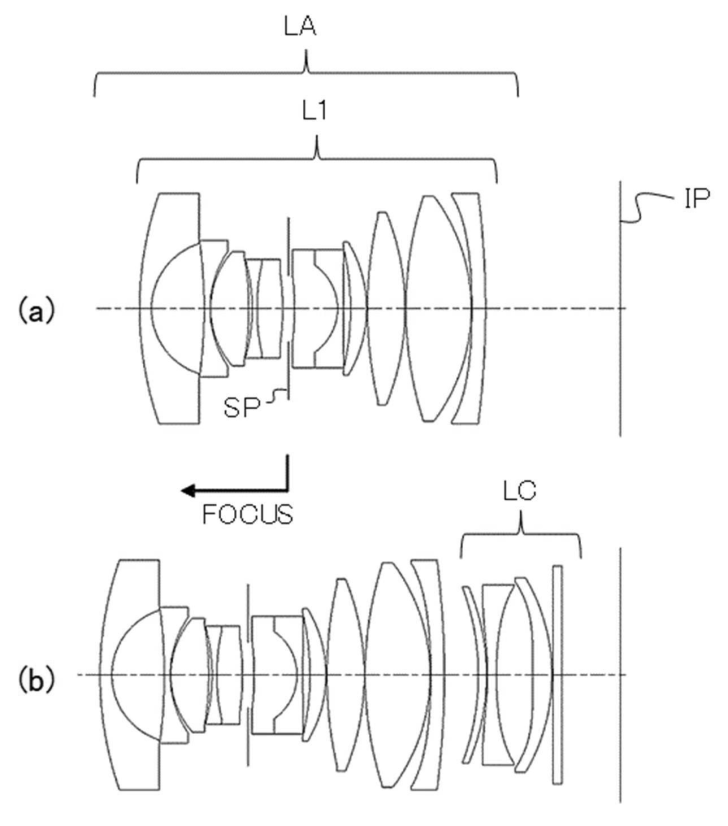
Canon RF 16mm F2.8 LC
This one is interesting, because there is no mention of the distortion, but by adding in the LC unit you get a different prime lens.
| Normal | With LC | |
|---|---|---|
| Focal length | 16.11 | 18.69 |
| F-Number | 2.50 | 2.90 |
| Half angle of view (°) | 53.33 | 49.17 |
| Image height | 21.64 | 21.64 |
| Lens length | 81.19 | 88.32 |
| Back Focus Distance | 22.76 | 9.91 |
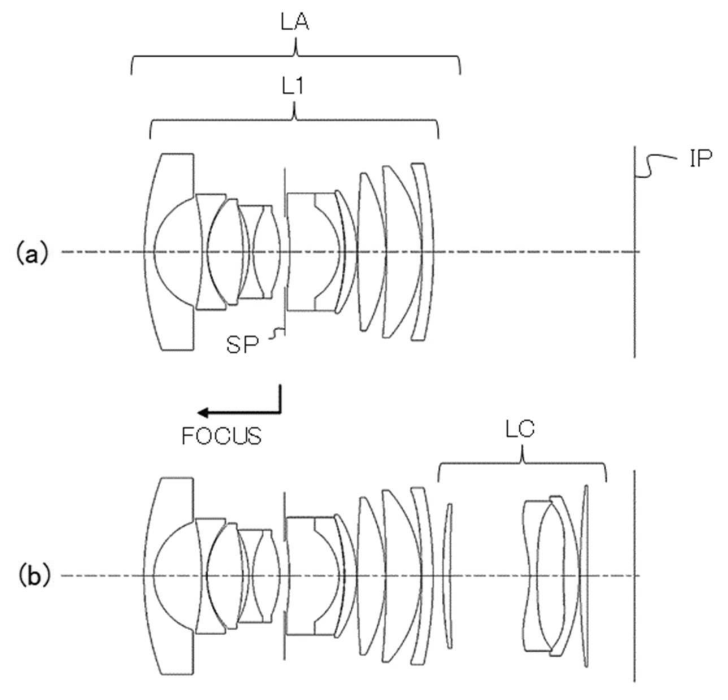
Canon EF 16mm F2.8 LC
This one is curious because it could have been a DSLR lens that was converted to be mirrorless.
| Normal | With LC | |
|---|---|---|
| Focal length | 17.67 | 16.71 |
| F-Number | 2.50 | 2.36 |
| Half angle of view (°) | 50.76 | 52.32 |
| Image height | 21.64 | 21.64 |
| Lens length | 100.05 | 100.06 |
| Back Focus Distance | 41.09 | 9.61 |
It's a curious patent application, I'm not sure I see the point of it, I'd like to hear your thoughts on it. One idea was that Canon could make two lenses for separate markets and price points with basically one optical design. While I see that for the prime lenses, I don't know the reason for the fisheye zoom conversion.
As with all patent applications, it's a look into Canon's research.
Source: Japan Patent Application 2025-012993




What you’ve actually described seems pointless.
Addding a drop in element that allows this sweet little lens to become a 16mm rectilinear prime really adds a lot more to it's versatility.