When you purchase through links on our site, we may earn an affiliate commission. Here's how it works. |
Looks good, not that I understand it.
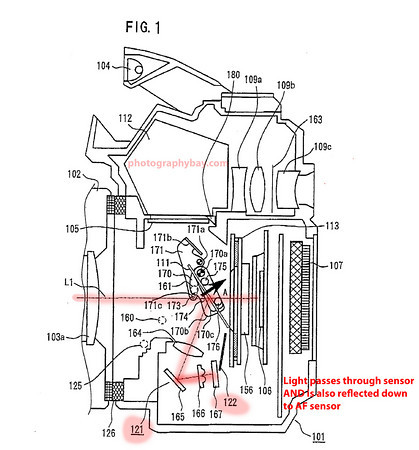
From Engadget via Photography Bay: http://www.photographybay.com/…..
cr


When you purchase through links on our site, we may earn an affiliate commission. Here's how it works. |
Looks good, not that I understand it.
From Engadget via Photography Bay: http://www.photographybay.com/…..
cr

You must be logged in to post a comment.


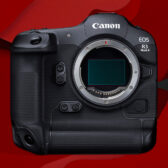
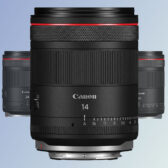
A partially transparent mirror seems a lot like the old 1960’s Canon Pellix SLR.
The light sensitivity was reduced somewhat, and the viewfinder was not as bright as wanted, and it went away quickly. I am always on the lookout for one of these for my collection, but there were few produced, and they are uncommon.
It seems awfully complex.
I foolishly didn’t pickup a mint Pellix when I had the chance. I’m still looking too.
It’s clear that Canon is developing a faster AF system for LiveView (they already stated that months ago at Photokina) as well as improving Movie mode, because they know that those features will have Huge future and demand
LiveView has enormous potential.
Sometimes is impossible to use the viewfinder, or just much easier to use LiveView.
Also the information displayed in LiveView can be a lot more than in the Viewfinder.
Each way to frame and shoot has its own advantages, so they both MUST be available considering the customers have a very wide range of different needs / tasks / jobs
Thinking that a feature “should not” be included in a DSLR just because “it does not belong to the DSLR world” or one doesn’t use it, it’s a mistake due to having somewhat narrow perspective of other people’s needs, the trends of technology, the demand and the companies’ business.
This improvement indeed will help a lot the Movie/Video mode in DSLRs, wich is also going to be improved and implemented in future DSLRs, despite some people like it or not.
(if you don’t like, just don’t use the feature. It’s that simple. And if you don’t want to pay “more”, don’t worry, it won’t make much difference to today’s DSLRs, so the “extra” price won’t show up)
LOT OF CUSTOMERS, both Amateurs and Professionals (Photographers and Videographers) can get lot of advantages of such implementations, wich will offer a level of quality and features that are not still available under several thousands dollars (and some are even inexistant yet)
So, GREAT NEWS that Canon is working on it. Hope that Nikon and other companies do the same.
The more competition, the faster and better systems development.
There are enormous creative possibilites with live-view, but only with an articulating LCD. I’d give up the viewfinder if I could just have a 2.5″ or 2.7″ articulating LCD. When I first got my Nikon 5400 (mail order as nobody in Alaska carried it at the time), I was overwhelmed by the creative power I now had. I could compose and shoot from right at ground level all the way to 12 feet off the ground when I used my monopod. With a standard viewfinder on my XSI, I’m limited to a 2 foot space with my old back and hip where I can reasonably bend down to look through the viewfinder. My “Fix” has been to use an ultrawide (the 10-22 USM) and just point the camera, then fix the composition with cropping. Thank god for megapixels.
Hey, CANON… don’t let Sony beat you on this one, GIVE ME AN ARTICULATING LCD!!!!!
I like it when Canon innovates. Hopefully, we’ll see more. But I think live view AF needs to go hand in hand with a good OLED screen (to improve visibility in daylight).
Nice
looks like the mirror flicks back rather than flicking up
so no more mirror shaving for FF in the future
nevermind my mirror shaving comment
the pentaprism+flash setup looks like a xxD anyway
so no FF here :(
unless Canon decides to give their FF a flash ;)
well, would be TERRIBLE to have this feature only in an APS-C sensor camera and Not in a FF camera….
I think it wouldn’t make sense.
In case of the FF camera bodies, I supose Canon would make them a bit bigger to get enough space to put it inside.
Otherwhise it would be ridiculous to have faster LiveView AF in xxD than in xD DSLRs
I doubt this will be a pro level camera option. Look at the DxO measures and how companies struggle for a few digits iso sensitivity. By using a partially reflecting mirror they would have to give up some good part of the light for the AF metering. And it does need light – as you know the AF becomes slow on slower lenses.
UNLESS of course the partially reflecting surface swings upwards when taking a picture, like the mirror does right now. That would be a nice solution. It could stay down for video I guess, losing some light in favor of a video AF.
Of course, I could not image for Nikon not to have such a patent?! :-p
> This improvement indeed will help a lot the Movie/Video mode in DSLRs, wich is also going to be improved and implemented in future DSLRs, despite some people like it or not.
But all the time DSLRs use CMOS sensors it’s a half-baked implementation. Unless they can figure some way to prevent image degradation on movement.
This is how AF works at present: a partially reflecting main mirror reflects light to the viewfinder and any light passing through reflects off a sub-mirror to the AF sensor. The change just seems to be that the light that was going to the viewfinder now goes to the AF sensor and the light that was passing through and going to the AF sensor now goes to the main sensor for live view. If we assume that the light was split evenly before (and that is a big assumption, I’ll admit) then there should be no real difference in AF performance. If it the viewfinder got the majority of the light, then the AF performance will improve, but the live view image might have a bit more noise. The mirror can still swing up when you take the shot, so the noise will not be present in the final image.
Of course, if you want to make videos in low light, then you can’t have the mirror clattering up and down and you’ll either want to use contrast detection AF or jack up your ISO and live with the noise.
ISO sensitivity as measured by DXO has absolutely NO RELATION whatsoever to actual sensor sensitivity. DXO measures ISO by determining the point where highlights start to clip. The standard way is spot meter off an 18% gray area so that the image luminance level is set at 50% of the final image file. Andy Westlake has the explanation here:
http://forums.dpreview.com/forums/read.asp?forum=1032&message=30685499
In fact, DXO results have often been found to disagree with real world photos. For example, performance of Canon 5D2 vs 1Ds3 (latter in reality has better dynamic range) or performance of D90 vs D300 (noise level at high ISO). I won’t give a hoot about so-called scientific results if they have no bearing whatsoever on how real world photos turn out. Of course, you can always use your camera SOLELY to shoot brick walls, test charts, color charts etc etc. ;)
Oh, thanks for the info, Gusto. Didn’t know those details about the DxO measurements. So what you say is, the D90 is actually not as much better than the D300 as the DxO ISO sensitivity suggests? If I remember correctly, the dynamic range is better as well though?!
Despite of this (possible) new system, companies are working to improve contrast detection AF.
So, hopefully we could get both systems, and if contrast detection AF is the only choice for a specific situation, it might be faster than the actual one.
then live view mode, the coms will only get half of the light as well? new dslr’s iso performance will be damned
I use live view for product photography, and it works great. The display is too dime to really make use of it outdoors.
The full text of the patent can be found at http://www.freepatentsonline.com/y2008/0316353.html
You can join (Free) and also view the 25 pages of diagrams.
It does read like a serious patent, and you get the feeling that it has been tested in the lab. How long it might take to get to production( if ever) depends on how much is already developed and designed.
The patent is pretty complex, and provides two different implementations defining movement of the mirrors. The net result is
1. conventional slr taking with mirror out of the way
2. Imaging thru the mirror with high speed autofocus available. This would allow autofocus while using liveview, taking movies, and allows ultra high speed photography for sports. Some light loss thru the mirror, and probably some image degradation due to imperfections in the resin mirror.
3. I noticed that a eyepiece shutter was also mentioned. That would be a nice feature, it may be that its required due to the mirror configuration.
Ed
I think, that different mirror assembly can allow mounting EF-S lenses on fullframe body.
Thank you. You’re statement is completely true, and hopefully will help all of us put our own technological desires in perspective.
cialis en ligne! Livraison discrete et rapide. cialis canada en ligne Acheter de Cialis sur internet. :] cialis au rabais au Canada
Merci pour ce post vraiment intèressant