


When you purchase through links on our site, we may earn an affiliate commission. Here’s how it works. |
This started as the featured Friday article and became a full-featured article on the PowerShot V1. So here we are.
With the release of the PowerShot V1, we are rejoicing in the demise of PowerShot scalpers worldwide. I have nothing against people making a dollar, but the prices are ridiculous.
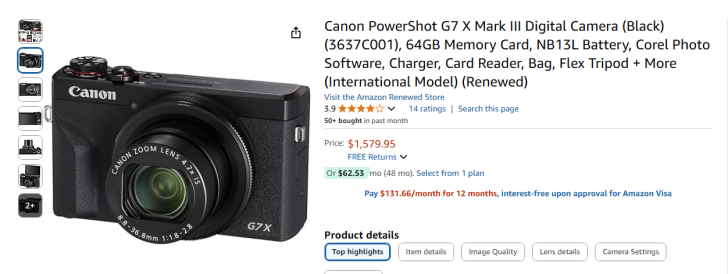
This hurts Canon’s brand, so getting this stuff gone this year will be good. This even expanded into the EOS-M, perhaps not as much in the USA, but in other regions, where an EOS-M camera sells for higher than Sony used full frame cameras.
I looked around for a little M200 to use as a webcam, but that’s simply not happening. I kid you not, EOS-M 100s are more expensive than Sony A7s. M200’s? I may as well start looking for unicorns. As much as I don’t like Sony, I find all this a little hilarious.
Is Missing an External EVF a Critical Oversight?
With the PowerShot V1 solidly being sold as the flagship PowerShot camera, there is one thing that it’s missing that Canon should consider, especially for older people (me) who like an EVF more than the back LCD for photography. The PowerShot V1 needs this.
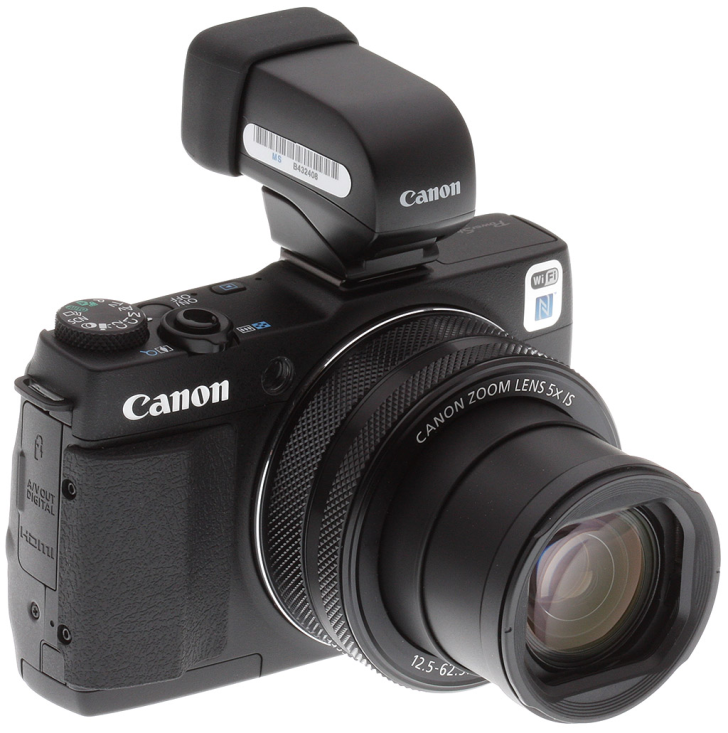
While the EVF-DC1 is out of production, Canon would make an OLED with a faster refresh rate, articulating EVF, making it a better-featured accessory. Of course, I’m assuming that Canon has video outputs on its new accessory hot shoe, but considering that feature existed in the first version of that hot shoe (on the PowerShots and EOS-M cameras), I would give it a low chance that it’s not on the newer accessory shoe that first appeared on the RF mount.
We have seen Canon patent mirrorless camera tilting EVF, but nothing recent regarding externally attached EVFs. While this could be a problem if they are looking at advancing EVFs beyond the ECF-DC1, they could simply reuse the same IP for a new one.
Why Doesn’t the PowerShot V1 Have an EVF?
I suspect the built-in EVF didn’t make it into the PowerShot V1 because of all the cooling vents. Who wants hot air to blow into their eyes when they hold the camera to their face? That doesn’t sound like a pleasant experience.
However, with an articulating attachable EVF, that problem disappears somewhat, as the EVF is generally higher and further away from the camera body than an attached EVF.
This would also lead to cameras of the RF line being able to use an EVF, such as smaller M6 or M200-styled RF cameras that I want to see in the RF lineup. Also, there are times when a flip-up EVF, even on a camera with a viewfinder, is just useful.
Canon Could Improve External EVF and Flash Interoperability At the Same Time
Canon could also simplify my life by allowing an off-camera shoe cord to pass through video and having a hot shoe on top of the EVF, similar to the Fuji EVF.
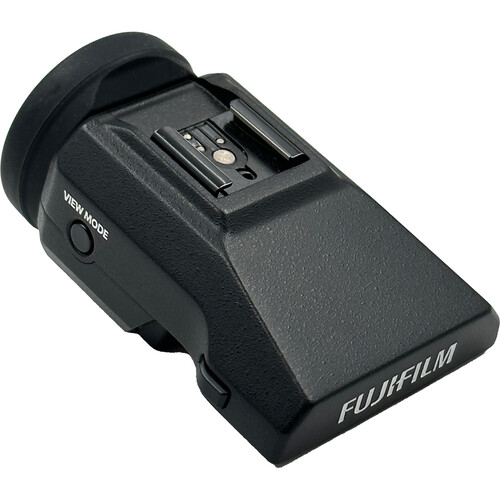
This was one of my annoyances with the EOS-M M6 Mark II when I wanted to use both a hot shoe-based flash and the EVF. Not happenin’
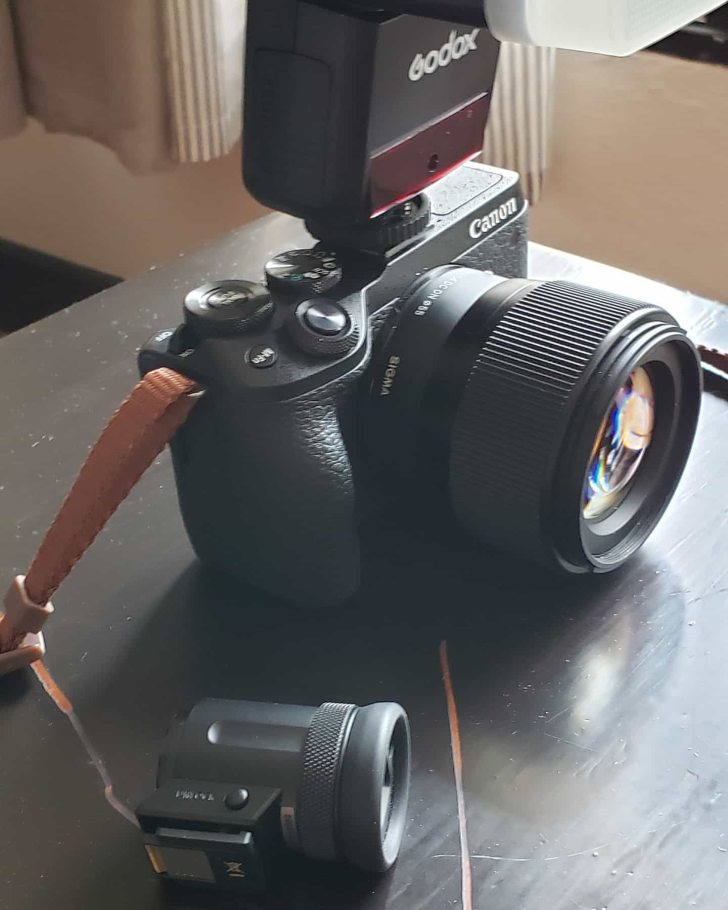
Yes, that’s a SIGMA 56mm F1.4 DC DN Contemporary on my EOS M6 Mark II. It’s just an amazing little lens. If you want an 85mm equivalent for your RF APS-C cameras, I highly recommend it. The EOS M6 Mark II, with its 32.5MP sensor, demands excellent optics and Sigma delivered in spades. The flash was a Godox tt350c, which is a great compact flash that suits the smaller camera body. But I digress down memory lane.
Performance & Quality Considerations
The PowerShot V1 is pretty much otherwise a camera that, photography-wise, is “on the buy list.” My only reservation is that we haven’t seen how much in-camera trickery Canon uses to get down to 16mm equivalent in such a small camera.
But if the optics are reasonable, we already know that the dynamic range and noise response, assuming it’s a cut-down EOS R7 sensor, as many have suggested, then the PowerShot V1 dynamic range and noise response should also be good.
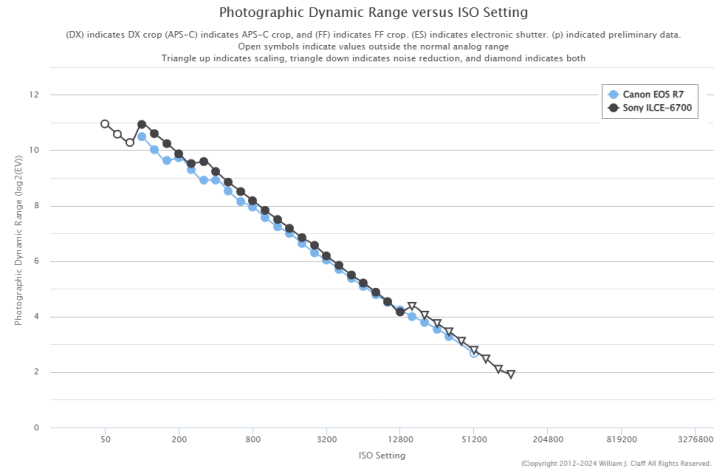
Bill’s excellent resources at photonstophotos show that the R7 left little to be desired in terms of dynamic range compared to even the latest Sony sensor generation.
The 16-50mm focal range is a bit limited on the telephoto end for my uses, but 24MP will allow some cropping if I cannot zoom with my feet. What is impossible to zoom, though, is more on the ultra-wide end, and the 16mm sounds perfect for me.
So, I will happily trade the longer end for wider than 24mm. Everyone, of course, has different needs.
Size and Weight Considerations
While I would typically gravitate to a small mirrorless ILC camera, I’m not going to get any camera and lens combination that goes down to 16mm equivalent in the same size or weight.
PowerShot V1 vs EOS R50
Some will point to the EOS R8 and RF 16mm f/2.8 STM combination, which is still around 630g and physically larger. Not to mention that the R8 and 16mm is nearly twice the price at $1800 MSRP (on sale now for $1598)
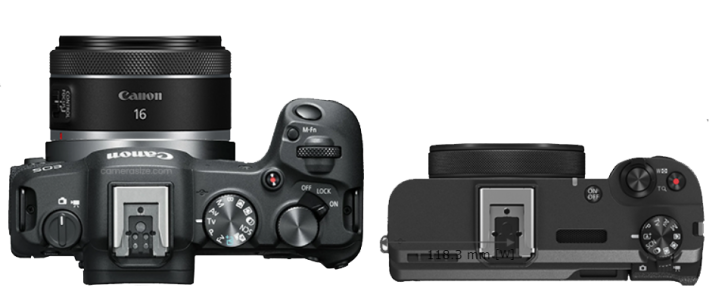
PowerShot V1 vs EOS R50
Someone suggested that the EOS R50 and Canon RF-S 10-18mm IS STM lens would get much closer to the PowerShot V1, and yes, it would.

Size-wise, the R50 is quite a small camera and does feature some external controls that I miss on the V1. However, I found the back of the R50 too cramped to wrap my hand around and grip the camera, which caused many accidental camera changes while I was gripping the camera while shooting. The kit is still heavier than the V1, at 525g, and the cost at MSRP is $1010, making it comparable by value. However, this combination isn’t for me.
Is the Canon PowerShot V1 the Perfect Travel Camera?
For me, and when travelling around Asia, it’s highly useful to save even hundreds of grams of carry-on weight when we are limited to 7kg (around 15.4 freedom pounds). Most decent carry-on bags or cases weigh around 1.5kg, which consumes over 20% of that 7kg before you even put anything into it.
Combine that with restrictive carry on size restrictions and there is a need for a high quality camera taking up as little weight and volume as possible.
Battery & Accessories
Another thing I appreciate about the PowerShot V1 is the battery. The PowerShot V1 uses the LP-E17 battery, the smallest of Canon’s interchangeable lens camera batteries. This allows for immediate access to a range of battery-related accessories for this camera.
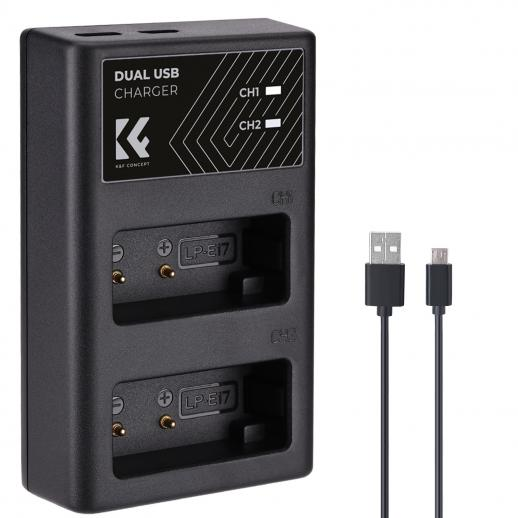
For example, if I didn’t already have one, I would immediately buy a dual LP-E17 charger that works off USB power.
Right now, the PowerShot V1 also lacks accessories for flash or external microphones outside of what is available for the hot shoe and RF mount cameras. While that provides some reuse, accessories tailored more to the camera’s size would be useful.
A good example of this is when Canon released the EOS-M, which also at the same time released the 90EX Flash.
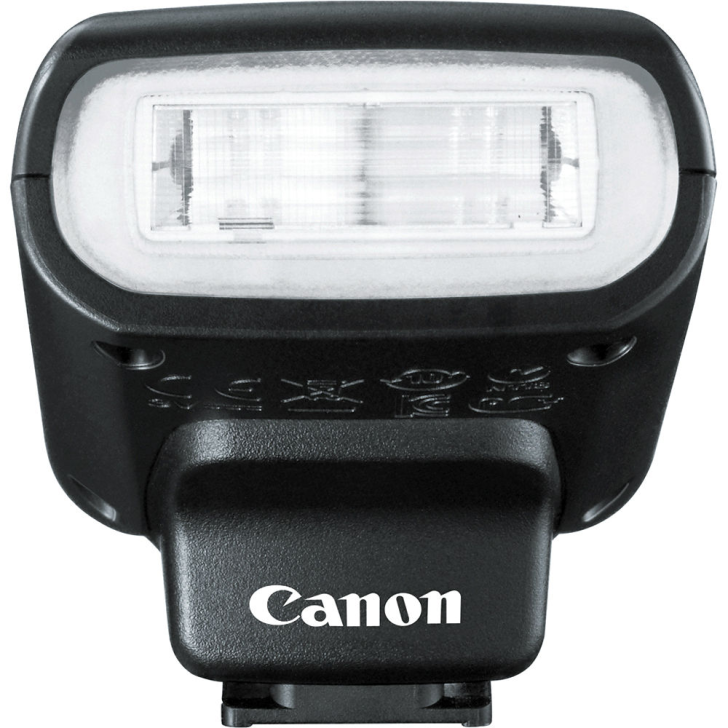
Conspicuously, there is no small flash for the PowerShot V1, and Canon doesn’t really have a small flash available right now, as the 90EX is discontinued.
What Could Canon Have Done Differently?
While I like what I’m seeing from the PowerShot V1, there are some things I wish they had done a little differently. For such a large compact camera, the controls are very rudimentary. We are missing at least one dial on the camera. But I didn’t find the EOS-M that onerous to use after a while, so I don’t think that will be personally a problem for me. But it should have had some more external controls.
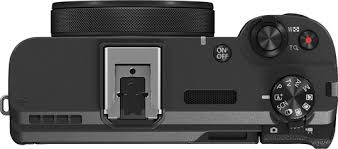
This other missing feature may be added to the firmware in the future or before the global release. It doesn’t affect me, but it’s curious about its omission. The camera, for all its video chops, has no high frame rate or slow-motion video options. It’s limited to a fastest frame rate of 120 frames per second. There have been comments that this is because of sensor speed, but the EOS R7 could handle 120fps with the full size of the sensor, if it is the same sensor, it should be able to handle faster than 120fps.
Upcoming Announcements & Final Thoughts
More information about it will be available after CP+, which is held in Japan from February 27 to March 2. The global announcement of the PowerShot V1 is expected to happen in March (as we reported back on February 15th). However, this may be delayed since the short supply has already been announced in Japan.
What Do You Think?
How about everyone else? What do you all want besides having a 10-100mm F1.0 lens? What could be added to the ecosystem to make it better for you?




thanks, I'll add that.
this is the strangest release ever, having to go to multiple canon sites to yank what I can find there.
it could have been, but i still thought we had more information at the time. The M3 was like that too, Asia only.
I'm rather sad that this wont' be in Vietnam, since I'm there in April and May.
More details now on video recording times. before anyone jumps off a cliff, i presume those are with thresholds set to normal.
After a quick comparison, I'm personally more drawn to getting a R8 (maybe with the 28mm pancake) as a lightweight option, since it is not that much heavier and gives me the flexibility to go with different set ups.
There is not a word yet on the German websites (canon or camera retailers) so far.
it's a solid camera for sure given the size of it.
the heat management most likely contributed a lot to the size.
also 15 fps mechanical shutter is no joke either.
There is a USB-C port, but no word on if it's a charging port. if it can't charge the camera, then I'm not sure it would release in Europe
If and only if the battery can be charged in camera, it has to happen using USB-C
could also be a factor of heat as well.
An USB-C port without charging-ability is definitely allowed in EU.
It is to make one charger (and cable) rule all direct chargeable devices.
Looks really oriented to the 4K video.