


When you purchase through links on our site, we may earn an affiliate commission. Here's how it works. |
At first, when I was reading this patent application (2025-118483), I was thinking that the Canon RF 50mm F1.2L USM was pretty new and that its replacement was more than a few years away. I was just about to toss this patent application aside, and then I realized that the Canon RF 50mm F1.2L USM came out in 2018. The Canon RF 50mm F1.2L USM was Canon's first L-series prime for the RF mount.
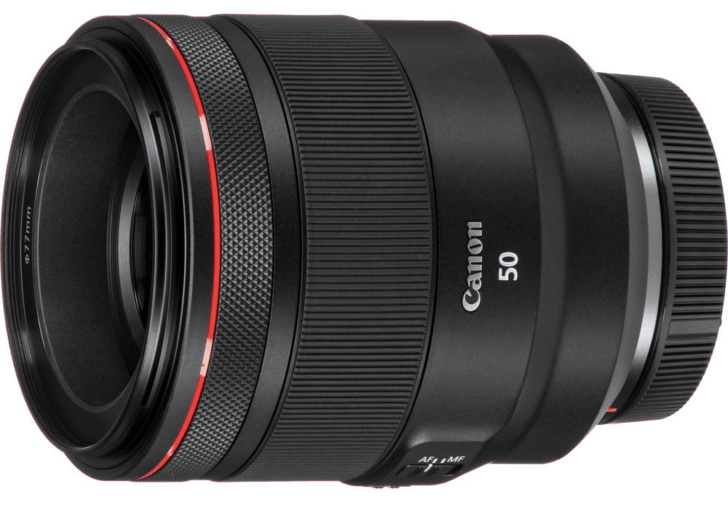
A lot of those early L lenses are going to be looked at for replacement over the next few years, and I wouldn't be surprised to see designs like this one take shape. Canon is doing far more fancy optical designs, putting the rear element closer to the back and designing for speed of autofocus, size, and weight. By the looks of the optical design, Canon is leaving nothing on the table with some molded asphericals and some significant chunky elements that we all love to see.
Canon hopes that with this lens, it will be able to correct for various aberrations and reduce the weight of the focusing group, making the lens focus faster and also reducing the aberrations that can occur while focusing. This patent application also looks to decrease sagittal coma flare, which may make astrophotographers a bit happy and also give pleasing bokeh in the corners.
According to Canon, and atypical Canon patent-speak;
Large-aperture optical systems tend to have difficulty correcting various aberrations. Furthermore, reducing the weight of the focus lens group to achieve faster autofocusing speeds makes it difficult to suppress aberration fluctuations during focusing. The optical system of Patent Document 1 corrects various aberrations by using multiple aspherical lenses, but does not adequately correct sagittal coma flare. Furthermore, since the front group, which has a large aperture and a large number of lenses, must be moved during focusing, it is difficult to increase the speed of autofocusing.
Now I have read a lot of Canon patent applications, and this, as far as my recollection (please remember the 2018 part though), is the first time I have seen two aspherical elements (La and Lb in the diagrams) grouped like that. This seems to be a relatively unique optical design from Canon. According to the patent, this group of La and Lb is meant to correct for sagittal coma flare.
There are 10 (yes TEN) embodiments. Every single one of them is a 50mm F1.2 – this also strikes me as being a bit peculiar because usually if it is just a passing afterthought on what focal is showing up in the embodiments and a red herring, we see a variety of focal lengths, not just one.
I'm just going to show one embodiment. This one with a 16mm backfocus distance seems the most realistic.

| Japan Patent: 2025-118483 | |
| Focal Length | 48.50 |
| F-Number | 1.25 |
| Half Angle of View | 24.04 |
| Image Height | 21.64 |
| Total Lens Length | 120.00 |
| Back Focus Distance | 16.33 |
This lens isn't much smaller than the Canon RF 50mm F1.2L, which is currently 108mm, and this lens is almost 110mm in length, but I don't think people will mind the extra 2mm if it comes with superior optical and auto focus performance.
Now, with all patents and patent applications, I have to stress constantly – this is simply a look into Canon's research; the only thing we can quantify accurately is that Canon is researching this. A patent application doesn't mean they are going to release this in the next month, or even year, or even at all.





I know someone that did stitch a 85mm set and swore never to attempt it again!
Deep space tends to use longer lenses but others may be better able to comment
My only quibble: I want to shoot video with it, but the motors in the lens are LOUD when it refocuses. I don't use remote mics, particularly if I'm shooting an "in the moment" video of my daughter, I just use a shotgun-mic mounted on the R5 and the refocus is EXTREMELY audible in the videos. The 15-35 2.8 has no such issue, I can't even hear it refocus. Combine that with the same IQ as the current 50 1.2L and it's a day 1 buy for me.
But via https://ppubs.uspto.gov/pubwebapp/ I found a US patent US 12386161 B2 posted on Aug 12th. This one contains lens designs for:
85mm/1.4
85mm/1.2
100mm/1.4
200mm/2.0
All fullframe.
I am in the camp of the current RF 50 1.2 is a great lens that delivers 😍 And I'd rather veer towards optical correction than software correction...
Oh I know what I know! I know I want the 35 1.2 well before a 50 1.2 II 😈
It's yet another cost-cutting measure that they're trying to sell as innovation. And it comes with several downsides like thermal drift and possible yellowing or haze after a decade.
Speaking personally, I prefer less expensive and lighter lenses - assuming the optics hold up - and don't spend too much time worrying about whether the elements might possibly 'yellow' in a decade's time.
Why does it matter what the lens is made of? To me, they can make it from cheese or banana leaves, I don't care, as long as optical performance is there. And Canon used PMO lenses for 15+ years now, in lenses like the EF-S 18-135 or EF-M 18-55. Not heard of any yellowing yet.
Sony, Sigma, and Tamron are all using magnetic linear drive motors now. Completely silent and ridiculously fast. Sony uses them in almost all their lenses, and certainly in all their new releases. Even in non-G and non-GM lenses. It's an impressive system.
Unfortunately something about those leaded glass elements made them subject to haze. Sometimes it could be removed with a lens disassembly and careful cleaning but other times not. I cannot begin to count the number of lenses like this I sent to Canon Japan for cleaning when I was a dealer.
So yes, it does matter what lens elements are made of and decisions that seemed great at the time (and may have actually been great at the time!) can have bad consequences in the future.