
Canon To Announce New Compact Cinema EOS Camera

Craig Blair
5 Min Read

When you purchase through links on our site, we may earn an affiliate commission. Here's how it works.

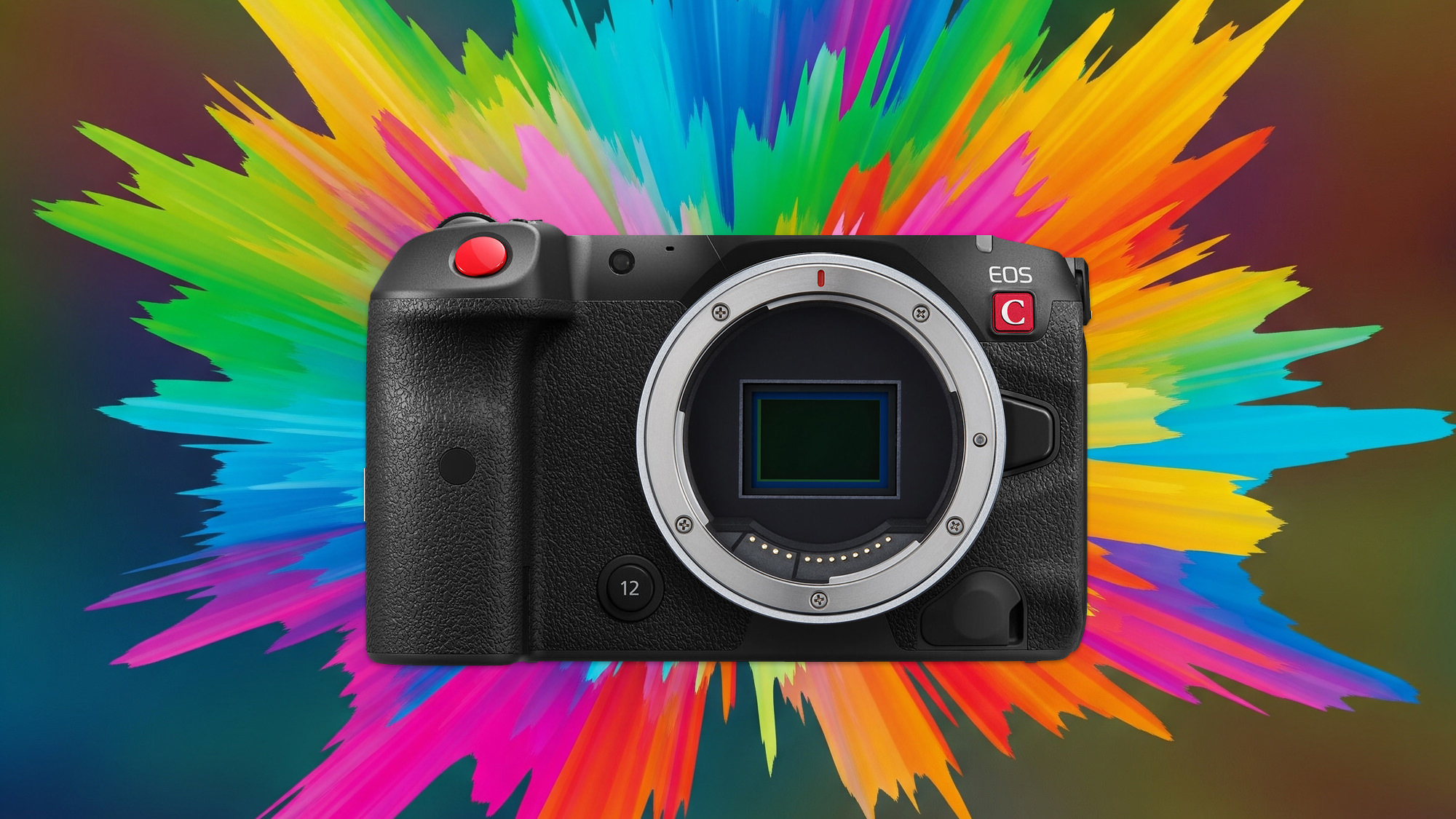
It looks like Canon is finally going to go head-to-head against Sony's Cinema Line of FX cameras with a Cinema EOS series of their own. Sony has been the dominant player in the segment of compact and affordable cinema cameras.

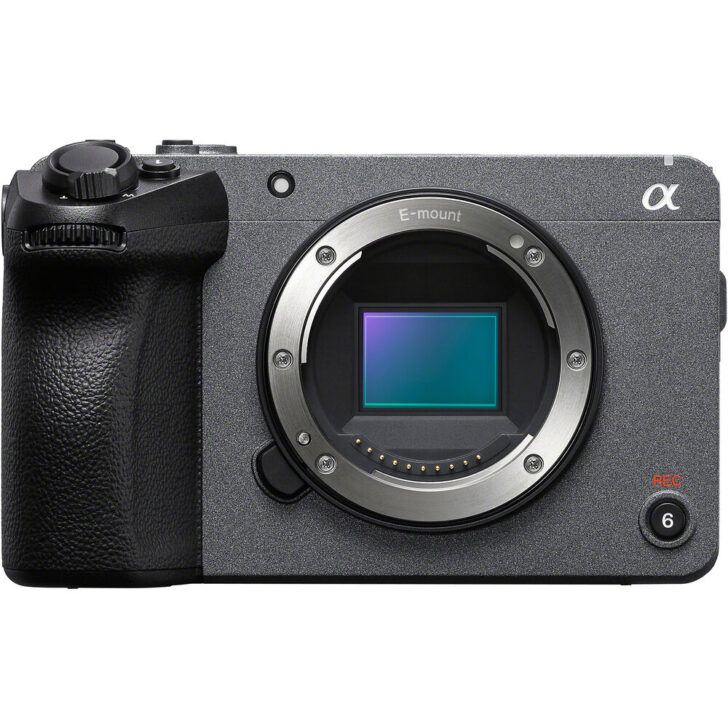
Sony launched the series with the full-frame FX3 in 2021, followed it up with the APS-C FX30 in 2022 and didn't release another in the line until this year with the brand new FX2 and the FX3A, which was a very minor update to the FX3.

There is the FX6, but that's more of a “true” cinema camera in form-factor.

Canon has been rolling with their hybrid camera strategy, which has served them well, but it was time that they moved into a space dominated by Sony.

A True Sony FX30 Competitor from Canon?

We believe that Canon will announce an APS-C version of the new Cinema EOS segment first. This will put Canon up against the FX30 and it will likely be a camera with much better specifications, which should be expected since they've had 3 years to do so.

The “Canon Cripple Hammer” no longer exists and we don't expect it to come back for a new product segment, especially one that will wear the Cinema EOS badge.
What to Expect

We currently don't have detailed specifications on the new camera, but that will likely come in short order. Canon is going to be putting some marketing muscle behind the camera(s).

We think it's quite likely that we'll be seeing an “all-new” APS-C sensor. We'd expect a new sensor with a similar readout speed as the EOS R1, which is currently the fastest of all rolling shutter cameras. Making an APS-C sensor with the similar capabilities shouldn't be too difficult for Canon.

We don't think this is where Canon would bring their first global shutter sensor since the Cinema EOS C700 GS, but there's nothing wrong with having a little bit of hope.

It would be nice to see the new camera have at least an option for a tiltable EVF. Sony built one into the FX2, but its inclusion is somewhat polarizing. Some people can't live without one; and some people would never use one.

Another area Canon could address is the battery, it would be a big bonus if something better than what we see in Canon's current hybrid cameras is part of the feature set. I'm not sure that you can make a compact camera with a battery like the BP-A30N, but something better than the battery found in the compact Sony FX line would be nice to see.

We would expect dual SD Card slots, which is the same configuration as the Cinema EOS C80. Matching card slots is a better way to go on this type of camera over doing a mismatch like we see in the EOS R5 Mark II.

A Full Frame Version?

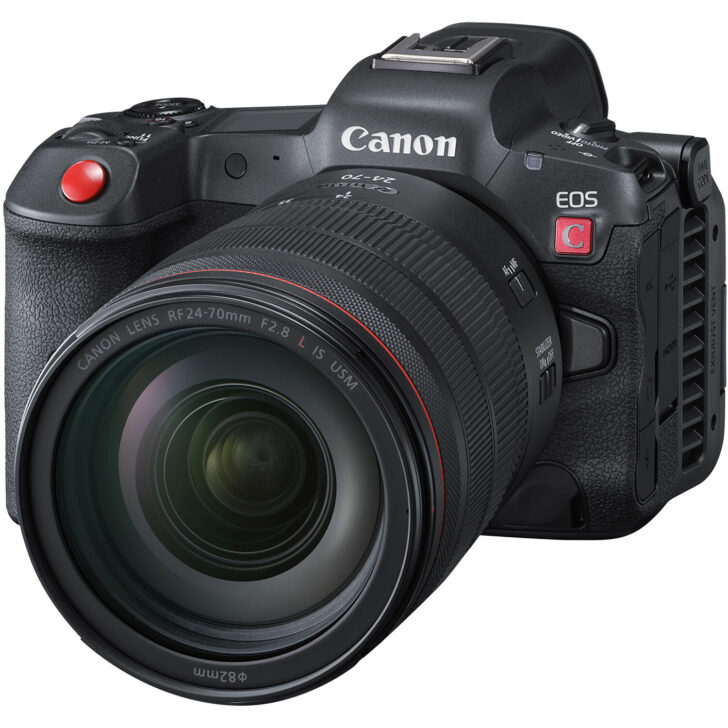
If Canon does this for APS-C, they will make a full-frame camera to compete with Sony's FX2 and FX3A offerings. The EOS R5 C needs a follow-up without compromises in software and ergonomics.

There are already plenty of great hybrid camera options from Canon if you're into both stills and video.
Conclusion

Canon did bring the EOS R50 V to market this year, which was designed with video in mind, though it is still a hybrid camera and used a lot of the same internals as the EOS R50, but for what it costs? It's a great value product.

If Canon can do that with a $650 camera, it'll be exciting to see what they can do with a $2000-$2500 camera built from the ground up with a focus on cinema quality video.

A few more things are known about this coming camera, but we're waiting for further confirmation.

The Cinema EOS announcement going to be the first week of September. The IBC 2025 tradeshow in Amsterdam begins on September 12, and they will want to show it off.

Go to discussion...

Share This Article
Craig is the founder and editorial director for Canon Rumors. He has been writing about all things Canon for more than 17 years. When he's not writing, you can find him shooting professional basketball and travelling the world looking for the next wildlife adventure. The Canon EOS R1 is his camera of choice.

35 comments

  1. I own the R50V and, as long as I keep it on a tripod, it's a pretty good camera. To me, the biggest plus is that C1 through C3 are videocentric not photocentric. That makes using it for video much less time-consuming than using an R6-2 and R7.
    • 0
  2. It may seem a bit old in 2025, but the C70 DGO sensor is still the nicest looking video sensor in a camera below $15k (and way nicer than C80, C400, R3, R5, etc offerings).

    If they made an FX30-style camera with that sensor (including internal raw) + IBIS, that would be incredible. Especially with the new Sigma 17-40mm f1.8. PLEASE include a timecode port on this body though. If it's true cinema, it needs a timecode port.

    My hope:
    - Canon C70 sensor
    - FX3 style body, with XLR handle when needed
    - IBIS
    - Get the DGO raw up to 120fps, rather than just 60fps.
    - TIMECODE PORT
    - Mini XLR on body + 3.5mm when you don't want to use top handle.
    - Larger battery
    - Internal ND?! One can dream. Even a single 5 or 6-stop ND would be great (like the Powershot V1, but stronger).
    • 0
  3. Hmm. I don´t think (and HOPE NOT that) they will go APS-C / S35 again with such a model. They don´t have enough (good) RF-S lenses for that in their lineup. Its more likely that they use the C80 sensor just without ND filters, with no XLR-Ports and with the LP-E6P battery instead of the bigger ones in the C80 (all in a smaller body). Would seperate such a model already more than enough form the C80. Besides: The R50v is also brand new to the market (more or less) - And full frame is "the standard" actually in the more professional RF system world.
    • 0
  4. Would love to see an R6V or R6C, whatever they’ll call it. Let’s say they put in the sensor from the C80/C400 with the 6K Raw video capabilities and triple base ISO along the lines of 800/1600/12800 if I recall correctly … That goes head to head with the FX3 as it has a dual native ISO of 640/12800, but the R6C would have a leg up in resolution, as 6K is the better middle ground for most people when doing video. I don’t want another R5C because of how massive the files for 8K are, not to mention how hard they are to play back. 6K is a great middle ground and is very practical all around. The C80 proves this very well, the only thing is that it can’t do 6K60fps raw, only the C400. That needs to change in a potential R6C because if they want to compete with the FX3 (it does 4K60/120), they’ll need to offer at least full frame 6K60 and then at least an oversampled/slightly cropped 4K120, which I believe the C80 has.
    • 0
  5. I hope they go with a new naming scheme. No more R5C or R50V - taking a hybrid camera and making it slightly more video-focused definitely cheapens it.

    Give us a whole new product line like Sony did with the FX-line.
    Fuji should do this too with the XH2s sensor.
    • 0
  6. "The “Canon Cripple Hammer” no longer exists and we don’t expect it to come back for a new product segment, especially one that will wear the Cinema EOS badge."

    Everybody sees things differently.
    A true "cinema" camera in my mind is something that would take full advantage of the image produced by the camera, done by the user, not decided by the manufacturer.

    It seems that they put the raw option in these R-series so that we could have a fine H.265/264. That is good, but not enough. The raw files are just for show.
    What makes the RED cameras special in my eyes is that you can have hundreds of stuff on your timeline and your computer still works, thanks to the compression.
    If Canon didn't have one, then yes. The sad thing is that they do but they kept it only for the C80 and above. If a camera is called Cinema, it should have 12-bit Cinema RAW Light LT. The camera can capture it, but the manufacturer doesn't put it so that the R1 cannot beat the C80. On paper it does, but it remains on paper.
    I can put a variable ND on a matte box, I can put a 2000nits of brightness monitor on top of an R1, but I cannot use files that are 1600 Mbps bitrate. Look at the bitrate of RED, Pyxis and the C80.
    1600 Mbps is only for show. "Look, my camera can do 6K RAW (29.97p): at 2000 Mbps; but can it do 6000 x 3164 / 25P at 576 Mbps? The answer is no.
    • 0
  7. Its about time. But Canon will not be compared with the FX30 or FX3 by the time they release anything. They will be competing with the mark ii versions. Though still very popular with videographers, the FX30 is now 3 years old and the FX3 over 4. And in many respects, we should be keeping our eye on Lumix. Everyone is behind Panasonic when it comes to putting cinema features inside compact camera bodies.
    • 0
  8. "The “Canon Cripple Hammer” no longer exists and we don’t expect it to come back for a new product segment, especially one that will wear the Cinema EOS badge."

    Everybody sees things differently.
    A true "cinema" camera in my mind is something that would take full advantage of the image produced by the camera, done by the user, not decided by the manufacturer.

    It seems that they put the raw option in these R-series so that we could have a fine H.265/264. That is good, but not enough. The raw files are just for show.
    What makes the RED cameras special in my eyes is that you can have hundreds of stuff on your timeline and your computer still works, thanks to the compression.
    If Canon didn't have one, then yes. The sad thing is that they do but they kept it only for the C80 and above. If a camera is called Cinema, it should have 12-bit Cinema RAW Light LT. The camera can capture it, but the manufacturer doesn't put it so that the R1 cannot beat the C80. On paper it does, but it remains on paper.
    I can put a variable ND on a matte box, I can put a 2000nits of brightness monitor on top of an R1, but I cannot use files that are 1600 Mbps bitrate. Look at the bitrate of RED, Pyxis and the C80.
    1600 Mbps is only for show. "Look, my camera can do 6K RAW (29.97p): at 2000 Mbps; but can it do 6000 x 3164 / 25P at 576 Mbps? The answer is no.
    R5c does have 12 bit Cinema Raw LT and can go upto 60 fps full frame with this codec because of its CF Express card slot. C80 can only do upto 30 fps full frame as it’s limited to SD cards.
    So when we expect a Cinema Camera, this should be there.
    • 0
  9. I hope it comes in full frame. And has the same sensor as C80/C400. Three base ISOs are good for shooting. 8K (R5C) is overkill and 6K is the sweet spot these days. I hope it includes at least one CFExpress slot. CFExpress cards will give better fps and these days they are cheaper than V90 SD cards.
    Am I asking too much?
    • 0
  10. I hope it comes in full frame. And has the same sensor as C80/C400. Three base ISOs are good for shooting. 8K (R5C) is overkill and 6K is the sweet spot these days. I hope it includes at least one CFExpress slot. CFExpress cards will give better fps and these days they are cheaper than V90 SD cards.
    Am I asking too much?
    Since the C80 just released recently, I think we have to wait longer for more C80 units to move before the introduction of another smaller FF.
    • 0
  11. R5c does have 12 bit Cinema Raw LT and can go upto 60 fps full frame with this codec because of its CF Express card slot. C80 can only do upto 30 fps full frame as it’s limited to SD cards.
    So when we expect a Cinema Camera, this should be there.
    I stand corrected. I didn't pay attention to the R5C.

    Cinema RAW Light LT:
    6000 x 3164: 576Mbps – C80
    8192 x 4320 / 25P / 1070: Mbps – R5C

    6000 x 3164 / 50P [1160 Mbps] – C400
    8192 x 4320 / 50P / 2140 Mbps – R5C

    The main difference is 8K vs 6K.
    Will wait for a 6K cinema that does 60FPS, other than C400, then.
    Thanks for the post.
    • 0
  12. All we need in the Cinema compact camera

    -Open Gate 4k
    -4k 60p or 120p
    -1080p 480fps
    -All-intraframe recording (whyyyyyyyyyyy the remove on R6)
    -Built in ND
    -Dedicated interface for video settings like R5C

    Tis all i ask oh dear canon, we dont have the budget for high tier
    • 0
  13. I hope they go with a new naming scheme. No more R5C or R50V - taking a hybrid camera and making it slightly more video-focused definitely cheapens it.

    Give us a whole new product line like Sony did with the FX-line.
    Fuji should do this too with the XH2s sensor.
    Agree, but “cheapens it,” isn’t the correct, accurate word. Rather adding “C” or “V” can create consumer confusion to those new to Canon. It gives the impression it’s a R5 plus better video when in reality it’s video centric body that can do photos, yet it’s not really a hybrid like the R5. It would be smart for Canon to move all its video centric bodies to the C line and reserve the R for photo centric and hybrids.
    • 0
  14. Would love to see an R6V or R6C, whatever they’ll call it. Let’s say they put in the sensor from the C80/C400 with the 6K Raw video capabilities and triple base ISO along the lines of 800/1600/12800 if I recall correctly … That goes head to head with the FX3 as it has a dual native ISO of 640/12800, but the R6C would have a leg up in resolution, as 6K is the better middle ground for most people when doing video. I don’t want another R5C because of how massive the files for 8K are, not to mention how hard they are to play back. 6K is a great middle ground and is very practical all around. The C80 proves this very well, the only thing is that it can’t do 6K60fps raw, only the C400. That needs to change in a potential R6C because if they want to compete with the FX3 (it does 4K60/120), they’ll need to offer at least full frame 6K60 and then at least an oversampled/slightly cropped 4K120, which I believe the C80 has.
    An R6C with the C80/400 sensor would be a great camera for me at the moment to compliment my C80. But considering how much more this camera would have to cost compared to the R6, I’m not sure if Canon would take this approach. Maybe they’d just create a whole new camera which this possibly could be.
    • 0

Leave a comment

Please log in to your forum account to comment