

When you purchase through links on our site, we may earn an affiliate commission. Here’s how it works. |
We’ve long believed Canon has been holding back the RF mount for profit, but what if that isn’t the only reason? Did Canon look at the trends out of China’s optical companies and realize that their greatest threat wasn’t Sony, Nikon, or Panasonic, but the likes of Laowa, Sirui, and other Chinese manufacturers that were starting to get things right?
The Past – Cheap lenses were Usually Bad
In the past, you could confidently state “you get what you pay for” in terms of lens quality and image quality. Usually, since the dawn of photography, a cheap lens was typically a poor lens that you’d make do with. The lens design triangle of Quality, Size, Weight, and Cost was usually accurate. So if a lens cost less and was reasonably sized, there was a good chance that its optical quality would suffer.
Through the 1990s and 2000s, we saw Sigma making middling lenses until they matured enough to be where they are, and the same with Tamron. As their optical engineering and materials science improved, so did their lenses, and the prices were still below the OEM’s, but not by much.
Fast forward to the 2020s, and Chinese manufacturers, such as Laowa and 7artisans, produced extremely inexpensive lenses to the point that, if they took non blurry photos at all, it was a bonus.
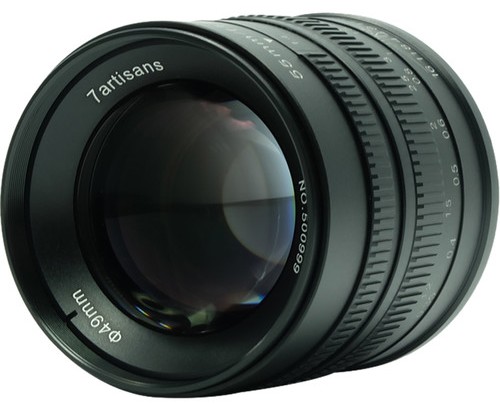
For instance, this 7Artisans 55mm f/1.4 lens could be found for less than $120, and its image quality was extremely poor. You could still use it for Instagram and social media images, so it wasn’t a complete loss. Don’t expect anything else from it.
Fast Forward to Now
Let’s continue to use 7Artisans as our problem child lens manufacturer. So now, 4 years later, while those budget lenses are still available, there are entirely new APS-C and full-frame lines with varying prices and quality.
7Artisan lenses no longer have vaseline-coated front elements, and for instance, their relatively new AF 85mm F1.8 has an MTF that the Canon RF 85mm F2.0 Macro would be proud of, if the lens accomplished a similar MTF.
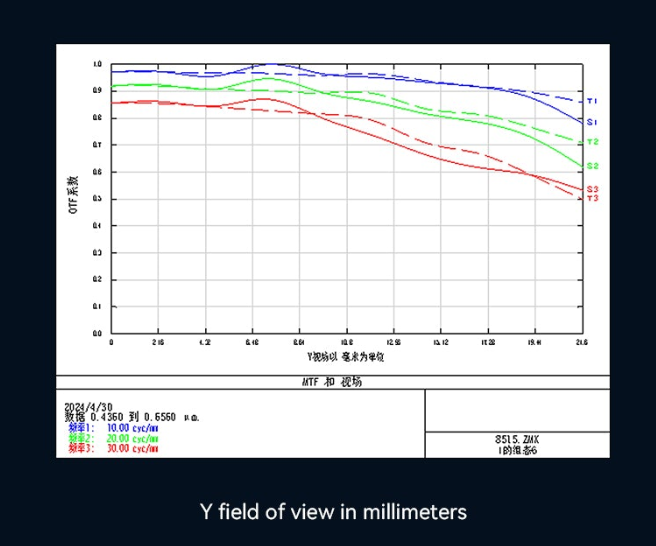
Of course, the Canon RF 85mm F2.0 Macro IS STM has 1:2 Macro, image stabilization, and other features. Still, if you are looking for an economical prime, the 7Artisans would easily fit the bill, coming in at under half the price of the Canon RF 85mm F2.0 Macro IS STM and delivering superior optical quality. Add insult to injury, the Viltrox 50mm F1.8 AIR is less expensive than the RF 50mm F1.8 and far superior wide open until f/5.6 – so much so, that I think it’s too embarrassing for Canon even to show the MTFs.
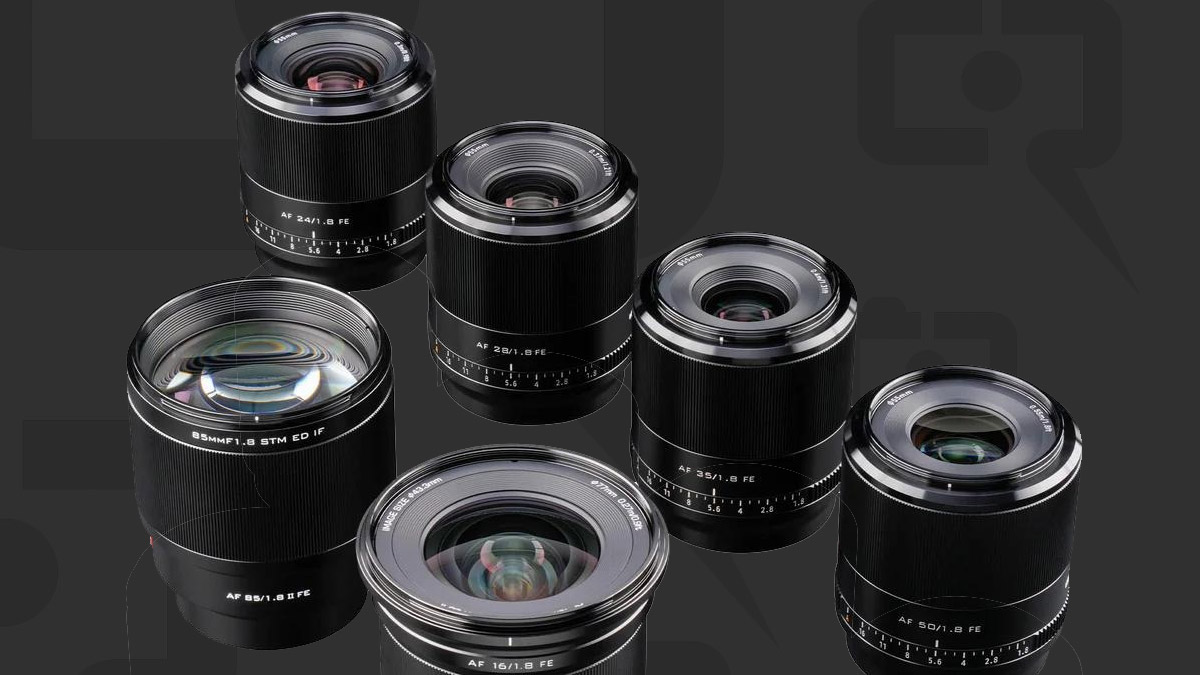
This is from a Chinese optical company I have always thought of as “budget” with “budget IQ” hauntingly similar, for instance, to the old Quantaray lenses. They now have a full line-up of 40+ lenses, including cinema lenses, so much for a small company.
Other Chinese Manufacturers are Ramping Up Too
Laowa dropped its impressive 200 mm F2.0 on the market; its release was just announced. By all previous commentary, this lens is excellent. It will come in far under the price of the OEM 200mm telephoto fast primes, at around $1800, and is far cheaper than the Sigma 200mm F2.0 and just stupidly under the price of the Canon EF 200mm F2.0L II USM, which was around $6000 when it was released.
Laowa, like the previously mentioned 7artisans, is now well over 40 lenses in its portfolio and growing at an extremely rapid pace. Laowa, at least with the 200mm F2.0, because it was a telephoto, was able to use the EF Mount and skirt Canon’s restrictions on the RF mount. We can rejoice in small victories, I suppose.
Add to this 200 F2.0 Laowa lens, and we have the Sirui Aurora 35mm F1.4, which we just finished drooling over and which shows possibly the best MTF I’ve ever seen from a 35mm fast prime lens. For the icing on top of the proof cake is the equally impressive TTArtisan 17mm F4 Tilt-Shift, a lens that no one else outside of Canon was bold enough to create. Sirui and TTArtisan have 25 and around 35 lenses, respectively, in their lens catalog. Not as many as the other vendors, but still a significant amount of lens options to choose from.
We could come up with a long list of Chinese manufacturers that fit this same mold – going from the “you get what you pay for” to “impressive bang for the buck in terms of optical quality for the price” in a matter of a decade or less. That’s not saying all new Chinese lenses are fantastic, just like all the Canon, Nikon, and Sony lenses aren’t fantastic either. But the Chinese lenses can usually back up any deficiencies with a far lower retail sales price.
Lenses are going to get hypercompetitive.
I think it’s safe to say the lens manufacturing industry is undergoing a seismic shift. As Chinese manufacturers start delivering more and more lenses with a high degree of optical sophistication, they’ll also iterate on the remaining features that are lacking, such as image stabilization and faster autofocus motors. Much of this technology is locked by patents, though, so that is one area where Canon, with its massive patent library, may have an advantage over these manufacturers. I’m not entirely convinced, though, that it’s going to stop the manufacturers for very long.
We have seen this already with the Viltrox 85mm F1.4 PRO, which offers a Dual Hyper VCM Motor auto focus motor drives to move the element groups, and that lens, which we haven’t really talked about, is still almost 40% cheaper than the Canon RF 85mm F1.4L VCM. Viltrox does well with this lens from an optical standpoint, and also the coolest name for VCM that has been done to date.

It’s safe to say that VCM is certainly a technology that will come to most of the Chinese manufacturers soon.
Did Canon Figure this all Out?
Canon refused to release the RF mount specifications fully and has kept licensing under strict control. This ran counter to how Canon acted with the EF mount, not that long ago. Now, there are lots of reasons why Canon may have done this, including the big one – profit. There are also elements such as support issues, compatibility, etc, that Canon may want to eliminate with the much more complex handshake between the RF lens and the RF camera body.
But as we mentioned, Canon seems to be blocking all integrations of lenses that are full frame from directly accessing the RF mount’s protocol, which may point to something far more strategic. There’s nothing that can currently stop, apparently, these manufacturers from doing like Laowa and releasing an EF version, but that eliminates anything under around 50mm as being a suitable product and complicates both the optical design and the lens manufacturing.
Maybe, just maybe, Canon saw this coming and realized that if they opened up the RF mount to everyone, they could not compete against them over time. Canon’s lenses would ultimately be boutique lenses people would purchase because they had the red ring or the Canon logo. A dramatic loss of lens revenue would start to hurt Canon’s ability to research and develop new lenses and camera bodies, making operating as a camera company considerably more difficult. In that predicted environment, it becomes exceedingly difficult for Canon to be competitive and still turn a profit.
There is a Risk
The risk, of course, is that Canon is alienating all those who don’t have a significant amount of money, and Canon is also gambling that the economies of those who purchase their lenses and cameras are going to remain strong. If you are less concerned about bang for buck, then Canon is the right choice for you. Go wild with the red rings. But if you are on a limited budget, such as a budding professional, it’s becoming extremely painful to say that Canon is the right decision.
My own camera budget has decreased massively over the past 5 years. I’m finding it more and more difficult to say that Sony isn’t the far more credible option, even for me (yes, I know), simply because of the extreme kit affordability that is available in the last 2-3 years from Chinese lens manufacturers.
Only time will tell, and obviously, if Canon bows to market pressure and opens up the mount to everyone, we can file this theory under “G” and be done with it, but there’s the outside chance that Canon was smarter than us all, if it works out for them.




I am not one that wants to use 3rd party lenses but I havent adopted the RF lenses because honestly they are too expensive. I bought the RF24-70 2.8 IS as I use that a lot and the RF35 F2 for video. Instead of replacing the rest of my lenses im using adapting my old ones because in most cases they work better than on my DSLRs.
Im sure im not the only one.
Indeed, the RF lenses are expensive. I still use my 100-400 II, the 70-200 II f/4, the TS-E 24 II, and the 16-35 f/4. I did replace the 24-105 f/4 with the RF version and also bought the 10-20. I bought both lenses on the gray market, though. That saved me almost €1000. For my R8, I did buy the 16mm, 28mm, and 50mm. For now, I'm holding off on replacing my EF lenses. This is also because I prefer an internal zoom lens for both the 16-35 and the 70-200. I hope these will become available in the future.
The same occurred when the German optical industry started to face stiff competition from Asahi Pentax, Canon, Nikon and the likes. The ones who in the seventies still spoke of Japanese garbage were quickly taught a lesson...
I guess the same ones are nowadays stupidly speaking of those crappy Chinese cars.
I also keep wondering how many Sony cameras are fitted with Sony lenses. Could it be that Canon got it right and Sony all wrong? Time will tell. Fact is, licensing certainly brings far less profit than selling OEM lenses.
The market is shrinking while competition keeps growing. And tariffs don't help...
EF mount was never open officially like Sony E and Fuji X ever did. It was open because it was out more than 10 years. And times were slower back in the days.
Right now Canon needs to bring more affordable zooms. Cheap primes both Canon and Yongnuo provide adequate amount. And RF-S has Sigma covered.
This decision by Canon is some kind of long game that they aren't going to tell us about.
Canon had something like 45% of total lenses shipped in 2024. I think a lot of companies like to sell how amazing they're doing.... really, how many lenses does Sigma actually sell?
How much money may Sony not-be-making by having their mount open to third parties?
We know Canon makes a lot of money with cheap cameras and lenses. They get most beginners with very attractive and affordable entry level cameras, then sell them a cheap 50mm, to attach them to the system. If beginners can't buy anything else, in a way, it is what it is - most likely, they'll commit.
Additionally, we see Canon is clearly trying to tackle the desire for third party manufacturers, with cheaper lenses that perform very well, like the 28-70 f/2.8, 16-28 f/2.8, and possibly this upcoming 45mm f/1.2 so then, a beginner that's looking to upgrade, will have attractive lenses available with the logo of the brand he trusts the most, which may help mitigate the desire for third party glass.
Sony is not that attractive to unknowing beginners, so a significant part of the line of though I just wrote will not apply - let's be real, a true beginner may not detach the kit lens for years. They have some outdated beginner cameras, and a few that are updated, but much more expensive, like the a6700. Also, their cheapest models are significantly more expensive than Canon's offerings (R100, R50).
At the moment, several of the most spectacular lenses for Sony FE are NOT made by Sony. Most of their users are not beginners either, for the reasons mentioned above, so they're not that afraid of buying third party - in fact, many go Sony because of the existence of such offerings.
There's the Tamron 35-150mm, Sigma's 28-45mm f/1.8, 28-105mm f/2.8, 35mm f/1.2 (two versions already!), 200mm f/2, 300-600mm f/4, and now the SongRAW 85mm f/1.2 and Laowa's 200mm f/2. There are probably a lot more awesome third party lenses I'm not aware of.
Sony has been repeatedly beaten on the race to groundbreaking lenses.
In an era where cameras are lasting longer and longer, due to slower improvements that can lead users to upgrade less often (hence camera brands pushing so hard on marketing for us to upgrade), and the use of electronic and, more recently, global shutters, if a brand with an open mount is not selling lenses, because there's so many decent third party options available, what will they sell then?
I'm not switching systems, but I'm not going to renounce to unique lenses like the Sigma 15mm f/1.4 fisheye, Sigma 35mm f/1.2, Sigma 28-45 f/1.8, Sigma 135mm f/1.4, SONY 50-150mm f/2, Sigma 200mm f/2, Sigma 300-600mm f/4, etc., or cheap and nice chinese lenses like what Viltrox offers to play with.
For me, adding a SONY camera to my arsenal is adding a powerful toolkit to get the job done and differentiate myself from other photographers even more.
I don't believe in brand loyalty. Being married to a brand is so stupid.
I might profit because some more EF glass with AF (and IS?) might be released and it fits better in my current scheme using a ND filter adapter between EF glass and e.g. the great EOS R50 V ...
I think this story covers half the problem seen by Canon - they don't want Canon lenses being used on other bodies.also (is the other half of the equation.)
To my surprise, not only do they perform extremely well, some solutions actually outperform Canons EF tilt shift offerings (which I own and use extensively). For example, I find that Laowa's turn-the-ring-to-shift is miles better than Canon's fiddly gear knobs. Laowa also sells a very good native lens mount that can be used across multiple lenses.
Yes, the flare is not as well handled as with Canon and I do miss electronic control of aperture - if nothing, then to make sure I haven't inadvertently shifted the aperture ring. But the bottom line is that Laowa is selling excellent medium format lenses at half the price of Canon's full frame tilt shifts. I think that this comparison is very appropriate since both are manual focusing lenses and Laowa comes out on top - no doubt.
Chinese manufacturers have made incredible leaps in less than a decade, not only in lenses, but other camera gear in general. I swear that Godox has some products that are better than the likes of Profoto or Broncolor.
The "RF" 600 just being the EF with an adapter hard-mounted *really* irritated me. I didn't buy that one. I haven't gotten the 24-70 for the reasons you just mentioned; I already have the EF MKii. I love my R5, and I love the RF50 1.2L. I didn't have a comparable lens in EF. But even all these years later I feel like Canon still hasn't covered the full breadth of the "universe" with their RF options. There are holes in the lens lineup. The R7 was an embarrassment, unless you wanted a replacement for the 90D. I get that it takes time to build a whole ecosystem out, but the R mount was announced in 2018. I'm not saying Canon is doomed, but there have been, in my opinion, some missteps. It seems like upcoming announcements will patch over those holes, and I hope they do, but in the meantime I haven't gotten as much RF glass as I thought I would have by now.
And they did the same to the RF 400mm f/2.8.
DJI is likely to be first. They are already a member of L mount and have extensive experience with cameras. They also own Hasselblad which I've no doubt they have learned a truckload from.
Viltrox is probably not too far behind, another member of the L mount alliance who is very likely to bring L mount cameras to market.
Not only will these cameras be inexpensive but they will be incredibly feature rich. They have no high end cine products to protect. They have no R1/Z9/A1 level cameras to protect. They will throw everything including the kitchen sink into their cameras and are likely to bring out at least an R6/Z6/A7 competitor and a R5/Z8 competitor.
The very first iterations will probably have some issues. No doubt many firmware updates will follow and the products themselves will iterate generations fairly quickly at first.
But the Chinese are coming, and unless companies like Canon, Sony, and Nikon get their sh=t together PDQ, the Chinese are going to eat their lunch and take all their customers.