

|
When you purchase through links on our site, we may earn an affiliate commission. Here’s how it works. |
Okay, it’s been over 3 years since the RF-S lineup was released by Canon, and they have yet to really capitalize on what those EOS-M cameras were. I know some people dismiss the EOS-M system and what it was for Canon and wanted it to die (Ahem, Craig), but for me, anyway, it was the perfect fit of form and function.
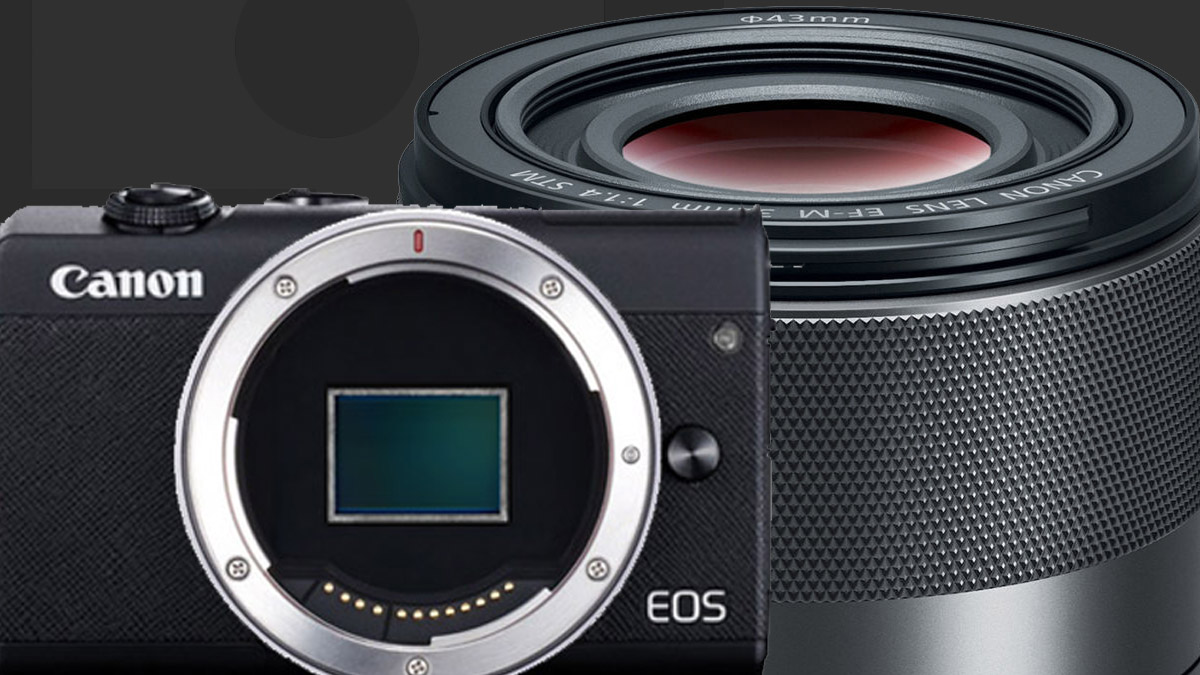
Until Canon released the R7, the EOS-M had Canon’s top-tier performing APS-C camera, the Canon EOS M6 Mark II. While I’m grudgingly moving over to the Canon EOS R50V, as it’s somewhat the same size and compactness that we had in that camera. But the actual body was much slimmer than the R50 V, making the R50 V a much more girthier camera. This is, of course, necessary for the active cooling that the R50 V employs, something that I’m curious to play around with, even for photography and non-video purposes.
But if we compare the performance of these two cameras, excluding video, it’s more of an M50 than the M6 Mark II powerhouse. It’s a great start, but only a start. But I’m glad at least that the R50 V has electronic first curtain shutter sync, so I never have to do another shutter shock test.
There’s absolutely no credible reason why Canon could not have simply ported the designs and features of the EOS-M into the RF mount. We’re not talking about a lot. Give us an R7 clone sans IBIS in a compact camera body. Call it an R7M and send me one to review, please.
Politics Maybe?
I always wondered if there was internal politics surrounding the EOS-M inside of Canon. Many didn’t really know, but Canon’s EOS-M first started under the guise of a DSC (digital stills camera) for the EOS-M and the EOS-M2. The system took the firmware that already existed in Canon’s DSLR systems with live view, and thus the EOS-M was born. Of course, this firmware struggled with autofocus, because with DSLRs, live view wasn’t Canon’s primary focusing method. Both of these cameras were universally trashed in reviews because of their very slow autofocus (I actually liked the EOS-M personally – I used two of them)
Starting with the EOS-M3, both the firmware and the models were PowerShot, and the firmware had different auto focus. For the first (and only sensor generation), Canon used stripes of phase detect pixels similar to what Sony does for their sensors. The color and everything were so different that I actually wondered if Canon simply didn’t use a Sony sensor.
Canon never mentioned why they moved EOS-M development, but I suspect that with the lagging sales of PowerShots at the time, Canon decided to dump the entire line into the PowerShot division that had less work to do. They were also more familiar with auto focus from the actual sensor, and this all predated Canon’s DPAF sensors.
The Powershot group started from the compact camera firmware, which explains why the EOS-M3 had such woeful firmware. The division improved quickly with the EOS M5 and M6 firmware being excellent, and then improved even further with the M6 Mark II. The EOS M6 Mark II had features in 2019 that weren’t available on the RF mount until 2022. The M6 Mark II in 2019 was proof that Canon could create high-performance mirrorless cameras, and much of its development DNA ended up in the RF system.
As importantly, while Canon executed its pivot from the EF mount to the RF mount, the EOS-M mount propped up unit sales in Asia enough for Canon to never lose its #1 mirrorless crown and also its #1 overall camera crown. So, while Canon was shockingly quiet on the EOS-M discontinuation, Canon deserves to at least make a little headway in providing the system lifestyle options on the RF mount that made the EOS-M successful.
The R100
The R100 for me shows that Canon purposely didn’t want to take any lessons from the EOS-M and move them to the RF mount. They took everything that made the M100 and M200 actually useful and did the opposite, and turned out in my mind the worst entry-level camera in Canon’s existence.
When the market is screaming for smartphone migration, they give entry-level users a camera with no damned touchscreen, with buttons and a way of operation that new users are completely unfamiliar with. While I could give an original EOS-M or an M100 to someone with no prior experience with an ILC (interchangeable lens camera) and they’d be up and running in minutes, the Canon EOS R100 takes all that learnt DNA and know-how and says f___ it.
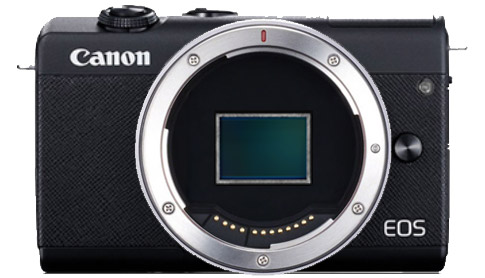
The R100 is functionally the same or worse than Canon’s entry-level Rebel DSLR’s and there’s no equivalence for an easy jump into migration from a smartphone for the RF system.
I know some will suggest that I don’t know the market, but I do know that compact, smaller cameras with even APS-C sensors are selling out everywhere. This is such an easy win.
EOS-M Lenses
Now let’s talk lenses. There was a rumor going around that Canon couldn’t simply take the EF-M lenses and move them over to the RF mount. I always thought, and I mentioned it often on CanonNews, that that was a hogwash excuse. Once I showed Craig the magic of DLO, he quickly understood why I never had a problem with these small EF-M lenses; many of them were panned as being “good for what you pay for them”.
One nice overlooked thing about the EOS-M lenses was that they were all 60-61mm in diameter. This means that I could purchase all the Canon EOS-M lenses, and use step-up 55mm filter adapters, and as long as I did not care about lens hoods, use the same filter on all my lenses. Coming from a DSLR world, this was a revelation.
I’m actually pleased to look at all the RF-S lenses (with the notable exception of the RF-S 14-30mm PZ) and realize that Canon did the same thing on the RF-S lens lineup, with all the lenses having the same barrel diameter. So, pro tip, if you are okay with slightly more lens flare because you are not using lens hoods (that you have to purchase separately for almost as much as the lens costs), then using step-up adapters can save you on purchasing different-sized filters to fit them all. You are welcome.
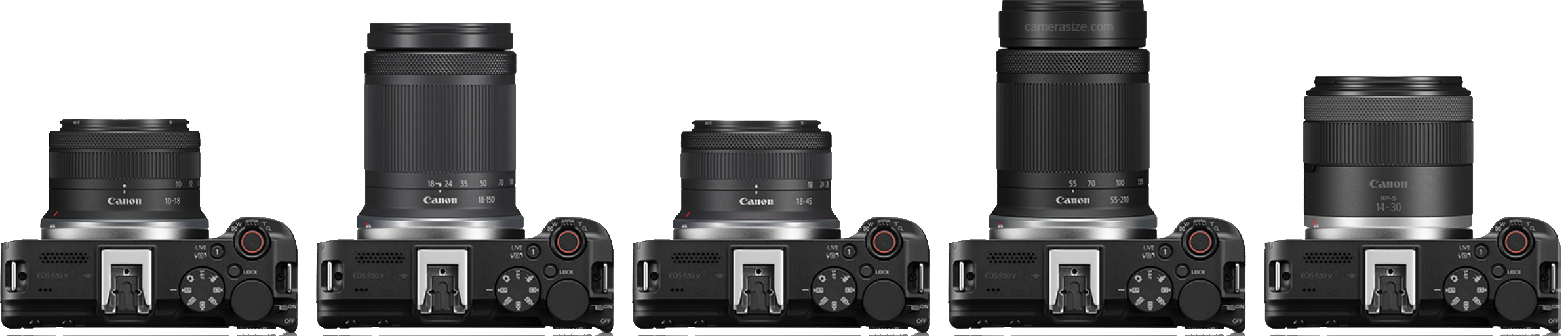
Now, some of the EF-M lenses I never much cared about (looking at you, EF-M 28mm f/2.8 Macro STM), but I do know some people did like the lenses that I didn’t, and I certainly don’t profess to be the sole authority on this. The point, though, is that there’s only 1 lens that Canon has taken from the EF-M lineup, even though Canon could simply take them all with minimal effort.
Canon EF-M RF-S18-150mm f/3.5-6.3 IS STM
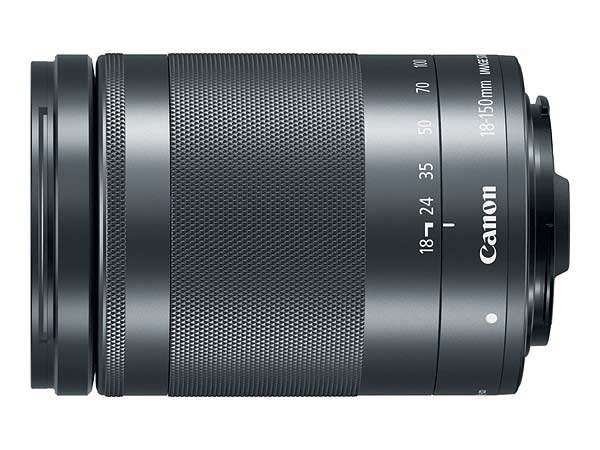
The Canon EF-M 18-150mm was ported to the RF mount, and thus the RF-S 18-150mm was born. All that was required was changing the lens firmware over to RF mount protocols, which is obviously easy for the Canon OEM to do. This lens is exactly what inspired this article, as a future project for CanonRumors had me looking at this lens. More on that later, but for now, this lens is optically identical to the EF-M lens. This lens also sat back into the lens mount, making that theory also wrong; even lenses that sat back into the EF-M mount are possible to port over.
EF-M 18-150mm |
RF-S 18-150mm |
|---|---|
|
|
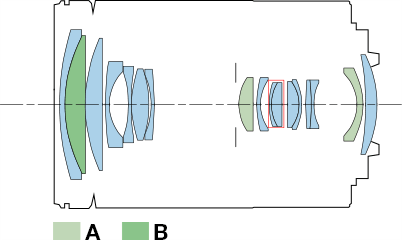
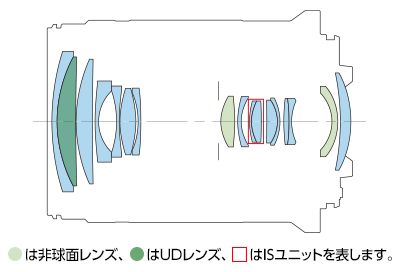
Look familiar? Yes, I thought so.
Lenses I want to see on my EOS R50 V
So yeah, where’s my EF-M 32mm f1.4 then? I suspect this is a lens that Canon simply doesn’t want to do because it would show up their RF VCM L primes. While I do realize that one of these MTFs is for a full-frame camera, and the other is for a crop camera, the RF, while used on a crop camera, is better, but it had better be for 3x the price.
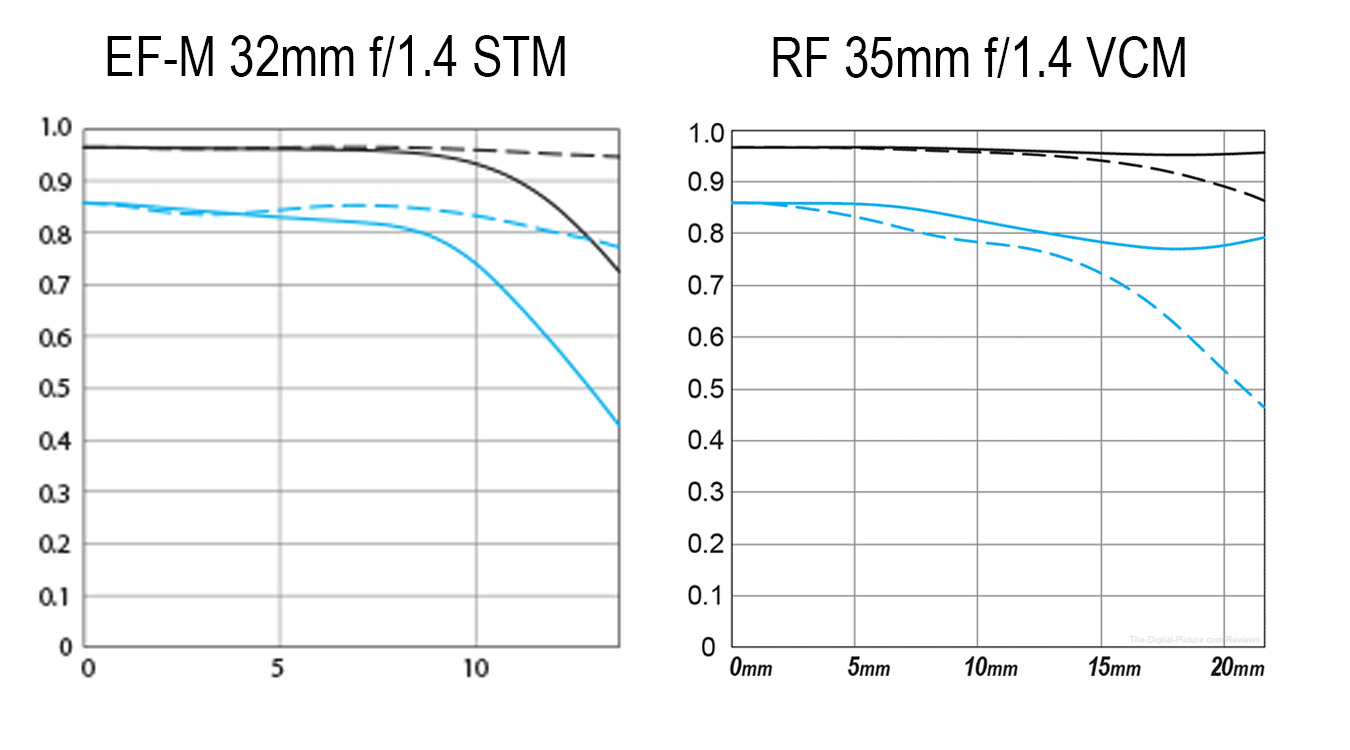
My point is that the EF-M 32mm gave Canon L-level of performance on the APS-C EOS-M system and is certainly something I would love to see Canon port to the RF-S system. Canon could finally break the mold and call this a Canon RF-S 32mm f1.4L STM, and there would be very few complaints about the optical performance. There would be some, of course, because that’s the way the internet world rolls.
As well, the RF mount deserves the EF-M 22mm F2.0, which was a simple design, but a fantastically compact pancake lens. This would be a great bang-for-the-buck prime kit lens, and mysteriously, it still does not exist for the RF mount. The RF 16mm and the 28mm small primes do come close, but they don’t replace a pancake lens that was less than 20mm in front of the camera body.
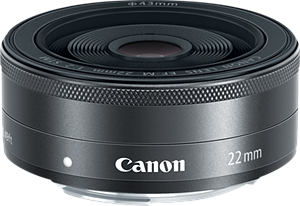
For Canon to make that for the RF-S mount would have the lens stick 2mm further into the lens mount, which wouldn’t be a problem for the RF mount, as even the RF-S 18-150mm and the EF-M 18-150mm also sit back into the lens mount. So much so, there was a guard around the EF-M 18-150mm rear element.
So, in practicality, there’s no reason that Canon couldn’t re-release that EF-M 22mm F2.0 STM and even the Canon EF-M 28mm f/2.8mm Macro IS STM as well, which doesn’t have an equivalent for RF-S unless you consider the Canon RF 35mm f/1.8 Macro STM to be a distant cousin.
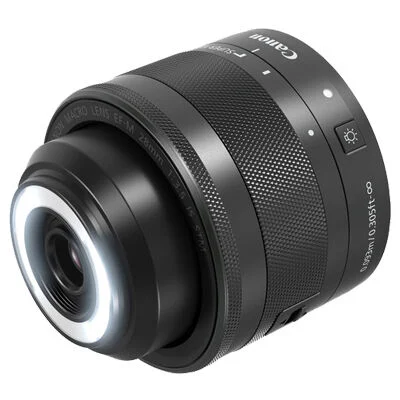
There’s one other lens I’d love to see moved over to the RF-S, and it’s a little more contriverisal, and I can even see why Canon didn’t move this one. This lens, in my mind, is the Canon EF-M 15-45mm. This is a lens in which you either loved or hated. Yes, it was a slow lens, and Canon’s quality assurance for the lens was absolutely the worst I’ve ever seen from Canon, but if you had a good copy of this lens, it was surprisingly good.
I had to try 4 different copies, and I rejected three of them to Canon Canada, who then lost patience with me and told me to go pound sand. I persevered and managed to get my hands on a good copy of this lens, and for the size of it, it was wonderfully compact, and had decent image quality when combined with DLO.
When Canon first came out with the 18-45mm, I first assumed that Canon had grown tired of the quality problems with the 15-45mm and simply stopped the zoom range so they could limit the problems of manufacturing the lens, but the optical design was different and far simpler than the 15-45mm. However, because Canon’s RF-S sensor is a 1.6x crop of full frame, 15mm as a starting point makes so much more sense than 18mm.
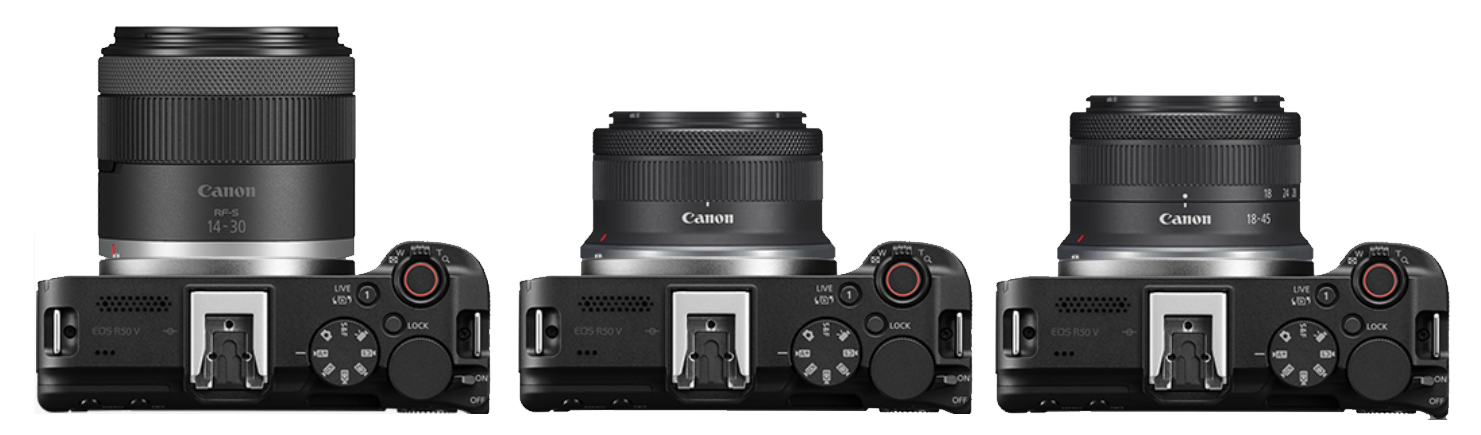
The Canon RF-S14-30mm f/4-6.3 IS STM PZ comes close to my wish, but it’s not as compact and doesn’t have the full 24-70mm equivalent range of the 15-45mm, and because of power zoom and different requirements, it is a more expensive lens as well as not as compact. The EF-M 15-45mm was a little different because it was collapsible and thus had a much smaller form factor when it wasn’t in use. As you can see, the size would be even smaller than the current 18-45mm that exists for the RF-S mount.
Closing Thoughts
For whatever reason, Canon seems to be resistant to moving over some of the cameras and lenses that made some of us (ahem, me) love the EOS-M system. Now that we have the Sigma and Tamron lenses on the RF mount, it would be nice if we got the cameras and lenses that made that lineup popular. There was a reason that the EOS-M system was most for a while, the most successful mirrorless system in the market. I do know that the margins were most likely quite tight for the EOS-M system, but when more and more smartphone users are graduating to interchangeable lens cameras, a less intimidating RF mount R200 just may be the right choice for them to start their ILC journey.
While Canon is the dominant market, and the market seems to show signs of growth, I’m also going to suggest that the market is growing slightly despite Canon, and not because of Canon. The market could be doing much better if Canon chose to look at the APS-C system as a system, and not an afterthought.





I was lucky, I recently found a new good used copy of the 15-85mm. The seller claims he only (bought and) used the lens on a 2-week vacation in 2011. And I have no reason not to believe him. But better still, would be an updated modern RF-mount version.
there's been a 17-70 in patent applications for ages.
I'd love that lens as it would be a great range for both crop and full frame
but the 15-85 or equivalent, without a doubt.
Amusingly, I used the 18-150mm for those same use cases as you mention. have you tried it? I would use it with DLO though, as it needs to clean up it's mess in the corners and whatnot.
As for conflict within Canon, wasn't the M series selling better than the RF series when it was abandoned? The decision to abandon it must have been painful and I think it had to do with no longer having to support the EF firmware code base and moving everything to the RF code base.
But Canon could also say: "Look at the R50V, the 16 STM, 28 STM, the 50 STM, The RF-S zooms. There you have it!"
I really, really hope, Canon will answer different and better. But if so, then I am sure, it won't be soon... 😢
Fujifilm is the only company genuinely cares about APS-C. That's because they don't make FF cameras.
EDIT:
EF-M 32 is a really great lens with stellar IQ over the whole aperture and focus range. Small, light ... just a tool without real flaws. I liked it for photo and it's now resting in my "video studio" on an M50 ii for youtube stuff where the clean HDMI is fed into an ISO recording device, sometimes with a 2nd camera and the computer screen cast.
Could be, that their R&D resources are limited (!) and that they'll focus/prioritize on rounding up the R system at the higher end (TS, FF primes, etc.).
If I had to bet a buck, I'd go for the latter and not the butt 😉
Full frame gear stays home.
I also miss the cameras, or better the philosophy of high-end and comact of the EOS-M system.
I really liked the compact nature of the EOS-M system. I bought the M50 II (two actually) after I transitioned from the 5D III to the R5 and bought a R as a second camera. The M50 II had clean HDMI output so, like @mb66energy I could use it in multi-camera ISO recordings during COVID times. However, the compact nature of the camera was the main value to me. I got it with the 15-45mm which was great, but the EF-M 22mm F2 was by far the most used lens for me. I really loved that lens! I considered an M6 II, but the lack of EVF just was a deal breaker for me. The add-on EVF just looked wrong and I never tried it. I've since sold all my EF-M lenses/bodies.
I use the R50 in the same manner as I used the M50 II. I actually have two R50's. The R50 has significant advantages over the M50 II, the Digic X and advanced AF is great, but also it supports the UVC/UAC standards, so can be used as a webcam with no HDMI capture card/cables and no special Canon software. I used the RF-S 18-150 with the R50 quite a bit, until the Sigma RF-S lenses came out.
I now use the Sigma 18-50mm f/2.8 most of the time with the R50. It is an excelent combo! I also have the 10-18mm f/2.8 and the 16mm f/1.4, 23mm f/1.4, 30mm f/1.4 and 56mm f/1.4 . I use these as a compact kit for many situations. I really like the 18-50 and 10-18 zooms because they are compact and f/2.8. The 56mm f/1.4 prime is nice because it is compact and has the two stops advantage over the 18-50 for portraits. The 30 and 23 are larger. The 23 is large enough, larger than both zooms, that I don't really like bringing it with me. The 16mm f/1.4 is huge in comparison and mostly a webcam/video use lens for me. I'm not really into video, this is just talking heads type use.
What I really, really, really want is an RF-S 22mm F2. [Canon, please, please, please]. R50 + RF-S 22mm F2 = 🙂 .
Perhaps even more than an RF-S 22mm F2 lens, I'd like to see an R50L. Not an R50 II, second version of an entry level camera, but a "Luxury" camera in the R50 form-factor. It would probably mean Canon needs a revamped lens line-up to go with it, if the strategy is to sell lenses.
My personal wish list:
- Improved sensor, improved low-light performance, fast enough readout to avoid the need for mechanical shutter of any kind.
- 24MP, or even 20MP if it makes a high IQ sensor more feasible.
- Burst rate can be kept at the current 15fps. But I want a bigger buffer.
- Pre-capture.
- ES shutter only
- IBIS
- Another exposure wheel (preferably two, though this would require some creativity...)
- A bit better EVF, though without adding bulk.
- Video features can remain the same as the current R50 or improved in some way.
- Customization ability more on par with higher end models
It could cost the same as an R7 and that would be fine. I'm sure I'm missing other features I'd like, but you get the idea.
The lens I miss most on RF is the EF-M 22mm f/2.0.
This was such a great street photography lens. It's equivalent of almost exactly 35mm is considered the perfect focal length by many street photographers, and also by Fujifilm (the X100 series also has that equivalent focal length). It's also super light and unobtrusive, totally incomparable to the RF 24mm. But yes, mysteriously, that lens did not get ported to RF. I wonder why. Was it too good for what it cost?
Instead, we got the RF 28mm f/2.8, which is a whole other focal range on APS-C and feels more like a 50mm.
To me, it almost seems like Canon is getting ready to ditch their APS-C lineup, which so far has been treated like a stepchild.