

When you purchase through links on our site, we may earn an affiliate commission. Here's how it works. |
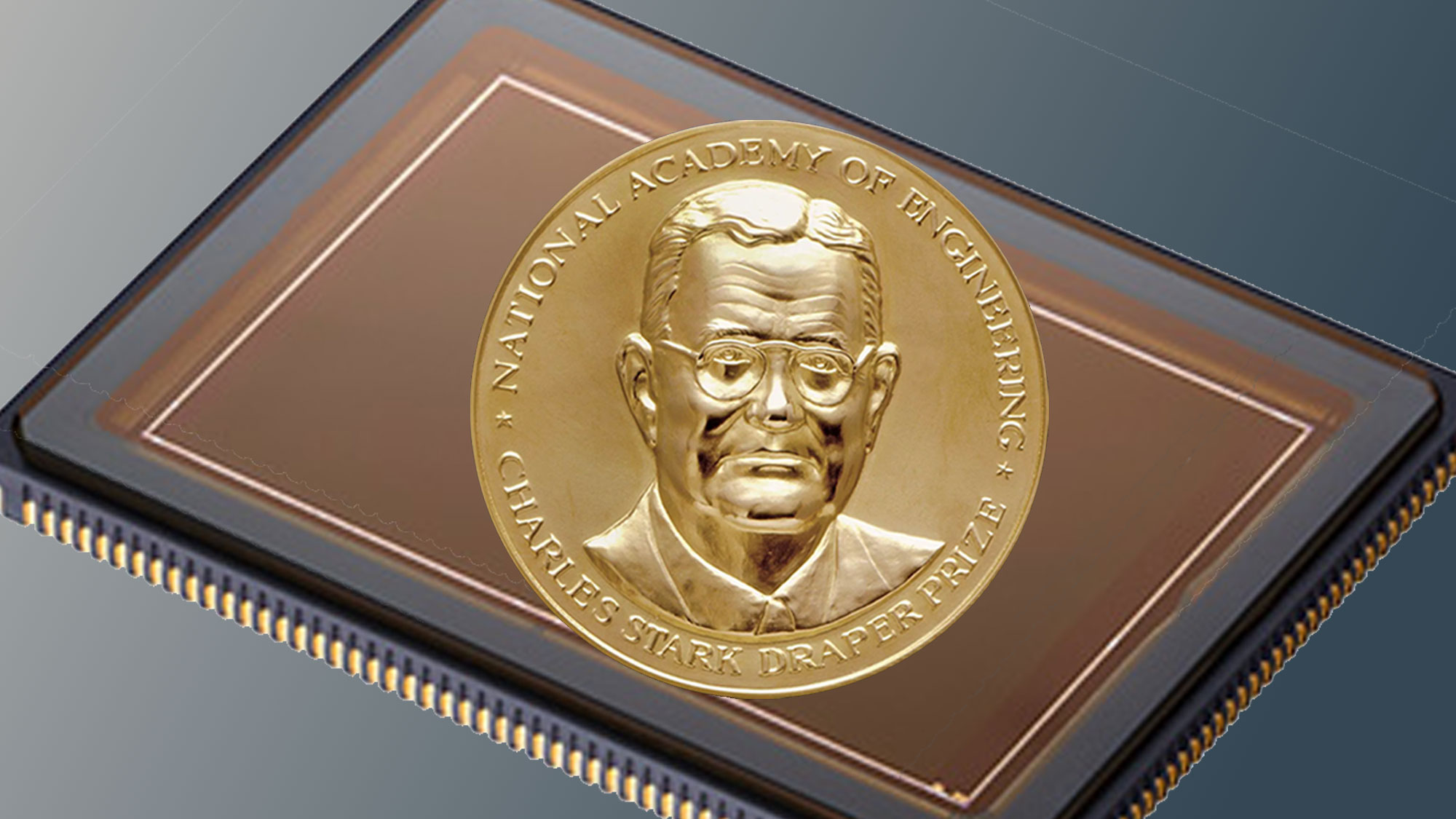
Noted physicist Eric Fossum, inventor of today’s CMOS image sensor and long-time friend of our community, has been awarded the 2026 Charles Stark Draper Prize for Engineering. This biennial award, presented by the National Academy of Engineering, carries a price tag of $500,000, making it one of the most prestigious awards in this field, often referred to as the ‘Nobel Prize of Engineering’.
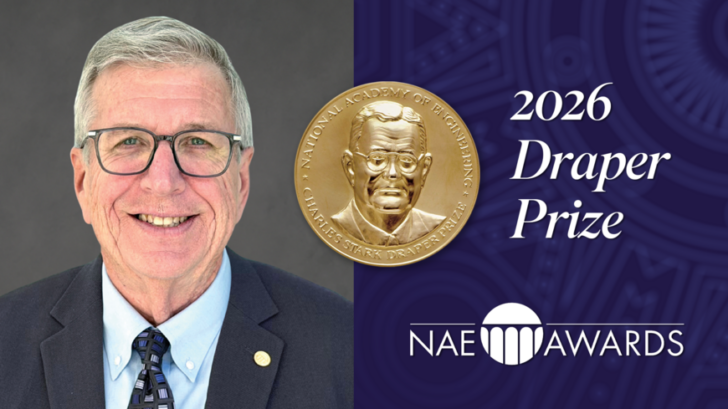
Currently, Fossum is the John H. Krehbiel Sr. Professor for Emerging Technologies and the Vice Provost at Dartmouth College. Fossum was honored for the “innovation, development, and commercialization” of the technology that is used in all digital cameras on the planet and beyond.
The JPL Era: A Crisis of Scale In the 1990s
The CMOS sensor’s history dates back to the early 1990s and the NASA Jet Propulsion Laboratory (JPL). During this period, NASA’s administrator, Daniel Goldin, introduced the “Faster, Better, Cheaper” approach for space exploration. Fossum’s task here was to address the physics problem, as the imaging technology then available, Charge-Coupled Devices (CCDs), were simply too big, power-hungry, and delicate for use in the miniaturized spacecraft of the future.
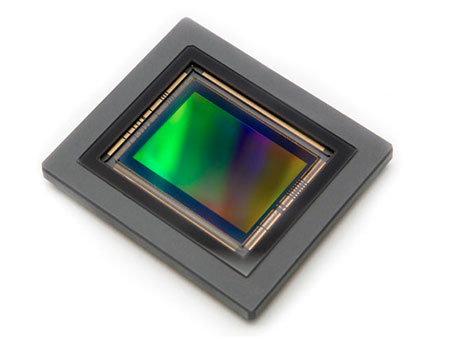
Fossum was challenged to reduce a “bread box-sized” camera system to a “coffee cup” size. Fossum at JPL went on to revolutionize digital imaging by essentially reinventing the sensor itself. Although CCDs transferred their charges across a chip in a “bucket brigade” fashion to a single amplifier, in his Active Pixel Sensor (APS), each pixel in a picture got its own miniature amplifier. To do so, he simply employed CMOS technology, already in use in computer processors.
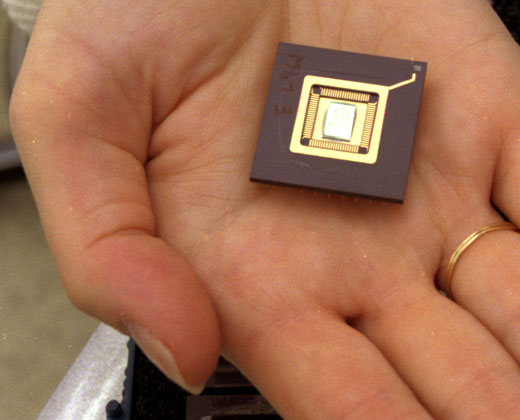
This innovation led to “the camera on a chip.” It used one-hundredth of the power of CCDs, protected itself from cosmic rays, and made possible today's shrinkage of imaging technology.
From Space Exploration to Social Justice
Although it was originally developed for use in interplanetary missions and Mars rovers such as the Perseverance Rover of 2020, which carried 20 CMOS cameras, Fossum soon understood the potential of the technology for use on Earth. In 1995, he founded Photobit.
As the NAE announced the 2026 prize winner, it wrote:
“The innovative work led by Dr. Fossum produced dramatic improvements in what active pixel sensors can deliver and brought digital imaging to the masses,” said Jerry M. Wohletz, Ph.D., president and CEO at Draper. “The wide range of applications for this technology and its impact on society are profound and clearly worthy of the Draper Prize.”
Reflecting on his invention, Fossum has noted that while he expected the technology to change photography, he was most gratified by its unexpected impact on social justice, as it provided a tool for transparency and accountability in the hands of billions of people.
A Storied Legacy
The Draper Prize is the latest in a long line of elite awards that Fossum has received. His career has been one that has been filled with the highest honors in science and technology, including:
- NASA Exceptional Space Act Accomplishment Award
- Technical Emmy Award
- Queen Elizabeth Prize for Engineering
- National Medal of Technology and Innovation
- Induction into the National Inventors Hall of Fame
- Election to the National Academy of Engineering
- Others like the Edwin Land Medal and NASA Exceptional Achievement Medal
In addition to his contributions in the field of research, Fossum remains an active mentor in the field of photography, most notably taking to the DPReview forums to engage with users and impart his knowledge.
With his ongoing development of the next generation of imaging technology—the Quanta Image Sensor, or QIS, with the capability of counting individual photons, his Draper Prize in 2026 represents a recognition of a lifetime of contributions that have fundamentally changed the world's perspective.
It's hard to imagine a world in which this technology did not exist, and the entire digital camera industry has been built on the invention that Eric Fossum made all the way back in the 1990s.
Press Release
2026 Draper Prize for Engineering Recognizes the “Camera-on-a-Chip” Inventor
January 06, 2026
CAMBRIDGE, Mass. Jan. 6, 2026 – Eric R. Fossum, Ph.D., a pioneering semiconductor device physicist and engineer, is the recipient of the 2026 Charles Stark Draper Prize for Engineering. The prize, endowed by Draper and awarded every two years by the National Academy of Engineering (NAE), is one of the world’s preeminent awards for engineering achievement.
The NAE recognized Fossum “for innovation, development, and commercialization of the complementary metal-oxide semiconductor (CMOS) active pixel image sensor ‘camera-on-a-chip.’” Originally developed to miniaturize cameras for NASA spacecraft, the technology makes high-quality imaging smaller, faster, and more energy efficient. It now powers billions of smartphone cameras and enables applications ranging from video communication and social media to medical tools, automotive safety systems, industrial vision, and space exploration.
“The innovative work led by Dr. Fossum produced dramatic improvements in what active pixel sensors can deliver and brought digital imaging to the masses,” said Jerry M. Wohletz, Ph.D., president and CEO at Draper. “The wide range of applications for this technology and its impact on society are profound and clearly worthy of the Draper Prize.”
Fossum was part of the research team at the NASA Jet Propulsion Laboratory that developed the breakthrough CMOS sensor. Further refinements with pinned photodiode (PPD) technology led to CMOS sensors that eventually exceeded the performance of charge-coupled device (CCD) sensors. CMOS sensors are generally less expensive and use less power than CCD sensors, making them ideal for use in battery powered devices. More recently, Fossum invented the Quanta Image Sensor, a CMOS-based photon-counting image sensor that enables high-resolution imaging in extremely low light conditions.
Fossum is the John H. Krehbiel Senior Professor for Emerging Technologies at the Thayer School of Engineering at Dartmouth, where he teaches, directs the Ph.D. Innovation Program, and conducts research in image sensors. He also serves as Dartmouth’s Vice Provost for Entrepreneurship and Technology Transfer. His professional recognition includes induction into the National Inventors Hall of Fame (NIHF), election to the National Academy of Engineering, the Queen Elizabeth Prize for Engineering, the National Medal for Technology and Innovation, a Technical Emmy Award, and the Edwin Land Medal.
Fossum received his Bachelor of Science degree in physics and engineering from Trinity College in Connecticut, and his Ph.D. in engineering and applied science from Yale University. He has published over 300 technical papers and holds 185 U.S. patents.
The Charles Stark Draper Prize for Engineering was established and endowed in 1988 at the request of Draper to honor the memory of “Doc” Draper, the father of inertial navigation, and to increase public understanding of the contributions of engineering and technology. The biennial prize honors an engineer whose accomplishments have significantly impacted society by improving quality of life, providing the ability to live freely and comfortably, and/or permitting access to information. Recipients receive a $500,000 cash award.





If current progress of QIT (Quanta Image Sensor) chips reach 16–41 MP with 1.1–2.2 μm pixels, 30–60 fps readout, and single‑exposure dynamic range around 95–100 dB (≈20+ stops), clearly in a range implemented in a QIS‑based “regular” professional stills body, medium‑ to long‑term realistically in the timeframe of 5–15 years from now, assuming the technology continues to mature and finds viable high‑volume markets along the way.
Now that would be awesome since I am an avid Night and Low Light fan!
See: https://petapixel.com/2026/01/09/ca...-image-sensor-with-26-stops-of-dynamic-range/