


When you purchase through links on our site, we may earn an affiliate commission. Here’s how it works. |
We invite you to join us for an exploration of the Canon EOS 6 Series, a product family that stands out within Canon’s full-frame DSLR and mirrorless portfolio. We also recommend looking at our other articles on the Canon Camera Series to provide you with a bigger picture of the Canon camera story.
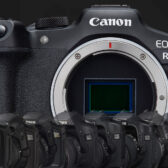
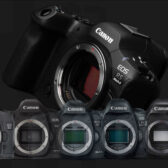
The Canon EOS 6 Series has always been an excellent choice for the photographer who sought smaller size and weight, simplicity, and price compared to other more “pro” models such as the 1 Series and 5 Series professional full-frame Canon cameras.
The Canon EOS 6 Series has transitioned from the first Canon EOS 6D to mirrorless cameras, the EOS R6, EOS R6 Mark II, with the EOS R6 Mark III still to come. This article aims to start the discussion about the Canon 6 Series history, including new technologies, benefits, and how it has advanced since its first model was introduced in 2012.
Canon EOS 6D

Launched: September 2012
Price at Launch: $2,099 (body only)
The Canon EOS 6D was released in 2012 and became Canon’s new budget full-frame DSLR. It occupied the somewhat big price gap between the 5D Mark III and the cropped APS-C 7 series and xxD series cameras. It was targeted at amateur and semi-professional users who wanted access to a full-frame body, but who were more budget conscious and did not want the EOS 5D Mark III or EOS 1D X.The 6D’s 20.0mp full-frame CMOS sensor offered fairly good quality with decent dynamic range and high ISO performance. It was a good camera for portraits, landscapes, and low-light photography.
A 6D had a polycarbonate body with partial weather sealing that was lighter than its magnesium alloy brothers, weighing in at 755g, although a few internet forum critics mentioned the camera body did feel less robust than the 5D series.
The 6D had an 11-point autofocus system with one cross-type center point. The autofocus system was fine for the time, but it was not as advanced as the 61-point autofocus of the 5D Mark III, which made it less of an option for fast-action photographers who photograph sports and birding.
The 6D was the first Canon full-frame camera to include built-in Wi-Fi and GPS for wireless image transfer and geotagging. It had a burst rate of 4.5 fps and a 73 JPEG buffer (up to 1250 frames with a fast enough card under specific conditions), which was more than enough for the intended market. An ISO range of 100-25600 (expandable to 102400) was decent enough to support lowlight shooting. As far as video, the 6D captured 1080p video at 30 fps and could use manual control of the video recording.
The Canon EOS 6D is a triumph of price versus performance. It’s a full-frame camera that doesn’t break the bank, delivering image quality that rivals more expensive models. While the autofocus system and burst speed won’t satisfy sports shooters, its compact size, Wi-Fi, and GPS make it a versatile choice for enthusiasts.
https://www.dpreview.com/reviews/canon-eos-6dThe 6D was an outstanding entry-level choice for the six series line that expanded access to full-frame quality to more people. It quickly became a popular camera option for working professionals on a budget, like wedding professionals, traveling amateurs, and any other individuals looking for a lightweight full-frame body.
The 6D was not the most feature-rich camera on the market, but its low price and reasonable features moved Canon solidly into the entry-level full-frame space to compete directly with cameras like Nikon’s D600.
Key Features
- 20.2MP Full-Frame CMOS Sensor
- DIGIC 5+ Image Processor
- 3.0″ 1.04m-Dot Clear View LCD Monitor
- Full HD 1080p Video Recording at 30 fps
- 11-Point AF with Center Cross-Type Point
- Native ISO 25600, Extended to ISO 102400
- 4.5 fps Shooting at Full Resolution
- Built-In Wi-Fi and GPS Connectivity
- iFCL 63-Zone Dual Layer Metering Sensor
- In-Camera HDR & Multiple Exposure Mode
Canon EOS 6D Mark II

Launched: June 2017
Price at Launch: $1,999 (body only)
The Canon EOS 6D Mark II was announced in 2017 as the successor to the Canon 6D. It was a very solid upgrade from the original 6D camera. It was equipped with a 26.2 megapixel full-frame CMOS sensor that provided a greater resolution and slightly better dynamic range than the previous 6D sensor. The DIGIC 7 processor had a positive impact on high ISO noise and performance overall.
The 6D Mark II was equipped with a 45-point all cross-type autofocus system, and by that, it was a major leap from the 6D’s 11-point system, which meant it was well equipped for action and low-light focusing. The Dual Pixel CMOS AF, which is one of the most outstanding features of Canon’s modern DSLRs, offered perfect and smooth autofocus in Live View and video, thus being a strong, attractive point for videographers. Along with that came the very first 3.0-inch, 1.04 million-dot vari-angle touchscreen LCD in full-frame DSLRs by Canon. This made the camera far more usable for creative angles and video work.
In terms of speed, the 6D Mark II was able to shoot continuously at 6.5 fps, and it had a 110 frame JPEG buffer. So while faster than its predecessor, it still did not approach the calibre of 7D Mark II or 5D Mark IV. Its ISO range of 100-40000 (which could be expanded to 102400 ) was decent for a full-frame camera, providing users with good low-light performance. The 6D Mark II body maintained the same polycarbonate construction but had better weather sealing. Some internet forum users still wished for a magnesium-alloy build and couldn’t see ever using such a camera body, because, as we know, everyone in the camera forums needs a camera that will survive the next battlefront.
The EOS 6D Mark II makes a fine entry-level full-frame camera, with a great vari-angle touchscreen and impressive Dual Pixel AF. While it’s not as robust or feature-packed as the 5D Mark IV, it’s a compelling option for those upgrading from APS-C or seeking a lightweight full-frame body.
https://www.cameralabs.com/canon-eos-6d-mark-ii-review/Priced at $1,999, the 6D Mark II targeted enthusiasts upgrading from APS-C cameras like the EOS 80D and semi-professionals needing a reliable backup, as well as those using the Canon EOS 6D. Its versatility made it a popular full-frame camera, though some criticized its dynamic range and build quality compared to competitors like the Nikon D750.
Key Features
- 26.2MP Full-Frame CMOS Sensor
- DIGIC 7 Image Processor
- 45-Point All-Cross Type AF System
- Full HD Video at 60 fps; Digital IS
- 3″ 1.04m-Dot Vari-Angle Touchscreen LCD
- Dual Pixel CMOS AF and Movie Servo AF
- Native ISO 40000, Expanded to ISO 102400
- 6.5 fps Shooting; Time-Lapse & HDR Movie
- Built-In GPS, Bluetooth & Wi-Fi with NFC
- Dust and Water-Resistant; SD Card Slot
Canon EOS R6

Launched: July 2020
Price at Launch: $2,499 (body only)
In 2020, Canon announced the EOS R6 which finally shifted 6 series to the mirrorless RF mount. The full-frame 20.1-megapixel CMOS sensor was a slightly modified version of the sensor that was utilized in the EOS 1D X Mark III. This sensor was a CMOS DPAF AF II sensor, adopting Canon’s modern sensor developments, thus acquiring excellent dynamic range and low-light performance, far better than the 6D Mark II.
Users who were using the 6D series and, quite possibly, users of the EOS RP and other early Canon mirrorless RF cameras were the ones who would consider it an interesting upgrade.
The R6 camera, driven by the DIGIC X processor, could shoot at 12 fps, and its mechanical shutter (20 fps electronic) had an over 1000 frame JPEG buffer under most circumstances, so that the camera could be used for sports, wildlife, and event photography purposes. The R6 employed the same AF system as the EOS R5, which provided users with 1,053 selectable AF points and the same subject tracking (which included people, pets, and birds) as the R5 did.
The R6 contained a 3.69-million-dot OLED electronic viewfinder (EVF) and a 3.0-inch, 1.62-million-dot vari-angle touchscreen LCD. The camera was also equipped with IBIS (In-Body Image Stabilization) and, when used with compatible RF lenses, had a total of 8 stops of stabilization. The 6 series also received a bump up in card slots, now having dual SD UHS-II slots from the single UHS-I slot in the 6D Mark II.
The camera body was made of magnesium alloy and came with far better weather sealing, which contributed to its being much more rugged compared with its 6D predecessors. So that the question about the build had been finally cleared, and the internet forums had to look for some other topic to discuss.
The Canon EOS R6 is a fantastic all-rounder, blending speed, image quality, and versatility in a compact package. Its autofocus and IBIS are class-leading, making it a top choice for enthusiasts and pros alike. The 20MP sensor may seem modest, but it delivers where it counts.
https://www.dpreview.com/reviews/canon-eos-r6-reviewWith a $2,499 price tag, the R6 was billed as a versatile full-frame mirrorless camera meant for both photographers and videographers. The R6 could shoot 4K60 video with 10-bit HDR-PQ, and also C-Log. These video features appealed especially to hybrid shooters. While some reviewers noted the 20MP sensor was less resolution than its competitors, such as the Sony A7 III, the performance and handling of the R6 made it a strong camera body that sold very well.
Key Features
- 20MP Full-Frame CMOS Sensor
- DIGIC X Image Processor
- 4K60p and FHD 120p 10-Bit Internal Video
- Sensor-Shift 5-Axis Image Stabilization
- 12 fps Mech. Shutter, 20 fps E. Shutter
- Dual Pixel CMOS AF II with 1053 Points
- 0.5″ 3.69m-Dot OLED EVF
- 3″ 1.62m-Dot Vari-Angle Touchscreen LCD
- Subject Tracking with Deep Learning
- Dual SD UHS-II Memory Card Slots
Canon EOS R6 Mark II

Launched: November 2022
Price at Launch: $2,499 (body only)
The Canon EOS R6 Mark II was announced in 2022 and improved on the balance of price and performance. The R6 provided a new 24.2-megapixel full-frame CMOS sensor with a slight resolution increase while maintaining great dynamic range and low-light performance.
The R6 Mark II improved autofocus, with improvements in subject tracking, including cars, and enhanced focus tracking of animals, which added to its suitability for action photography and nature photography. With a 12 fps mechanical shutter (40 fps in electronic mode), and a virtually unlimited frame JPEG buffer of over 3500 under most circumstances, the R6 Mark II was now a much better option for action photography.
The R6 Mark II had a 3.69-million-dot OLED EVF, and the camera also retained the 3.0-inch, 1.62-million-dot vari-angle touchscreen LCD. Video capability was vastly improved, now offering 4K60 oversampled video (from 6K), with no artificial 30 minute recording time limit, and featuring improved thermal management.
The EOS R6 Mark II is a near-perfect all-rounder, improving on its predecessor with better resolution, faster shooting, and enhanced video features. It’s a compelling choice for anyone seeking a high-performance full-frame mirrorless camera without breaking the bank.
https://www.cameralabs.com/canon-eos-r6-mark-ii-review/The R6 Mark II was released at the same price point ($2,499) as the R6. The R6 Mark II was a significant camera release for Canon in the market of hybrid shooters, sports photographers, and enthusiasts. It matches up very well against the Sony A7 IV and Nikon Z6 II. We see that the R6 Mark II was one of the highest-selling cameras in Japan and other markets we were able to track. It was also easily the most popular full-frame Canon mirrorless camera while available on the market.
Key Features
- 24.2MP Full-Frame CMOS Sensor
- 4K60 10-Bit Internal Video, C-Log 3
- External 6K ProRes RAW Recording
- Dual Pixel CMOS AF II
- 12 fps Mech. Shutter, 40 fps E. Shutter
- Sensor-Shift 5-Axis Image Stabilization
- 3.69m-Dot OLED EVF
- 3″ 1.62m-Dot Vari-Angle Touchscreen LCD
- Dual UHS-II Memory Card Slots
Canon EOS R6 Mark III

Launched: November 2025
Price at Launch: $2,799 (body only)
The Canon EOS R6 Mark III was introduced to the market on November 6, 2025. It has a 32.5-megapixel full-frame CMOS sensor and DIGIC X processor. The ISO range is from 100 to 102,400 and is expandable to 50-204,800. The sensor in the R6 Mark III is slightly faster and has a higher pixel count compared to the one in the R6 Mark II. Subject detection capabilities have improved and now automatically cover people, animals, and vehicles (including horses, trains, and planes).
The R6 Mark III has a burst rate of 12 fps with the mechanical shutter and 40 fps with the electronic shutter, which matches the burst rate of the R6 Mark II. The R6 Mark III has a pre-capture of 20 frames that saves individual RAW files, which is a first for the six series. The buffer is capable of holding up to 150 RAW frames when using CFexpress Type B cards. In addition, the image stabilization within the camera provides up to 8.5 stops of stabilization at the center and up to 7.5 stops at the periphery with compatible RF lenses.
Canon says this camera is still squarely aimed at stills shooters, albeit ones who also need to be able to shoot video, so we’re definitely looking forward to getting our hands on a production model to see if the ultra-fast sensor comes with any image quality impact, as was the case with the Nikon Z6III’s ‘partially Stacked’ sensor. Even if there is, though, we’re clearly well into the evolution of Canon’s 6-series line; in the DSLR days, the EOS 6D was a decent camera, but one with obvious compromises relative to higher-end models. With the EOS R6 III, those compromises are getting much harder to find.
https://www.dpreview.com/reviews/canon-eos-r6-iii-initial-review#IIFor video, it captures 7K RAW Light up to 59.94p, open-gate 7K at 30p, oversampled 4K 60p from 7K, 4K 120p to Full HD 180p. Supports Canon Log 2 and 3 with waveform monitoring and false color. It records with Canon Log 2, capturing up to 15 stops of dynamic range. It has dual card slots: one CFexpress Type B and one UHS-II SD. The body is magnesium alloy with dust and water resistance seals. The weight is approximately 680g. It has a full-size HDMI port, 5GHz Wi-Fi, and Bluetooth 5.1. The viewfinder is a 0.5-inch 3.69m-dot OLED EVF. The LCD is a 3.0-inch 1.62m-dot vari-angle touchscreen.
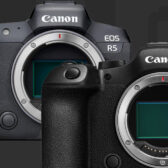
Read More about the EOS R6 Mark III


Key Features
- 32.5MP Full-Frame CMOS Sensor
- 7K 60p 12-Bit Internal RAW Light Video
- Open Gate 7K 30p, High-Speed 4K 120p
- Dual Pixel CMOS AF II & Movie Servo AF
- Up to 40 fps & Pre-Continuous Shoot Mode
- 8.5-Stop 5-Axis Image Stabilization
- 3.69m-Dot OLED EVF with OVF View Assist
- 3″ 1.62m-Dot Vari-Angle Touchscreen LCD
- CFexpress & SD UHS-II Memory Card Slots
- Multi-Function Shoe, Wi-Fi and Bluetooth
The Sensors
The 6-Series has usually attempted to balance cost versus raw image quality. The original 6D’s 20.2MP sensor and the 6D Mark II’s 26.2MP sensor were essentially the same in terms of dynamic range. So in reality, there was no actual penalty for the increase in resolution from 20MP to 26MP.

The R6 and R6 Mark II marked a significant increase in dynamic range, with the R6’s 20.1MP sensor (from the 1D X Mark III) achieving around 2.5 EV of dynamic range increase over the 6D sensors. The R6 Mark II’s 24.2MP sensor maintained similar performance with better noise control, and like the 6D Mark II’s sensor, offered an increased resolution with no penalty to dynamic range.
Honorable Mention: Canon EOS RP

Launched: February 2019
Price at Launch: $1,299 (body only)
Although the Canon EOS RP doesn’t technically fall into the 6-Series, being Canon’s most affordable full-frame mirrorless camera certainly gives it an honorary mention. I know some will state that the EOS R8 is the successor to the RP, but it was the RP that started off the prosumer camera line for the RF mount. Debate away in the forums.
The EOS RP was launched in 2019 with the EOS R as the start of the RF mount system for Canon. It featured a full-frame 26.2-megapixel CMOS sensor (that was the same as the 6D Mark II) and DIGIC 8 processor. It was a lightweight camera weighing 485 grams, and had a compact camera body. It was basically a mirrorless version of the 6D Mark II, but at least featured a magnesium alloyed body construction.
The EOS RP had a relatively slow burst rate of 4 frames per second and featured Canon’s CMOS DPAF AF auto focus. The video recording was passable, with 4K24 video (with a 1.6x crop). The 2.36-million-dot OLED EVF was decent for the price. The RP also had the 3.0-inch, 1.04 million-dot vari-angle LCD and had a single UHS-II SD card slot.
The appeal of the EOS RP was the price, and it was marketed as the bang for the buck option for the RF mount.
The EOS RP is a budget-friendly entry into full-frame mirrorless, offering solid image quality and a compact design. It’s not a speed demon, but for portrait and travel photographers, it’s a steal.
https://www.photographyblog.com/reviews/canon_eos_rp_reviewThe RP served as the low-cost entry to Canon’s RF-mount system and had an appeal for those wanting to be an early adopter of the RF mount system and wanted an economical camera body to start off with.
Key Features
- 26.2MP Full-Frame CMOS Sensor
- DIGIC 8 Image Processor
- UHD 4K and Full HD 1080 Video
- 2.36m-Dot OLED Electronic Viewfinder
- 3″ 1.04m-Dot Vari-Angle Touchscreen LCD
- Dual Pixel CMOS AF, 4779 AF Points
- ISO 100-40000, Up to 5 fps Shooting
- Wi-Fi and Bluetooth Connectivity
Final Thoughts
As with most of Canon’s camera lines, the 6 series has transitioned from its initial camera to something far more. But it keeps the same DNA of cost and performance, sitting firmly under Canon’s professional camera systems that include the R5, R3, and R1 series of cameras.







Just one thing: both the R6 and R6 Mark II have the same EVF and rear LCD, there was no improvement AFAIK.
The EOS RP has magnesium in its contruction as well, which is a nice touch for the lower price point.
Dammit! I even had craig check the document to see if I slipped up anywhere. Thanks for the proof reading catches. After a while at looking at the document in wordpress my eyes start to go cross eyed.
The RP and then the R8 fit the bill more, IMHO
I was a little tempted to put the R8 in there as well, as at least with the R6 Mark II and now III it really does feel like the lineup has shifted upscale. But I think the RP and also the R8 if anyone would be the spiritual successor of the entry-level rebels in EF-S land, while the R6 would be like the "super rebel" that sat about (think 77D, etc) - i still think there's a seperation there.
Once the R6 Mark III gets here in the next couple of days, the R6 III will be in there, and I'll certainly think of adding the R8 as well, and talking more about if this is a fork in thinking from Canon - like the XXD series went on after the 50D when the line split to the 60D and the 7D.
I'll certainly give it some thought! Thanks!
Hard to believe that was about 8 years ago now. And Sony continued their hit streak with several more great cameras in this middle tier ($2k-$4k USD) until about 2022. I think the A7RV was probably the last time Sony responded with a spec "win" over Canon in the segment. Something changed around 2022 and Sony focused on the high end A1 II and A9 III cameras while letting the mid tier languish. Canon has methodically improved each of these models and I would argue, beat Sony with the R5C, R5 II, R6 II, C50, and tonight they will be announcing the R6 III. It is safe to say that Canon is sitting comfortably on top in 2025.
I do agree that the R6 has moved upscale and I think that there have been 2 splits: 5D -> R6 and R5 and 1D X -> R3 and R1 (at least on paper for the latter: who knows if the R3 will continue? and moreover to me the R1 feels like an upgrade of the R3 rather than a different class)... but they stay in FF land.
If the 6D was the gateway drug for FF, now that role is held by the RP / R8
Nothing is simple really 😉 what about the 5Ds? One could argue that we went 6D -> R8, 5D -> R6, 5Ds -> R5 and 1D X -> R1 (ignoring one-offs like R, RP and maybe R3)
You're welcome! 🙂
Roger Cicala called the EOS R (not the RP) a mirrorless 6D Mark II.
Sure, the R had the 5D Mark IV sensor. But does the 1D X Mark III sensor in the R6 make it the successor to the 1D X series?
Yes, I've often compared the RP to the one-off 77D. Not quite an x0D, not quite a Rebel. Somewhere in between.
Sorry, but at $2K+, neither the 6D nor 6D Mark II were entry level. They were prosumer level FF cameras after the 5-Series moved from prosumer, with the 5D Mark II, to pro level bodies with the 5D Mark III, which was essentially the successor to the 1Ds Mark III without a built in vertical grip.
It's no accident that the 22.3 MP 5D Mark III with a pro level AF system appeared at the same time the 20.1 MP 1Ds Mark III was discontinued. The 2008 20.0 MP 5D Mark II was intentionally slightly lower resolution than the 2007 1Ds Mark III, Canon's highest resolution sensor at the time. The original 6D replaced the 5D Mark II as the prosumer level FF camera when the 5D Mark III went upscale.
The EOS RP was Canon's first budget FF camera body. If anything, the EOS R (not the RP) was the spiritual successor to the 6D Mark II. Roger Cicala called the EOS R "a mirrorless 6D Mark II". Claiming the EOS R was a 5-Series body because it got the 5D Mark IV sensor is about as ridiculous as claiming the R6 is a 1-Series body because it got the 1D X Mark III sensor...
It's a combination of both magnesium allow and composite plastics.
You could have replied to me once, it would have been enough. And I know I know I am guilty of the same now 🤯
I understand your point of view but I do not agree with it, simple as that.
And as I have written elsewhere, I do not use the sensor's model to classify cameras, but I look at sensor size and at camera's relative position in Canon lineup at the time the camera is current. So to reiterate, for me the 6D (e.g.) was the entry point for FF at the time of its introduction
I've only replied to you once in the comments to this particular post.
(Well, this one is twice. My next comment will be thrice.)
"Entry point for FF" at $2K+ does not equal "budget entry point for FF" and barely $1K.
When the 6D debuted at $2K+, there were plenty of $1K and under budget DSLRs.
When the RP debuted at $1.2K, there were fewer sub $1K and under budget DSLRs, and the floor was higher due to inflation in the intervening 8+ years.
Well there is one entry point FF at any given time. Who are we to decide what price is considered to be "budget"?