

When you purchase through links on our site, we may earn an affiliate commission. Here's how it works. |
Welcome to the next installment! Make sure to check out our articles on the Canon 5-series evolution and the 1-series evolution of excellence.
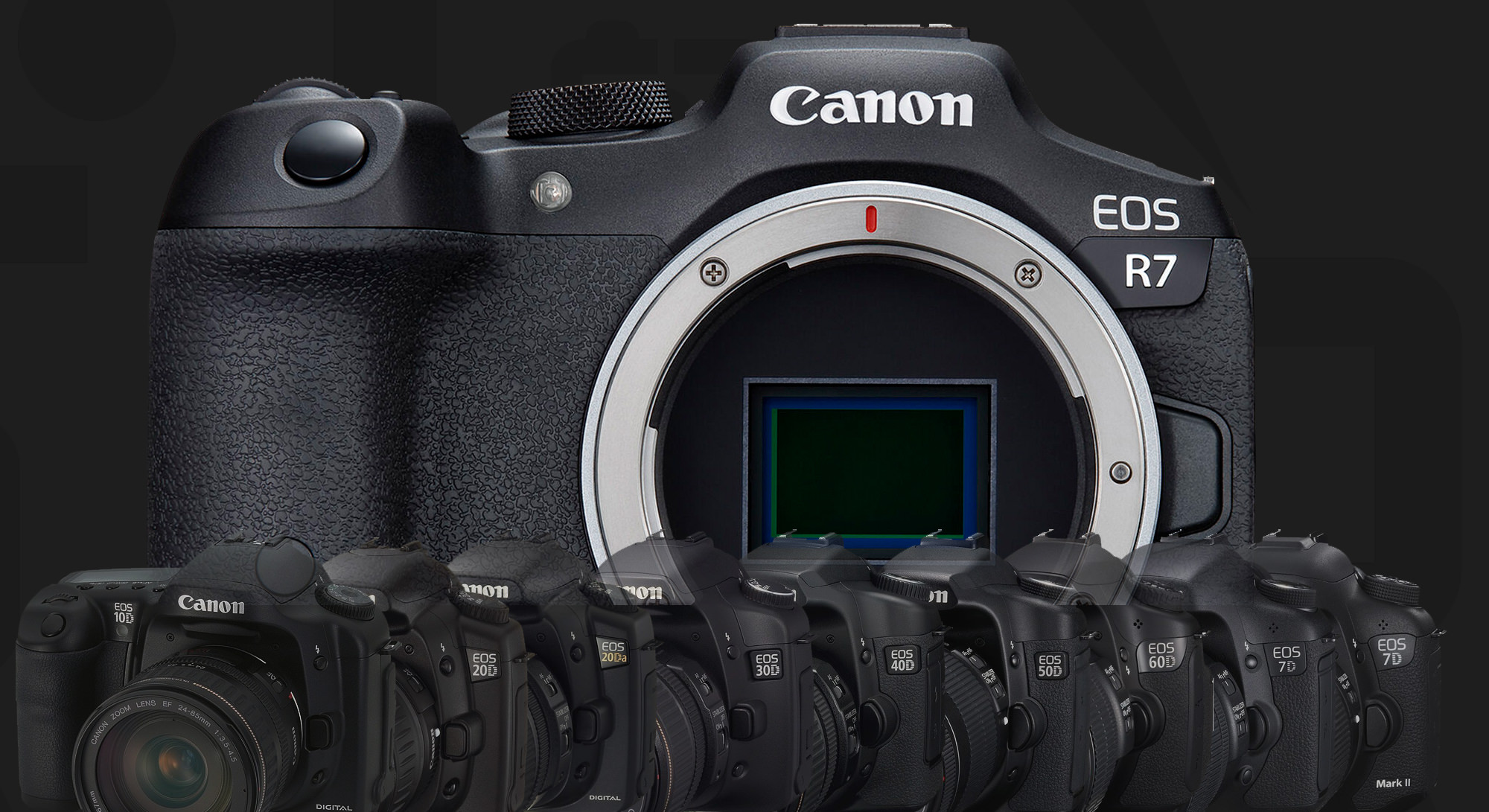
The 7-series and the cameras that preceded it were near and dear to my digital imaging heart. I started off with the 20D and nearly followed along Canon’s complete release path through the 7 series. I hope you enjoy this article as much as I did researching and writing it up.

The 7 series path through its history is the most inconsistent of any Canon camera line. Still, it brought us some fabulous cameras that I’m sure a lot of you also remember fondly.
Canon EOS 10D
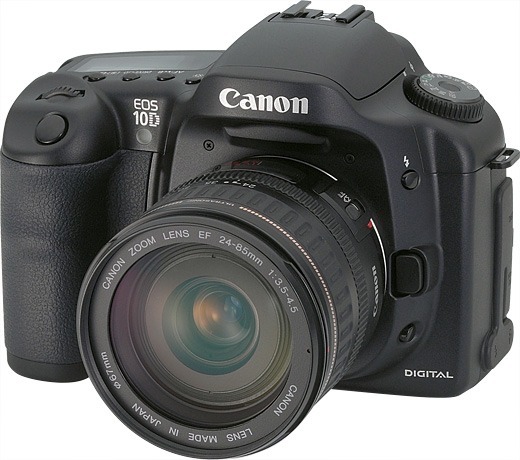
Launched in February of 2003, the Canon EOS 10D was Canon's first semi-professional digital SLR camera, aimed at enthusiasts and semi-professionals. It has a 6.3 megapixel CMOS sensor, which allowed for very good (at the time!) image quality, and provided better low-light performance than the D60.
The camera had a magnesium alloy body, which was tough, and the 7-point autofocus system was very good at the time. The 3 frames per second burst, along with a buffer providing up to 9 RAW images at once, made this a very versatile camera. Its ISO range was 100-3200 ISO, and Canon also introduced the DIGIC processor with this camera.
The 10D, retailing for about $1,999 ($1,499 street price – that was a thing back in the day), struck a happy balance between performance and price point. The camera appealed to portrait, landscape and event photographers who wanted a reliable camera for their work without the cost of a professional camera such as the EOS-1D.
Ergonomics
The camera's ergonomics and usability made it a user-friendly camera, especially for users of Canon’s semi-professional film cameras. Canon's success with the 10D sealed its place in the history of the DSLR world and ushered many of us from film into the world of digital.
The impact of the 10D was very important, and it firmly established Canon in the prosumer APS-C space. While not groundbreaking in any specifications, the 10D was a well-balanced camera with a significant feature set relative to its pricing.
If you've ever handled a D30 or D60, and you pick up the EOS 10D, you'll be immediately struck by how much stronger this camera feels, and how much that body adds to the feeling of quality and superb value.
The next surprise will be your first auto focus, which will be remarkably fast and certain. Then the shutter release, with a quoted 50 ms off the shutter release lag and a halving of the viewfinder blackout the EOS-10D feels a whole lot more responsive.
I have no concerns in stating that, as things stand (at the time of writing this review) the EOS-10D is the absolute best in class, with the best image quality, lowest high sensitivity noise, superb build quality and excellent price (not to mention the huge choice of lenses).
https://www.dpreview.com/reviews/canoneos10dKey Features
- 6.3 Megapixel
- 7 Point Autofocus
- 1.8-inch, 118,000 dot LCD Display
- Shock, Dust and Weather Resistant
- 3 fps Continuous Shooting
- Uses Canon EF Lenses
Canon EOS 20D
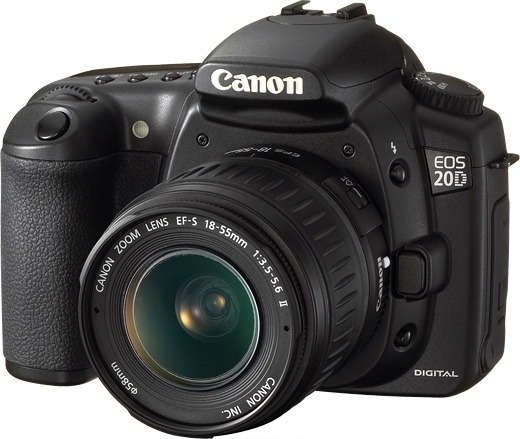
Launched in August 2004, the Canon EOS 20D was a significant step in Canon's semi-professional digital SLR line. Building on the success of the EOS 10D, the EOS 20D would become my first digital camera. It had an 8.2-megapixel CMOS sensor that promised better quality images, particularly in the higher dynamic range and low-light shots.
The body was still a magnesium alloy and offered the same durability that users loved in the EOS 10D. The 20D also featured a faster and better-performing 9-point autofocus system, and reached a 5fps burst rate with a 23-frame RAW buffer. The ISO was 100-3200, and the new DIGIC II processor gave better speeds, colors, and noise improvements over the EOS 10D.
[prli-product-display type=”product” id=”81845″]
Affordable launch price
With a launch price of around $1,499, the 20D was markedly cheaper on the street than the 10D, making it even more accessible to photographers with a tight budget. It was a sturdy camera built for sports, portrait, and event shooters with good performance.
The camera performs superbly in every respect. Color is accurate, image noise is very low, resolution is excellent, and the camera is very responsive, both to the shutter button and from shot to shot.
Particularly impressive is the extent to which Canon managed to decrease high-ISO image noise, while at the same time going to a sensor layout with physically smaller pixels. Canon has had over a year since their EOS-10D was announced to talk to photographers about what the next mainstream pro digicam should be, and it's clear from the 20D that they listened. In all respects, Canon has outdone itself, offering a camera that not only captures excellent images but also provides photographers with unprecedented levels of control in an extremely easy interface.
Expected upgraders will be D30, D60, and 10D owners. Digital Rebel owners wanting a little more control will also want to give the 20D a look. Anyone looking for the benchmark of quality in a relatively affordable D-SLR with a lens should look at the high-end bundle with the image-stabilized 17-85mm EF-S lens.
https://www.imaging-resource.com/PRODS/E20D/E20DA13.HTMThe market effect of the 20D established Canon's double-digit camera line as a prosumer camera line that was cost-effective, yet very capable. The 20D provided performance close to professional level in a mid-level priced body. For Canon, notably, the 20D sold extremely well and created more consumer demand for digital SLRs, primarily by hobbyists and professionals.
The combination of performance, build quality, and cost competition established the 20D as a benchmark for semi-professional-level cameras in the mid-2000s.
Key Features
- 8.2 Megapixel
- 1.8-inch, 118,000 dot LCD Display
- Shock, Dust and Weather Resistant
- 5 fps Continuous Shooting
- Uses Canon EF & EF-S Lenses
Canon EOS 30D
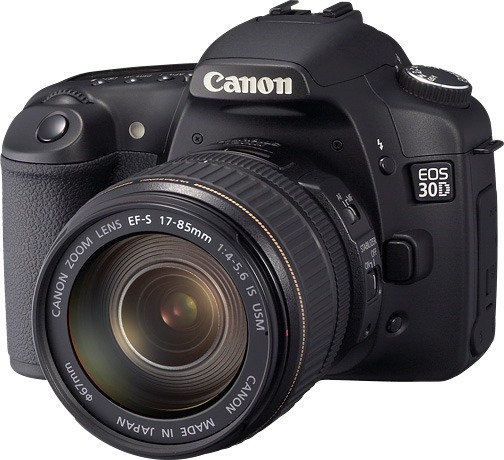
The Canon EOS 30D was an updated version of Canon's prosumer digital SLR, and was launched in February 2006. The 30D was a successor to the very successful EOS 20D. It had the same 8.2-megapixel CMOS sensor, and it provided the same image quality and dynamic range, as well as low-light performance. Most of the features were taken from the 20D, such as the frame rate and autofocus. It also used the same processor for the camera, the DIGIC II processor.
One significant upgrade was the 2.5-inch LCD, which gave photographers a better way to use the cameras, and the term chimping became far more common in the industry. The burst depth was increased, and the 30D added spot metering, finer ISO steps and picture styles.
The Canon EOS 30D delivers the very high performance at a modest cost they are looking for. Many serious amateurs and professionals will be choosing this body as their primary camera. Many others will be choosing the 30D as their backup camera (I am a member of this group).
Should I upgrade? If you have a 20D, you must look at the new enhancements and determine if they are worth the cost to you. For some, the 30D will easily be worth that cost. And there is always something exciting about getting the latest model. Many others will wait for the next generation to be introduced, and buy a lens instead. :)
If you have an older Digital SLR or one of the Digital Rebel models, this is a more substantial upgrade – One that should be considered carefully.
https://www.the-digital-picture.com/Reviews/Canon-EOS-30D-Digital-SLR-Camera-Review.aspxAt launch the price was $1,399 MSRP (and far less on the street), and that placed it just about in the right spot for enthusiasts and prosumers.
However, for many (including me!), the Canon EOS 30D was a skippable camera, as there just weren't enough notable differences from the Canon EOS 30D to warrant the purchase.
Key Features
- 8.2 Megapixel
- 2.5-inch, 230,000 dot LCD Display
- Shock, Dust and Weather Resistant
- 5 fps Continuous Shooting
- “Picture Style” Settings
- Uses Canon EF & EF-S Lenses
Canon EOS 40D
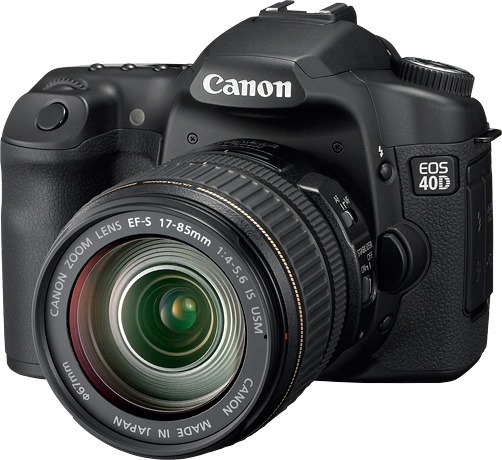
Released in August 2007, the Canon EOS 40D was a significant upgrade in Canon’s semi-professional DSLR collection from the EOS 30D. It had a 10.1-megapixel CMOS sensor that produced clean images with more resolution detail and good low-light performance, which is what earned it praise online.
It was built upon 20D and 30D’s magnesium alloy body but with better weather sealing. Some complaints in the forums focused on the lack of “pro-level” durability and dual card slots because the D300 was released with dual card slots and touted far better weather sealing. Needless to say, this was now a problem; suddenly, everyone had the fear of compact flash cards dying while shooting in the rain.
New Processor
The 40D introduced the DIGIC III processor, and the 9-point autofocus system had fast and accurate focus points. The 6.5 frames per second (fps) burst rate with a 75-frame JPEG buffer made it a good choice for sport and action photographers. The ISO range of 100-3200, which could expand to 3200, was a reason for flexibility, and the quick performance of the DIGIC III processor offered better control of image noise. The 40D had more customizable controls and introduced My Menu. The sensor incorporated a self-cleaning feature for dust issues, the first time in Canon’s semi-professional lineup.
The 3.0-inch LCD, slightly increased magnification on the viewfinder, and the introduction of Live View made it a welcome upgrade for Canon’s semi-professional line.
Canon’s EOS 40D features many improvements over its predecessor and finally shows the pesky Nikon D80 who’s boss – albeit one which costs almost half as much again. Canon’s delivered a superb DSLR which handles beautifully, is packed with useful features and delivers great-looking images.
The Live View facility works well, especially when remote-controlled using a PC, and the silent-shooting modes prove it doesn’t have to make a racket either. The anti-dust system whether through luck or design also proved quite effective in our tests, with foreign particles rarely being an issue. And while our studio resolution tests proved some 10 Megapixel DSLRs resolved slightly more, it didn’t make a big difference in real-life. Ultimately the 40D most-impresses out in the field where it’s simply an extremely quick and capable camera which confidently handles almost any situation.
https://www.cameralabs.com/canon_eos_40d/12/ With a launch price of around $1,299, the 40D had a target market of enthusiasts and prosumers who were looking for more advanced features than the 30D offered. It did exceptionally well for sport, portraits and events, fully compatible with Canon's long line of EF lenses and the growing number of EF-S lenses.
This was my favorite camera in the series, and before the 7D, according to my point of view, this was the best xxD series camera that Canon made.
Key Features
- 10.1 Megapixel
- 3.0-inch LCD Display
- Shock, Dust and Weather Resistant
- Integrated Cleaning System
- 6.5 fps Continuous Shooting
- Live View Function
- “Picture Style” Settings
- Uses Canon EF & EF-S Lenses
Canon EOS 50D
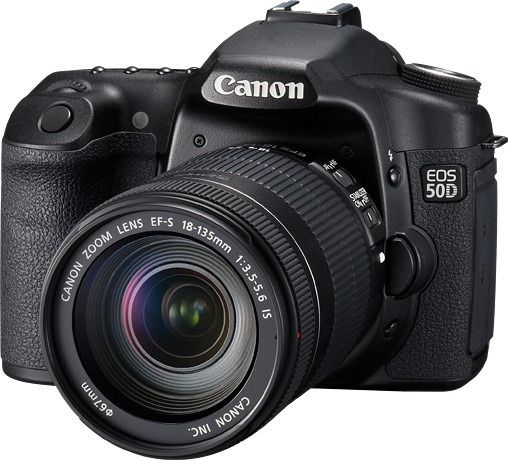
The Canon EOS 50D was released in October 2008, replacing the EOS 40D. The 50D had a 15.1-megapixel CMOS sensor, a significant jump in resolution over the 40D. The photos were supposed to be much sharper and hold more detail, especially when cropping or printing large. The magnesium alloy body was still durable, although it was still not fully weather-sealed, as some photographers in forums now considered it a deal-breaker.
The 9-point autofocus system featured cross-type points for both precision and accuracy, and the burst rate at 6.3 frames per second and 90 frames of JPEG buffer. It had a native ISO setting from 100-3200 and an expanded ISO setting of 12800. The DIGIC 4 processor enabled speed and color accuracy to improve, and the LCD was now a 3.0-inch, 920,000-dot resolution display, and it was also capable of Live View with face detection, a first for the prosumer line.
Canon's EOS 50D sticks with the conservative pattern that the company has established for their semi-pro digital SLR in terms of physical design. Still, now it also includes most of Canon's cutting-edge digital SLR technology. Where this line usually leads is in image quality for a reasonable price, and Canon has also worked to improve that aspect, which is core to why loyal customers keep coming back.
While the highest ISO settings didn't meet our hopes and expectations to rise and compete favorably with the Nikon D300 and Nikon D700, it's not really a surprise. The higher resolution at the APS-C size was unlikely to compete with the Nikon D700's full-frame sensor. And that the D300 at 12.3 megapixels outperforms the 15.1-megapixel Canon 50D at ISO 6,400 also makes sense: the pixels are smaller on the Canon, so they collect less light. Canon's extended ISOs always include some compromise. There's nothing wrong with hoping, but the expectations did bring disappointment when both 6,400 and 12,800 produced noticeable banding.
https://www.imaging-resource.com/PRODS/E50D/E50DA.HTMThe 50D was priced at about $1,399.00 at the time of launch. An advantage to a larger resolution was more detail in the photographs; however, there were disadvantages. Because the photodiode size was smaller, it also meant more high-ISO noise when going beyond ISO 400, which people with pixel-peepers were inclined to ridicule online. Shadow pulling, which at the time was considered a forum sport, took over with this camera (and I have to admit, I was doing it too). In many ways, this camera’s sensor was a jump too far in terms of resolution versus noise.
I was honestly disappointed with this camera. I thought the noise was a bridge too far and ended up going back to my trusty 40D and selling off the 50D. To be honest, looking back on it, I was probably too influenced by the feeling of the time that we should be able to look at images at 100%. Needless to say, I grew out of that, but many did not.
Key Features
- 15.1 Megapixel
- 6.3 fps Continuous Shooting
- Uses Canon EF & EF-S Lenses
- 3.0″ Clear View VGA LCD
- Live View Mode
- Integrated Cleaning System
- ISO 3200 – Expandable to 12800
- 9-point Wide-area AF
- Face Detection Live AF
- HDMI Output
Canon EOS 7D
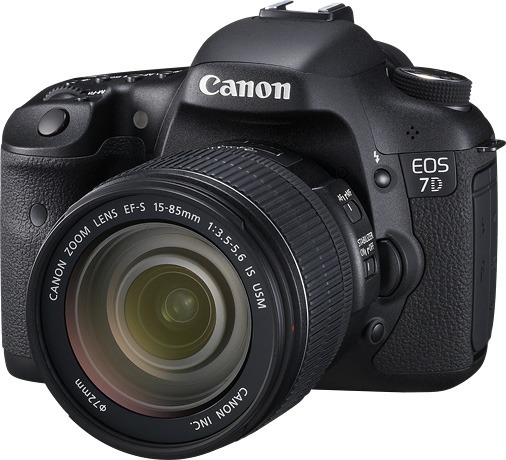
The Canon EOS 7D, released in September 2009, was Canon's flagship semi-professional DSLR. The EOS 7D took Canon's APS-C line of DLSRs above the EOS 50D, offering even greater performance. The 18-megapixel CMOS sensor on the EOS 7D took resolution further but for some, the camera also increased the amount of high-ISO noise and spurred on the dramatic megapixel race.
The magnesium-alloy body was built for durability, and included more weather sealing than the 50D, which resolved some online complaints about ruggedness of the EOS 50D. The 19-point autofocus system (all cross-type) was fast and accurate, and at 8 frames per second with a 126-frame buffer in JPEG, it was a fantastic sport and wildlife camera.
The next evolution, the 7 series
The ISO range was 100-6400, expandable to 12800, and the dual DIGIC 4 processors provided responsiveness, performance, and color rendition. The 3.0 inch, 920,000-dot LCD display with Live View and face detection, and 100% viewfinder coverage was a step up from the EOS 50D.
If you are looking at the pros and cons list above you could be forgiven for getting the impression that we somehow struggled to populate the cons list with a number of bullet points that comes at least close to what you can see in the pros department. You are not mistaken. The EOS 7D is an excellent addition to Canon's range of APS-C DSLRs that is, in terms of build quality, speed of operation, ergonomics and image quality, a cut above Canon's previous APS-C flagship, the EOS 50D.
In some respects the 7D is even a better camera than the EOS 5D Mark II and a viable alternative for all those who do not want or need a camera with a full-frame sensor. Its eight frames per second continuous shooting speed and highly flexible AF system might even make it a consideration for credit-crunch battered sports photographers on a budget.
https://www.dpreview.com/reviews/canoneos7d/30Launched at approximately $1,699, the 7D was aimed at the prosumer who was looking for an affordable price but wanted pro-level speed, durability and build quality. It was great for everything from action photography to wildlife and event photography.
The advanced specifications, such fast frame rate, not to mention the wireless flash control via built-in speedlite transmitter, certainly helped too. Although some online complained about noise in shallow shadows, I found it far less objectionable than the 50D, and the viewfinder was just simply breathtaking coming from the xxD series of cameras.
Key Features
- 18 MP APS-C CMOS Sensor
- Dual DIGIC 4 Image Processors
- 3.0″ 920k-Dot Clear View II LCD Monitor
- Full HD 1080p Video Recording at 30 fps
- 19-Point All Cross-Type AF System
- Native ISO 6400, Extended to ISO 12800
- 8 fps Shooting for 130 JPEG/25 Raw Shots
- iFCL 63-Zone Dual Layer Metering Sensor
- Weather-Resistant Magnesium Alloy Body
Canon EOS 7D Mark II
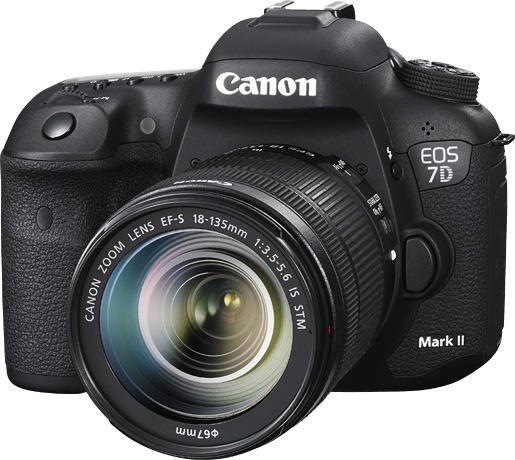
The Canon EOS 7D Mark II, debuting in October 2014, was a definitive flagship of Canon’s prosumer DSLR camera line and improved upon the legacy of the original 7D with features that packed high-performance into an APS-C camera.
The 20.2 megapixel CMOS sensor and its noise control were significantly better than the 7D; however, some users found their images lacked easy shadow recovery in high-ISO (ISO1600 and above) situations. Those people, though, are never happy. I think they are complaining about 24MP sensors now.
The magnesium alloy body was taken further with improved weather sealing, giving it better durability in harsh conditions than any of its DSLR line predecessors. The 65-point autofocus system (all cross-type), borrowed heavily from the 1-series, the burst rate of 10 FPS, and a 103-frame JPEG buffer made a great camera for taking photos of sports and wildlife.
The camera included dual DIGIC 6 processors, a 3.0-inch, 1.04 million dot LCD that enabled live view features, and a viewfinder with 100% viewfinder coverage. A new flicker detection feature improved consistency under artificial lighting, an excellent feature for indoor sports shooters.
For sports, especially with the world's first system that can “shoot through” flickering stadium lighting, the Canon 7D Mark II is the world's best indoor and night sports camera, better than the Canon 1D X and Nikon D4S unless you install a whole-arena strobe system or high-frequency ballasts. If you're shooting indoor or night sports at anything other than a major national venue, you'll need this 7D Mk II. This flicker shoot-through feature synchronizes your shutter automatically so you don't get random dark or color-shifted images.
The 7D Mk II is also a spectacular camera for every other kind of use. If you think you want one for general photography, landscapes, portraits or action, get one!
Only if you shoot subjects that don't move and really do exhibit at mural size or larger regularly (few do), would I get a full-frame camera like the 6D or 5D Mark III instead.
I've always loved the original 7D, and now the long-awaited 7D Mark II is everything the original 7D was — and a whole lot more. Heck, just look at my four-year-old Hawaii photos from the old 7D, and imagine that same quality at 10 frames per second with even better metering.
For under $1,800, my kids call this a “triple-nipple duh.” The 7D Mark II is the obvious gotta have, especially for any kind of sports shooting unless you already have a $6,500 flagship.
https://kenrockwell.com/canon/7d-mk-ii.htm#rexPriced at around $1,799 at launch, the 7D Mark II targeted enthusiasts and professionals seeking speed and durability at an APS-C price. It was tailored for action, wildlife, and event photography, with full Canon EF/EF-S lens compatibility.
Key Features
- 20.2MP APS-C CMOS Sensor
- Dual DIGIC 6 Image Processors
- 3.0″ 1.04m-Dot Clear View II LCD Monitor
- Full HD 1080p/60 Video & Movie Servo AF
- Dual Pixel CMOS AF with Live View
- 65-Point All Cross-Type Phase-Detect AF
- Native ISO 16000, Extended to ISO 51200
- 10 fps Shooting at Full Resolution
- Built-In GPS Receiver & Digital Compass
- Magnesium Alloy Body Construction
Canon EOS R7
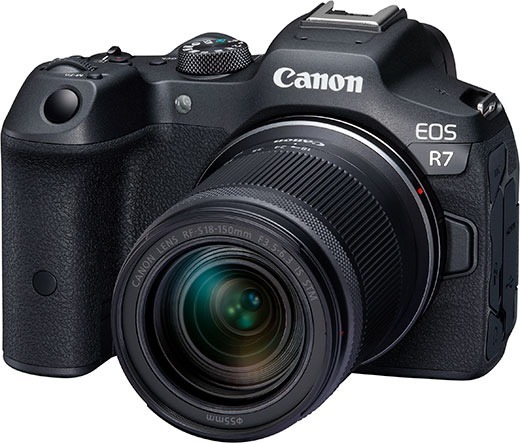
Coming in May 2022, the Canon EOS R7 was Canon's flagship APS-C mirrorless model made for enthusiasts and semi-pro users looking for a more compact RF-mount camera with some high-performance capability. The Canon EOS R7 featured a 32.5-megapixel CMOS sensor shared with the Canon EOS M6 Mark II and Canon EOS 90D but it had “apparently” new microlenses and circuitry that allow for faster readouts and optimized performance.
The R7 featured a Dual Pixel CMOS AF II system with 5915 selectable points that demonstrated that this camera is an inheritor of the EOS R3 and its stellar subject tracking. With a mechanical shutter frame rate of up to 15 fps (or 30 fps using electronic) and a 224-frame JPEG buffer, the R7 is Canon’s current at the time of publishing this article, mirrorless APS-C camera flagship. The 5-axis IBIS (in-body stabilization) offered a maximum of 8 stops of stabilization. The native ISO range is from 100 to 32000 (with extended 51200), and a DIGIC X processor powers the camera.
EOS R7 a departure from the DSLRs
The viewfinder, because it’s a mirrorless camera, is now an electronic viewfinder with 2.36 million dots and a 3.0-inch LCD with 1.62 million dots and a 270-degree vari-angle. It has two UHS-II SD card slots for redundancy. The R7 camera body is a little bit shallower that some may find less comfortable for long stretches or with bigger RF lenses.
The R7's AF joystick, controversial for including the joystick in a control dial, means it's easy to nudge accidentally, so people like me criticized this design as foreign to Canon’s modern DSLR and mirrorless ergonomic design. I have no idea who thought it was a good idea, but they were probably the same folks who came up with the slide bar on the EOS-R.
Canon’s EOS R7 is a powerful mirrorless camera that confidently handles a wealth of subjects and situations, whether used for action and wildlife, or as a solid all-rounder for anyone who doesn’t feel the need or have the budget to build a full-frame system.
Highlights include an excellent autofocus system, fast burst shooting albeit with some caveats, decent built-in stabilization, and detailed images from the 32 Megapixel sensor when coupled with a good lens. But be aware of a number of limitations which may prevent it from being the ultimate small pro wildlife body 7D II owners had hoped for.
https://www.cameralabs.com/canon-eos-r7-review/The R7 is the spiritual successor to the EOS 7D Mark II. In so many ways the R7 improved on the 7D Mark II, that it’s really hard to list them all. Even though I hated the ergonomic decisions, the R7 is truly Canon’s best ever effort in a crop camera body.
Key Features
- 32.5MP APS-C CMOS Sensor
- Dual Pixel CMOS AF II
- 4K60 10-Bit Video, HDR-PQ & C-Log 3
- 30 fps E. Shutter, 15 fps Mech. Shutter
- 2.36m-Dot OLED EVF
- 1.6m-Dot Vari-Angle Touchscreen LCD
- Sensor-Shift 5-Axis Image Stabilization
- Dual UHS-II Memory Card Slots
- Multi-Function Shoe, Wi-Fi and Bluetooth
The Sensors
This was a time of transition for Canon, but it wasn’t until the R7 that we saw a full ADC on a sensor. The time between cameras after the 50D was just too long, and too many sensor generations were skipped.
You can see that in the dynamic range with the 10D to the 7D Mark II all clumped, and only showing a 1 EV gain in dynamic range over those 7 cameras, and it’s not until the R7 where you see the effects of Canon’s more modern sensor design, with a jump from 9EV to 10.5EV, a larger jump in one camera than all 7 before it.
What’s perhaps more intriguing is that this gives us an appreciation on Canon’s subtle sensor design improvements, as the sensor increased the megapixel count from 6.3MP to 20.2MP, which at the time were record breaking megapixel counts, and Canon still maintained fairly stable dynamic range across all it’s sensors.

That all being said, I found the 40D and later to be perfectly fine in terms of dynamic range, but the 32.5MP sensor I used extensively in the Canon EOS M6 Mark II, is fantastic.
Honorable Mention: Canon EOS 20Da
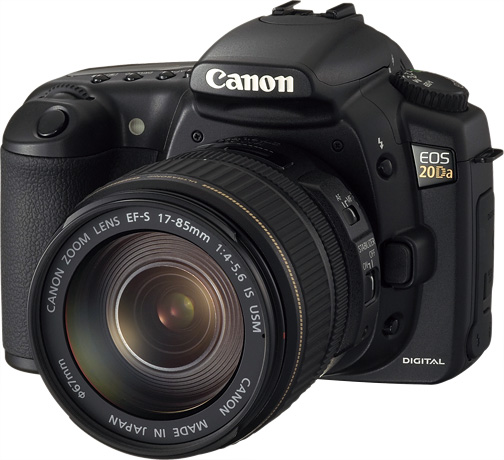
The Canon EOS 20Da, released in February 2005 in Japan and globally in June, was a variant of the EOS 20D and is specially modified to be an astrophotography camera. It uses an 8.2-megapixel APS-C CMOS sensor (22.5 x 15 mm, 1.6x crop factor) with a modified low-pass filter that makes the sensor more sensitive to Hydrogen-alpha (Hα), 656 nm, light (it is about 2.5 times more sensitive). Meaning the 20Da is capable of producing images of nebulae and other objects in space with great detail, with the proper setup.
The camera had Canon’s first generation of live view for getting accurate focus on the stars using its 1.8-inch LCD screen as it was more difficult to focus correctly on stars without the use of live view. Canon also modified the mirror lockup procedure for this camera to minimize vibrations.
While Canon cameras have been used since the dawn of digital for astrophotography, given that most of Canon’s digital cameras all had remotely operated controls that could be attached to a computer, and the ability to do mirror lockup, this was the first time Canon came out with an astrography-specific digital camera.
While the sensor modification was done for astrophotography use, the camera could still be used for daytime photography using an external IR filter.
Honorable Mention: Canon EOS 60D
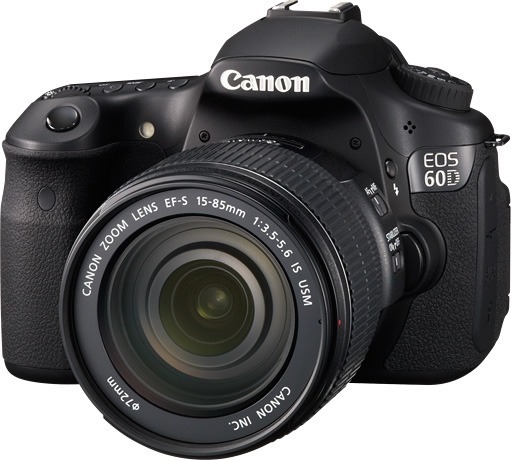
The Canon EOS 60D, released in August 2010, was a consumer DSLR in Canon’s lineup, repositioned from the EOS 50D to cater more to the consumer level of the market. It featured an 18-megapixel CMOS sensor, matching the EOS 7D’s resolution.
The 60D moved to a polycarbonate body with an aluminum chassis, a departure from the 50D magnesium alloy build, reducing weight (755g vs. 822g) but drawing criticism for a less robust feel despite retaining partial weather sealing. No one liked this, nor did they like the simplified button arrangement on the DSLR. If you were coming from the 50D, this camera did not feel like an upgrade in terms of build quality and ergonomics.
Its 9-point autofocus system, with one cross-type center point, was less advanced than the 50D all cross-type setup but reliable for portraits, landscapes, and casual action. The 5.3 fps burst rate and 58-frame JPEG buffer supported moderate action shooting, while the ISO range of 100-6400 (expandable to 12800) provided flexibility. Powered by a DIGIC 4 processor, it introduced a 3.0-inch, 1.04-million-dot vari-angle LCD, a first for Canon DSLRs, enhancing Live View and creative angles. The 60D’s video also featured 1080p video at 30 fps with manual controls.
The new 60D represents something of a rethink on Canon's part, now more clearly positioned as a prosumer SLR camera that sits halfway between the cheaper, more consumer-focused 550D / Rebel T2i and the more expensive, semi-pro 7D. Current 50D owners looking to upgrade may miss that camera's more durable metal body shell, slightly faster burst shooting, more intuitive joystick control, PC sync socket and support for Compact Flash cards – they'd be better advised to look at the 7D – but for the rest of us, especially those interested in video, the 60D is a compelling addition to the Canon EOS range.
https://www.photographyblog.com/reviews/canon_eos_60d_review#conclusionThe 60D signaled the end of the “double digit” line that many of us cut our digital photography teeth with, as Canon clearly signaled that the line was moving into the consumer market, and the 7D was now the model for those that wanted a prosumer crop camera. Alot of us “old timers” were not happy with this at all, and complained bitterly.
Not too surprising, Canon ignored us.
Key Features
- 18 MP APS-C CMOS Sensor
- DIGIC 4 Image Processor
- 3.0″ 1.04m-Dot Clear View Vari-Angle LCD
- Full HD 1080p Video Recording at 30 fps
- 9-Point AF with Center Cross-Type Point
- Native ISO 6400, Extended to ISO 12800
- 5.3 fps Shooting for 58 JPEG or 16 RAW
- 63-Zone Dual Layer Metering Sensor
- In-Camera Editing and Picture Styles
Honorable Mention: Canon EOS Elan 7/7E
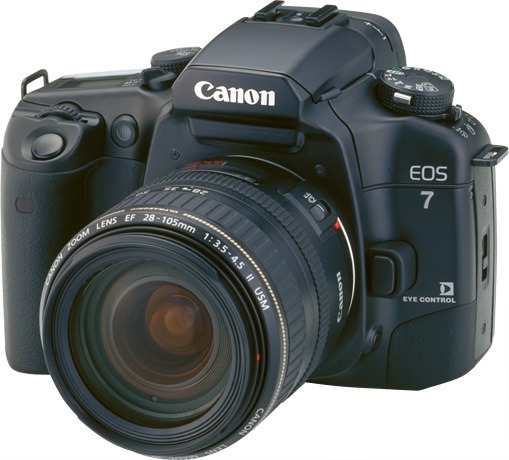
The Canon EOS Elan 7/7E, which was initially released in October 2000, was a 35mm film SLR that ignited Canon's semi-professional digital SLRs (EOS 10D, 2003). The EOS Elan 7/7E had claimed “Mid-Level” status (EOS 30/33, Europe/Asia Market) and was intended for the enthusiast, who desired a 7-point autofocus system (a deviation from the previous systems' 3-points), fast predictive autofocus (moving subjects, sports photography, or wildlife), 35-zone evaluative metering (previous Elan SLRs were based on 6-zones), continuous bursts up to approximately 4 fps, and a shutter speed of up to 1/4000 sec.
The 7E model was unique in having an eye-controlled AF point selection and would not carry over to the digital cameras until the R3, many years later. The plastic-metal body weighed 675g and gave the impression of being durable and portable. It also included styling in the ergonomics of the dial,s and the quick control dial (QCD) is now standard on all Canon cameras.
Key Features
- 7 Point Autofocus
- Eye Control Autofocus
- Shock, Dust and Weather Resistant
- 4 fps Continuous Shooting
- Uses Canon EF Lenses
[prli-product-display type=”product” id=”81845″]




One minor nitpick: The Elan 7E wasn't unique in having eye-controlled AF point selection. That feature originated with the A2e in 1992, which was also sold as the EOS 5 outside North America. I remember trying a 5 in a shop in Scotland and thinking it was a beautiful camera, but a little beyond my budget so I went with a 100 (original Elan, which I still love).
Thank you, we will update that.
The EOS 40D is the camera that helped me become serious about photography. It will always be my personal favourite camera. I bought one a year ago and I'll never let it go.
Once the 60D came, that line moved, they became "Super Rebels" for a while. The 90D was a cool camera, but it didn't lead to the 7 series. We even had the 77D.
The 50D, which was terrible is what split the lines.
The (original) 7D is what kept me with Canon when I needed to upgrade my 40D, and the 7D2 continued in the same tradition. I bought an R7 too, but it didn't live up to expectations. I know I'm not alone in this.
I was tempted with the 7D2, but at the time I felt it was too out of date compared to the 80D. But I have friends with the 7D2 for whom you'd have to pry the camera out of their dead hands, even with the R7 offering.
I ultimately decided the R6 with long glass gave me equivalent framing at much higher quality pixels, so left the crop world. But I think the crop world remains quite valid, and the sensors only get better. Someone mentioned in the R3 "II" forum how a crop R3 would be a neat spin on the professional use of crop sensors, and I have to agree. It would be neat to see an R7/R3II crop value pair in the line-up for those photographers needing every last ounce of apparent zoom.