


When you purchase through links on our site, we may earn an affiliate commission. Here’s how it works. |
All the talk recently has been about the upcoming Canon EOS R6 Mark III, and that release has the Canon world excited to see what Canon comes up with. I gave my thoughts on things that I’d like to see earlier this week.
The Canon EOS R7 has been a very popular APS-C camera for Canon. I was recently suprised by how many of them that they still sell. I had no idea, but I haven’t really embraced any of the Canon APS-C EOS R cameras. The whole APS-C line are very capable cameras, and we all have opinions.
Image Sensor
I think the current 32.5mp resolution is a good sweet spot for an APS-C camera and I don’t really want to see Canon pushing the smaller sensor to 40mp and beyond. Perhaps they have received feedback from customers that they do indeed want a resolution increase.
Fujifilm has moved to 40MP resolution in the X-T5, so it has been done for the smaller sensor and people love that camera. For good reason.

That said, we’re starting to see that Canon is moving away from the “True Hybrid” philosophy and making cameras for intended use cases.
We saw it earlier this year with the EOS R50 V and recently the Cinema EOS C50, cameras that are capable of making photographs, but they’re not targetting photographers. While every EOS R camera in the lineup is more than capable for video shooters, Canon appears to be changing their focus to photographers and videographers with separate product lines.
I don’t think a stacked sensor is likely. They cost more to produce and how much is someone willing to pay for an APS-C camera when a 6 series will likely launch between $2500-$3000 USD.
I’d still prefer where the EOS R7 is now as far as resolution goes.
Mechanical Shutter
If I was a betting man, I have felt that the EOS R7 Mark II would be the ideal place to remove a mechanical shutter in an APS-C “prosumer” camera, I don’t think Canon is ready to do it in a full-frame camera.
I have used the mechanical shutter a handful of times in the EOS R1, and I don’t think I’d miss it if it wasn’t there.
Do it Canon! It’s another way to remove some cost.
Ergonomics
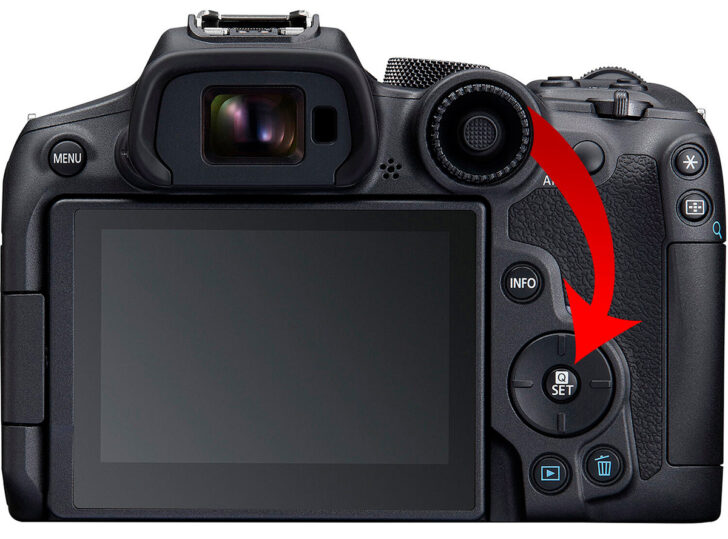
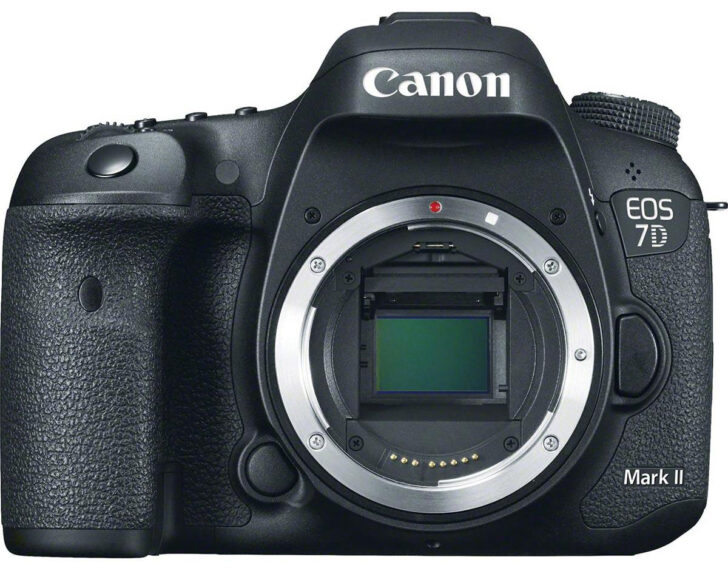
Ergonomics are my biggest beef with the EOS R7. The 7 series DSLRs were very close to Canon’s ergonomic ethos in their other “pro” cameras. They were built like tanks, and it was easy to move between a 5-series and 7-series in real time.
I want to see Canon make the body a bit bigger and please put the scroll wheel back to where it’s supposed to be. I have big hands and a larger nose, and it was like I was going to stick my thumb in my eye anytime I used it.
The 7-series DSLRs did have top-down LCDs, while I like having one, I don’t think we’ll see that, even if Canon does make the body bigger than the current camera.
Ergonomics are very personal; others may love the EOS R7 in that regard. They’d still be wrong. =D
Build Quality
Let’s get the 7-series back to where it should be. Build it as well as you would a 5-series, or at least close.
Wildlife shooters loved the 7D series of cameras, extremely capable without breaking the bank. You could use them in the pouring rain, during a sandy safari or getting buried in snow. I don’t have the same confidence with the EOS R7.
The R7 evolution from the 7D Mark II reminded me of the disaster that was the EOS 60D evolution from the previous xxD cameras. I don’t know what the EOS 77D was, I never saw one.
Pre-Capture & Speed
The EOS R7 Mark II needs pre-capture. There’s no doubt in my mind that it will be a feature.
No, what the EOS R7 has isn’t the pre-capture that we know in today’s modern cameras from any manufacturer. You needto use DPP to take advantage of it, and the buffer clearing is annoying.
The EOS R7 shoots 30fps in E-Shutter, and I would expect it to get to Canon’s 40fps peak in the current lineup. Yes, the EOS R3 has the 195fps option, but I can’t imagine anyone likes editing that beyond a very specific use.
I would like Canon to bring the DIGIC Accelerator to the EOS R7 Mark II. It’d be great to have a top-end autofocus system in an APS-C camera. If everything I want happens, wildlife and sports photographers would be all over it. I might even take another look at an APS-C Canon camera.
EVF
The current EOS R7 has a 2.36m-Dot OLED panel, and it’s ok, but getting it closer to 3.5m-Dot would be a welcomed upgrade. Wouldn’t a 1.44x EVF (0.9x 35mm equivalent) be a nice thing?
Do that too Canon.
Rear LCD
Just like I wrote in my EOS R6 Mark III wishlist ramblings, I’d love to see a similar flippy mechanism that we see in the Panasonic S1 II. The ability to go up and down without flipping the screen out would be pretty great.
I have a camera that flips out for the up and down, I have another that only does up and down but doesn’t flip out, it’s time for a marriage.
On the Leica Q3, I find that when I shoot above my head, I’m less disoriented when aiming the camera when compared to the flip out up and down. That may be a me problem, but my problems matter too!
The resolution of the rear LCD doesn’t matter to me at all, I don’t trust and of them to show me anything truly accurate, that’s what the computer is for.
That’s That
As I mention from time-to-time, I’m not a videographer and I have no opinion or desire when it comes to video features.
All of this would raise the price from the original $1499 launch price of the EOS R7, but if it’s sub-$2000, I don’t think that’ll be a problem.
I don’t think we’ll see the EOS R7 Mark II this year, but it’d be nice to be wrong about that.



I don't see R5 series ergonomics at the expected price. No top display, etc.
More MP at APS-C? Really? I think the actual number is good. Better pixels are always welcome (readout, s/n, etc...)
What I really like to see is a third "wheel dial", to manage exposure compensation. Ususally I'm in (M)anual mode and Auto-ISO. On the R6-II I use the wheel above the on/off switch for exposure compensation. On the R7 I need to reach for the control ring on the lens or on the adapter, which feels a bit odd.
- faster readout speed and/ or larger buffer
- better ergonomics --> move the joystick to a similar position as the R6 series. It should have similar ergo. in general
- replace the "scroll wheel" and give it a dedicated second dial. One for shutter, one for ISO and control ring for aperture is great.
- BG compatabiliity
- pre-capture
There, done
Also, needs to have an available battery grip. Nothing like heading out for a few hours and having to swap batteries in the middle of an outing. I know it's not quite possible, but I miss the long battery life of the DSLR.
The third wheel would be great. The control ring concept is great. Canon's execution of it in the lens line-up, not so much. I really loved using it in the beginning when I really didn't have RF lenses and only used EF adapted lenses. The control ring was always in the same convenient spot and could reliably be used for exposure control.
However, once I started to get RF lenses and realized that the location of the control ring kept varying, often positioned at the front of the lens, then it became virtually impossible to rely on it for exposure control in any sort of action situation.
Significantly improved readout speed would be great (stacked would be awesome, even if expensive).
Battery grip!
All newer generation features/HW (Digic accelerator, pre-capture, action priority, etc, etc)
For example:
and so on 😉
Same body size, build quality, and ergonomics as the R5-series. Don't mess around with what works (like they did with original R7). No need to reinvent the wheel... or control wheel in this case.
In fact, some shared parts across models should help keep manufacturing costs down and retail prices under control.
This also should make it possible to fit a battery grip... IMO, perhaps the single most important omission from the original R7. Ideally, the R7II should share the same grip as the R5-series. Again, no need to reinvent the wheel, Canon!
If they go with electronic shutter only, Canon must solve the rolling shutter issues completely. How they do that is up to them. If it requires a stacked sensor, put in a stacked sensor. Like the 7D series DSLRs, this camera will be used extensively by sports and wildlife photographers who don't need or want full frame... or who want to complement their full frame cameras with an APS-C camera. Rolling shutter effects are a serious problem for us folks shooting fast moving subjects.
And, based upon who will use the R7II, it needs durability and weather sealing comparable to the old 7DII and/or today's R5-series.
When it was introduced, the 7DII cost $1800. I know full well because I bought two to replace my original pair of 7D that were still fine, but after four or five years were getting pretty high mileage. It was relatively seamless switching between those APS-C cameras and the 5DII and 5DS that I used alongside. In contrast, eight years later R7's introductory price was $1500. Why Canon felt the need to cheapen the mirrorless camera baffled me. They sold a ton of 7DII at the higher price, didn't they?
Other comments are right... R7II needs better AF, better viewfinder and MUCH bigger buffer (especially if it gets pre-shoot and 40 fps)!
While I prefer two identical memory card slots, Canon never does that. At least one slot in R7II needs to be CFexpress.
Do it right this time Canon and maybe I'll finally buy one or two of your APS-C mirrorless!
And for me it actually works better with the R7 and 100-500, than the R6 and 200-800.
- R6 & 100-500: Too little MP if I have to crop
- R6 & 200-800: Poorer autofocus performance, especially for birds in flight.
If the R7 II were to cost as much as $3200, I would still consider it, if it had a stacked sensor, autofocus performance on par with the R6 III, and same ergometry.
Shooting wildlife, I have to say that my initial worries about a potential fragility of the R7 compared to the very rugged 7D series didn't come true. Okay, my R7 was the first camera in my life that I stuffed in a rubber case, simply to have a bit beefier body when paired with a big tele prime. So it features some additional protection. Overall, after an extensive use in wildlife I have to say that am quite happy how reliable this tiny camera is, and I am impressed by its image quality, given its conventional sensor. For the mark II version I - like other users here - I do hope for the following main improvements:
- bigger body with the same layout like the R5 series (I am convinced that Canon got that message)
- more reliable AF for shooting birds in flight against blue, cloudy or overcast skies (funnily, my R7's AF works much better with a vivid background, e.g. trees, here its AF really shines)
- better trained eye AF (the R7's eye AF mode gets too easily distracted by bright reflections on water or some particular patterns on bird feathers, a typical example is a pronounced spot on the "shoulders" of folded heron wings that nearly always attracts the eye AF more than the bird's head)
- faster sensor readout (if Canon is not willing to substantially speed up the new senor's readout speed, they should at least stick with that fast mechanical shutter of the Mk I version).
I guess many users of the R7 for wildlife have roughly about the same wish list.
Btw, just in the 7 series tradition, the R7 is a really great macro camera for free-hand shooting, in combo with e.g. a 100mm macro lens (I still use my EF 100mm f/2.8 L IS USM), and the in-camera focus bracketing is real fun to use when the motif isn't moving too fast. So I hope the Mk II version will fit within this tradition, maybe with some additional new features.
PS: The only thing that had to be exchanged so far was my R7's eyepiece, the frequent use has worn through its rubber coating.
UHS-II is good enough (two please), but a CFe slot would be better.
Healthy buffer. It doesn't have to be huge, nor do I expect it to be, but the bigger the better of course. At the very least it has to be better than the first R7, which I understand to be disappointing.
I'd be surprised if the AFtracking wasn't whatever Canon's standard is these days that they're sticking in the R6 III or R5 II. Don't need or expect the Eye AF. Aircraft recognition as well as animalsbirds, please, since that's what I'd be buying it for.
OT, but I'll take the opportunity again to bitch about Canon not having (or allowing a 3rd party) mid-level supertelephoto. The RF 100-400mm is unsealed and average (good price though, I'll admit) and the RF 100-500mm is expensive. Why is there nothing in the $1000-1500 range? The Tamron 50-400mm would be practically perfect, even if Canon added a few hundred bucks compared to the E or Z mount versions so they'd get a healthy cut.