Canon EOS R6 Mark III & RF 45 F1.2 STM November 6

People like to brag L lenses, even when the lens sucks...it's just "I have a thicker wallet then yours"; you can afford it, and you want people to know you can. Some thinks buying third party lenses makes them "poor", but it's ok, as they swap lenses very easily at any new release, so in a short time they flood the used market with many pro lenses at bargain prices for people really needing them to buy. I actually appreciate that :-)
I buy L lenses because of many factors, one is durability. In a professional environment, gear takes more of a beating. I’ve had more failures with Sigma and Tamron than the rest of my L lenses put together. Those 3rd party lenses were sharp and cheap but way less durable. Both brands ended up costing me more money in the long run. L lenses are reliable and dependable, they also hold their value on the used market better too. My EF 135mm f2.0 L I’ve owned for nearly 20 years now. I never missed a beat. Sure, the new RF version is more expensive, slightly brighter, has IS and is a bit larger too…but my old lens turns in such nice images.
 
  • Like
Reactions: 7 users
Upvote 0
I buy L lenses because of many factors, one is durability. In a professional environment, gear takes more of a beating. I’ve had more failures with Sigma and Tamron than the rest of my L lenses put together. Those 3rd party lenses were sharp and cheap but way less durable. Both brands ended up costing me more money in the long run. L lenses are reliable and dependable, they also hold their value on the used market better too. My EF 135mm f2.0 L I’ve owned for nearly 20 years now. I never missed a beat. Sure, the new RF version is more expensive, slightly brighter, has IS and is a bit larger too…but my old lens turns in such nice images.
I correct in "some people"; I didn't want to generalise, I have L lenses too, for example a classic 70-200 f2.8 non-IS since more then 15yrs, and it never skipped a beat.
Just wanted to say that I see (also in here) some people brag L lenses not because they enjoy quality and duration, but just because they can afford it :-)
 
  • Like
Reactions: 1 users
Upvote 0
My EF 135mm f2.0 L I’ve owned for nearly 20 years now. I never missed a beat. Sure, the new RF version is more expensive, slightly brighter, has IS and is a bit larger too…but my old lens turns in such nice images.
I´m currently looking to purchase a used EF 135mm F2. I have been looking at this lens on the used market for nearly two years now and it always around 600 €, sometimes 550 €. It hasn't lost any value since I started looking.

The lens really sparked my interest and I could use for school plays, sports and especially for a golden wedding I am shooting next year. This golden wedding made my decision to purchase it. The RF is too expensive for my limited use case, but I´m really looking forward to the EF and I'm curious to shoot with it :)
 
  • Like
Reactions: 2 users
Upvote 0
I´m currently looking to purchase a used EF 135mm F2. I have been looking at this lens on the used market for nearly two years now and it always around 600 €, sometimes 550 €. It hasn't lost any value since I started looking.

The lens really sparked my interest and I could use for school plays, sports and especially for a golden wedding I am shooting next year. This golden wedding made my decision to purchase it. The RF is too expensive for my limited use case, but I´m really looking forward to the EF and I'm curious to shoot with it :)
Had the 135 L for many years, it's a beautiful lens, and still sharp by today standard, at least on all 20mpx bodies I had (5D II and 6D), and also AF was pretty good, and we all know that EF lenses on R bodies works even better then on DSLR's, so I think today is still good for some indoor sports, and certainly for portraits and weddings.

Also consider the Sigma 135 f1.8 Art (which I swapped the 135 L for in the past; now I also ditched it for the 105 1.4 Art) which is a beautiful lens, depending on what you're looking for; the Canon is probably slightly more 3D's and probably has a smoother render of bokeh highlights, with a more "classic" look, while the Sigma is razor sharp even at f1.8 and certainly more "clinical".

I know many prefer global rendering over absolute sharpness, personally I just prefer a sharper lens, that I can "sweeten" in post if needed, rather then a softer look which is more complicate to sharpen if needed; I saw the difference between the Canon and the Sigma, but for my taste, I happily sacrificed a tad of rendering for a definitely sharper lens.
 
  • Like
Reactions: 1 users
Upvote 0
That all depends upon what one means by "better". Flat field correction usually means less smooth bokeh, especially prior to the late 2010s.

Roger Cicala talked about this in one of his blogs a while back.

If you want to do document reproduction (or shoot the sharpest photos of flat test charts) you need a different type of lens than the EF 50mm f/1.2 L. It doesn't matter if the out of focus areas are harsh when your entire field is the same distance from the camera.

If you're shooting portraits in a 3D environment (i.e. not in a studio with a diffuse backdrop), though, smooth out of focus areas are far more important than the edges and corners being focused on exactly the same distance as the center of the field is focused.
Not everyone buys lenses to do flat document (i.e. test charts) reproduction. The idea that flat field correction is more important than smooth out of focus areas for an f/1.2 portrait prime is misguided at best.

If you want to be the best test chart shooter in the world, then the Art is the lens for you.
You’re giving way too much credit to the Sigma’s sharpness.

Like I said to someone else, the Sigma 50mm f/1.4 Art is sharp, but it’s not THAT sharp. It was excellent by 2014 standards, when it was released, but that was 11 years ago.
A modern f/1.4 or f/1.2 prime lens, wide open, performs as good as the Sigma did stopped down to f/2.8 or f/4.

Anyway, I never bought f/1.4 for portraits, I did it for the light, because f/2.8 to f/1.4 is a very big difference, and not every environment allows the use of flash.


Last edited:
  • Like
Reactions: 1 user
Upvote 0
Had the 135 L for many years, it's a beautiful lens, and still sharp by today standard, at least on all 20mpx bodies I had (5D II and 6D), and also AF was pretty good, and we all know that EF lenses on R bodies works even better then on DSLR's, so I think today is still good for some indoor sports, and certainly for portraits and weddings.

Also consider the Sigma 135 f1.8 Art (which I swapped the 135 L for in the past; now I also ditched it for the 105 1.4 Art) which is a beautiful lens, depending on what you're looking for; the Canon is probably slightly more 3D's and probably has a smoother render of bokeh highlights, with a more "classic" look, while the Sigma is razor sharp even at f1.8 and certainly more "clinical".

I know many prefer global rendering over absolute sharpness, personally I just prefer a sharper lens, that I can "sweeten" in post if needed, rather then a softer look which is more complicate to sharpen if needed; I saw the difference between the Canon and the Sigma, but for my taste, I happily sacrificed a tad of rendering for a definitely sharper lens.
My copy of the EF 135mm f2.0 L is a bit battered. It's had a hard life and it's delivered consistently when other lenses would have given up the ghost many times over. One of the benefots of the EF 135mm f2.0 L is that it can take a 1.4x tc with minimal drop in IQ. The 2x TC is pretty poor optically on this lens.
For me, I can do 95% on this lens with what i can do on my 70-200/2.8 II LIS. I can often take a few steps forwards and make up the difference between a 200 & 135mm lens. If notm, there's the 1.4x TC or even drop my R5 into 1.6x crop mode and it's a very sweet approx 200mm. It's way lighter and smaller than the EF zoom and gives slightly nicer results (in my opinion). Although the RF 70-200mm f2.8 LIS is pretty spectacular in terms of it's physical size and weight. If I have a 24-70 f2.8 with me, I use the long end of that lens to compliment my 135 on my other camera.
My EF 85mm f1.2 IIL is boarderline sharp enough wide open for my R6ii and R5....I need a lot of post sharpening for that particaulr lens. My 135, is matching or even very slightly out resolves both my R6ii and R5 sensors. I need a touch more sharpening on my R5 than I would with my EF 24-70mm f2.8 II L. but it's close.
The achillies heel of the EF 135mm f2.0 L (and also the EF 85mm f1.2 II L) is strong magenta / green Loca on spectacular highlights. it's easily corrected in Lightroom, but it is very strong on these two lenses. The other issue on my R5 and R6ii is AF point accuracy, the smallest AF box is still too large for the super slim DOF these two lenses produce and the view finders (although excellent) don't seem to make the exact point of focus pop as much as I would like. If I put a subject on a 30' slant, the smallest AF window on offer on either camera covers quite a lot of distance in the AF window and literally could be anywhere in that window.
I am getting the best AF results out of my R6ii and R5 with these two lenses than I've ever seen before with DSLR 5D series cameras.
I have tried a RF 135mm f1.8 LIS.
The rendering was very similar to my older lens. It lens was a lot larger and heavier (although the size isn't a lot different to my adapted ef 135mm f2.0 L). The extra 1/3rd of a stop was slightly more noticable that I expected in portraits. The lens was noticably heavier and less manageble. it was nice to have the image Stabiliser...although both my R6ii and R5 have IBIS, which helps a bit with long lenses.
I liked the reduced min focus distance. The copy I handled seemed to be closer to 130mm than my EF lens. it was certainly sharp! Oh yes, it's a very sharp lens for sure. The rendering and colours are very nice, maybe more contrast on the RF and the colours pop a bit more. It doesn't take a TC which is dissapointing, however, there's always the 1,6x crop mode to fall back on.
My reasons for not replacing this lens, the old one is a known thing. It's suprisingly still sharp enough. Do I really want blistingly sharp portraits? It's smaller, lighter and does 95% of what the new RF can do. It's also free to me because I bought it over 20 years ago. The new one is very expensive. I think I'm more likely to get a RF 50L first, then maybe a RF 85L and then possibly a RF 135L.....eventually, when I have had a fiscal windfall!
 
Upvote 0
You’re giving way too much credit to the Sigma’s sharpness.

Like I said to someone else, the Sigma 50mm f/1.4 Art is sharp, but it’s not THAT sharp. It was excellent by 2014 standards, when it was released, but that was 11 years ago.
A modern f/1.4 or f/1.2 prime lens, wide open, performs as good as the Sigma did stopped down to f/2.8 or f/4.

Anyway, I never bought f/1.4 for portraits, I did it for the light, because f/2.8 to f/1.4 is a very big difference, and not every environment allows the use of flash.


My experiance with 3rd party lenses is that they are often very sharp, comparitively so. It's the rest of the hardware is often the dissapointment. The AF and / or IS systems are weaker on 3rd party. AF is less consistent and less accurate. The build and durability is poorer and often there's a difference in contrast, colours and rendering. Flare suppression on Canon L series is usally top drawer, 3rd party is a but of a crap shoot with flare and ghosting.
 
  • Like
Reactions: 1 user
Upvote 0
AF is less consistent and less accurate.
That ended when Canon launched the RF mount, back in 2018 lol. We all know Canon's EF lenses work a lot better on mirrorless cameras than they did on DSLRs. Generally speaking, the same happened with third party glass from reputable brands. Come on, it's time to stop relying on outdated information, that is misleading at this point - it's been 7 years.
The build and durability is poorer
Better in many cases, specially considering many third party lenses cost as much as low end to medium range offerings from first parties.
often there's a difference in contrast, colours and rendering.
Well, that's to be expected, I guess. Each brand with their own signature. Heck, even among the same brand we don't have the same rendering across all lenses. Just yesterday, or two days ago, I was here commenting that I'm not very fond of the lower contrast look of the RF 50mm f/1.2, that differs from my 28-70mm f/2.
Flare suppression on Canon L series is usally top drawer
That's actually an area where I'm not a very happy Canon customer lol. This is not to say that every lens from other brands is better, but I see a lot of offerings from our opponents retaining a lot more contrast when the sun is in the frame. Try comparing a few Canon RF lenses against Sony or Sigma DN lenses, you may be in for a surprise.
 
Last edited:
  • Like
Reactions: 3 users
Upvote 0
That ended when Canon launched the RF mount, back in 2018 lol. We all know Canon's EF lenses work a lot better on mirrorless cameras than they did on DSLRs. Generally speaking, the same happened with third party glass from reputable brands. It's time to stop relying on outdated information, that is misleading at this point - it's been 7 years.

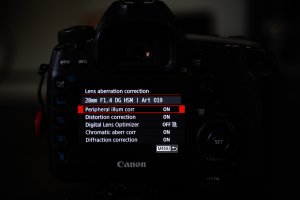
I can guarantee my 40 Art, 105 Art and 24-105 Art are as good as any Canon RF (yes, RF, non EF) when comparing consistency and accuracy; they're also so well integrated in my Canon body (and surely Sigma paid licence for this, getting in return full access to AF algorithms and in body corrections) then when I connect them to my R6 (and same was on my 6D that lived with me for almost 10 years) the camera recognise them by the name, and they enjoy corrections for vignette, distortion, chromatic aberrations and diffraction for jpeg and video, and even real time on lcd and evf on the ML cameras. Only the DLO is not available for the Sigma's, otherwise Canon bodies treat them as proper Canon lenses.

(internet picture)
04-LAC.jpg

About durability, no problems whatsoever, and about build quality, well, I guess many have never taken into their hand an Art lens from the last 10 years (but also many top tier Tamron's, and now Chinese are getting also there), their build is as robust, if not more, then any current RF L lens to date.

"It's time to stop relying on outdated information"

YES, definitely

Last year I bought almost immediately the RF 28-70 STM, and if the 45 f1.2 is any good I'll be surely ordering as soon as I see trusted reviews (and I'll ditch the 40 Art which is probably the sharpest lens on the market, period), so I'm not a Canon hater by design, I enjoy Canon since 1999 in the film era and never had any other photo system apart from Hasselblad V, but I'm not blind to the rest of the market, and the progress that Sigma and Tamron did (which makes them in my eyes "first party" lens manufacturers on pair with CanNikSon), and that Chinese manufacturers are doing right now.
 
  • Like
Reactions: 1 users
Upvote 0
My experiance with 3rd party lenses is that they are often very sharp, comparitively so. It's the rest of the hardware is often the dissapointment. The AF and / or IS systems are weaker on 3rd party. AF is less consistent and less accurate. The build and durability is poorer and often there's a difference in contrast, colours and rendering. Flare suppression on Canon L series is usally top drawer, 3rd party is a but of a crap shoot with flare and ghosting.

The AF of the latest Art/Sports Sigma lenses (15mm f/1.4 fisheye, 35mm f/1.2 II, 135mm f/1.4, 200mm f/2, for example) is instantaneous and the weather sealing and build quality is top notch. The lens coatings are excellent as well and the behaviour of the lenses is just like a pro grade first party lens.
 
  • Like
Reactions: 2 users
Upvote 0
My 40 Art's AF seems accurate enough, but it's definitely slower and noisier than most Canon USM lenses I've used.

Ridiculously sharp even wide open despite being one of the cheapest lenses I own. Heavy though
 
  • Like
Reactions: 1 user
Upvote 0
Quite a few of the general purpose modern lenses on shelf feature darker glass than prior equivalents so demand more sensor sensitivity if shooting the same times of day in the same degrees of shade as prior sensor or glass offerings for comparable tiers.
Some headline apertures ratios are narrower* on RF lenses than what came before, but again this issue has been blown out of proportion by forum chatter. The best example is the RF 100-500, which is no narrower than the EF 100-400 which it replaced, it just adds more focal length and so the maximum aperture at the long end is a narrower f-stop. The only objective deficiency of that newer lens is the weird extender compatibility restriction.

*Better high ISO capabilities is one reason for this, as you say, but as has been discussed on these forums in the past, (probably) the main reason Canon brought out RF lenses with narrower maximum apertures is that the mirrorless system allows autofocus in much dimmer light, so they were no longer arbitrarily restricted to f/5.6. I'm sure we would have seen such lenses in the EF era otherwise - it's not a drift towards darkness, it's an opening up of more possibilities in lens design.
OK, so I was probably a little harsh with the middle finger. But it's still no longer a "thanks for keeping with us non-pro still shooters" message. Maybe that's just a sign of the times, though.
I don't know if any camera release is ever done as a thank you to existing customers. They just want to sell as many as possible - to whomever they deem most likely to part with some money.
 
  • Like
Reactions: 3 users
Upvote 0
Some headline apertures ratios are narrower* on RF lenses than what came before, but again this issue has been blown out of proportion by forum chatter. The best example is the RF 100-500, which is no narrower than the EF 100-400 which it replaced, it just adds more focal length and so the maximum aperture at the long end is a narrower f-stop. The only objective deficiency of that newer lens is the weird extender compatibility restriction.

The 100-500 is F6.3 at 400mm. But i agree most people on internet comparing it to other 100-400 lenses that stop at 400mm. Same situation with the RF 100-400 - most people compare it to other professional 100-400 lenses, while in fact it's a cheap 70-300 replacement with added 100mm.
 
  • Like
Reactions: 1 users
Upvote 0
Some headline apertures ratios are narrower* on RF lenses than what came before, but again this issue has been blown out of proportion by forum chatter. The best example is the RF 100-500, which is no narrower than the EF 100-400 which it replaced, it just adds more focal length and so the maximum aperture at the long end is a narrower f-stop. The only objective deficiency of that newer lens is the weird extender compatibility restriction.
The extender approach for the RF lenses has been a bummer for me. I'm also still a fan of always-on manual focus with the AF in perpetual servo when I'm in the countryside, and between the two my EF lenses continue to dominate my trips. The sharpness and faster AF simply haven't been sufficient game changers for me to outweigh the loss of functionality for the (incidentally) mechanical focus capability and extender compatibility. Given Canon's subtle movement back to equivalent capabilities I think that they're well aware, but have simply sought to solve other complaints first. AF is fast and amazing, but not perfect and susceptible to poor choices when branches and long grass become involved. Canon will get there with the 3rd or 4th generation RF lenses, no doubt.
*Better high ISO capabilities is one reason for this, as you say, but as has been discussed on these forums in the past, (probably) the main reason Canon brought out RF lenses with narrower maximum apertures is that the mirrorless system allows autofocus in much dimmer light, so they were no longer arbitrarily restricted to f/5.6. I'm sure we would have seen such lenses in the EF era otherwise - it's not a drift towards darkness, it's an opening up of more possibilities in lens design.
I'll be pedantic, but I feel that given contrast focus was available long before the R showed up it's actually the EVF that made this broadly reasonable. I do like my EVF! But I hear your point.
I don't know if any camera release is ever done as a thank you to existing customers. They just want to sell as many as possible - to whomever they deem most likely to part with some money.
I've founded a few successful companies, and have lead significant segments of (continue to lead) a few large ones. I think that both can be true. But why I worded my claim this way:

Prior to the R, the primary general purpose 35mm DSLRs for Canon were the 5D and 6D series, right? The 5D was configured in a way that it best assured things got done for people who needed to do it—whatever that was—and priced it accordingly. The 6D was configured to be technically eligible: For a much lower price, one got a 35mm sensor with OK light sensitivity, half the shutter ceiling, and passable weather sealing. Thus it was in one shade or another for years. The X0D series was actually competitive unless you had to have the 35mm.

Eventually the R came out as Canon faffed about figuring out what it wanted to be in the mirrorless world. But nothing to really change the status quo for the average Joe or Jane.

Then Canon releases the R5 and R6—the R5 was clearly spec'd as the camera that gets it done for general cases for those who need to do it—and priced accordingly... but the R6? Canon lifts the sensor and much of the tech out of the then-flagship 1D series and drops it in, matches the shutter to the R5, doubles the ISO of the R5, smokes the DR, and puts in real (for the time) moisture/dust sealing. And then for whatever reason while the R existed sells it for a fraction of the cost of the R5 and within inflation reach of the 6D II. There was no need to do any of that -- the 6D series had set the pace, and people were already buying it; ditto for the RP. In the Canon context, this combo made performant camera capabilities at the 35mm level a reasonable stretch for the prosumer -- the pain from lesser capabilities really didn't apply to most people. Naturally it became Canon's best seller, probably because people doing non-paid camera things are more populous than people who get paid to do camera things. And this spoke to them.

Yes, Canon was wise to take this approach to sell more cameras. But yes, they also went above and beyond for people who'd like this kind of device but don't need this kind of device as a general statement. It really, in my mind, came off as a generous thank you (love letter?) for all those who didn't jump ship at the 6D tier, or came quickly back, while Canon lagged in the mirrorless arena.

Of course, all of this is known to the forum here -- but it bears repeating when the term "love letter" gets used and we're debating "what next for the R6 series" in the context of prosumers. I totally agree with the earlier remarks about the VCM and hybrid videos being an essential for modern sales and interests (just thinking of my own kid...) but the move with the paper specs for the R6 III also feels more 6D-ish and less R6-ish in the I and II contexts.

I want the 2015 R6 spirit to live on in 2025. Whether or not I stick with the R6 is immaterial, this is what I want Canon to be known for. Not the 6D.

 
Last edited:
  • Like
Reactions: 1 user
Upvote 0
I want the 2015 R6 spirit to live on in 2025. Whether or not I stick with the R6 is immaterial, this is what I want Canon to be known for. Not the 6D.

I'm really curious to understand how this new release would be anything like a 6D; not even the R8 is as limited as that was.

Virtually every one of the rumoured specs are improvements over the previous R6 in terms of photography, though a couple are more video focused. Personally, the improved EVF, AF, resolution and battery life over my R6.1 are plenty to make the switch tempting.

As for ISO, if you've been shooting long enough, I think you've seen that Canon arbitrarily sets the upper limits; there's no reason to think this would be a downgrade in the ranges that people actually use.
 
  • Like
Reactions: 7 users
Upvote 0
In the Canon context, this combo made performant camera capabilities at the 35mm level a reasonable stretch for the prosumer -- the pain from lesser capabilities really didn't apply to most people. Naturally it became Canon's best seller, probably because people doing non-paid camera things are more populous than people who get paid to do camera things. And this spoke to them.
I have no proof to that, but I'm ready to bet that there are more prosumers then pros with an R5 in the bag, and more pros then prosumers with a R6 in the bag.

(most of) Serious (and non-serious) prosumers usually like the latest tech because of the passion, have money to buy it because they have another job and so they don't have to "justify" the price and the amortisation, and in the context of those two cameras, rarely care about R5 files being huge, they actually enjoy higher resolutions.

Meanwhile (most of) pros buy tech they need and not tech they want, they invest money in new gear only if new stuff is getting them more money by doing new or better things and so being able to rise prices towards customers, and in the context of those two cameras, many appreciate a smaller file if they don't need to print in big sizes, and a much lower price while retaining 95% of the "pro" features of the R5 like ibis, double card slot, LP-E6 batteries and a proper grip to house two of them, joystick, back dial so total 3 physical dials on the body, etc. And they probably appreciate (I surely do) having the double card slots taking the same card shape, and not two different ones.

I come back to what I was saying in previous post, Canon makes its marketing segmentation choices, surely trying to steer various category of shooters towards certain body and lenses, to maximise their profits, but it's not Canon that decides what's pro, prosumer or amateur for you, but YOU decide in which category falls FOR YOU each item they sell. Prosumers or plain simple (rich) amateurs can buy R1 (and they do, trust me), and pros can buy RP's or even (not exaggerating with R100) a R10, which I also had and it's a war machine, it handles like a mini R6.
If you do exclusively studio headshots, R10 (or R50; R100 s*cks, we all agree ahahah) it's much more then anything you would ever need.

I'd stop "psychoanalysing" Canon marketing choices, who cares if R6 III is tailored by them, in their opinion, for pros, prosumers or amateurs? If it's not for you, in ypur opinion, whatever is the shooting category you feel you're in, just look elsewhere, in Canon or outside Canon :)
 
  • Like
Reactions: 3 users
Upvote 0