Need to test my lens for sharpness

Status
Not open for further replies.
Hi
Ive been thinking lately my 70-200 2.8 Mk2 canon lens(on 5dmk2) isnt as sharp as it was, so i was out today and purposly did some test shots (nothing scientific).
Situation: tripod, remote release, mirror lockup, i used a range of F stops, on iso 100, and no IS with manual focus. My eyes are nearly 20/20 (actually i havent checked the diopter yet)

I manually focused using live view x10 so the center was looking perfect (subject was some static log pile

One thing i will add and i dont know if it means anything, when i view live view at x10, it looks nice and sharp and i take a picture, then zoom in on that image on the camera to the max which then looks the same as live view at x10, and it doesnt look quite as sharp as the live view. There probably isnt much in it but im sure i can detect it.

Looked at the results tonight at 100% and i dont think its as sharp as it should be, or infact, as it was on day one. I might be wrong.

I am a pixel peeper for a very good reason. Stock sites are pixel peepers so i need to be.
Hopefully is me doing something wrong.

What is the best way to test it at home?

Thanks for any help
 
I test sharpness in real life and often look at anatea of critical focus (an eye). I can tell when I achieve it, which is not every shot.

I once had a 28-300 lens which was soft beyond ~220 mm. Canon fixed it and it is sharp through the range.

Hope this helps
 
Upvote 0
Was the log pile flat and parallel to the sensor? The DoF at f/2.8 is thin especially with a close subject. I'd test on a flat, evenly lit target. Personally, I use an ISO 12233 type chart (Applied Image QA-77), but that costs more than some L-lenses - there are free ones you can download and print. Fine to use letter-sized paper, your goal isn't measuring absolute resolution in LP/mm (to do that, you need a chart large enough to fill the frame). Print 5 copies, tape them to a wall at the center and corners of the frame. Stable tripod, mounted by the tripod collar on the lens. Focus using Live View 10x, take several shots. Then loosen the collar and rotate the camera/lens 180 degrees, and take several more. Compare center vs. corners - corners should be less sharp, but symmetrical, if there's a difference among the corners that moves with the 180 deg rotation, that indicates decentering.
 
Upvote 0
simonbratt99 said:
[...]

I manually focused using live view x10 so the center was looking perfect (subject was some static log pile

One thing i will add and i dont know if it means anything, when i view live view at x10, it looks nice and sharp and i take a picture, then zoom in on that image on the camera to the max which then looks the same as live view at x10, and it doesnt look quite as sharp as the live view.

[...]

I observed the same with my 40D which has similar ABSOLUTE sensor resolution (pixels per mm). I explained it to myself ... :

1. There is always some slight noise reduction involved for the image files, shurely NOT for the live view. Additionally the viewing firmware for the files might have some accelerated routines which affect IQ to gain speed (not shure but makes sense).

2. Using DPP I have seen some photos (especially with the 2.0/100 and my macros) which had per pixel sharpness, others which weren't es sharp. It took two years or so to understand that just a minor noise reduction setting reduces the percepted sharpness dramatically (with 10 MP cameras each pixel counts even more!). Now I set the noise reduction to zero - some grain is (for me) still much more acceptable than blurry details.

Perhaps this helps to understand the differences between different series of photos where noise reduction settings affected the percepted IQ in different ways.

Best - Michael
 
Upvote 0
neuroanatomist said:
Was the log pile flat and parallel to the sensor? The DoF at f/2.8 is thin especially with a close subject. I'd test on a flat, evenly lit target. Personally, I use an ISO 12233 type chart (Applied Image QA-77), but that costs more than some L-lenses - there are free ones you can download and print. Fine to use letter-sized paper, your goal isn't measuring absolute resolution in LP/mm (to do that, you need a chart large enough to fill the frame). Print 5 copies, tape them to a wall at the center and corners of the frame. Stable tripod, mounted by the tripod collar on the lens. Focus using Live View 10x, take several shots. Then loosen the collar and rotate the camera/lens 180 degrees, and take several more. Compare center vs. corners - corners should be less sharp, but symmetrical, if there's a difference among the corners that moves with the 180 deg rotation, that indicates decentering.

Its a good point Dr.B, the log pile was purposly at an angle, for some reason i thought it would help me see the part i focused on when back on the computer (as im only checking center point focus)> also i didnt say but it was a foggy morning. I didnt think that mattered much as i was only about 2 meters from the log pile (but yes there was no sun out)
 
Upvote 0
mb66energy said:
simonbratt99 said:
[...]

I manually focused using live view x10 so the center was looking perfect (subject was some static log pile

One thing i will add and i dont know if it means anything, when i view live view at x10, it looks nice and sharp and i take a picture, then zoom in on that image on the camera to the max which then looks the same as live view at x10, and it doesnt look quite as sharp as the live view.

[...]

I observed the same with my 40D which has similar ABSOLUTE sensor resolution (pixels per mm). I explained it to myself ... :

1. There is always some slight noise reduction involved for the image files, shurely NOT for the live view. Additionally the viewing firmware for the files might have some accelerated routines which affect IQ to gain speed (not shure but makes sense).

2. Using DPP I have seen some photos (especially with the 2.0/100 and my macros) which had per pixel sharpness, others which weren't es sharp. It took two years or so to understand that just a minor noise reduction setting reduces the percepted sharpness dramatically (with 10 MP cameras each pixel counts even more!). Now I set the noise reduction to zero - some grain is (for me) still much more acceptable than blurry details.

Perhaps this helps to understand the differences between different series of photos where noise reduction settings affected the percepted IQ in different ways.

Best - Michael

Im pretty sure i set NR to 0 in the menus
 
Upvote 0
simonbratt99 said:
Just checked and i did have high ISO noise reduction turned on and to quote a site "Canon states noise reduction is applied at all ISO speeds when enabled, so we've included samples at every setting."
http://www.cameralabs.com/reviews/Canon_EOS_5D_Mark_II/noise_reduction.shtml

It might make a difference

I will try to add an example today or tomorrow. Noise reduction is applied regularly at ISO 100 and very seldomly NOT applied at ISO 100 - as I see in DPP. I think that drove me mad to understand the different IQ between different photos under nealy the same conditions, subjects and with the same camera. 40D and 5Dmkii are very similar - I think they were born in the same year ;-)
 
Upvote 0
simonbratt99 said:
Wouldnt it be nice just to have a standard chart we can all print out, set up at X distance with X standard settings and compare our image with a known best image.
Why is it so difficult.

Reikan FoCal does something along those lines with their aperture sharpness test (everyone is using the same target, and the software determines the settings so they are standardized), with the aggregated results reported online. But the idea is complicated by the fact that setups will vary - particularly, many people shoot test targets without bright, even illumination. Also, where would the 'known best image' come from? Reviewers generally only test one, sometimes 2-3 copies. Roger Cicala (lensrentals) tests many copies of some lenses, there's often quite a bit of variation.

I suppose the bottom line is that if you buy a lens, and you're not happy with the resulting images, you should exchange it or send it to Canon. BTW, Canon does have reference bodies and lenses, so they can determine if your lens isn't up to spec, and correct it if that's the case. You might want to send your 70-200 II in (and if it's still under warranty, it'll be free).
 
Upvote 0
If the instructions said bright even illumination, then if the home user doesnt do that, thats their own fault. You cant legislate for idiots.
The best standard is who ever is the test place for these things ie... these guys manage to put up test shots
http://www.the-digital-picture.com/Help/ISO-12233.aspx i dont see anyone doubting their test shots.

How long is a warranty on a canon 70-200 2.8 MK2 hopefully over a year?
 
Upvote 0
simonbratt99 said:
If the instructions said bright even illumination, then if the home user doesnt do that, thats their own fault. You cant legislate for idiots.
The best standard is who ever is the test place for these things ie... these guys manage to put up test shots
http://www.the-digital-picture.com/Help/ISO-12233.aspx i dont see anyone doubting their test shots.

How long is a warranty on a canon 70-200 2.8 MK2 hopefully over a year?

True. I have the same type of charts that Bryan (TDP) uses (the Applied Image QA-77) - but as I stated above, you need a frame-filling chart for resolution testing...how many 'home users' do you think would be willing to pay $600-$1000 for a test chart?

The Canon warranty is one year (in the USA, at least).
 
Upvote 0
neuroanatomist said:
simonbratt99 said:
If the instructions said bright even illumination, then if the home user doesnt do that, thats their own fault. You cant legislate for idiots.
The best standard is who ever is the test place for these things ie... these guys manage to put up test shots
http://www.the-digital-picture.com/Help/ISO-12233.aspx i dont see anyone doubting their test shots.

How long is a warranty on a canon 70-200 2.8 MK2 hopefully over a year?


True. I have the same type of charts that Bryan (TDP) uses (the Applied Image QA-77) - but as I stated above, you need a frame-filling chart for resolution testing...how many 'home users' do you think would be willing to pay $600-$1000 for a test chart?

The Canon warranty is one year (in the USA, at least).

I need to get into the test chart printing business lol! No print justifys that cost.
 
Upvote 0
simonbratt99 said:
Its possible the ball head on my giottos tripod isnt the right thing to be using with a 5dMK2 and the canon 70-200 2.8, maybe its just not rigid enough (even with mirror lockup), yes the tripod mount is on the lens collar.

Quite possible...there's a significant difference in stability between a good ballhead and an 'okay' ballhead (and I'd put Giottos in the second category). Also, the tripod itself may be part of the problem, for the same reason. I was doing some focus testing a few weeks ago for some people in my camera club - in one case, two people side-by-side with 5DII + 24-105L, one with a Promaster (rebranded something else) tripod/ballhead, the other person borrowed my RRS TVC-33 + BH-55. In Live View, the difference in stability was substantial.
 
Upvote 0
I actually had this exact same thought yesterday with my 70-200 IS II. I tried shooting the 12233 test chart printed fairly well on 17x11 paper and the corners seemed to be not as sharp as they should be.

The only thing was shooting a chart of that size even at 200mm put the position of the lens near the MFD. Could this cause the sides to actually be slightly OOF since its so close?

Also during checking out my lens i noticed a large piece of dust on the inside of the rear element :(
 
Upvote 0
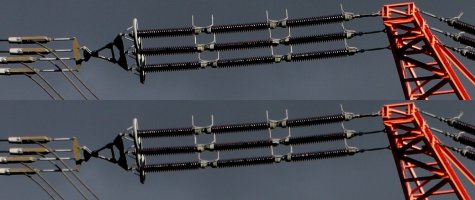
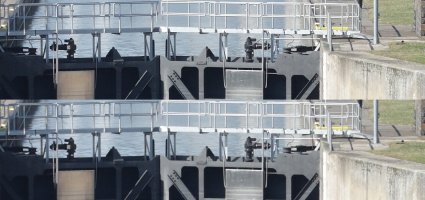
Examples for subtle differences in sharpness without (upper) and with minor luminance noise reduction of 2 units with DPP are attached. But sharpness isn't perhaps the right word, I would say texture fidelity is the right term: look at the speckled surfaces in the 2nd example and the glass/ceramics insulators of the 1st example.

These differences drove me mad because I thought it was an AF error of the 40D or some loose mechanical element inside lenses. The 40D involves noise red just for ISO 100 despite I set it to high iso noise reduction.

Best - Michael


First image: 40/2.8 STM
Second image: 100/2.8 Macro USM (Non-IS)
 

Attachments

  • noise_reduction_example_1_grid_bockhorst.jpg
    noise_reduction_example_1_grid_bockhorst.jpg
    150.4 KB · Views: 1,185
  • noise_reduction_example_1_water_bockhorst.jpg
    noise_reduction_example_1_water_bockhorst.jpg
    192.5 KB · Views: 1,227
Upvote 0
neuroanatomist said:
simonbratt99 said:
Its possible the ball head on my giottos tripod isnt the right thing to be using with a 5dMK2 and the canon 70-200 2.8, maybe its just not rigid enough (even with mirror lockup), yes the tripod mount is on the lens collar.

Quite possible...there's a significant difference in stability between a good ballhead and an 'okay' ballhead (and I'd put Giottos in the second category). Also, the tripod itself may be part of the problem, for the same reason. I was doing some focus testing a few weeks ago for some people in my camera club - in one case, two people side-by-side with 5DII + 24-105L, one with a Promaster (rebranded something else) tripod/ballhead, the other person borrowed my RRS TVC-33 + BH-55. In Live View, the difference in stability was substantial.

How is the best way to test if your tripod lens camera combo is stable enough? Maybe putting live view on with 10x to exaggerate vibration and slightly tap a tripod leg?
Assuming a totally calm day and solid ground, can the camera mechanics of taking a picture (with mirror lockup) on an 'okay' tripod and ball head, cause vibration?

I know my ball head can creep a little if not done up really tight with the 70-200 lens (let alone the 2x converter lol)

The tripod is about the right weight for carrying around for 5 hours though, its not a super light weight one.
 
Upvote 0
I just checked that ball head (Giottos MH7001) rated for up to 6kg, and the 70-200 mk2+5dmk2 is about 2.5kg so should be ok (albeit it an 'ok' brand)
http://www.giottos-tripods.co.uk/index.php?page=productpage&cat=49130e8d88135&product=49184adb70f08

The tripod MTL9351B says rated to 5kg
http://www.giottos-tripods.co.uk/index.php?page=productpage&cat=49130e801a374&product=49185f7ddd445

I think i will test it without having the tripod fully extended (when using a heavy lens)

I see your tripod is $$$$ expensive! and rated up to 23kg. Very nice just not in my price range :-)

Do you think it will help if i swap head for this one
http://www.wexphotographic.com/buy-giottos-mh1300-621-series-ii-ball-head/p1025892
Its rated at 15kg instead of my existing 6kg rated one. I dont really want to swap the tripod.
 
Upvote 0
Status
Not open for further replies.