ISO Poll

Aug 23, 2013
524
0
8,296
I thought it might be interesting to take a poll to get an idea of how people shoot most of the time with regard to ISO settings. With all the talk of new tech, it's advantages and disadvantages, I was just wondering if people could look through their galleries and figure out what ISO range they used the most and which range the least. I also figured this exercise might help some people around here determine what is most important to them for their style of shooting.

I for one find that roughly 85% of the time, am between 800-3200 and between 100-800 the rest of the time.

Wasn't sure which other category to post this in so I figured general would work. My apologies if there was in fact a better place for it.
 
mackguyver said:
Landscapes, 100-800 (if windy)
Wildlife 100-6400 - mostly 800-3200
Portraits, candids, street - 100-800
Professional work that will be printed 20"x30" or larger , never over 400

I've taken my work up one stop with the 5DIII over the 5DII (particularly with landscapes), and now I'm considering upping it one more notch with DxO PRIME.

What makes up the largest bulk of your shooting?

I actually jumped on DxO Optics Pro 9 and have had mixed feelings about it thus far. There are times when PRIME impresses me. But then there are also times when it has done some really odd things to the images (especially with straight edges). I'm not an expert on noise reduction software, but there have been times when it didn't appear to outperform LR5 and CS6 (especially considering the processing time difference when saving the file). Although, there is a lot to like about the software in general, my primary motivation was PRIME. Have you installed and tested the trial?
 
Upvote 0
To answer your first question, it really depends. Right now, I'm doing a lot of architecture work and it's almost always at ISO 100 unless it's windy, and then I'll go up to 400 or just wait...and wait. I'm doing nature work on the weekends, but it hasn't been too fruitful lately. For that, I like to go at daybreak, shooting around 800 for landscapes and 3200 for wildlife. I actually missed some perfect light on a landscape shot because I tried to drop the ISO down to 100 to capture more detail, but it was too windy and by the team I switched back, seconds later, the light was gone.

As for DxO, I upgraded it as soon as they announced it last week, and I haven't had much time to play with PRIME, but so far, it seems to work really well on ISO 800-6400 from my 5DIII. I torture tested it this weekend when I took a heavily underexposed (at least -3 stops) shot at ISO 12,800. I was impressed with it's ability to recover detail from thin air, but the shadows were still crap and I'd never sell the photo or print it larger than a 4x6

I'd like to go back through my archives to try it on other shots and compare it to DxO 8, Adobe Camera RAW and others, but I just haven't had time.
 
Upvote 0
Outdoors, I like to be at 100, and 200 is OK.

Indoors, I like to be at 1600 or lower, but 3200 is acceptable.

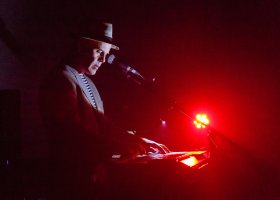
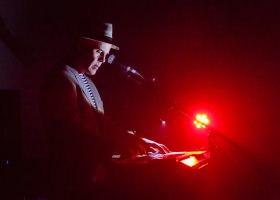
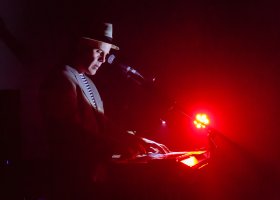
Last week, I had occasion to push the ISO on my 5D Mark III and my 24-70mm II at a concert. This shot was taken at ISO 25,600, f/2.8, 1/250 of a second (70mm). The only difference among these three copies is the noise reduction I applied in Lightroom; 0, 25, and 50. Hopefully they are presented in that order, as the preview doesn't show me the images...
 

Attachments

  • Thomas Dolby-114.jpg
    Thomas Dolby-114.jpg
    816.4 KB · Views: 644
  • Thomas Dolby-114-2.jpg
    Thomas Dolby-114-2.jpg
    575 KB · Views: 643
  • Thomas Dolby-114-3.jpg
    Thomas Dolby-114-3.jpg
    478.8 KB · Views: 645
Upvote 0
mackguyver said:
To answer your first question, it really depends. Right now, I'm doing a lot of architecture work and it's almost always at ISO 100 unless it's windy, and then I'll go up to 400 or just wait...and wait. I'm doing nature work on the weekends, but it hasn't been too fruitful lately. For that, I like to go at daybreak, shooting around 800 for landscapes and 3200 for wildlife. I actually missed some perfect light on a landscape shot because I tried to drop the ISO down to 100 to capture more detail, but it was too windy and by the team I switched back, seconds later, the light was gone.

As for DxO, I upgraded it as soon as they announced it last week, and I haven't had much time to play with PRIME, but so far, it seems to work really well on ISO 800-6400 from my 5DIII. I torture tested it this weekend when I took a heavily underexposed (at least -3 stops) shot at ISO 12,800. I was impressed with it's ability to recover detail from thin air, but the shadows were still crap and I'd never sell the photo or print it larger than a 4x6

I'd like to go back through my archives to try it on other shots and compare it to DxO 8, Adobe Camera RAW and others, but I just haven't had time.

Have you considered switching or buying into the D800/e (or preordering the Sony) at all since you do so much work in the lower ISO ranges?

I personally have been mulling over just buying into another system all together but decided to do an analysis of my shooting only to realize I don't do all that much in the lower ISO ranges for me to justify spending thousands on another ecosystem.
 
Upvote 0
This surely depends on the camera?

Either way, with 5D3.... These days I shoot macros at ISO 160 mostly. It's with flash anyway so that ISO works nicely without any problems.

Indoors with flash... Mostly ISO 400. When there is something specific that another ISO can add to the picture, then I choose something else. Indoors without flash - ISO 3200 is my max.

Outdoors in daylight: Fast objects can bump the ISO quite high without any major grain. Either way I mainly shoot primes wide open, so ISO usually remains close to 100. ISO 160 is my personal favorite, so when ever possible, I use that one. Grain can always be added later on.
 
Upvote 0
Dick said:
This surely depends on the camera?

Either way, with 5D3.... These days I shoot macros at ISO 160 mostly. It's with flash anyway so that ISO works nicely without any problems.

Indoors with flash... Mostly ISO 400. When there is something specific that another ISO can add to the picture, then I choose something else. Indoors without flash - ISO 3200 is my max.

Outdoors in daylight: Fast objects can bump the ISO quite high without any major grain. Either way I mainly shoot primes wide open, so ISO usually remains close to 100. ISO 160 is my personal favorite, so when ever possible, I use that one. Grain can always be added later on.

My apologies for the ambiguity. I am specifically thinking about current canon full frame sensors (basically 5d3 and 1dx).

So I guess my question for Mackguyver goes for you as well. Since you do so much around ISO 100-160, have you felt compelled at all to consider getting a body with the Sony sensor in it?
 
Upvote 0
JohnDizzo15 said:
Have you considered switching or buying into the D800/e (or preordering the Sony) at all since you do so much work in the lower ISO ranges?

I personally have been mulling over just buying into another system all together but decided to do an analysis of my shooting only to realize I don't do all that much in the lower ISO ranges for me to justify spending thousands on another ecosystem.
No, because I'm very happy with Canon, CPS, and their service in general. I have (knocking on wood) never had a serious equipment failure, and find their gear very user-friendly.

I also don't buy into the extended DR, lower noise arguments as being vastly important. If you expose properly in the first place, there are very few shots you would need more performance from. And there's always HDR.

The only limit I've faced with Canon bodies is in megapixels. I had a client ask for HUGE prints and my 5DII had just barely enough pixels, even at ISO 100 and perfect focus. Then again, DxO's tests don't show a huge difference in sharpness between the 5DIII and D800, so I'm not sure the extra pixels would help a whole lot.

If all of my work was for huge prints and I only shot at ISO 400 and under, then I might consider it.
IMHO, though, I think people considering switching to the D800[E] should be looking at medium format. And if MF is too expensive, then they they probably aren't making enough money to justify the "extra" performance they "need". I just don't think there's enough difference between Canon & Nikon to take such a huge bath, financially.
 
Upvote 0
mackguyver said:
JohnDizzo15 said:
Have you considered switching or buying into the D800/e (or preordering the Sony) at all since you do so much work in the lower ISO ranges?

I personally have been mulling over just buying into another system all together but decided to do an analysis of my shooting only to realize I don't do all that much in the lower ISO ranges for me to justify spending thousands on another ecosystem.
No, because I'm very happy with Canon, CPS, and their service in general. I have (knocking on wood) never had a serious equipment failure, and find their gear very user-friendly.

I also don't buy into the extended DR, lower noise arguments as being vastly important. If you expose properly in the first place, there are very few shots you would need more performance from. And there's always HDR.

The only limit I've faced with Canon bodies is in megapixels. I had a client ask for HUGE prints and my 5DII had just barely enough pixels, even at ISO 100 and perfect focus. Then again, DxO's tests don't show a huge difference in sharpness between the 5DIII and D800, so I'm not sure the extra pixels would help a whole lot.

If all of my work was for huge prints and I only shot at ISO 400 and under, then I might consider it.
IMHO, though, I think people considering switching to the D800[E] should be looking at medium format. And if MF is too expensive, then they they probably aren't making enough money to justify the "extra" performance they "need". I just don't think there's enough difference between Canon & Nikon to take such a huge bath, financially.

I definitely concur with you on all those points.

My consideration of another system is not merely to swap out, but to maintain and run both my canon equipment and either the Nikon or Sony (and using which ever system will give me better results in a given scenario). I don't do this professionally (not full-time at least) as I have a day job which makes my decision making process a bit different than most pros.

Also, I didn't give it any real thought until I actually got my hands on some files out of the D800. Much to my surprise, I was very impressed with how much I was able to manipulate them in post with regard to pulling detail out of darks and shadows. But again, I only shoot at ISO levels where this would be beneficial less than 1/5 of the time I am shooting.
 
Upvote 0
JohnDizzo15 said:
I definitely concur with you on all those points.

My consideration of another system is not merely to swap out, but to maintain and run both my canon equipment and either the Nikon or Sony (and using which ever system will give me better results in a given scenario). I don't do this professionally (not full-time at least) as I have a day job which makes my decision making process a bit different than most pros.

Also, I didn't give it any real thought until I actually got my hands on some files out of the D800. Much to my surprise, I was very impressed with how much I was able to manipulate them in post with regard to pulling detail out of darks and shadows. But again, I only shoot at ISO levels where this would be beneficial less than 1/5 of the time I am shooting.
I understand about having two systems, and yes, Nikon has always been better in terms of retaining shadow detail (and Canon highlight recovery), but I still think there's isn't a ton of difference in photos "exposed to the right". Like I said in another post, if Nikon was so superior, why would any non-sponsored Pro shoot with Canon? Yet, most pros are still about 50/50 Nikon/Canon. And most of them are out making money instead of arguing over specs on forums ;)

If you're considering adding another system, you might try renting first, or really looking at getting the D800(E) and a single great lens to start.
 
Upvote 0
With my 60D I tried to keep things 1600 or lower; with the 5D3, 3200 or lower. In practice 90% of my shots are 100-400, with a handful of very-low-available-light photos shot at 3200-12800. If I had to choose one setting for the camera to get stuck on, it would probably be 400--exactly the 35mm film speed I used to buy most often.
 
Upvote 0
JohnDizzo15 said:
privatebydesign said:
90% 100-200iso; 8% 400-800iso; 2% either under 100 or over 800.

Same question for you since you primarily shoot at the lower end. If not, are they similar reasons as Mackguyver?

Absolutely no interest in mixing systems or changing systems for a few percentage points difference in any one metric. The DR I get out of my Canon equipment is not, generally, problematic, Nikon don't make a TS-E 17 which I use a good bit, the actual resolving power of real images from the Nikon system and Canon system is very similar, certainly nothing like the numbers would suggest.

I travel a lot and mixed systems really don't work so well when you need/want backup and diverse coverage; batteries and chargers, those small lenses you think don't make much difference (50 f1.4, 15mm fisheye etc) suddenly becomes two lenses that does make a difference. Do you take two of each make body to not lose the lens capability you don't double up on?

I have been labeled a Canon die hard quite rudely by some here, yet only a couple of months ago I used a complete range of comparable Nikon gear to mine, not one feature made me even think of swapping, my Nikon counterpart felt exactly the same about my gear. If Nikon made the lenses I use and had a body that did something I need exceptionally better I'd think about swapping, I'd never run two systems.

Camera choice is amazingly varied at the moment, when buying you need to start somewhere and I'd suggest rather than concentrate on bodies think end use and then lens selection as the two primary considerations. MP, DR, FPS, even sensor size are all considerations, but my deal breaker features won't be the same as yours. If I wanted markedly higher quality images than I can currently get from one shot (I print to 38" regularly) I'd be looking at medium format, not 135.
 
Upvote 0
privatebydesign said:
If I wanted markedly higher quality images than I can currently get from one shot (I print to 38" regularly) I'd be looking at medium format, not 135.
Good point about print sizes - that's where ISO really comes into play. With the 5DIII, I'm comfortable printing up to 20"x30" up to around ISO 1600 - 3200 if pushed. Maybe 40"x60" up to ISO 400, and larger with ISO 100. This all assumes a very clean capture and high quality interpolation tools.
 
Upvote 0
It all depends on what my client or I perceive to be acceptable image quality for any given project. As a rule of thumb I prefer shooting in the lowest ISO setting possible given my desired aperture (depth of field) and shutter settings (do I want to stop motion or illustrate blur?). And acceptable image quality depends on the final output (website or high res print? - most of my stuff is used for the web).

Here are the general ISO settings I use for the following types of shots:

Landscape: Day 100-400, Night 100-400 (tripod), 400-1600 (handheld).

Sports: Max 12800 if I wanna stop motion in poor lighting conditions, but I'll lower that max to 3200 if I need to make a 8x10 print or smaller.

Lifestyle/Travel/Portraits: with flash - whatever's necessary to use a 1/200 shutter speed. no flash - max 12800
 
Upvote 0