1DX: obviating the need for more expensive lenses?

  • Thread starter Thread starter smirkypants
  • Start date Start date
Status
Not open for further replies.
S

smirkypants

Guest
So I shoot sports, and more specifically polo and I use a 100-400L. I'm good and take much better photos than many of my colleagues who use much more expensive equipment. Why? Because on my field, while they are trapped in place with their heavy artillery pieces, I'm like the mobile cavalry running around for the best shots. I know the game. I can move closer. I run up and down the field. I get great shots. For me, it's all about positioning and composition.

Using the light lens also keeps me sharp. I think a lot of photographers with their gigantic artillery pieces get lazy—both in terms of their willingness to move their butts as well as in their composition. Their photos tend to all look the same.

I'm also quite handy with photoshop: specifically, I'm pretty good with lens blur to simulate the bokeh of more expensive lenses. It works surprisingly well, though it's quite a time consuming process. In the end, however, I'd rather spend an hour processing a shot that I have than spend no time processing a photo that I don't.

The only time my photos stink is when the light gets bad. I pump up the ISO to about 3200 and basically pray. I get some good shots, but it's damned hard work in post-processing. Sometimes I just bust out the 70-200mm and hope the ponies pass by close... which ain't too often on a 300 yard field.

I've thought several time about buying a 400 2.8 and using it when the light is bad. I've used one several times, and if you're lucky enough to actually get a shot, it's creamy buttery goodness. But that's the thing, right? Actually getting the shot. Ponies move fast and keeping the camera trained on a torso that's moving fast and bobbing up and down is tricky hand-held and nearly impossible mono-podded. Still, when the light is bad, I lose, and I've been thinking about getting one for the bad days.

So here cometh the 1DX with ISO capabilities to die for. Money is not the issue. Do you guys think the low light problems will be much more a thing of the past? I'm curious as to what you guys might think.
 
Hmmm... Maybe you should consider the Sigma 120-300? Anyway, the 1DX may help you somewhat.

In general though, will the 1DX replace broad aperture lenses? No more than the 1dmkIV did.

And congratulations on having better pictures than any one else! They must be really jealous.
 
Upvote 0
smirkypants said:
So I shoot sports, and more specifically polo and I use a 100-400L.

Wow, if you're getting such great shots with this lens shooting at f/5.6 I'd say just stay with it. You're obviously extremely comfortable with this lens and understand it's capabilities. Assuming you're shooting with a Mk4, the 1DX is just going to give you a little more shooting time at the end of the day.

The Sigma 120-300 f/2.8 has had me interested for years, but I've been happy shooting sports with a 300 f/2.8is and 70-200 f/2.8is on a variety of x1.3 crop bodies. However the new release Sigma 120-300 f/2.8 sounds like a comprehensively re-worked lens, IS being the headline upgrade, plus the optics and mechanics sound like they have gone through a comprehensive update too. The Sigma was never as quick tracking action as Canon glass, but early indications are that the new Sigma has lifted its game.

I want to read beyond the press releases and see some real world reviews on this lens. If it works as promised, a 120-300 stabilized f/2.8 lens sounds very compelling.

Paul Wright
 
Upvote 0
I'm sure the 1DX will have great low light performance, but I doubt it will be revolutionary. And I really think it's something we need to see tested extensivly and independantly, not just listen to Canon.

As much as I enjoyed reading about how much more awsome you are than your fellow shooters, why not just show us some photos?
 
Upvote 0
Precisely my thinking. There's zero real world experience with this promised new camera.

A polo pony on the field is worth more than 20 of them back in the stables.


TexPhoto said:
I'm sure the 1DX will have great low light performance, but I doubt it will be revolutionary. And I really think it's something we need to see tested extensivly and independantly, not just listen to Canon.
 
Upvote 0
I think we are all waiting to see what the low light capabilities actually are. Canon has, in the past advertised big improvements which turned out to really just be 80% better in-camera jpeg NR processing and maybe a 1/2 stop raw improvement. (1D MK IV vs 1D MK III for example).

We will just have to wait, being its a FF camera, 1 to 1-1/2 stops improvement in raw over the 1D MK IV in RAW would be a big gain, but I doubt if we'll see it.
 
Upvote 0
My local Canon dealer did let me try the new Canon EF 300mm f/2.8 L IS II USM for a couple of hundred shots in challenging light conditions last weekend. I love it, most of all due to its light weight. I imagine I could carry it around all day for handheld shooting. For extended reach you could add a 1.4x teleconverter (not sure if the AF would still be fast enough to meet your needs though).

An future alternative could be the announced Canon EF 200-400mm f/4 L IS USM Extender 1.4x Lens in combination with a monopod...
 
Upvote 0
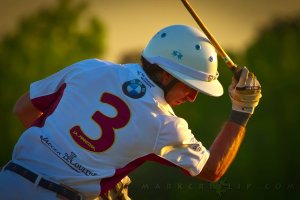
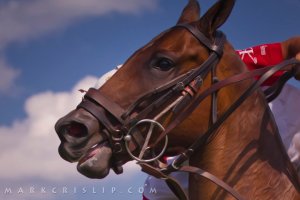
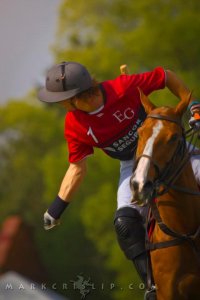
I didn't want to sound like I was bragging; rather, that I get different and interesting kinds of compositions because I am mobile. Since I was challenged, I'll attach a few shots that absolutely could not have been taken with a stationary lens. I was extremely low to the ground on the sidelines. Monopods give you a different angle. Anyway, just curious as to your guys' thoughts.
 

Attachments

  • pablo.jpg
    pablo.jpg
    61 KB · Views: 307
  • miguel.jpg
    miguel.jpg
    57.8 KB · Views: 309
  • magoo.jpg
    magoo.jpg
    49.2 KB · Views: 1,458
  • tincho.jpg
    tincho.jpg
    34.2 KB · Views: 1,462
Upvote 0
I was half-expecting some endorsement of APS-C cameras because those allow longer focal lengths (and a wider range of focal lengths, i.e. 160mm-640mm is larger than 100-400mm), but no matter. I don't think it's controversial to say that being mobile gives you opportunities others miss, and I like that certainty about it :)

Indeed the 120-300mm is a great lens but I see you use some very tight framing - and as the 120-300mm is reputed to have a shorter focal length at 300mm (I have one but haven't tested this...for one, what to test it against? My Sigma 120-400? Uh...) than 300mm. Aside from that it's definitely a quality lens, but it's heavy (6.5 pounds) and in any case simply not as flexible in framing. But it sounds like it may still be useful here. A fixed focal length lens doesn't seem like the right solution - 135mm L, 200mm f/2L, 300mm f/2.8L, etc. all rob you of zooming capabilities, so in that sense the 120-300mm f/2.8 OS trumps them all. This is part of the reason why I've been calling for Canon to release their own and end the argument - though as long as they neglect to do so I will also suggest the Sigma option without reservations; it's a fine lens.

I see the need for a one-lens solution here, and I agree that if you are limited to ISO, and need full-frame capabilities, a better full-frame camera (like the 1D X) seems needed. If nothing else, the new camera has both a slightly lower resolution and is a full three or four years newer than Canon's most recent full-frame cameras, so it would be very surprising if it didn't deliver at a level close to what's being promised.

So, for everything that's been said (including by me) and other people who take bird photographer needs seriously, this is an example where it should work according to plan - it should work perfectly for this use.
 
Upvote 0
smirkypants said:
I didn't want to sound like I was bragging; rather, that I get different and interesting kinds of compositions because I am mobile. Since I was challenged, I'll attach a few shots that absolutely could not have been taken with a stationary lens. I was extremely low to the ground on the sidelines. Monopods give you a different angle. Anyway, just curious as to your guys' thoughts.
I'm sorry to tell you this but these are really crappy sports photos - there's no context, no way to understand what's going on (or what it even was that you were shooting - cricket? Polo? A riding competition?), you can't see anyone's face except for the horse. As a sports photographer, your goal should be taking good photos of interesting situations. Unfortunately, there's nothing interesting about these photos.
 
Upvote 0
I dont know a shizzle about polo photography. But it seems to me that these pictures is not as good as you think they are. To stereotype and nothing that tell me that this is a game or practice
 
Upvote 0
Thank you for the insights as to what constitutes good sports photojournalism. I am not a photojournalist.

Again... I value my mobility, but this mobility comes at a cost; that is, poor performance in bad light. The 1DX has allegedly great low light performance. If I could get clean results in lower light because of better ISO performance, I'll take it. With currently available consumer technology, the only way to avoid noise is to shoot f2.8. I was just wondering if we were on the cusp of not needing f2.8 in low light. I was just thinking that if not the upcoming generation, then probably the next.
 
Upvote 0
Don't you just love the level of "constructive" criticism on these forums?

Are you trying to take sports pictures or environmental portraits, because they work better as the latter than the former? (I mean that as a compliment.) I suspect that active polo players would know exactly what is going on, and that is probably your target market. I would, however, prefer to see more of the subjects' faces.

FWIW, the trend in sports photography seem to be frame looser and let the art director do the cropping.
 
Upvote 0
I'd love to see the metadata for the photos that you did post.

You made me laugh when you said money is not an issue. You are photographing polo, a rich-man's game. ;D

The biggest help you will see from fast glass is to increase your shutter speed but keeping everything else the same. If money is no object, you should probably get the 200mm f/2L IS and a 1.4x TC when necessary. That is an amazing lens and will be more robust IMO than a 400mm f/2.8L II at less than half the price.

Unfortunately, I would tend to agree with a lot of the comments, but I don't know if those are crops to show that you got the picture of if they are re-sized shots. I would suggest zooming out a bit and getting context and drama in the picture. If the player is spending so much energy hitting the ball, why is he hitting it? OH MY GOD, those two menacing chaps are behind him on their horses of death! :o Stuff like that. Drama and excitement are key for sports photos.
 
Upvote 0
smirkypants said:
Thank you for the insights as to what constitutes good sports photojournalism. I am not a photojournalist.

Fair enough. In that case, though, I don't think you should be comparing yourself to the other guys on the pitch like this, since the motivations behind their pictures are quite different from yours.
 
Upvote 0
smirkypants said:
Thank you for the insights as to what constitutes good sports photojournalism. I am not a photojournalist.

What is your purpose for the images, what are they used for? If it isn't photojournalism I assume it is for personal use? If so, stuff what everyone else thinks hahaha.

I however would take a lot as constructive criticism.

Back to the original post - I think the 'art' of photography is to not need to simulate bokeh, and to use post processing as more of a final touch rather than image manipulation. Therefore I don't think the increased ISO capabilities will obviate the need for expensive lenses.

There is also build quality, focus, image quality and IQ that are part of an expensive lens, I know for a fact that I wouldn't trade my 50 1.2L for a 50 1.8... low light improvement isn't going to affect my lens choice here... I never shoot below f2 on it anyway.

I've spent the week shooting on Nikons and after breaking a 600mm f4, i've been using a 200-400f4 with a TC and i tell you I would choose the more expensive prime any day.

I think we should probably get back to the original post - Whether the increased ability to shoot in low light will remove the need for more expensive lenses.... not getting personal haha.
 
Upvote 0
IRT.

For you, obviously yes, with what you described this is a perfect fit for you to do things 'your' way possibly with a little extra weight? For others, it will just make life at 2.8 that much faster giving the world high quality wildlife shots we've never seen before. I'm hopeful the 5D Mark III will have the ISO features of the 1Dx and the speed and focus points of at least a slightly improved 7D, because I prefer the smaller frame of the 5D for off tri-pod use, but even if the 5D III matches the features of this, I'd probably still end up getting both over the coarse of this upcoming generation of DSLR tech. I'm guessing the 5D will at least have less ports/lack dual CF cards on it because there isn't any place to put them which is part of the reason why I'd still get both in time, waiting on the 5D first though because the budget/credit card limit says so....
 
Upvote 0
A zoom is convenient, a prime is faster and has better IQ. So take both with you. :) If you currently have a 7D, consider a 1D Mk III/IV. The 1D X might be right up your alley, and you already know you want an f/2.8 lens so get both if you can afford it.

I've seen plenty of 400mm f/2.8 lenses at polo, not for taking pics of a player's nose but to get distance from the horses and ball. Last year a pro photographer lost his 400mm on impact.

I agree on sport pictures being about capturing the heat of the battle and emotions, close-ups can add to that story. That said, polo isn't an easy sport to take pictures of. Players mostly look down, the field is huge, the ball is small, and lighting conditions vary. Good luck on your career, and here's two of my own polo pictures, both taken with a 7D + 100-400L.

_MG_3754.jpg


_MG_3712.jpg
 
Upvote 0
Going back to the original subject even if the 1DX reduces the need for larger appatures its going to extent the need for longer focal lenghts so really Canon arent likely to loose out, just the reverse I expect since former 1D users will already likely have fast lenses and might now buy something longer aswell.

From Canon's point of view matching the D3s is probabley more important than providing a 1.3 crop alternative, espeically given there dominance in the sports market.
 
Upvote 0
Status
Not open for further replies.