Hi.
I´m a beginner when it comes to use my Canon 600mm f/4l is ii. The purchase of that lens started my interest in bird photography lately. But I have one question/problem.
I have been taking photos of mammals earlier and they are pretty easy to hit with your "autofocus points". I normally use the center point and often nails the images perfectly even if the fellow deer for an example runs quick.
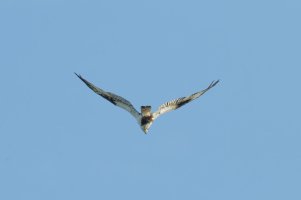
But when it comes to birds they are faster, not as easy to predict in flight and most of all smaller. They are often very hard to nail in a distance with just the center point so I would like to use more focusing points as the option where you have at least nine points or even more. But when it comes to tracking the birds in flight I find it very hard for the camera to follow the bird unless it´s just a clean sky above. If there are trees or anything else in the background the camera is having a hard time to following the bird in servo mode.
Is it the limitations of the autofokus in the Canon 5d mkiii that makes it almost impossible to use more than one focusing point or are there any adjustments that will be better for BIF? I have tried several of the different settings and also tried to optimize them myself but with no luck.
How do you do it? Any suggestions and advices to improve the tracking capabilities or is it that the focus is not good enough on that body? Maybe it´s the same with any camera that the subject needs to be covered completely with all selected points or else some of the points will find another thing to "lock up to" in the background?
Appreciate your help.
I´m a beginner when it comes to use my Canon 600mm f/4l is ii. The purchase of that lens started my interest in bird photography lately. But I have one question/problem.
I have been taking photos of mammals earlier and they are pretty easy to hit with your "autofocus points". I normally use the center point and often nails the images perfectly even if the fellow deer for an example runs quick.
But when it comes to birds they are faster, not as easy to predict in flight and most of all smaller. They are often very hard to nail in a distance with just the center point so I would like to use more focusing points as the option where you have at least nine points or even more. But when it comes to tracking the birds in flight I find it very hard for the camera to follow the bird unless it´s just a clean sky above. If there are trees or anything else in the background the camera is having a hard time to following the bird in servo mode.
Is it the limitations of the autofokus in the Canon 5d mkiii that makes it almost impossible to use more than one focusing point or are there any adjustments that will be better for BIF? I have tried several of the different settings and also tried to optimize them myself but with no luck.
How do you do it? Any suggestions and advices to improve the tracking capabilities or is it that the focus is not good enough on that body? Maybe it´s the same with any camera that the subject needs to be covered completely with all selected points or else some of the points will find another thing to "lock up to" in the background?
Appreciate your help.


 Again, tuning the AF is the key.