Any news on Sony A7R II?

raptor3x said:
3kramd5 said:
I can not for the life of me tell if IBIS is working. I haven't shot any long focal lengths yet, but it doesn't have that "everything slows down" look you get when enabling lens-based IS.

Easy way to tell if the IBIS is working is look through the EVF and rotate the camera about the lens' optical axis back and forth. If IBIS is working the picture will seem steady, if not then there's some setting you need to adjust.

Negative.
I went to the menu, disabled IBIS, and reenabled it. Or tried too. It said my lens isn't supported. Oh well.
 
Upvote 0
3kramd5 said:
raptor3x said:
3kramd5 said:
I can not for the life of me tell if IBIS is working. I haven't shot any long focal lengths yet, but it doesn't have that "everything slows down" look you get when enabling lens-based IS.

Easy way to tell if the IBIS is working is look through the EVF and rotate the camera about the lens' optical axis back and forth. If IBIS is working the picture will seem steady, if not then there's some setting you need to adjust.

Negative.
I went to the menu, disabled IBIS, and reenabled it. Or tried too. It said my lens isn't supported. Oh well.
I rented fe 16-35mm for my recent trip to Hawaii. With over 200 shots with my a7s, never feel the IQ is below canon f4 IS. I have this lens in my bh account. Will more likely buy it after some testing a7rii with fe55.
 
Upvote 0
Dylan777 said:
3kramd5 said:
raptor3x said:
3kramd5 said:
I can not for the life of me tell if IBIS is working. I haven't shot any long focal lengths yet, but it doesn't have that "everything slows down" look you get when enabling lens-based IS.

Easy way to tell if the IBIS is working is look through the EVF and rotate the camera about the lens' optical axis back and forth. If IBIS is working the picture will seem steady, if not then there's some setting you need to adjust.

Negative.
I went to the menu, disabled IBIS, and reenabled it. Or tried too. It said my lens isn't supported. Oh well.
I rented fe 16-35mm for my recent trip to Hawaii. With over 200 shots with my a7s, never feel the IQ is below canon f4 IS. I have this lens in my bh account. Will more likely buy it after some testing a7rii with fe55.

Hmmmm. I wonder how it compares to the batis.
 
Upvote 0
3kramd5 said:
Dylan777 said:
3kramd5 said:
raptor3x said:
3kramd5 said:
I can not for the life of me tell if IBIS is working. I haven't shot any long focal lengths yet, but it doesn't have that "everything slows down" look you get when enabling lens-based IS.

Easy way to tell if the IBIS is working is look through the EVF and rotate the camera about the lens' optical axis back and forth. If IBIS is working the picture will seem steady, if not then there's some setting you need to adjust.

Negative.
I went to the menu, disabled IBIS, and reenabled it. Or tried too. It said my lens isn't supported. Oh well.
I rented fe 16-35mm for my recent trip to Hawaii. With over 200 shots with my a7s, never feel the IQ is below canon f4 IS. I have this lens in my bh account. Will more likely buy it after some testing a7rii with fe55.

Hmmmm. I wonder how it compares to the batis.

2cents: Batis will have upper hand in term of IQ.
 
Upvote 0
I was doing some tests with S-Log2 and S-Gamut picture profiles for video on my A7S and decided to try it with normal photo.
I was very surprised to see that it is also work for RAW files.
Normally picture profiles do not have any effect on RAW files on Canon camera– but for Sony with Sony S-Log2 and S- Gamut this is different.

Therefore, there is extremely interesting question – is Sony for S-Log2 does logarithmic analog signal compression before chip ADC or just manipulates digital output of ADC?
Could not find any information so far anywhere which could provide answer to this question.
If Sony with S-Log2 profile manipulates analog signal before ADC (to fit real scene high DR to ADC min –max input values) than this could be the answer why Sony declared A7S DR to be more than 14 stops.

Moreover, this could be the key to single shot HDR using Sony A7S or A7RII
A7RII, which also has S-Log2 profile, and S-Log2 base ISO is 800 for A7R compared to ISO3200 for A7S.

I did some test shots using normal shooting (PP disabled) and PP profile using S-Log2 and S-Gamut and there are some interesting things.
1. With the fixed Aperture, and fixed ISO3200 normal RAW shot (no PP applied) require at least twice less exposure (twice faster shutter speed) to have approximately the same histogram right side level (and overall brightness) as for shot with S-Log2 profile.
So S-Log2 shot is exposed twice more and still has no highlights clipping.
2. When both images are normalized in LR to the same brightness impression that RAW file taken using S-Log2 profile has much better gradation in highlights and in general looks more natural.

My impression after these tests is that S-Log2 compression is done on analog signal before ADC and these results in more reach resulting image but not sure that this could be true.
Possible this is due to more scene DR being compressed to fit the ADC input signal range and these results in more details and finer gradations in image highlight areas.

Not have much time now to spend more on these tests and more research regarding subject, possibly some time later.
Would be interesting if someone who also has A7S or already got his a7RII would try the same and share his observations.
Seems that this could provide better real scene DR mapping to the camera output DR range.
 
Upvote 0
S-Log2 indeed requires different metering (and thus exposure). See:

From http://www.xdcam-user.com/2014/08/exposing-and-using-slog2-on-the-sony-a7s-part-one-gamma-and-exposure/

I will try to repeat your experiment this afternoon.
 
Upvote 0
Neutral said:
Not have much time now to spend more on these tests and more research regarding subject, possibly some time later.
Would be interesting if someone who also has A7S or already got his a7RII would try the same and share his observations.
Seems that this could provide better real scene DR mapping to the camera output DR range.

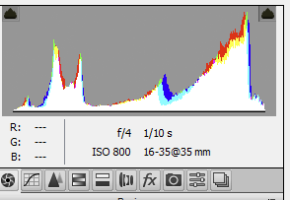
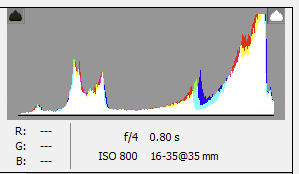
At ISO800 (base for s-log2), just eyeballing the in camera histogram, not shooting on a tripod, etc. (i.e. entirely non-scientific), it took .8 seconds at a fixed aperture to yield roughly the same exposure as 1/10 with linear encoding. Obviously I was off by a bit, so maybe 4:1 not 8:1?

I can't tell if one has an advantage over the other from a post-processing standpoint.
 

Attachments

  • linear.png
    linear.png
    11.4 KB · Views: 455
  • slog2.png
    slog2.png
    9.3 KB · Views: 458
Upvote 0
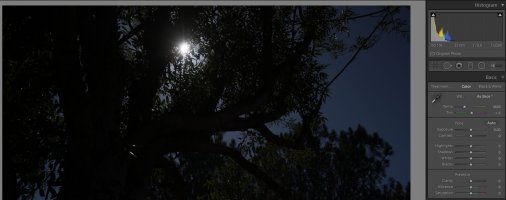
This wasn't a "let's see what test I can manufacture" situation. Rather, I haven't yet figured out how to meter and frame high contrast scenes (which do a number on the display... I think OVF still wins here) with the A7R ii, and I hosed this one substantially. Not a masterpiece by any stretch of the imagination, but that's pretty handy.
 

Attachments

  • Untitled-1.jpg
    Untitled-1.jpg
    126.1 KB · Views: 191
  • Untitled-2.jpg
    Untitled-2.jpg
    45.8 KB · Views: 448
  • MAB-20150808-0235.jpg
    MAB-20150808-0235.jpg
    1.4 MB · Views: 185
Upvote 0
bwud said:
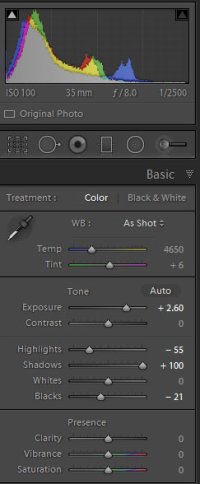
This wasn't a "let's see what test I can manufacture" situation. Rather, I haven't yet figured out how to meter and frame high contrast scenes with the A7R ii, and I hosed this one substantially. Not a masterpiece by any stretch of the imagination, but that's pretty handy.

Compared to the shot metered properly, the vastly underexposed one is obviously noisier and the recovered colors are a bit washed out.
 

Attachments

  • MAB-20150808-0236.jpg
    MAB-20150808-0236.jpg
    1.4 MB · Views: 824
  • Untitled-2.jpg
    Untitled-2.jpg
    54.7 KB · Views: 441
  • Untitled-1.jpg
    Untitled-1.jpg
    360.4 KB · Views: 197
Upvote 0
Dylan777 said:
I rented fe 16-35mm for my recent trip to Hawaii. With over 200 shots with my a7s, never feel the IQ is below canon f4 IS. I have this lens in my bh account. Will more likely buy it after some testing a7rii with fe55.

I switched from the Canon 16-35 f/4 IS to the FE 16-35 because I found I was almost always using the Canon on the A7R with an adapter. At the wide end there's no significant difference but the Canon is definitely the better lens around 35mm.
 
Upvote 0
3kramd5 said:
Neutral said:
Not have much time now to spend more on these tests and more research regarding subject, possibly some time later.
Would be interesting if someone who also has A7S or already got his a7RII would try the same and share his observations.
Seems that this could provide better real scene DR mapping to the camera output DR range.

At ISO800 (base for s-log2), just eyeballing the in camera histogram, not shooting on a tripod, etc. (i.e. entirely non-scientific), it took .8 seconds at a fixed aperture to yield roughly the same exposure as 1/10 with linear encoding. Obviously I was off by a bit, so maybe 4:1 not 8:1?

I can't tell if one has an advantage over the other from a post-processing standpoint.

OK, so your results are the same what I found out for S-Log2 exposure.
This indeed is very interesting.

This actually means that using S-Log2 you can capture at least 4 times more light (2 stops) or even 3 stops by the camera sensor without affecting highlight compared to liner mode with the same given fixed aperture and fixed ISO for the similar output results (as seen on histogram)

This is very drastic way for preserving highlights clipping and this is completely different to the Canon “preserve highlights” mode. My understanding was (from different sources) that in highlights protection mode Canon is just underexposing shot and then pushing up shadows and mid tones in the resulting image (digital post processing after sensor ADC). .
Sony on the contrary allowing increasing exposure by two stops by exponentially compressing highlights.
So it is very interesting how they do this technically.

My understanding that for this to be done properly it have to be done by changing analog signal amplifier gain curve from linear to logarithmic curve starting from some signal level that is fairly below highlights clipping point.
Moreover, this point in A7S and A7rII could be adjusted – it called knee point in PP settings and could be set to higher or lower level.
So my suspicion (interpretation of what we observe with S-Log2) that Sony is doing that in analog signal amplifier before sensor ADC.
Why I think so is that S-Log2 base ISO for A7S is 3200 and for A7rII is 800 compared to native ISO 100 for linear mode.

This raise the question – why this high ISO setting is required for S-Log2 mode to work?
Why it could not work when using base ISO100?

Reasonable explanation for me is that it is not possible to do S-Log2 compression with base ISO where analog circuit gain before ADC is equal 1 so it is not possible to reduce gain for higher signal levels.
For S-Log2 mode analog amplifier (before ADC) is initially set for gain required for ISO3200 for A7S and for ISO800 for A7rII.
This means it is 32 times (5 stops) higher for A7S compared to gain for base ISO100 or 3 stops higher for a7rII.

So using this initial gain setup, it is possible to reduce analog amplifier gain up to 5 stops (from 32 to 1) for higher signal levels (Max 5 stops reduction at Max signal level) for A7s and by 3 stops for A7rII.
This logarithmic gain reduction applied starting from the “knee point” which could be adjusted in the PP profile in A7S and A7rII. In reality, I think gain reduction is less – around 3 stops as seen from output histogram.

Therefore, this allow mapping of all the possible photocell DR to the input signal range (min/max values) of the ADC behind analog amplifier . So this theoretically would allow to fit more real input DR to the digital output signal after ADC.

If we Look at Sensorgen figures for A7S http://www.sensorgen.info/SonyA7S.html this could mean that in S-Log2 mode (at ISO3200) we could have read noise of 4.1(e-) but increase saturation point from 5453 (for analog amplifier gain =32) up to 155557 (for gain =1) thus using full well capacity for highlights (which is limited for linear gain mode as higher signal will be beyond ADC max input signal level)
This theoretically gives possibility to have captured DR equal to 155557/4.1 = 37940.
This translates to log2 (37940) = 15.2 stops of theoretical limit for input scene when using S-Log2 mode for input analog signal amplifier before ADC.
In practical implementation (with some other limitations, which we do not know), this could be that 14.5 stops of maximum DR that Sony was claiming for a7S.
So my assumption (and possible explanation) that when Sony was claiming 14.5stops maximum DR for A7S that figure was maximum that could be achievable using for S-Log2 mode and not for linear mode.
Possibly marketing people did not know that well.
Also that means that DXO measurements for A7S DR was done in linear mode do not reflect actual camera DR capabilities when S-Log2 mode is used.

Who knows , may be Sony will be using that methodology transparently for user in coming a7000 which claimed to have DR above 15.
Basically this is similar to dual ISO mode in ML , difference is that it is not a dual ISO using two shots but rather logarithmic ISO reduction for highlights in a single shot

This all above is very interesting (at least for me and hope for some others) and I hope I will be able to find some time in to do some more tests and more research on that.

 
Upvote 0
Neutral said:
3kramd5 said:
Neutral said:
Not have much time now to spend more on these tests and more research regarding subject, possibly some time later.
Would be interesting if someone who also has A7S or already got his a7RII would try the same and share his observations.
Seems that this could provide better real scene DR mapping to the camera output DR range.

At ISO800 (base for s-log2), just eyeballing the in camera histogram, not shooting on a tripod, etc. (i.e. entirely non-scientific), it took .8 seconds at a fixed aperture to yield roughly the same exposure as 1/10 with linear encoding. Obviously I was off by a bit, so maybe 4:1 not 8:1?

I can't tell if one has an advantage over the other from a post-processing standpoint.

OK, so your results are the same what I found out for S-Log2 exposure.
This indeed is very interesting.

This actually means that using S-Log2 you can capture at least 4 times more light (2 stops) or even 3 stops by the camera sensor without affecting highlight compared to liner mode with the same given fixed aperture and fixed ISO for the similar output results (as seen on histogram)

This is very drastic way for preserving highlights clipping and this is completely different to the Canon “preserve highlights” mode. My understanding was (from different sources) that in highlights protection mode Canon is just underexposing shot and then pushing up shadows and mid tones in the resulting image (digital post processing after sensor ADC). .
Sony on the contrary allowing increasing exposure by two stops by exponentially compressing highlights.
So it is very interesting how they do this technically.

My understanding that for this to be done properly it have to be done by changing analog signal amplifier gain curve from linear to logarithmic curve starting from some signal level that is fairly below highlights clipping point.
Moreover, this point in A7S and A7rII could be adjusted – it called knee point in PP settings and could be set to higher or lower level.
So my suspicion (interpretation of what we observe with S-Log2) that Sony is doing that in analog signal amplifier before sensor ADC.
Why I think so is that S-Log2 base ISO for A7S is 3200 and for A7rII is 800 compared to native ISO 100 for linear mode.

This raise the question – why this high ISO setting is required for S-Log2 mode to work?
Why it could not work when using base ISO100?

Reasonable explanation for me is that it is not possible to do S-Log2 compression with base ISO where analog circuit gain before ADC is equal 1 so it is not possible to reduce gain for higher signal levels.
For S-Log2 mode analog amplifier (before ADC) is initially set for gain required for ISO3200 for A7S and for ISO800 for A7rII.
This means it is 32 times (5 stops) higher for A7S compared to gain for base ISO100 or 3 stops higher for a7rII.

So using this initial gain setup, it is possible to reduce analog amplifier gain up to 5 stops (from 32 to 1) for higher signal levels (Max 5 stops reduction at Max signal level) for A7s and by 3 stops for A7rII.
This logarithmic gain reduction applied starting from the “knee point” which could be adjusted in the PP profile in A7S and A7rII. In reality, I think gain reduction is less – around 3 stops as seen from output histogram.

Therefore, this allow mapping of all the possible photocell DR to the input signal range (min/max values) of the ADC behind analog amplifier . So this theoretically would allow to fit more real input DR to the digital output signal after ADC.

If we Look at Sensorgen figures for A7S http://www.sensorgen.info/SonyA7S.html this could mean that in S-Log2 mode (at ISO3200) we could have read noise of 4.1(e-) but increase saturation point from 5453 (for analog amplifier gain =32) up to 155557 (for gain =1) thus using full well capacity for highlights (which is limited for linear gain mode as higher signal will be beyond ADC max input signal level)
This theoretically gives possibility to have captured DR equal to 155557/4.1 = 37940.
This translates to log2 (37940) = 15.2 stops of theoretical limit for input scene when using S-Log2 mode for input analog signal amplifier before ADC.
In practical implementation (with some other limitations, which we do not know), this could be that 14.5 stops of maximum DR that Sony was claiming for a7S.
So my assumption (and possible explanation) that when Sony was claiming 14.5stops maximum DR for A7S that figure was maximum that could be achievable using for S-Log2 mode and not for linear mode.
Possibly marketing people did not know that well.
Also that means that DXO measurements for A7S DR was done in linear mode do not reflect actual camera DR capabilities when S-Log2 mode is used.

Who knows , may be Sony will be using that methodology transparently for user in coming a7000 which claimed to have DR above 15.
Basically this is similar to dual ISO mode in ML , difference is that it is not a dual ISO using two shots but rather logarithmic ISO reduction for highlights in a single shot

This all above is very interesting (at least for me and hope for some others) and I hope I will be able to find some time in to do some more tests and more research on that.

Found something interesting related to the S-Log2 subject:
http://nofilmschool.com/2014/07/sony-a7s-dynamic-range-arri-alexa-amira
Mentioned there that Sony was claiming 15.3 stops which actually match my calculations above for theoretical S-Log2 max DR limit for A7S.
Authors of that article measured A7S dynamic range in S-Log2 mode to be around 14.1 stops.
"Here we tested usable dynamic range of the given cameras. With 14.1 stops the usable dynamic range of the A7S comes surprisingly close to the Arri Amira with its legendary Alexa sensor (see our full review here)"
 
Upvote 0
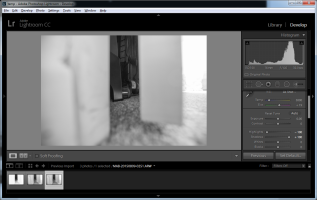
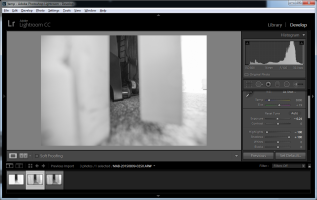
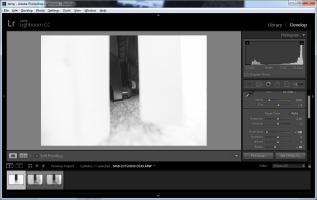
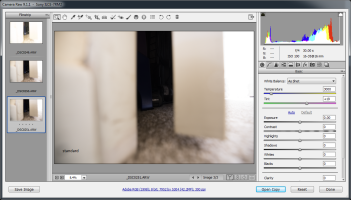
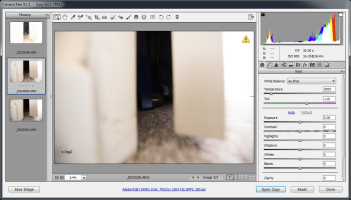
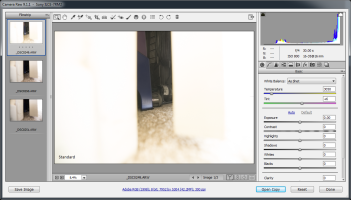
Here's a contrived situation. I put a lenscap in a closet, closed the door most of the way, and shot through the crack with a wide angle lens. See my cringe-worthy setup:

1Ighel9LPvrDndqux-h0h9LA_434p6mwhzCXHtNoQwQ


01 and 02 have the same exposure settings (f/4, 30 seconds, ISO800). 02 is s-log2.

01 has blown highlights. 02 doesn't have blown highlights (excepting the very right-hand side of the frame), but the shadows are darker.

I can certainly recover a heck of a lot more detail with the s-log2 image.

However, better than both is 03, which is shares the exposure time and aperture, but is at ISO100. It has similar shadows to 01, and better highlights than 02.

01 Raw
02 Raw
03 Raw
 

Attachments

  • 03 - Recovered.png
    03 - Recovered.png
    245.9 KB · Views: 180
  • 02 - Recovered.png
    02 - Recovered.png
    245.1 KB · Views: 193
  • 01 - Recovered.png
    01 - Recovered.png
    236.7 KB · Views: 178
  • 03 - Standard.png
    03 - Standard.png
    359.7 KB · Views: 181
  • 02- s-log2.png
    02- s-log2.png
    367.5 KB · Views: 183
  • 01 - Standard.png
    01 - Standard.png
    388.3 KB · Views: 174
Upvote 0
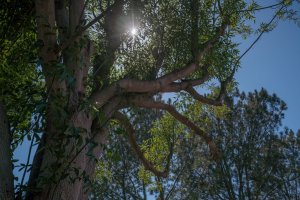
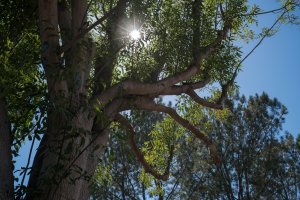
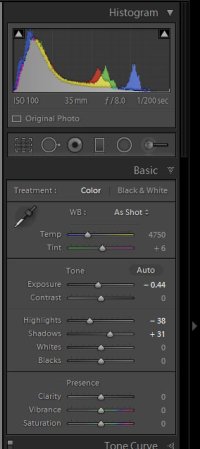
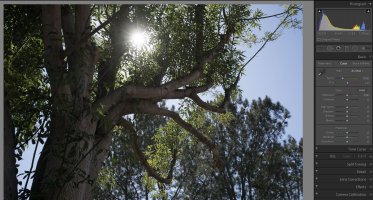
Shot at about 4:30PM facing a smidge south of west (maybe 255 degrees). Highlights are maybe 1/2 stop from clipped, foreground was in deep shadow. I can recover it better than I think I'd have been able to with my 5Dmk3, but there's something about it I don't like. I think it's the color (possibly because it's coming from deep shadow). I can actually recover more shadow than I recall seeing with my eyes (probably a false memory), but it starts to look way too flat.

I need to learn to process these, I guess. If I'm not pleased by the time I leave for Europe next month, it's going back and I'll get a 5DS.
 

Attachments

  • image.jpg
    image.jpg
    638.2 KB · Views: 187
Upvote 0
Dylan777 said:
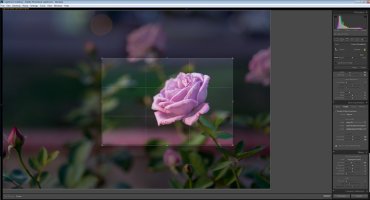
1st photo shows cropping size

2nd photo exported from LR6

Dylan: As a user of both canon and Sony, may I ask how you've configured yours?

I have shutter on the front wheel and aperture on the rear dial a'la Canon since balance is terrible (and it's simply uncomfortable) if my thumb is up top. I'd love to put ISO on the rear wheel but it's not configurable.

If I toggle the bottom of the rear dial it brings up the AF spot selection (don't recall what mysterious name they gave that, maybe AF mode?), which I can then maneuver a number of ways. I prefer using the 4 directional buttons of the dial (so I don't have to move my hand), but often it jumps out of spot selection mode and into whatever mode that button is otherwise assigned for (the only one I use frequently is ISO, and I can put that on AEL, which is currently something silly like monitor off). I'm thinking about unassigning them to avoid that. Center of the dial is AF-on (focus decoupled from the shutter release); it's the easiest to reach by feel, but I'm worried that adding a battery grip will screw that up in portrait orientation.

I have the c1 button for Focus Magnify, c2 for metering mode, and I can't for the life of me remember what I put on 3 and 4.


Also, I started a "shot with" thread here. Feel free to add your new photos!
 
Upvote 0
bwud said:
Dylan777 said:
1st photo shows cropping size

2nd photo exported from LR6

Dylan: As a user of both canon and Sony, may I ask how you've configured yours?

I have shutter on the front wheel and aperture on the rear dial a'la Canon since balance is terrible (and it's simply uncomfortable) if my thumb is up top. I'd love to put ISO on the rear wheel but it's not configurable.

If I toggle the bottom of the rear dial it brings up the AF spot selection (don't recall what mysterious name they gave that, maybe AF mode?), which I can then maneuver a number of ways. I prefer using the 4 directional buttons of the dial (so I don't have to move my hand), but often it jumps out of spot selection mode and into whatever mode that button is otherwise assigned for (the only one I use frequently is ISO, and I can put that on AEL, which is currently something silly like monitor off). I'm thinking about unassigning them to avoid that. Center of the dial is AF-on (focus decoupled from the shutter release); it's the easiest to reach by feel, but I'm worried that adding a battery grip will screw that up in portrait orientation.

I have the c1 button for Focus Magnify, c2 for metering mode, and I can't for the life of me remember what I put on 3 and 4.


Also, I started a "shot with" thread here. Feel free to add your new photos!

1. Shutter front & Aperture back

2. Left, Right and Down Button set as Focus Setting. This setting allows me to move the AF point faster, kinda like joystick on 1dx.

3. Center set for Face AF

3. Center in AF/MF area set for Eye Focus

4. Everything else, I use Fn.

I do not like the shutter & aperture dial. It's small, feel cheap and hard to turn. Too early to tell about the AF tracking.
 
Upvote 0