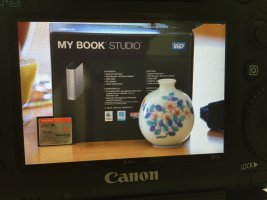
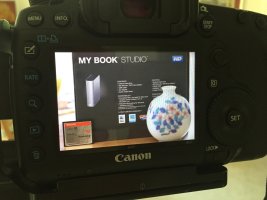
Big Difference in real focal lenth btw. 100-400 Mk II and 70-200 IS MK2 + 2xEXT3

Just tried my 70-200MK II with Ext III against my 100-400 Mk II and found that there is big difference in focal length between the two:

400mm on the 70-200 MKII +Ext III looks much longer than 400mm on the 100-400 MKII. How could that be ? I mean I know that there is some difference and that the 100-400Mk II is not really 400mm but it really looks like there is a 50-70mm difference here ?
 
As I understand it, the 100-400ii focus breathes a ton, and only approaches 400mm when focused at a mid-long distance or greater - this was the tradeoff to get such a short MFD for it. Might be interesting to experiment more outdoors.
 
Upvote 0
Focal lengths often reduce as you focus closer. This effect varies from lens to lens.

Try it again at or near infinity with both, and I suspect the difference could diminish.

Also bear in mind that what goes on the marketing material isn't necessarily 100% correct - in other words, not every 400/5.6 lens has a focal length of exactly 400mm or an aperture ratio of exactly 5.6
 
Upvote 0
LonelyBoy said:
As I understand it, the 100-400ii focus breathes a ton, and only approaches 400mm when focused at a mid-long distance or greater - this was the tradeoff to get such a short MFD for it. Might be interesting to experiment more outdoors.

Yes you re right - tried it again at about 50meters. The effect gets much smaller maybe only 2-3% that the 200 + Ext is longer not like 15-20% as it was at about 3,5 meters
 
Upvote 0
The 'real' focal length for a lens is specified with the focus at infinity.

Tried an EF-S 55-250mm, with a fairly close subject (5-6 meters), it was about 155mm framing at the long end.
 
Upvote 0
The recent review of the 70-300 L made the observation that there was very significant focus breathing of that lens as well. Approaching more like ~200 mm at MFD (their claim) rather than 300 mm.
 
Upvote 0
paolo80 said:
since you have both, do you notice a big IQ difference between the 2 setups? thanks!

Cannot really tell as the 100-400 is new in my set and I did not really use much so far:

But this one was with the 7d and 200mm + 2xExt III (can you zoom in if you view it?)
https://www.flickr.com/photos/chrisk1982/8406713930/in/dateposted-public/
https://www.flickr.com/photos/chrisk1982/8407287847/in/dateposted-public/

You should look at the eye of the red kite - it is still amazingly sharp

Other than that the handling of the 100-400 is much nicer (IQ generally should be a bit better than the combination but NOT by much in the middle of the frame)
http://www.the-digital-picture.com/Reviews/ISO-12233-Sample-Crops.aspx?Lens=687&Camera=453&Sample=0&FLI=5&API=2&LensComp=972&CameraComp=453&SampleComp=0&FLIComp=4&APIComp=0
 
Upvote 0
Lenses like the 70-300mmL and the 100-400mm L have rear focusing. (Focus elements at the rear of the lens). This gives some good optical performance but does cause significant focus breathing. Its considered acceptable, because a telephoto is normally used at longer distances.

On the other hand, the 70-200 does not use rear focus, and is often used at closer distances.

Primes generally do not have focus breathing, they are a simpler design.
 
Upvote 0
I cannot comment on IQ of the 70-200mm IS Mk II + 2X TC III vs. the 100-400mm Mk II, but I have done tests between the 700-200mm + 2X TC III and the 400mm f/5.6 at 30 feet. The target was a printed page, side lit from both sides with the bulbs no in view of the camera. Camera was supported with a bean bag for stability.

5 shots with each lens were taken, with center point of a 6D refocused for each shot. The minor variation in focus was more than the IQ difference. Static shots of wildlife, small birds and raptors is quite good with the zoom and the 2X TC III for the central portion of the frame. A raptor taking off from a perch was good for one shot with the zoom and the TC III, but after that the combo would get lost in the sky and never AF again, while the 400mm prime could recapture focus for BIF almost instantly.

I purchased the 2X TC III (and 1.4X TC III) before I purchased the 400mm f/5.6. Once I had the 400mm prime, I never used the 2X again, and sold it to another photographer with a 500mm f/4 prime. I do use the 1.4X on both the 70-200 IS f/4 and f/2.8 IS II on occasion, but not for BIF.
 
Upvote 0
AvTvM said:
raptor3x said:
Don't forget that the 70-200 IS II is actually ~ 230mm at MFD.

Never heard this claim before. Also did not notice this "feature" on my copy of the 70-200 2.8 ii.
Could you kindly provide a source/confirmation for this claim?
Thanks!

I guarantee your copy exhibits the same behavior, it's basically a reverse of the focus breathing seen in the Nikkor and Tamron 70-200 lenses. I think Roger from LensRentals has an article about it as well but I can't seem to locate it.

http://www.lightandmatter.org/2015/videos/lens-comparison-tamron-sp-70-200-f2-8-di-vc-usd-vs-canon-ef-70-200-f2-8l-part-2/

Also, here's a quick and dirty test I did just now. I focused at infinity (left) and MFD (right) from the same position and used f/32 so the images were somewhat in focus. You can measure the change in magnification of the target to get an idea of the change in focal length.

maYiz6c.png


The 229mm number I quoted was actually at 7ft, not MFD. Based on what I'm seeing, if the lens is truly 200mm at infinity, then it's actually around 238mm at MFD. See below. Give it a try with your copy and see what you get.

EDIT: I'm dumb, that was the 70mm test I posted, I've posted the correct shots below; it's a bit harder to make out due to being more out of focus, but the conclusion doesn't change.

Here is 200mm at infinity (left) vs 7ft (right). If you measure it you'll see that it's consistent with the articles measurement of 229mm if you assume the lens is actually 201mm at infinity.

u2Itn09.png


Here is 200mm at infinity (left) vs MFD (right). This one gives something like 278mm at MFD, again based on the lens being 201mm at infinity.

J24ySBE.png
 
Upvote 0
nc0b said:
I cannot comment on IQ of the 70-200mm IS Mk II + 2X TC III vs. the 100-400mm Mk II, but I have done tests between the 700-200mm + 2X TC III and the 400mm f/5.6 at 30 feet. The target was a printed page, side lit from both sides with the bulbs no in view of the camera. Camera was supported with a bean bag for stability.

5 shots with each lens were taken, with center point of a 6D refocused for each shot. The minor variation in focus was more than the IQ difference. Static shots of wildlife, small birds and raptors is quite good with the zoom and the 2X TC III for the central portion of the frame. A raptor taking off from a perch was good for one shot with the zoom and the TC III, but after that the combo would get lost in the sky and never AF again, while the 400mm prime could recapture focus for BIF almost instantly.

I purchased the 2X TC III (and 1.4X TC III) before I purchased the 400mm f/5.6. Once I had the 400mm prime, I never used the 2X again, and sold it to another photographer with a 500mm f/4 prime. I do use the 1.4X on both the 70-200 IS f/4 and f/2.8 IS II on occasion, but not for BIF.

My experience is similar. I have never used a 100-400 II, but my experience with my 70-200 f/2.8 II and 2xIII extender is marginal, all with my 6D before I purchased my 5D3. The center is pretty sharp, but edges much softer. This is OK for wildlife where you are using the center of frame and cropping. AF does struggle.

I've rented 400 f/5.6 primes before and found the sharpness and AF performance is much better than the zoom with an extender. I used a 1.4xIII extender with my 70-200 more often and the combo worked very well. Now I have a 300 f/2.8 II, so don't really need to use the extender with the zoom anymore :D
 
Upvote 0
I've always known that the 70-200f2.8ISII was the best portrait zoom lens on the market, but good grief, it increases focal length as you get closer? That should be listed as a selling feature!
Funny, when Sigma does the same thing they call it a Macro lens.
 
Upvote 0
9VIII said:
I've always known that the 70-200f2.8ISII was the best portrait zoom lens on the market, but good grief, it increases focal length as you get closer? That should be listed as a selling feature!
Funny, when Sigma does the same thing they call it a Macro lens.

It is. It's in it's listed magnification factor, and one of the main reasons that I sometimes think about swapping my70-200f2.8 NON IS lens for it.
. I also just got a kick out of someone saying that a lenses true fstp is different than what's advertised. This I don't believe but I see it mentioned now and then. I'm not referring to tstops, but you guys are very welcome to show me that a 100mm f2 doesn't have a 50mm aperture. Horseshoes and hand grenade rules of course, we live in an imperfect world.
 
Upvote 0
risc32 said:
9VIII said:
I've always known that the 70-200f2.8ISII was the best portrait zoom lens on the market, but good grief, it increases focal length as you get closer? That should be listed as a selling feature!
Funny, when Sigma does the same thing they call it a Macro lens.

It is. It's in it's listed magnification factor, and one of the main reasons that I sometimes think about swapping my70-200f2.8 NON IS lens for it.
. I also just got a kick out of someone saying that a lenses true fstp is different than what's advertised. This I don't believe but I see it mentioned now and then. I'm not referring to tstops, but you guys are very welcome to show me that a 100mm f2 doesn't have a 50mm aperture. Horseshoes and hand grenade rules of course, we live in an imperfect world.

The 50mm number is for a simple lens, as lenses get complex with lots of elements, they start talking effective aperture diameter and entrance pupil.

http://photo.stackexchange.com/questions/37796/whats-the-difference-between-real-and-effective-aperture
 
Upvote 0
risc32 said:
I also just got a kick out of someone saying that a lenses true fstp is different than what's advertised. This I don't believe but I see it mentioned now and then. I'm not referring to tstops, but you guys are very welcome to show me that a 100mm f2 doesn't have a 50mm aperture. Horseshoes and hand grenade rules of course, we live in an imperfect world.

400mm f/5.6, has a 71.4mm aperture – right?

The patent for the 100-400mm f/4.5-5.6L IS II is:

Example 3
Zoom ratio 3.75
Focal length f = 104.16-166.66-391.00mm
Fno. 4.60-5.20-5.80

So the lens is really 391mm f/5.8, that's a 67.4mm aperture. A 6% difference? Maybe that's close enough.
 
Upvote 0
neuroanatomist said:
risc32 said:
I also just got a kick out of someone saying that a lenses true fstp is different than what's advertised. This I don't believe but I see it mentioned now and then. I'm not referring to tstops, but you guys are very welcome to show me that a 100mm f2 doesn't have a 50mm aperture. Horseshoes and hand grenade rules of course, we live in an imperfect world.

400mm f/5.6, has a 71.4mm aperture – right?

The patent for the 100-400mm f/4.5-5.6L IS II is:

Example 3
Zoom ratio 3.75
Focal length f = 104.16-166.66-391.00mm
Fno. 4.60-5.20-5.80

So the lens is really 391mm f/5.8, that's a 67.4mm aperture. A 6% difference? Maybe that's close enough.

Dunno how it is in the US but in Europe(Germany) with many things its legally OK if you re within plus minus 10% of the advertised performance specifications (e.g. horsepower of cars, square footage of rental units, etc)
 
Upvote 0