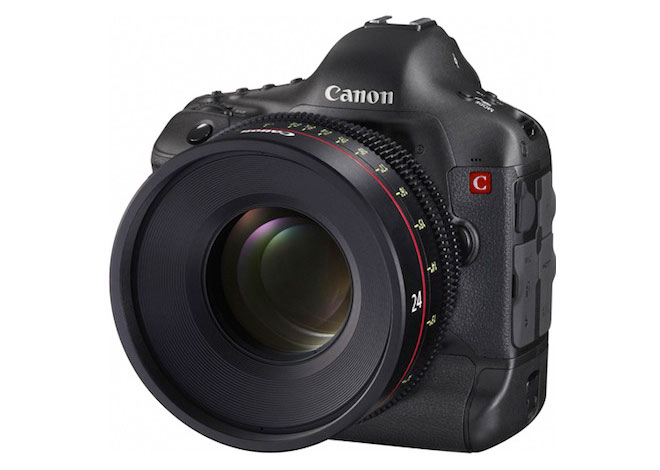
The glass elements look like they're significantly smaller than the diameter of the lens. Is the barrel widened just to make it easier to manipulate the focus controls manually? Or is it really an optical consideration? Thanks!
I'm not a cinematographer, but my understanding is you want all your lenses to have the exact same diameter so you can switch lenses and not have to adjust the Follow Focus gears.
So the 24mm prime has to be the same OD as the fattest zoom lens.
You also want the distance scale visible from the side and the behind since there are usually two people operating the camera - one to frame the shot, and the 'focus puller' to adjust the focus, and the puller needs to see the distance scale since they don't have a viewfinder.
The other natural question is "why are Cine lenses so much more expensive than still lenses?" and the answer is that they have to be designed so they don't 'breathe'. In a still prime, when you focus, there is a tiny amount of zoom happening - but since you're taking a still photo, it doesn't matter. In video, if, when you focus your image size changes - it becomes very visible and annoying. They call it breathing.
A Cine lens is designed to correct for this, so the image is perfectly the same - throughout the entire focus range. This correction is difficult and expensive... and adds no value if you're a still photographer.
Yeah the housing makes the focus throw much better and they try to make the size uniform to make swapping lenses less of a pain. The Zeiss CP.2s share the same optics as the ZE lenses, they're just in a different housing and they have more aperture blades (all the CP.2's have 14 blades vs. the 8 or 9 that the ZE's have) for more circular bokeh.
Another thing cine lenses will have is smooth manual control of aperture, without any clicks. So you can change DOF and overall exposure during a shot without shaking the camera.
It is possible to declick non-cine lenses with manual aperture rings and has become hip to do so to get some of that working.
Cine shoots tend not to care as much about bulk and cost as still shoots and are a smaller market so will have higher prices. Though Samyang is coming out with cine versions of their inexpensive EF lenses which may be cool.
A Cine lens is designed to correct for this, so the image is perfectly the same - throughout the entire focus range. This correction is difficult and expensive... and adds no value if you're a still photographer.
A Cine lens is designed to correct for this, so the image is perfectly the same - throughout the entire focus range. This correction is difficult and expensive... and adds no value if you're a still photographer.
It would be useful. The issue is, to correct focus breathing, you have to essentially turn a prime into a zoom and have the lens zoom out as it focuses closer. The reason you still see focus breathing in a lot of movies is because it's SO expensive to correct for it completely.
I'm guessing these Canon lenses don't correct for breathing and are essentially rehoused L series lenses. I have no evidence of this, though.