Why I need MPs

Status
Not open for further replies.

thepancakeman

If at first you don't succeed, don't try skydiving
Aug 18, 2011
476
0
7,791
Minnesota
Just because I like to throw fuel on the flame...

There are so many discussions about needing more megapixels with strong proponents on each side, I thought I'd join the fray with some specific examples (especially because it seems like most of the "I need MPs" side is landscape photographers of which I am most definitely not.)

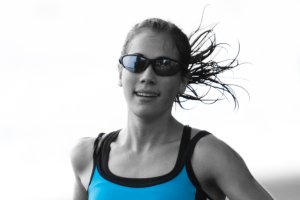
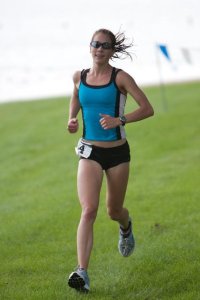
Below I am posting the crop image and then the original. Again, my context is that capturing a decent shot of every athlete in the race is my number one priority. There is little to no time to worry about doing anything artistic, and often even a basic reframing of the shot is more work that I seem to have time for. So some of these are cropped because I think there is artistic value in the a portion of the original image (and 500 shots of "runner...runner...runner...runner" gets old without some creativity ::) ), or as one example shows, simply to isolate the given athlete.

I'm open to contructive criticism if there are things I could do differently to reduce or eliminate my "need" for more MPs (or any other photographic/artistic feedback).

 

Attachments

  • IMG_5968.jpg
    IMG_5968.jpg
    173.4 KB · Views: 1,397
  • IMG_6175.jpg
    IMG_6175.jpg
    133.1 KB · Views: 1,310
  • IMG_7971.jpg
    IMG_7971.jpg
    146 KB · Views: 1,312
  • IMG_8080-2.jpg
    IMG_8080-2.jpg
    129 KB · Views: 1,311
Don't you actually want higher resolution and more detail? And, you believe that you get that from more MP's? Due to the effects of lens diffraction, you reach a point where smaller pixel size does not yield more resolution or detail. Once you reach that, then a move to A larger format with the same sized photosites will allow for more Resolution and Detail. The point where this happens for a f/2.8 lens is claimed to be at about 4.2 microns. Beyond that, its just merely salesmanship.

Unfortunately, the step from crop to FF is expensive, and to MF even more expensive, since new lenses are required as well as a large sensor.

If you are making money from landscape photography, perhaps your work will pay for a move. If its for personal use, your finances are going to determine that. One thing that is not overcome yet by current technology is a way to overcome lens diffraction.

However, they are lots of researchers working on new ideas to get around the issue. We will see breakthrus over the next 20 years that will blow away todays technology, but they are not nearly ready to start production.

Here is a video of a lecture given by Eric Fossum, one of the CMOS sensor inventers. He covers current state of camera sensors and where some of the research is heading.

He is not very kind to companies that mislead photographers to purchase cameras with more MP.

http://www.dpreview.com/news/2011/10/28/ericfossumspeech
 
Upvote 0
Mt Spokane Photography said:
Don't you actually want higher resolution and more detail? And, you believe that you get that from more MP's?

Okay, maybe I'm confused, but aren't higher resolution and more megapixels the same thing? ???

Due to the effects of lens diffraction, you reach a point where smaller pixel size does not yield more resolution or detail.

There seems to be some debate as to whether we have reached the diffraction limits of current lenses at 18ish MPs, but I'm not really looking to debate the technical feasbility of it. I'm asking whether or not an increase in MPs would increase my ability to get printable results in my circumstances or if there are simply usage/technique changes that I need to make. Some of these crops are all the way down around 1200x800 which is questionable for even a 5x7 print.

If you are making money from landscape photography, perhaps your work will pay for a move. If its for personal use, your finances are going to determine that.

I think I'm hopeless as a landscape photographer even if I wanted to be one. :'( As it is, I'm just earning enough to "support the habit" doing sports event photography.
 
Upvote 0
I've been wondering about this too.

For the sake of communication, maybe we could talk about this issue in terms of "detail" and "output size". The term "resolution" seems ambiguous to me.

Where is the megapixel threshold for detail on a full frame camera? At what megapixel count on a FF does detail stop improving?

What about the issue of cropping? Let's say I take the same image with a FF 10MP and 20MP. Are people suggesting that I can simply upsize the 10MP (using post software) and it will have the equivalent detail as the 20MP shot ??
 
Upvote 0
Best if everyone makes up their own mind on this based on looking at large prints, but second best is evidence from some of the lens testing sites.

The first error people make is bringing diffraction into discussions like this (particularly along with misuse of the word "limit"). Diffraction is not a function of pixel size - as a property of the lens how could it possibly be so?

Take a look at Photozone.de, where some Canon lenses were tested on 8Mpixel and 15Mpixel cameras. Of course we don't know for sure that the corresponding tests were of the very same lens (probably not in most cases), but if you look at all such cases you should become convinced that whether at f/2.8 or f/11 the MTF50 scores are higher with the 50D - athough they are not higher by as much as square root (15/8) = 1.37. Take the 85/1.8 where at f/8 it is almost certainly a diffraction limited lens (all that means is diffraction is greater than all the other sharpness-reducing aberrations at that f no.). On the 350D it measures 1980 lp/ph in the center, while on the 50D the score is 2372, 1.2 times larger. Now we cannot be sure how much of the shortfall over the theoretical increase is due to the lens, and how much due to the camera (but none is due to diffraction which is exactly the same in these two cases).

Another way to look at the question is to go to dxomark.com, and pick a nice lens. If we take the 85/1.8 again and look at the MTF (measurement tab, resolution, MTF) it is about 10% contrast at 80 lp/mm in the center (on full frame, but here we want to get a lower limit for the lens). That is with a 21Mpixel sensor and its AA filter, so the lens has much higher contrast and resolution (we can only guess by how much). Note the figure changes little for RGB or f no. settings.

So at very minimum this lens resolves 80 lp/mm (and probably way beyond, possibly as much as 200 lp/mm, but I can't prove that). Since the AA filter is imperfect it is best to have slight "oversampling", say 3 blue (6 green) pixels per cycle, or 6x80 pixels per mm. That means that a sensor with (6x80x24)x(6x80x36) will be guaranteed to be getting useful information from the lens, that's 200Mpixel on full frame, or 80Mpixel on APS-C. Don't take the actual number too seriously, the point is that even with this pessimistic assessment of lens performance, there is most definitely scope for getting better results, admittedly in the face of rapidly diminishing returns (increasing the pixel count by a factor of 4 will only increase the resolution by a few tens of percent - but one day it will become cheap enough to allow that in a fast camera).

Of course some people who judge sharpness on "100%" images on a monitor won't believe any of this, but look at large prints and decide yourself.
 
Upvote 0
learn composition in camera.
that will give you more details then cropping bad shots afterwards.

now you will say "often i can´t get close enough for the right composition".
well i say better spend your money on a tele instead of a 36MP camera. ;)

The first error people make is bringing diffraction into discussions like this (particularly along with misuse of the word "limit"). Diffraction is not a function of pixel size - as a property of the lens how could it possibly be so?

well.... first error is that you have no clue what you are talking about.
of course it´s a matter of "pixel size". when the airy disc is bigger then a photosite you can´t resolve more then the airy disc size. that makes smaller photosites useless at some point (size).
and because it´s a physical limitation of LIGHT you can´t do much about it.

if this limit is reached yet.. that is a complete other discussion!!

some will argue that with an bayer sensor you will get more accurate colors of an given pixel, when the photosites are smaller then the airy disc..... but more accurate color does not translate into better resolution. even when you agree to that and think it makes a visible difference in color accuracy.. at some point this effect will also be gone on a bayer sensor.

the lens is one limiting factor for resolution, affected by diffraction the other is the size of the photosites on the sensor. that´s a fact.. period.

im to bored to explain it again have a look here:

http://www.cambridgeincolour.com/tutorials/diffraction-photography.htm

http://en.wikipedia.org/wiki/Airy_disk
 
Upvote 0
Gothmoth said:
learn composition in camera.
that will give you more details then cropping bad shots afterwards.

now you will say "often i can´t get close enough for the right composition".
well i say better spend your money on a tele instead of a 36MP camera.

OP needs to capture every athlete in the race. Not sure what the distribution method for the photos is, but in the two uncropped shots of the runners, you can see their race numbers - that might be necessary and might preclude tight composition with limited time. I'm sure there are workarounds, but just pointing out one other factor.
 
Upvote 0
neuroanatomist said:
Gothmoth said:
learn composition in camera.
that will give you more details then cropping bad shots afterwards.

now you will say "often i can´t get close enough for the right composition".
well i say better spend your money on a tele instead of a 36MP camera.

OP needs to capture every athlete in the race. Not sure what the distribution method for the photos is, but in the two uncropped shots of the runners, you can see their race numbers - that might be necessary

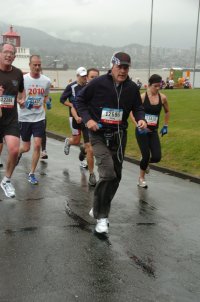
That's the only reason atheletes wear numbered bibs. Everything else is in an rfid chip that's usually tied to our shoelaces. The photogs pick a spot along the race course and make the best of whatever comes their way. The results usually aren't pretty... :P Participants pay $40-$80 for their race photos to whatever company has contracted the event although I'm not sure what each invidual photographer nets.
 

Attachments

  • 709531-1516-0015.jpg
    709531-1516-0015.jpg
    464.4 KB · Views: 433
Upvote 0
Gothmoth said:
well.... first error is that you have no clue what you are talking about.
of course it´s a matter of "pixel size". when the airy disc is bigger then a photosite you can´t resolve more then the airy disc size. that makes smaller photosites useless at some point (size).
and because it´s a physical limitation of LIGHT you can´t do much about it.

the lens is one limiting factor affected by diffraction, the other is the size of the photosites on the sensor. that´s a fact.. period.

Perhaps you wrote in haste.

The diffraction from the lens does, of course, produce a slightly fuzzy (unsharp) representation of the image on the sensor. This fuzziness in the focal plane does, by no means depend on anything to do with the sensor. In fact the fuzziness is exactly the same whether there is a sensor there or not e.g. if film were used.

Equally obvious is that if you choose to scale the picture according to pixel size the fuzziness will appear greater because you scale it more with smaller pixels - but in reality it did not change.

Note that you will never see an Airy disk in a real photograph unless you photograph point sources. Note too that the site you cite, thanks, needs very careful reading, but if carefully read comes quite close (from an author who does not appear to be an expert) with what I said (read right to the very end "Are smaller pixels somehow worse? Not necessarily ...").

Anyway, what stands beyond doubt is the range of results available for anyone to inspect at DXOmark etc. already given. Choose your sampling requirements based on sound information theory, and calculate where you want to place your resolution limit.
 
Upvote 0
Denabears said:
Gothmoth said:
the lens is one limiting factor affected by diffraction, the other is the size of the photosites on the sensor. that´s a fact.. period.

Perhaps you wrote in haste.

The diffraction from the lens does, of course, produce a slightly fuzzy (unsharp) representation of the image on the sensor. This fuzziness in the focal plane does, by no means depend on anything to do with the sensor. In fact the fuzziness is exactly the same whether there is a sensor there or not e.g. if film were used.

Perhaps you read in haste.

Your first statement: diffraction depends only on the lens, and the detector is irrelevant.

His response: both lens and detector impact diffraction.

He's correct, but by no means are you correct.
 
Upvote 0
Gothmoth said:
learn composition in camera.
that will give you more details then cropping bad shots afterwards.

now you will say "often i can´t get close enough for the right composition".
well i say better spend your money on a tele instead of a 36MP camera. ;)

So the OP is supposed to compose 8 different pictures, of different objects, who are moving 10-30/mph(runner vs. biker), in a matter of a few seconds.

How about you try to take 8 different pictures of 8 different stationary(not even moving like the OP) targets in just 5 seconds. Then you tell me how that went.
 
Upvote 0
Pancakeman, perhaps you're just asking too much of one camera. It appears that your work is largely "mechanical:" find the location, compose for the scene (rather than for the actual subjects) then hit the shots. Maybe you could assemble a rig with 2 or 3 cameras mounted on it, and fire all at once. If you have that mounted on a tripod or monopod, you might also keep a single body free for more creative composition. Yes, a lot more expensive gear, but also a lot more useable shots.

And one more idea: maybe buy a 1DX and use it in video mode. The video resolution might be high enough to let you "sweep" a group and get multiple useable still shots.

I have no idea if this would actually work for the particulars of your work environment, but thought I'd throw it out there.
 
Upvote 0
The OP, by my interpretation, is asking about cropping ability with larger MP. The answer of course is yes.

So then here comes the laws of physics:

Gothmoth said:
if this limit is reached yet.. that is a complete other discussion!!
...
im to bored to explain it again have a look here:
http://www.cambridgeincolour.com/tutorials/diffraction-photography.htm

For those persons who add technical aspects to this type of discussion, the fact that you get bored repeatedly explaining it, or have to continually rehash the same arguments, means it is probably not explained well enough for the average layman.

Reminding us that airy disc and diffraction are overriding limitations are good, but what would REALLY help (me) is real-world examples that drive it home, such as:
- The MP limit on a FF sensor with EF70-200mm f/2.8 would be .....

Is it possible to define in those terms? I don't even know if it works that way. In my mind, I do somewhat grasp the great technical commentary given, but these discussions will be endless (which is not necessarily a bad thing...I usually learn something) without practical examples. **If I were capable, I would try. Perhaps a parable would do :-)
 
Upvote 0
neuroanatomist said:
Perhaps you read in haste.

I don't believe so. But I certainly don't want to get into an endless argument either as I doubt it would help anyone.

I look forward to perhaps 10 years from now when 100+Mpixel cameras will be available, fast and cheap,until then we can but dream (or stitch, but not so much for sports photographs).
 
Upvote 0
Firstly remember what is expected of you. Practice composition in camera so you don't have to crop in post because this takes forever for a few thousand pictures. If the client wants to publish any pictures he will crop them anyway, and usually not very artistically.

For your own portfolio, pick a few of the best and edit these more thorougly, including crop, angle, spot removal, vignette, etcetera. 10 MP should still be enough for a web portfolio and smaller prints (up to A4). If not then your upcoming 7D might be the right solution for you; I would have suggested renting it otherwise.
 
Upvote 0
Denabears said:
Best if everyone makes up their own mind on this based on looking at large prints, but second best is evidence from some of the lens testing sites.

The first error people make is bringing diffraction into discussions like this (particularly along with misuse of the word "limit"). Diffraction is not a function of pixel size - as a property of the lens how could it possibly be so?

Do use a camera without a lens?? The diffraction properties of a lens are part of the camera system, and affect the final result. There is not a "Limit", its a gradual effect.

You can have a 100mp sensor and get 100mp files, but the resolution will be limited by the lens and lens aperture.
 
Upvote 0
Status
Not open for further replies.