
When you purchase through links on our site, we may earn an affiliate commission. Here's how it works. |
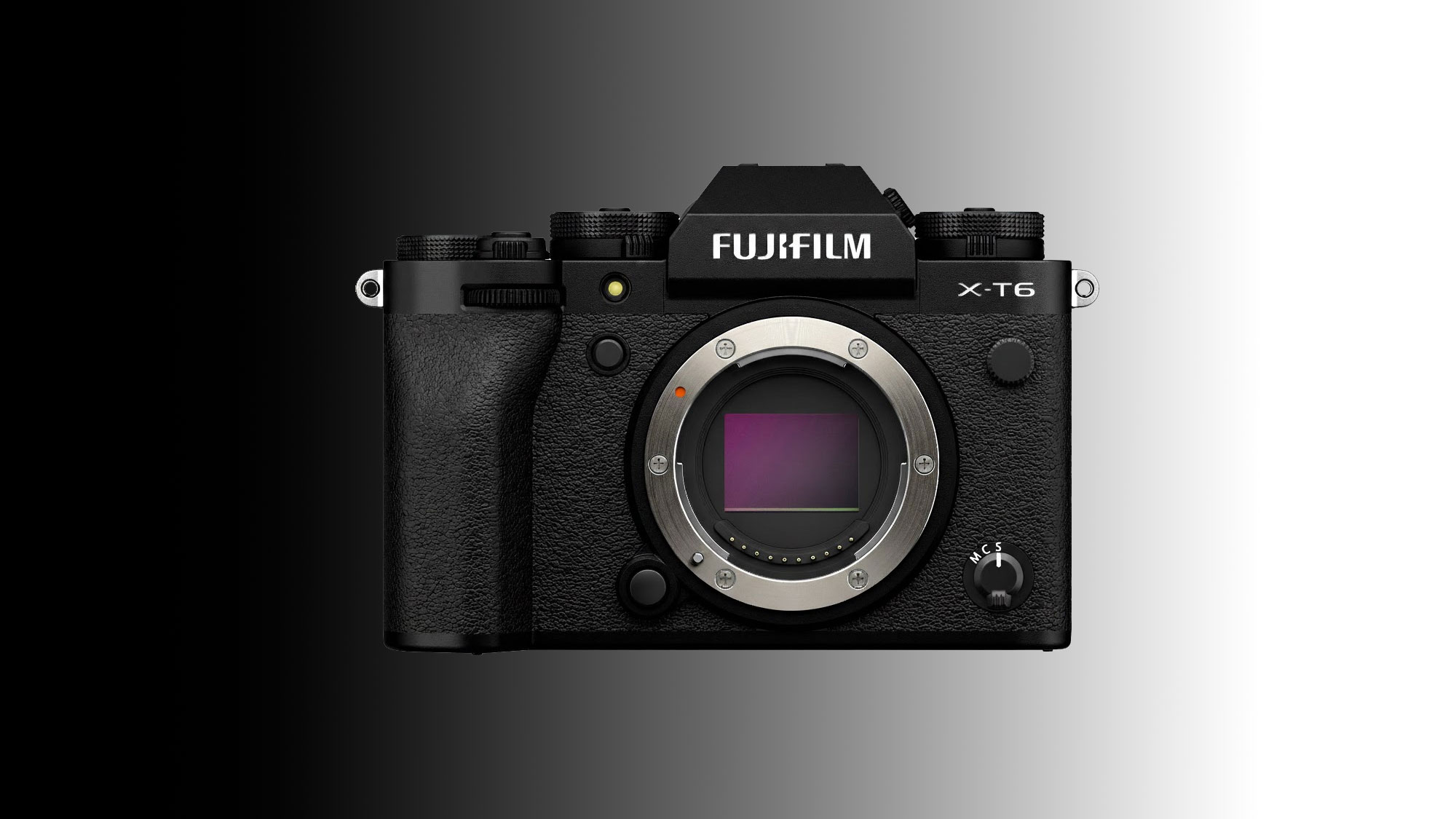
Rumor on the street is that Fujifilm is also readying their X-T6 for release later this year, rumored for September. This will follow Canon's expected release of the Canon R7 Mark II, expected to be released sometime in the first quarter of this year. This will set off an interesting comparison between two APS-C contenders, but before we get to that in a related article, let’s talk about the rumored Fujifilm X-T6.
Fujifilm has the largest DNA of APS-C cameras and lenses, ranging from consumer to professional, so it’s always a bit exciting to see what they come up with, at least to me. This also seems exciting because the rumors have an entirely new generation of processing and sensors starting this year. It's also, according to me anyway, one of the best-looking APS-C cameras in the market today.
What We Think It May Have
We don't have a lot of information to go on for Fuji's X-T6, but we can guess, especially if we look at the jump from the X-T4 to the X-T5 and use that to do some tea leaf reading. Since this is something I consider fun, let’s roll with it.
| Fujifilm X-T4 | Fujifilm X-T5 | |
| Announcement Date | February 26, 2020 | November 2, 2022 |
| MSRP at launch | $1,699 | $1,699 |
| Sensor size | APS-C | APS-C |
| Pixel count | 26MP | 40MP |
| Maximum burst rate | 15fps (Mech)21fps (Elec) | 15fps (Mech)13fps (Elec) |
| Buffer depths | 110 / 79 JPEG | 119 JPEG |
| Viewfinder mag / res | 0.75x equiv3.69M dots | 0.8x equiv3.69M dots |
| LCD | 3.0″ 1.62M dot fully-articulated | 3.0″ 1.84M dot two-axis tilt |
| Max IBIS rating | 6.5EV | 7.0EV |
| Multi-shot high-res mode | No | 160MP, 20 shots. No motion correction |
| Max video rate | 4K/60 (1.18x crop) | 6.2K/30 (1.23x crop)4K/60 sub-sampled |
| 10-bit video options | F-LogHLGUp to 4:2:0 | F-Log, F-Log2,HLGUp to 4:2:2 |
| Mic / headphone | Yes / via adapter | Yes / via adapter |
| Card slots | 2x UHS-II SD | 2x UHS-II SD |
| Battery life, LCD / EVF | 500 / 500 | 580 / 590 |
| Weight | 607g (21.4oz) | 557g (19.6oz) |
The first notable difference between the X-T4 to the X-T5 and today’s rumored X-T6 is the time between releases. The X-T6 is easily well overdue at around 4 years, if the rumored September release holds up.
The big jump for the X-T4 to the X-T5 was the resolution and related video options that were exposed because of the sensor's increase in resolution. The X-T5 was a worthy upgrade from the X-T4 offering at the time, best in class resolution for an APS-C sensor, long with a bigger viewfinder experience, lighter camera body, and greatly improved video features, making it really the first hybrid of the X-Tn series.
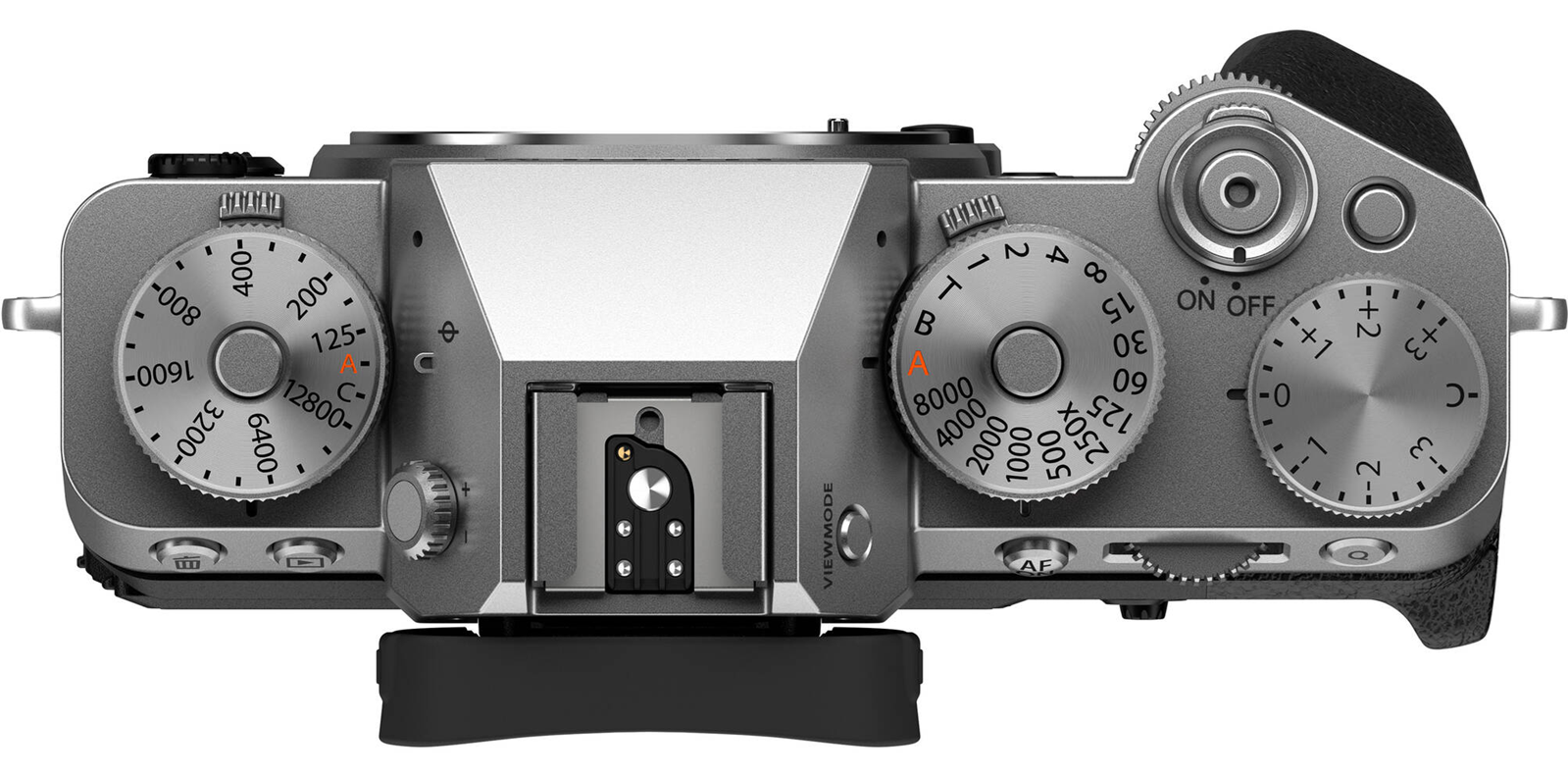
If there was one complaint, it was that the 5th generation processor struggled with the increase of pixels, and the auto focus and sensor readout speed lagged. Especially the readout speed, which increased from 19ms in the X-T4 to 37ms in the X-T5.
This also showed up in the auto focus, which simply wasn’t up to the camera’s peers at the time from Sony, Canon, and Nikon.
What's Expected in the X-T6? The 6th Generation Platform
The rumors right now are very lightweight on details, but we can get a good feel for what Fujifilm will do because there weren't too many things that the X-T5 was lacking. Users had some issues with the processor just not keeping up to the demands of processing 40MP, and the sensor itself wasn't the fastest either. So I think it’s safe to say that this would be a “performance release” and not a resolution release like the X-T5 was. So what is this 6th-generation platform? Basically, it’s like Canon’s DIGIC platform, though Canon seems to be stuck at DIGIC X with minor version upgrades.
Platform 6 is supposed to offer far more efficient and faster processing than generation 5. With this expected to allow;
- Faster processing for frame rate, reduced shutter lag, and improved auto focus tracking
- AI and Autofocus – it’s expected to include major advancements in AI and autofocus, bringing it closer to its peers.
- Better IBIS control – IBIS isn’t just mechanical; there’s a lot of processing that happens to coordinate between lens stabilization and camera IBIS systems to effectively increase the IBIS effective stop ratings.
- As well, platform 6 is expected to have a new sensor generation that some theorize may have a different pixel pattern layout. I wouldn’t be surprised if this is also a partially stacked sensor.
Better auto focus usually depends on how fast you can read the sensor, and also how fast you can process your auto focus calculations. With everyone that isn't Canon, reading for auto-focus generally isn't reading the full sensor, but a much smaller subset of phase detect pixels.
Subject recognition, though, requires reading of more pixels than just phase detection, and may be better with faster sensors, in theory. So, better AI and subject recognition could easily go hand in hand with an absolute requirement of increasing the sensor speed.
With a faster processor, it seems likely that Fujifilm would also have the ability to support 8K, but would they tread on the toes of the X-H2 to do so? Leaving 8K out of the X-T5 seemed like a marketing decision to create a gap between the X-T5 and the X-H2, so it's very likely that the X-T6 would continue this tradition and leave the video resolution similar to the X-T5.
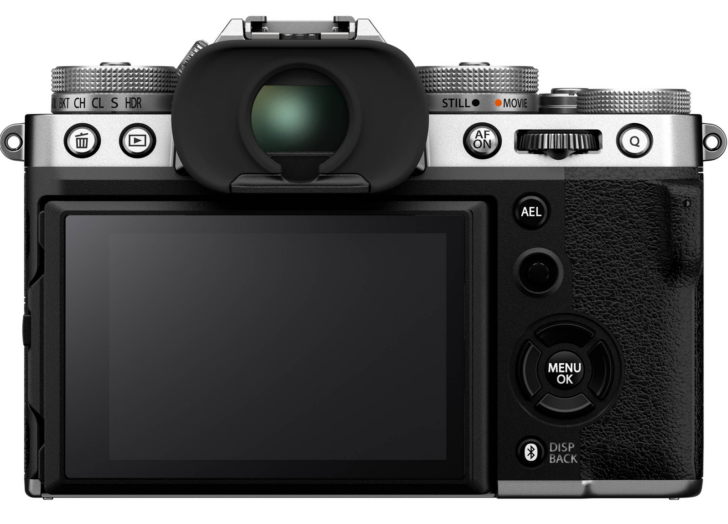
My guess would be that the X-T6 would have a much faster electronic shutter frame rate, quite possibly 6.2K unsampled, with 4K/60 oversampled. Improvements in IBIS and autofocus seem like givens.
Partially Stacked Sensor with Dual Gain Output?
Let’s talk about this sensor a bit. I'm going to ignore the different pixel patterning until it's really confirmed, because that would be a hassle to processors, and I hope Fujifilm doesn't necessarily think of doing that.
But if Fujifilm was able to use Sony's DGO? That could be the barn-burning big part of the update, if Sony allows it. So if we assume that Sony isn't holding the Dual Gain Output technology used on the Sony A7 V sensor as proprietary for Sony cameras only, and I personally think that’s doubtful because it first came out in the Panasonic Lumix S1 II. This could be a huge upgrade to the image quality between the X-T6 and X-T5 cameras.
At the minimum, I would expect a partially stacked sensor here since Nikon, and now Sony, have employed it on sensors. Using the A7 V sensor readout speed to derive the theoretical readout speed of a similar Fujifilm sensor. That would give the Fujifilm 40MP sensor a theoretical readout speed of around 17ms, assuming the imaging pipeline is fast enough to support reading the sensor quickly enough.
A partially stacked sensor with DGO would make the most sense for Fujifilm to employ with a new 40MP sensor. The partially stacked sensor will minimize any rolling shutter issues that the X-T5 had, and also, with DGO, give the X-T6 a near full-frame dynamic range capability.
Closing Thoughts
Yes, I know this is CanonRumors, but we are allowed to look across the fence to see what others do, especially when their releases coincide with Canon’s. It's way too early in the year for detailed specifications for the X-T6. Simply because it isn't, according to rumors, not coming out until around September of this year. Also, for Fuji rumor readers, what is in this article is our educated guesses; don't go out making camera decisions based upon what we are saying here. Also Craig writes all the Canon Rumors, so this is my chance to have a little fun too ;)
Competition drives the camera companies, so Canon likely has a very good idea what is coming out in the X-T6, and using that as a basis for the R7 Mark II. Very similar to how the R7 stacked up against the X-T5, even though the R7 came out before the X-T5.