
When you purchase through links on our site, we may earn an affiliate commission. Here's how it works. |
Here's an interesting one that came out of the recent X system summit by Fujifilm.
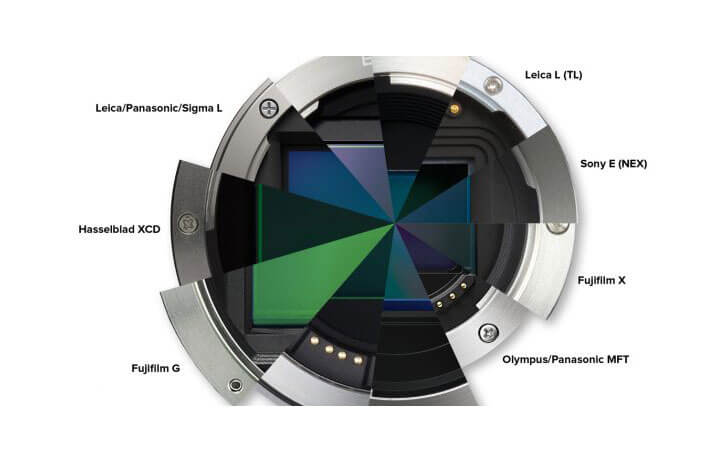
They came up with something that is called the “value angle” when talking about the various lens mounts out there for photography.
What is the value angle?
The formula for value angle = 2 × arctan ((mount diameter – sensor diagonal) / (2 × flange distance))
Which in layman's terms, is a calculation that takes into account the flange distance of a mount. the size of the mount itself against the size of the image sensor.
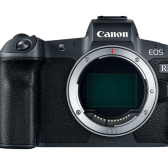
In Fujifilm's mind, this formula tells us and them how difficult it is to design top performing lenses for a particular mount. The winner? The EF-M mount from Canon. The latest RF mount from Canon didn't do as well according to the formula.
| Company | Mount | Value Angle | Format | Flange Distance | Diameter | Sensor Diagonal |
| Canon | EF-M | 58.6 | APS-C | 18 | 47 | 26.8 |
| Leica | L (TL) | 54.5 | APS-C | 20 | 48.8 | 28.2 |
| Sony | E (NEX, E-mount) | 52.9 | APS-C | 18 | 46.1 | 28.2 |
| Fujifilm | X | 48.1 | APS-C | 17.7 | 44 | 28.2 |
| m43's (Olympus, Panasonic,etc) | MFT | 46.0 | Micro 43's | 19.3 | 38 | 21.6 |
| Nikon | Z | 40.2 | Full Frame | 16 | 55 | 43.3 |
| Canon | RF | 30.0 | Full Frame | 20 | 54 | 43.3 |
| Fujifilm | G | 21.6 | 44×33 | 26.7 | 65 | 54.8 |
| Hasselblad | XCD | 17.6 | 44×33 | 20 | 61 | 54.8 |
| L-mount Alliance | L | 15.7 | Full Frame | 20 | 48.8 | 43.3 |
| Sony | E (FE) | 8.9 | Full Frame | 18 | 46.1 | 43.3 |
As you can see in the table above, the EF-M mount takes the top prize, while the RF mount comes in second for flexibility behind Nikon's Z mount and well ahead of Sony's E(FE) mount.
Canon News shows us what the EF-M mount would look like using this formula for the EF-M mount with a full frame image sensor.
| Company | Mount | Value Angle | Format | Flange Distance | Diameter | Sensor Diagonal |
| Canon | EF-M | 58.6 | APS-C | 18 | 47 | 26.8 |
| Canon | EF-M | 11.7 | Full Frame | 18 | 47 | 43.3 |
I think this likely shows us that the EF-M mount was never intended to be full frame and makes the introduction of the RF mount much needed for the full frame mirrorless application.
You can check out the full article about the value angle over at Profifoto (Google Translated Link).
Nothing here means you can't make amazing lenses for any of these mounts, Fujifilm merely uses this formula to discuss how “easy” it is to get stellar optical performance from new lens designs. Canon's RF mount is going to lead to some unique and one-of-a-kind designs, which may be more difficult on the E (FE) mount for Sony.