

|
When you purchase through links on our site, we may earn an affiliate commission. Here's how it works. |
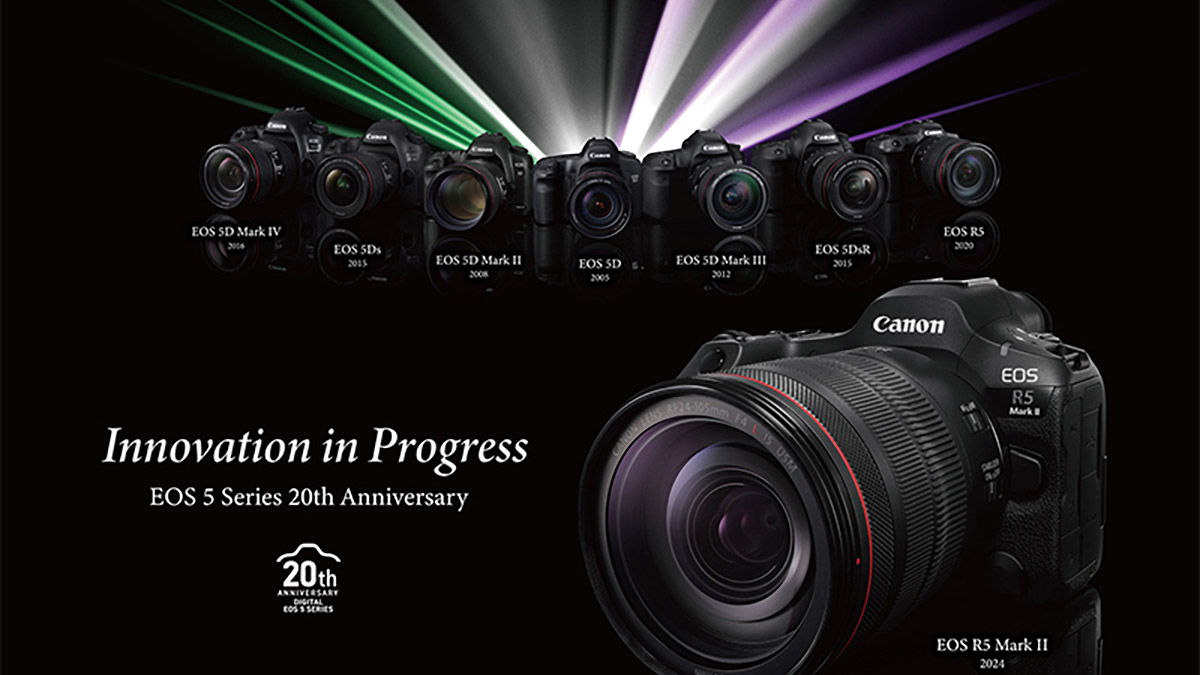
Even though Canon jumped the gun, it's officially 20 years since Canon started the digital five series with the 5D. Canon announced the 5D as the world's first economical full-frame camera on August 22, 2005.
It was the first genuinely affordable full-frame digital camera – and many companies' camera lines and other Canon cameras owe their success to this camera.
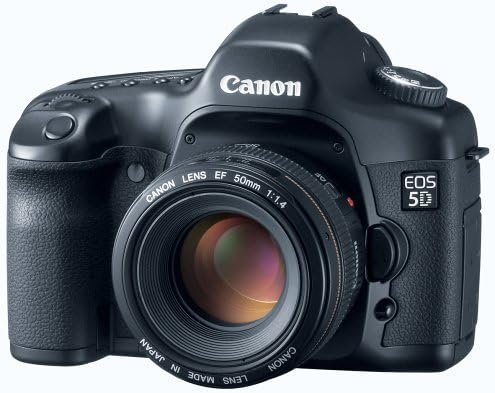
I remember when this camera came out; it was an image quality revelation coming from the APS-C cropped cameras at the time. However, it wasn't all greatness. The viewfinder blackout could be measured in hours; the frame rate was decidedly slower than the speedy APS-C cameras at the time. Exposure to the left and highlight clipping were fun things to worry about, but the camera, once you mastered it, was a pleasure to work with the image files, and having the ability to really appreciate fast lenses and shallow depth of field in the digital realm.
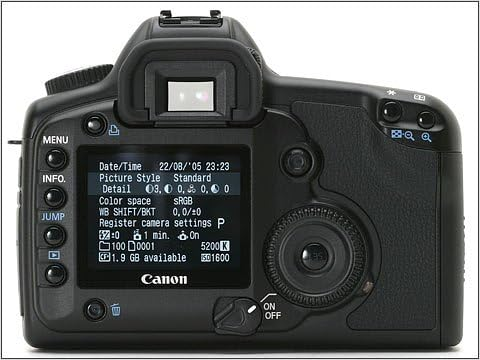
It's a little amusing to look back at the reviews that considered 12.8 megapixels to be a challenge to work with in terms of lenses and camera stability. These days, 24 megapixels is universally panned as not enough for professional use (or so I've been told anyway).
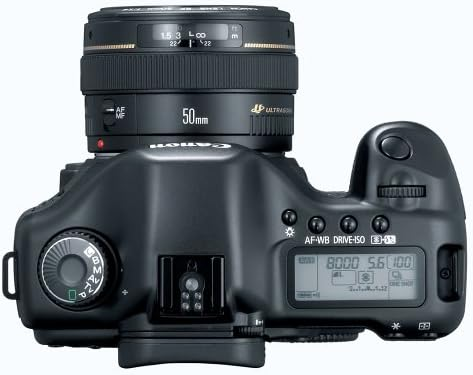
To be fair, at the time, 8MP was considered more than enough resolution for anyone to need.
The EOS 5D is a fantastic photographic tool which is capable of producing really excellent results. The caveat is that it takes a little more care and understanding of your equipment (especially lenses). We found resolution to be absolutely excellent with crisp detailed results straight from the camera (JPEG) and even more detail available if you shoot RAW.
https://www.dpreview.com/reviews/canoneos5d/32
The reviews were all generally positive, but many reviewers were unsure about the 5D's ability against the very popular 20D and 30D lineup from Canon and similar APS-C cameras from other manufacturers. The MSRP of $3299 ($5480 in today's dollars), while extremely “cheap” for full frame, was still quite a jump from the 20D's more affordable $1499.
But while the 5D represents the holy grail for some photographers, other have questioned the relevance of full-frame sensors in today’s market. Full-frame bodies may have been necessary for extreme wide angle coverage a few years ago, but now ultra-short focal length lenses designed specifically for digital SLRs have effectively counteracted the problem of smaller sensors cropping the field-of-view. In this case, why pay through the nose for an unnecessarily large sensor when a cropped body and ultra wide lens can deliver the same field-of-view at a lower price?
https://www.cameralabs.com/canon5d/
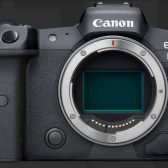
Ultimately, the 5D lineup turned out to be one of Canon's most successful lines and led to the fabulous R5 Mark II that we have today.

- 45MP Full-Frame Stacked BSI CMOS Sensor
- DIGIC Accelerator Processing
- Dual Pixel Intelligent AF, Eye Control
- 8K 60 Raw/4K 60 SRAW/4K 120 10-Bit Video
- Up to 30 fps, Pre-Continuous Shoot Mode
- 5.76m-Dot EVF with OVF Sim. View Assist
- 3.2" Vari-Angle Touchscreen LCD
- In-Camera Upscaling to 179MP
- CFexpress & SD UHS-II Memory Card Slots
- Wi-Fi 6E / Wi-Fi 6 Support
We did a historical look through the 5D series, be sure to give it a read.
Canon EOS 5 Series
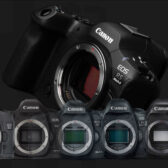
Canon EOS 5D Specifications
| Type | ||
| Type | Digital, single-lens reflex, AF/AE camera | |
| Recording media | Type I or II CF card * Compatible with Microdrive and 2GB and larger CF cards | |
| Image size | 35.8 x 23.9mm | |
| Compatible lenses | Canon EF lenses (except EF-S lenses) | |
| Lens mount | Canon EF mount | |
| Image Element | ||
| Type | High-sensitivity, high-resolution, large single-plate CMOS sensor | |
| Pixels | Effective pixels: Approx. 12.80 megapixels Total pixels: Approx. 13.30 megapixels | |
| Aspect ratio | 3:2 | |
| Color filter system | RGB primary color filter | |
| Low-pass filter | Located in front of the image sensor, non-removable | |
| Recording System | ||
| Recording format | Design rule for Camera File System 2.0 | |
| Image format | JPEG, RAW (12bit) | |
| RAW+ JPEG simultaneous recording | Provided | |
| File size | Large/Fine | Approx. 4.6MB (4368 x 2912 pixels) |
| Large /Normal | Approx. 2.3MB (4368 x 2912 pixels) | |
| Medium/Fine | Approx. 2.7MB (3168 x 2112 pixels) | |
| Medium /Normal | Approx. 1.4MB (3168 x 2112 pixels) | |
| Small/Fine | Approx. 2.0MB (2496 x 1664 pixels) | |
| Small /Normal | Approx. 1.0MB (2496 x 1664 pixels) | |
| RAW | Approx. 12.9MB (4368 x 2912 pixels) | |
| * Exact file sizes depend on the subject, ISO speed, Picture Style, etc. | ||
| Folder setting | Folder creation/selection enabled | |
| File numbering | Consecutive numbering, auto reset, manual reset | |
| Color space | sRGB or Adobe RGB | |
| Picture Style | Standard, Portrait, Landscape, Neutral, Faithful, Monochrome, User Defined 1, 2, 3 | |
| Interface | USB 2.0 Hi-Speed (Print/PTP, PC connection selectable) Video output (NTSC/PAL) | |
| White Balance | ||
| Settings | Auto, daylight, shade, cloudy, tungsten light, white fluorescent light, flash, custom, color temperature setting | |
| Auto white balance | Auto white balance with the imaging sensor | |
| Color temperature compensation | White balance correction: ±9 stops in full-stop increments White balance bracketing: ±3 stops in full-stop increments * Blue/amber bias or magenta/green bias possible | |
| Color temperature information transmission | Provided | |
| Viewfinder | ||
| Type | Eye-level pentaprism | |
| Coverage | Vertical/Horizontal approx. 96% | |
| Magnification | 0.71x (-1 diopter with 50mm lens at infinity) | |
| Eyepoint | 20mm | |
| Built-in dioptric adjustment | -3.0 – +1.0 diopter | |
| Focusing screen | Interchangeable (two types optional), Ee-A (Precision Matte) focusing screen provided | |
| Mirror | Quick-return half mirror (Transmission:reflection ratio of 40:60, no mirror cut-off with EF600mm f/4 or shorter lenses) | |
| Information | AF information (AF points, focus confirmation light), exposure information (shutter speed, aperture value, AE lock, exposure level, spot metering circle, exposure warning), flash information (flash ready, high-speed sync, FE lock, flash exposure compensation), white balance correction, maximum burst, CF card information | |
| Depth-of-field preview | Enabled with depth-of-field preview button | |
| Autofocus | ||
| Type | TTL-CT-SIR with a CMOS sensor (TTL secondary image registration, phase detection) | |
| AF points | 9 plus 6 Assist AF points | |
| Metering range | EV -0.5 – 18 (at 20°C/68°F, ISO 100) | |
| Focus modes | One-Shot AF, AI Servo AF, AI Focus AF, Manual focusing (MF) | |
| AF point selection | Auto, manual | |
| Selected AF point display | Superimposed in viewfinder and indicated on LCD panel | |
| AF assist beam | Emitted by the dedicated external Speedlite | |
| Exposure Control | ||
| Metering modes | 35-zone TTL full aperture metering • Evaluative metering (linkable to any AF point) • Partial metering (approx. 8% of viewfinder at center) • Spot metering (approx. 3.5% of viewfinder at center) • Center-weighted Average Metering | |
| Metering range | EV 1-20 (at 20°C/68°F with EF50mm f/1.4 lens at ISO 100) | |
| Exposure control | Full auto, program AE (shiftable), shutter-priority AE, aperture-priority AE, manual exposure, E-TTL II autoflash | |
| ISO speed range | Equivalent to ISO 100-1600 (in 1/3-stop increments), ISO speed can be expanded to ISO 50 and 3200.Full auto: ISO 100-400 set automatically | |
| Exposure compensation | Manual: ±2 stops in 1/3- or 1/2-stop increments (can be combined with AEB) | |
| AEB: ±2 stops in 1/3- or 1/2-stop increments | ||
| AE lock | Auto: Applied in One-Shot AF mode with evaluative metering when focus is achieved | |
| Manual: By AE lock button in all metering modes | ||
| Shutter | ||
| Type | Electronically-controlled, focal-plane shutter | |
| Shutter speed | 1/8000 to 30 sec. (1/3- and 1/2-stop increments), bulb X-sync at 1/200 sec. | |
| Shutter release | Soft-touch electromagnetic release | |
| Self-timer | 10-sec.delay | |
| Remote control | Remote control with N3 type terminal | |
| External Speedlite | ||
| EOS-dedicated Speedlite | E-TTL II autoflash with EX-series Speedlite | |
| Flash exposure compensation | ±2 stops in 1/3- or 1/2-stop increments. | |
| FE lock | Provided | |
| PC terminal | Provided | |
| Zooming to match lens focal length | Provided | |
| Drive System | ||
| Drive modes | Single, continuous, and Self-timer (10 sec.) | |
| Continuous | Max. 3 shots per sec. | |
| Max. burst | JPEG (Large/Fine): Approx. 60, RAW: Approx. 17 * With a Canon 512MB CF card. * Varies depending on the subject, ISO speed, Picture Style, CF card, etc. | |
| LCD Monitor | ||
| Type | TFT color liquid-crystal monitor | |
| Monitor size | 2.5″ | |
| Dots | Approx. 230,000 dots | |
| Coverage | 100% with respect to the effective pixels | |
| Brightness adjustment | Five levels provided | |
| Interface languages | 15 | |
| Image Playback | ||
| Image display format | Single image, shooting information, 9-image index, magnified view (Approx. 1.5x – 10x), autoplay, image rotation, and Jump (by 10 or 100 images, by date, by folder) | |
| Highlight warning | In the shooting information mode, any overexposed highlight areas with no image information will blink. | |
| Histogram | Brightness, RGB | |
| AF point display | Enabled | |
| Image Protection and Erase | ||
| Protect | Single images can be erase-protected or not. | |
| Erase | One image or all images in the CF card can be erased (except protected images). | |
| Direct Printing | ||
| Compatible printers | CP Direct, Bubble Jet Direct, and PictBridge-compatible printers | |
| Printable images | JPEG images (DPOF printing possible) | |
| Easy Print feature | Provided | |
| DPOF: Digital Print Order Format | ||
| DPOF | Version 1.1 compatible | |
| Customization | ||
| Camera setting registration | Under Mode Dial’s setting | |
| Custom Functions | 21 Custom Functions with 57 settings | |
| Power Source | ||
| Battery | One Battery Pack BP-511A, BP-514, BP-511, or BP-512. * AC power can also be supplied with the DC Coupler. * With Battery Grip BG-E4, size-AA batteries can be used. | |
| Battery life | At 20°C/68°F: Approx. 800 shots At 0°C/32°F: Approx. 400 shots * The above figures apply when a fully-charged Battery Pack BP-511A is used. | |
| Battery check | Automatic | |
| Power saving | Provided. Power turns off after 1, 2, 4, 8, 15, or 30 min. | |
| Date/Time battery | One CR2016 lithium battery | |
| Dimensions and Weight | ||
| Dimensions (W x H x D) | 152 x 113 x 75 mm ( 6.0 x 4.4 x 3.0 in. ) | |
| Weight | Approx. 810g (28.6 oz.) (body only) | |
| Working Conditions | ||
| Working temperature range | 0°C – 40°C (32°F-104°F) | |
| Working humidity | 85% or less | |
Canon EOS 5D Manual
I managed to get my hands on the PDF of the Canon EOS 5D Manual, so if you are curious or have a used 5D after being inspired to purchase one used, here it is to download.


12 comments