

When you purchase through links on our site, we may earn an affiliate commission. Here’s how it works. |
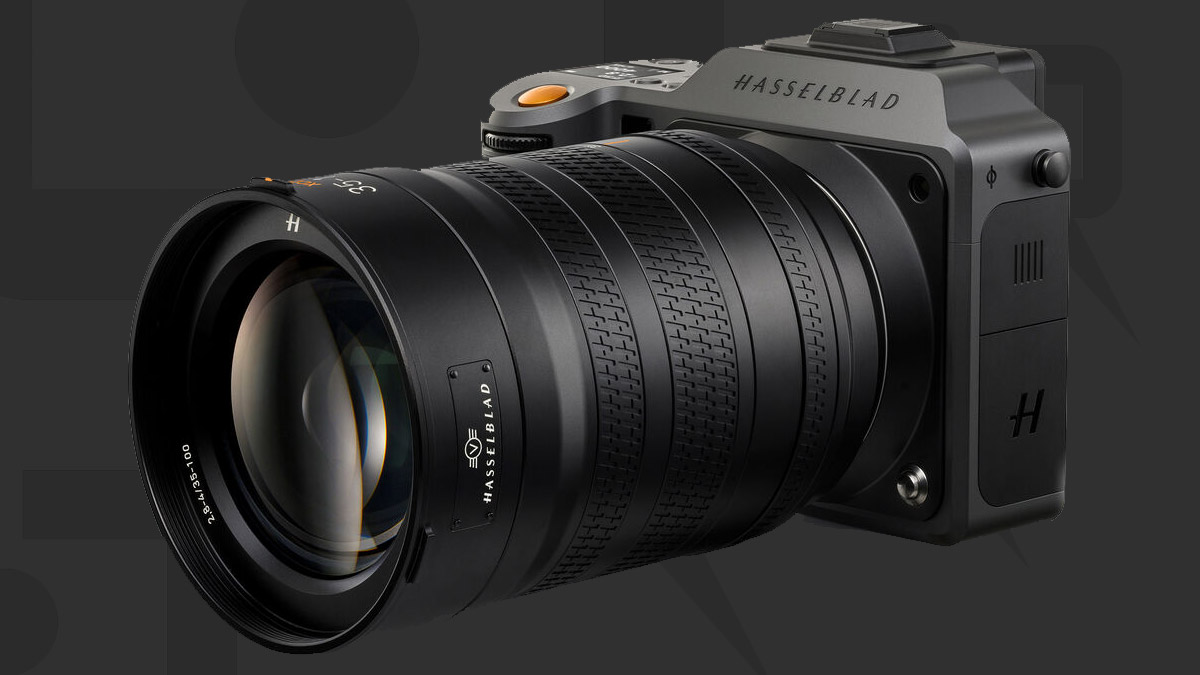
Hasselblad released the XCD II 100C today, and Hasselblad seems to be going all in with HDR image workflow. The camera supports what Hasselblad is calling its new Hasselblad Natural Color Solution HDR (HNCS HDR) processing. The camera can capture Ultra HDR JPEG and HDR HEIF image files, and it can also capture and process its RAW images in HDR using the accompanying Phocus Mobile 2 app and compatible software.
They also gain what they call continuous autofocus that uses a combination of phase detection and LiDAR sensors. The autofocus system also includes deep learning-based subject detection and can detect targets that include people, animals, and vehicles. The camera also sports improved image stabilization, up from 7-stop stabilization in the X2D to 10-stop stabilization in the X2D II, though I am curious about how they are measuring that.
We had previously discussed LiDAR when this rumor broke.
Essentially, LiDAR is a ranging device which measures the distance to a target. The distance is calculated by sending a short laser pulse and recording the time lapse between the outgoing light pulse and the detection of the reflected (back-scattered) light pulse. This has been used with great success in a variety of fields, such as our smartphones and also automotive sensors.
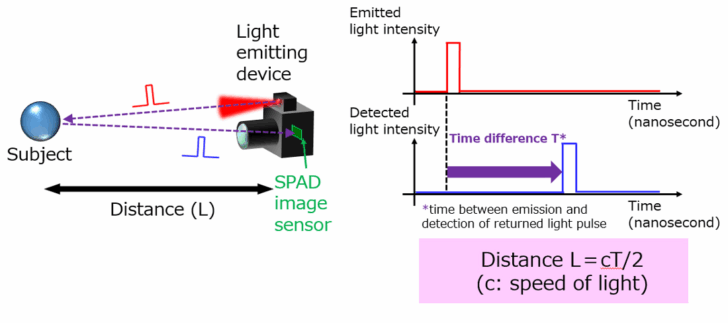
LiDAR operates in a variety of lighting applications, which makes it ideal for small sensors that perhaps don’t have large enough pixels to do phase detection on the actual sensor itself.
The image sensor appears to be either similar to or the same as its predecessor, and as with the X2D before it, it contains an internal 1TB SSD and supports CFExpress Type B cards. There are some improvements for handling, such as some more (3 more) custom buttons that were not there in the X2D, as well as a new Joystick control.
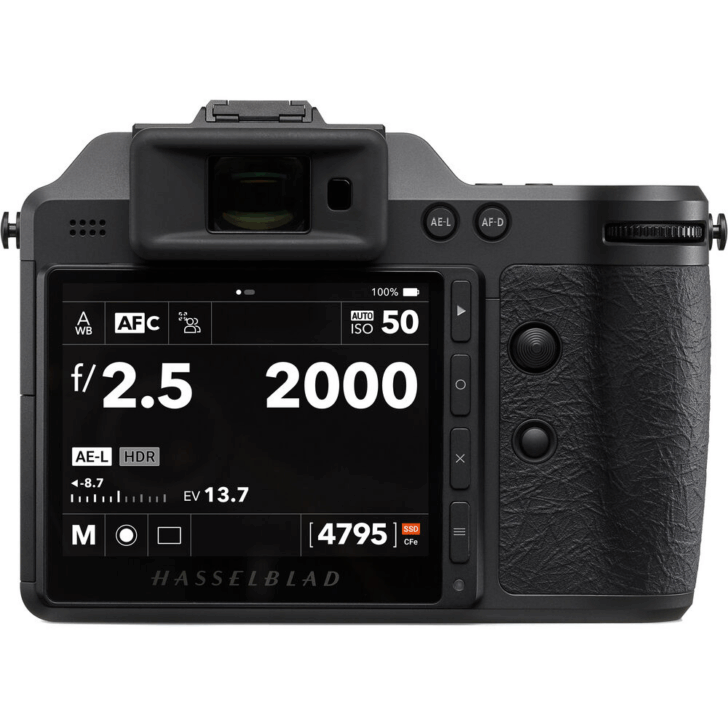
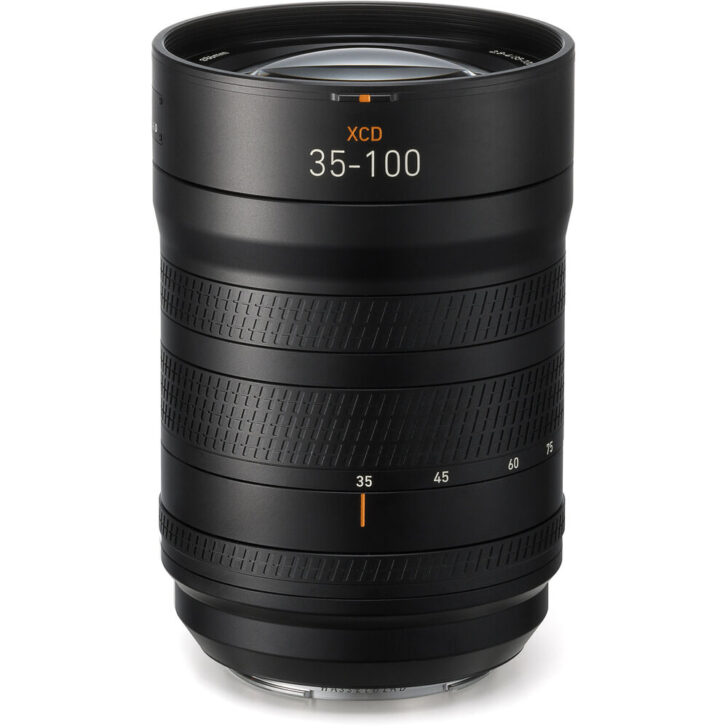
While the screen is the same size at 3.6 inches, it’s brighter, supporting up to 1400 nits in brightness. The camera comes in slightly lighter than the X2D at 730g instead of 790g, and for all purposes, it’s the same size. At the same time, Hasselblad has announced the Hasselblad XCD 35-100mm f/2.8-4 E Lens, which is equivalent to 28-75mm in 35mm format.
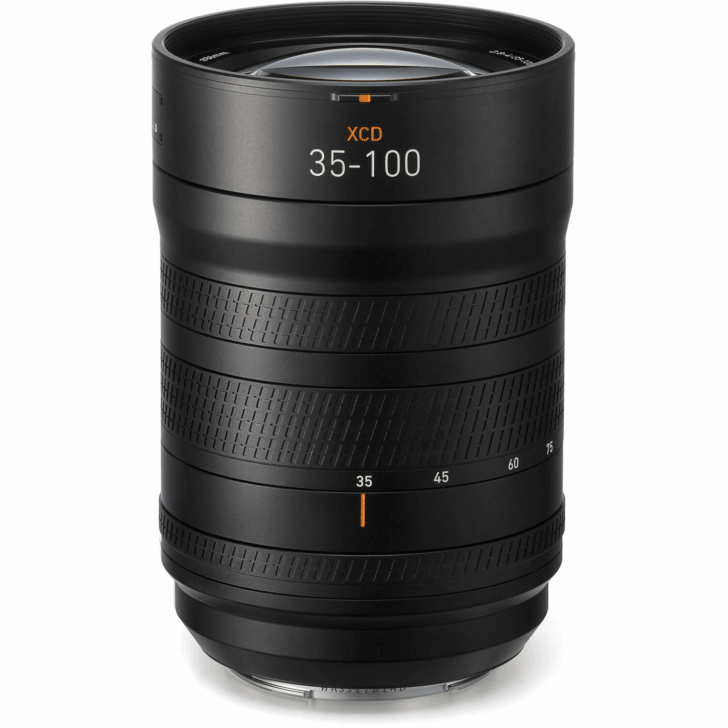
The Hasselblad X2D II 100C is available now for $7,399, and the XCD 35-100mm f/2.8-4 E is available for preorder for $4599.
Order the X2D II 100C
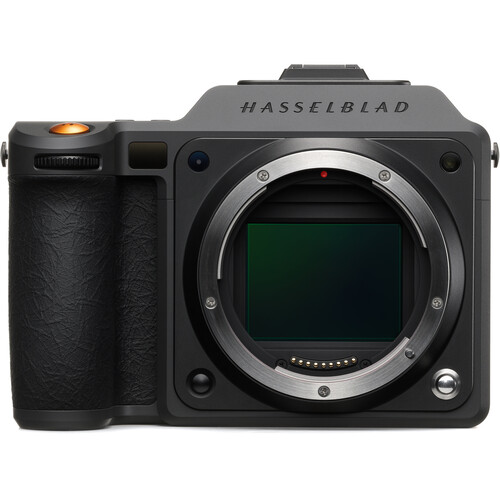
- 100MP 43.8 x 32.9mm BSI CMOS Sensor
- HNCS HDR, 16-Bit Color, 15.3-Stop DR
- 5-Axis 10-Stop In-Body Stabilization
- Improved AF with 425-Point PDAF & LiDAR
- AF-C Mode with Subject Detect & Tracking
- 5.76m-Dot 1x-Mag. OLED EVF
- 3.6" Two-Way Tilting OLED Touchscreen
- ISO 50-25600, Up to 3 fps Shooting
- Internal 1TB SSD & CFexpress B Card Slot
- Updated Phocus Mobile 2 App
Pre-order the XCD 2,8–4/35–100E
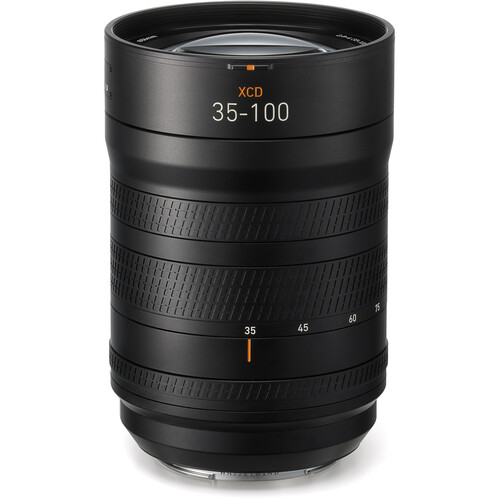
- Medium Format | f/2.8-4 to f/32
- 28-76mm (Full-Frame Equivalent)
- Bright Standard Zoom
- Integrated Leaf Shutter, 1/4000 sec Sync
- Linear Stepping AF Motor, Internal Focus
- Minimum Focus Distance: 1.3'
Gallery
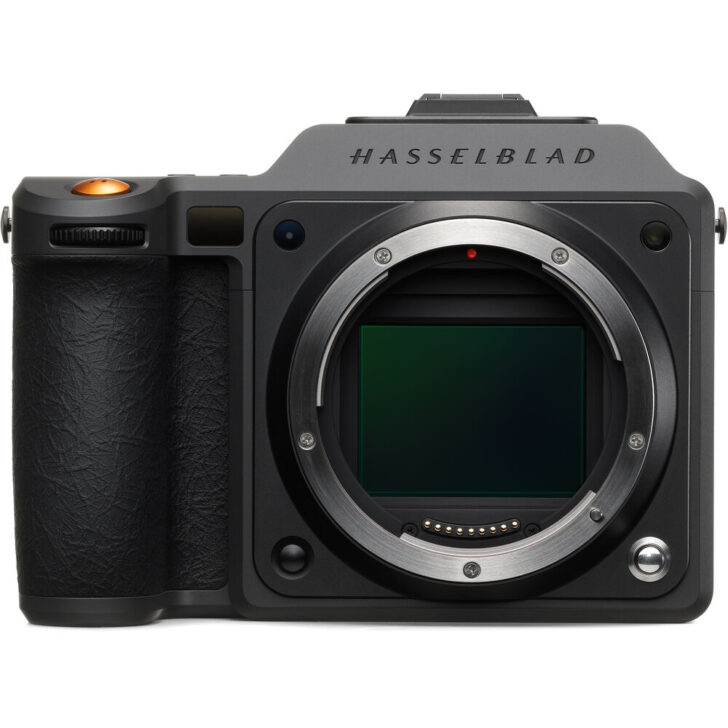
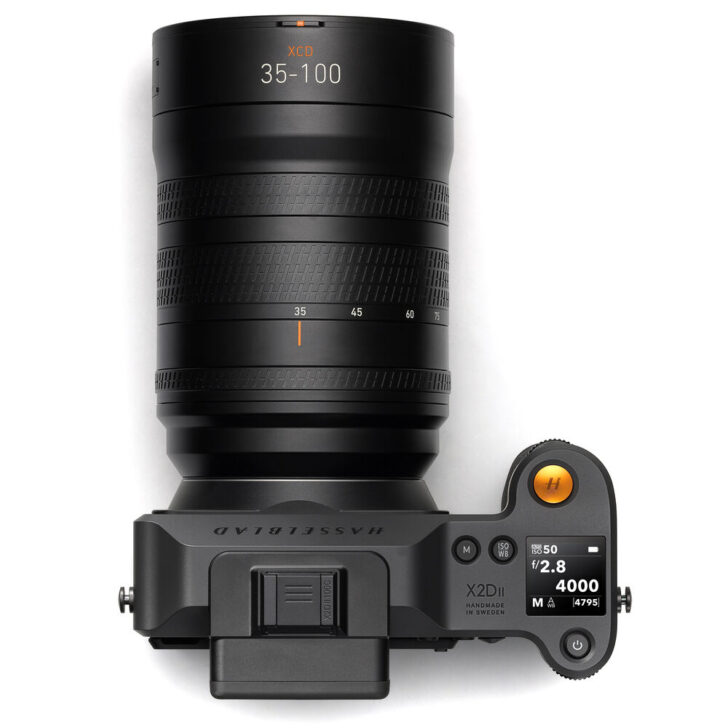
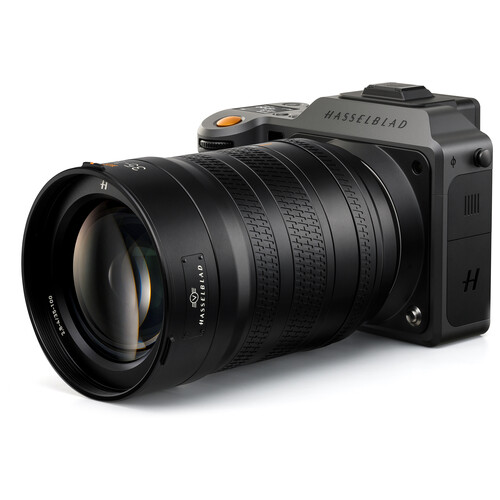
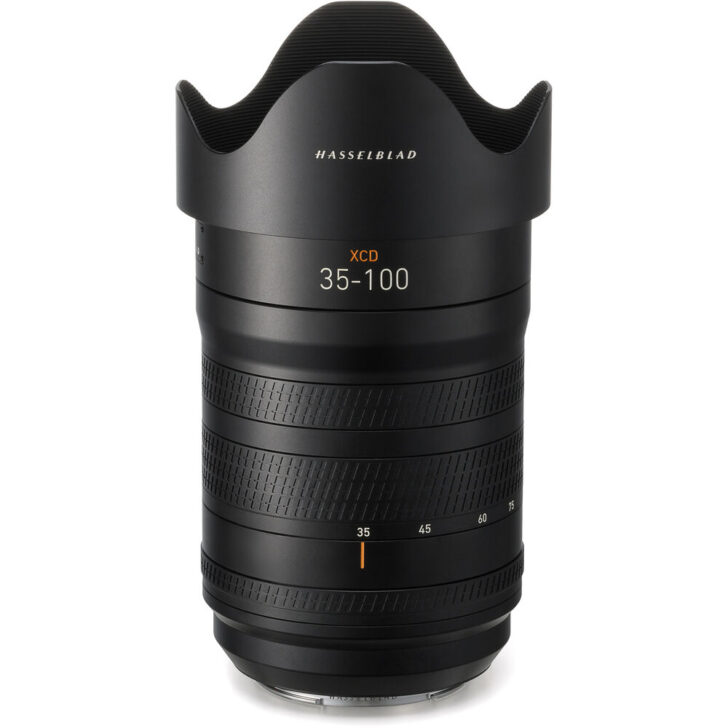
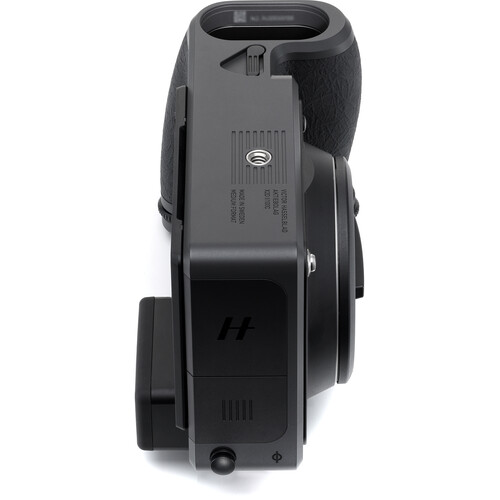
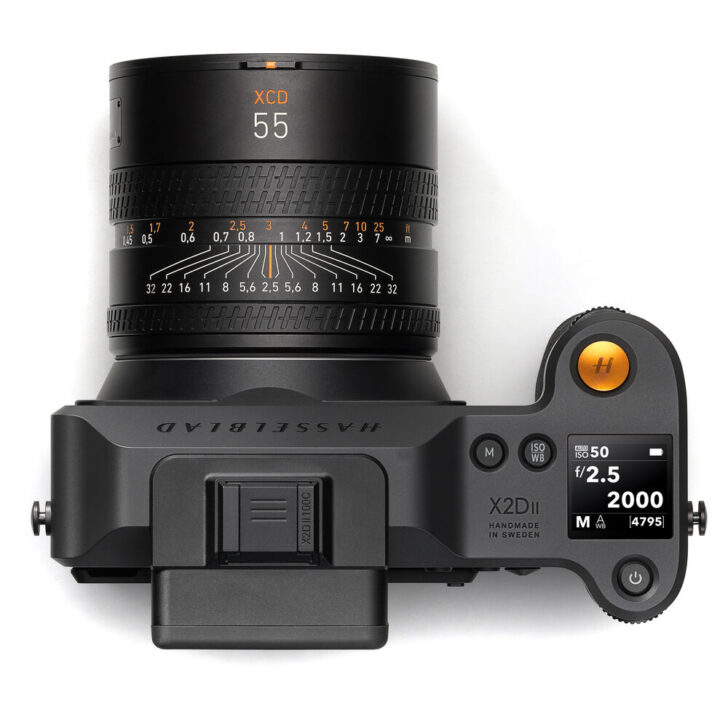
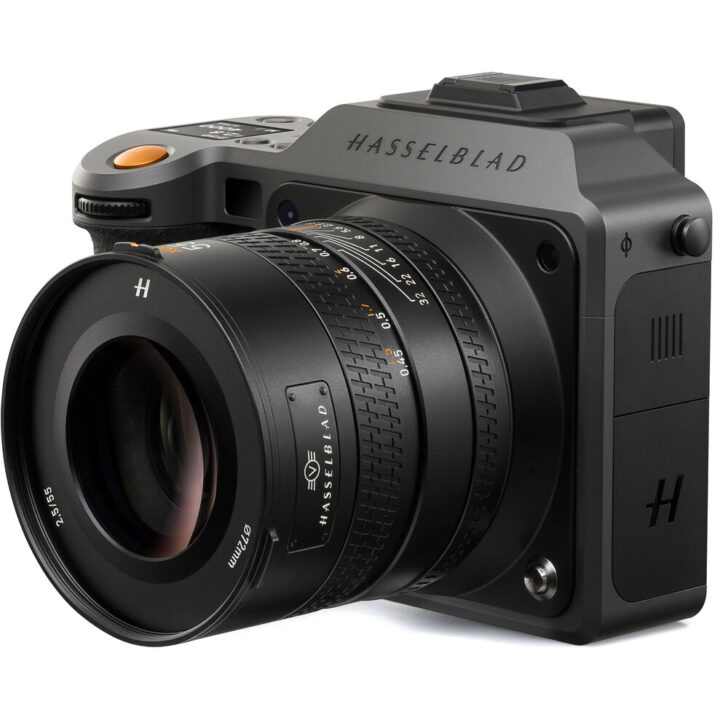
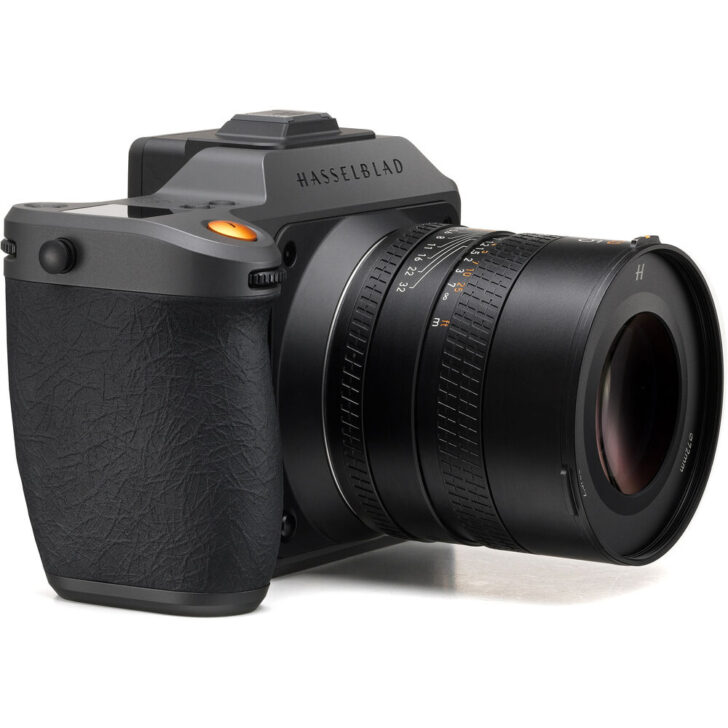
Press Release
HASSELBLAD INTRODUCES 100MP HDR FLAGSHIP MEDIUM FORMAT CAMERA AND STANDARD ZOOM LENS: X2D II 100C AND XCD 2,8–4/35–100E
Powered by AF-C continuous autofocus, Hasselblad Natural Colour Solution with High Dynamic Range, 10-stop stabilisation, and Phocus Mobile 2, the X2D II 100C delivers unmatched creative control in a compact, powerful system.
Following the groundbreaking success of the X2D 100C, Hasselblad today releases the X2D II 100C, the industry’s first 100-megapixel medium format camera with true end-to-end high dynamic range (HDR)[1]. With AF-C continuous autofocus[2], Hasselblad Natural Colour Solution with High Dynamic Range (HNCS HDR), and industry-leading 10-stop in-body image stabilisation, the new camera delivers even more true-to-life colour, faster focusing performance, and greater hand-held control. Combined with Phocus Mobile 2, it offers a seamless workflow and expands creative possibilities across landscape, portrait, street, and travel photography.
Launching alongside the X2D II 100C is the XCD 2,8–4/35–100E, a wide-angle to medium telephoto zoom lens that covers the most commonly used focal lengths. With a wide f/2,8 aperture and flagship optics designed for top-tier performance, it excels in low-light conditions and delivers the fastest focusing speed in the Hasselblad XCD lens lineup.
HASSELBLAD X2D II 100C: BRILLIANCE AT EVERY MOMENT
For the first time on a Hasselblad camera, the X2D II 100C introduces AF-C continuous autofocus. Powered by deep learning algorithms, the system delivers reliable performance, accurately detecting and tracking moving subjects. Phase Detection Autofocus (PDAF) coverage has been expanded from 294 to 425 zones and works together with LiDAR-assisted focusing to ensure fast and accurate results. A new AF illuminator further improves autofocus performance in low-light conditions and also serves as a self-timer indicator. Together, these enhancements give users a faster, more responsive focusing system for capturing brilliance at every moment.
The X2D II 100C is the first medium format camera to support true end-to-end HDR[1]. HNCS HDR harnesses high dynamic range to elevate Hasselblad’s signature natural colours to new levels of brilliance. Even in harsh lighting, it effectively reduces overexposure, enhances highlight retention, and reveals greater tonal depth, resulting in richly detailed HDR images that reflect what the eyes naturally see. HDR images are processed in-camera as HDR HEIF or Ultra HDR JPEG and can be instantly reviewed on the new 3,6-inch OLED touchscreen at up to 1 400-nit peak brightness — 75 percent brighter than the X2D 100C
— delivering vivid, true-to-life clarity. With Phocus Mobile 2, users can edit HDR images and apply HNCS HDR processing to RAW files. When shared on HDR-capable platforms, these images showcase the full brilliance of HNCS HDR, revealing colours and tones with unprecedented fidelity.
The X2D II 100C’s enhanced 100-megapixel medium format BSI CMOS sensor embodies Hasselblad’s commitment to uncompromising image quality. With 16-bit colour depth delivering approximately 281 trillion colours, it captures the subtle gradations that bring a photograph to life. A new native ISO of 50 and an increased dynamic range of 15,3 stops provide precise control from the deepest shadows to the brightest highlights.
The sensor’s extraordinary resolution demands equally extraordinary stabilisation. To achieve this, Hasselblad engineers followed the most stringent calibration protocols, resulting in a 5-axis, 10-stop in-body stabilisation system that delivers up to eight times the stability of the X2D 100C when capturing distant subjects. Users can now capture hand-held long exposures lasting several seconds without a tripod, unlocking new creative possibilities.
With Phocus Mobile 2, the Hasselblad workflow achieves a new level of portability, allowing users to edit on the go while staying fully immersed in their creative process. Available on iOS devices[3], the app seamlessly connects to Hasselblad X and V system cameras[4] for wireless image transfer, and also allows for remote control with a live view, firmware updates, and even waking the camera when powered off. It offers a range of editing tools, including HDR image editing and Hasselblad Natural Noise Reduction (HNNR), an AI-powered feature that reduces noise in RAW files without affecting details or Hasselblad’s signature colours.
The X2D II 100C retains the remarkable storage capabilities of its predecessor, featuring 1TB of internal SSD storage directly on the camera. With an added CFexpress Type B slot, users can shoot with confidence, free from concerns about storage limitations or the need for additional memory cards.
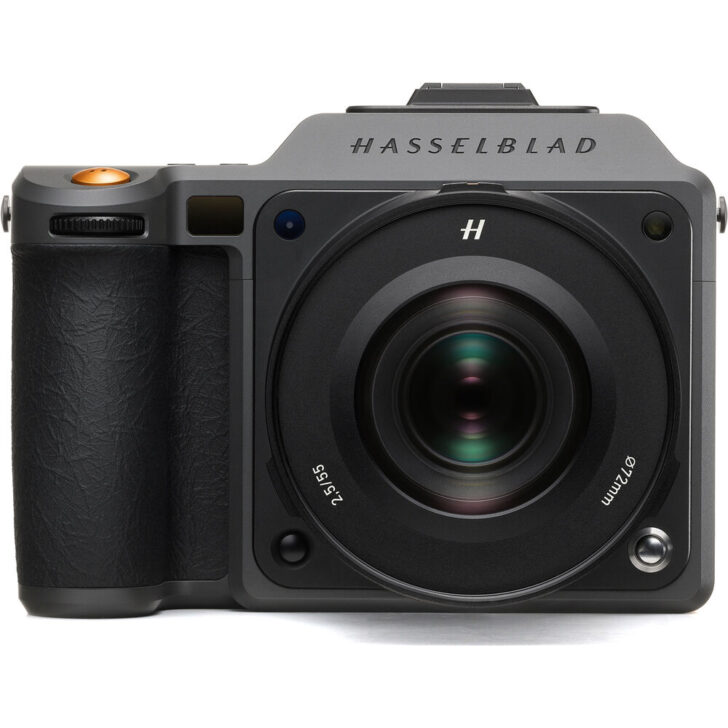
Designed to be even more compact, the X2D II 100C weighs 7,5 percent less than the X2D 100C for improved handling comfort. Crafted through an advanced finishing process, the new graphite grey matte coating offers exceptional durability and a refined, subtle texture, while the black nameplate adds a touch of distinction. The signature ergonomic grip has also been redesigned with a textured surface to enhance comfort and control during extended shoots.
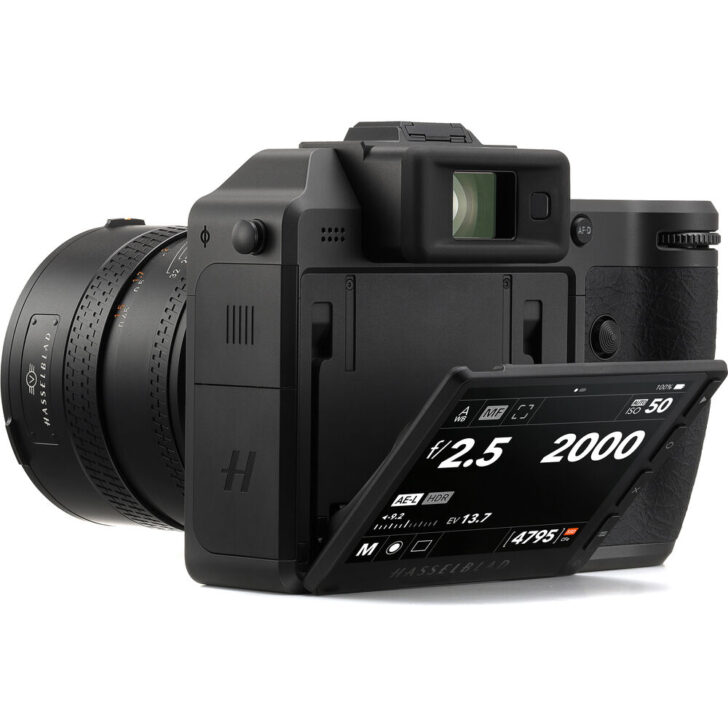
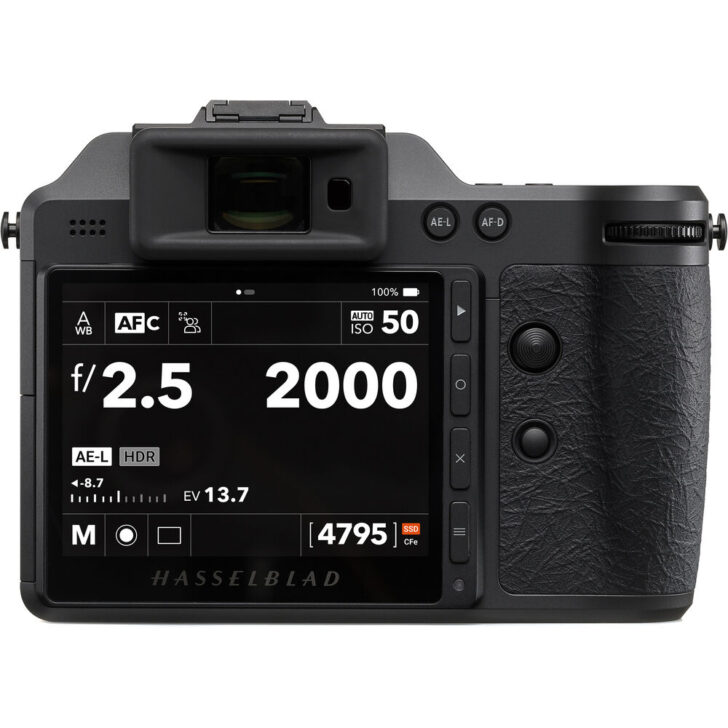
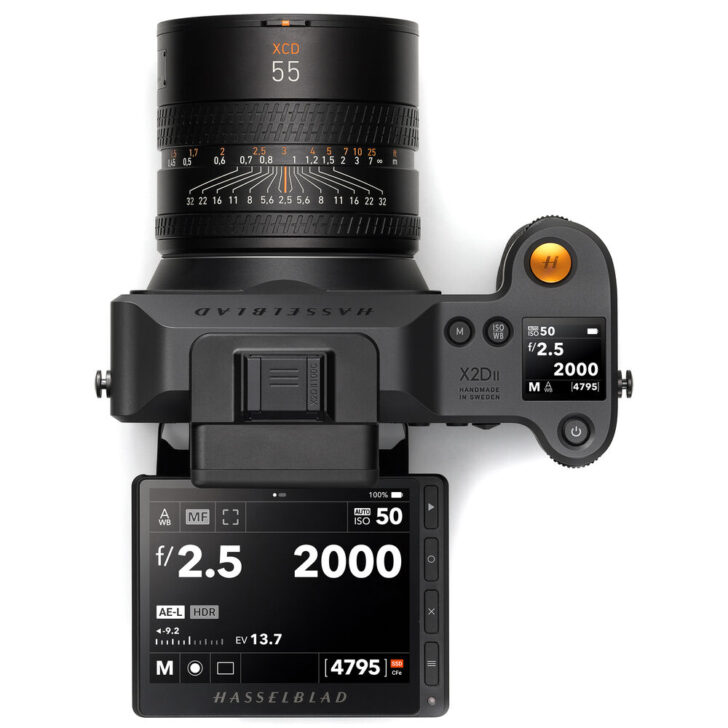
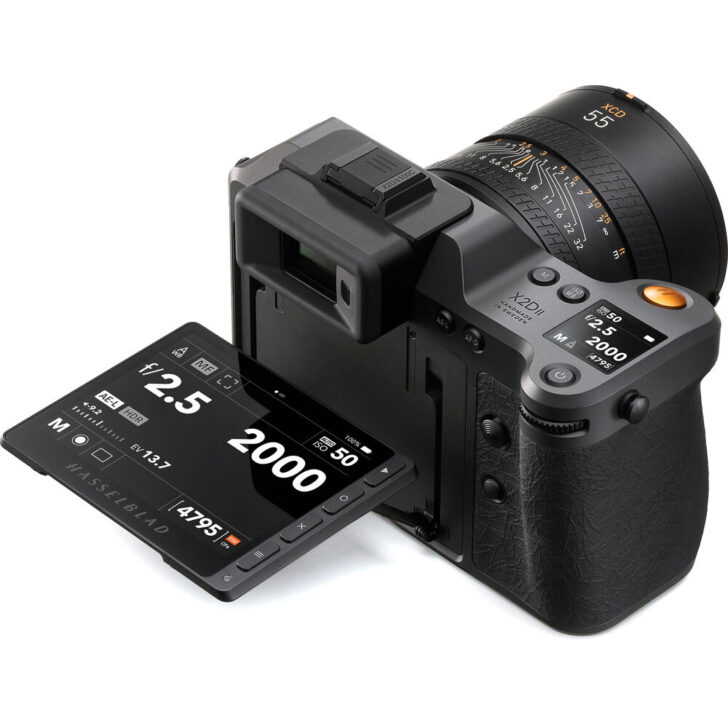
The 3,6-inch OLED screen tilts 90° upward and around 43° downward, and pulls out while staying clear of the electronic viewfinder (EVF), making it easier to compose and capture shots from high and low angles. A newly added 5D joystick enables swift focus point selection and intuitive menu navigation without touching the screen. With eight customisable buttons, the camera offers greater flexibility and a more personalised control experience.
XCD 2,8–4/35–100E: A COMPACT STANDARD ZOOM LENS WITH FLAGSHIP PERFORMANCE
The new XCD 2,8–4/35–100E is a versatile standard zoom lens that seamlessly bridges wide-angle to medium telephoto focal lengths. With approximately 3× optical zoom, it delivers a 28–76 mm full-frame equivalent focal length and an aperture range of f/2,8 to f/4. Effectively combining the range of seven Hasselblad prime lenses into one, it excels in capturing sweeping landscapes, intimate portraits, dynamic street photography, and spontaneous travel moments with confidence.
At its widest aperture of f/2,8, the lens delivers exceptional low light performance, while producing smooth, creamy bokeh and distinct background separation.
The “E” in XCD 2,8–4/35–100E stands for “Exclusive” and represents the top-tier optical performance, delivering the same edge-to-edge image quality as Hasselblad’s XCD prime lenses. Its advanced optical design comprises 16 elements in 13 groups, including three aspherical and five ED elements, ensuring sharp resolution and authentic colour that meet the demands of a 100-megapixel sensor.
The XCD 2,8–4/35–100E is powered by the fastest stepping motor in the XCD lens lineup. This compact internal focusing group, paired with optimised control algorithms, enables smooth and accurate autofocus. When paired with the X2D II 100C’s AF-C system, it confidently tracks moving subjects and ensures precise focus in action shots.
The integrated leaf shutter offers full flash synchronisation from 1/4000 second to 68 minutes, allowing photographers to balance fill flash in bright light or shoot wide open without compromise.
Despite its bright aperture and extended zoom range, the lens remains remarkably compact, measuring just 138 mm in length and weighing just 894 grams. It features the highly praised control rings from XCD V Series lenses, allowing quick adjustments to shutter speed, aperture, ISO, exposure compensation, and subject switching. The engraved “H” logos and subtle “V” insignia on the control rings reflect Hasselblad’s commitment to minimalist design and enduring quality, creating a lens that performs as elegantly as it appears.
VANDRA BACKPACK AND FILTERS FOR HASSELBLAD CREATORS
Inspired by Sweden’s Freedom to Roam, the Vandra Camera Backpack blends functionality and style. With about 20-litre capacity, it can easily hold a Hasselblad body, two lenses, and accessories.
Hasselblad also introduces three new 86 mm UV, ND8, and CPL filters, all fully compatible with the XCD 2,8–4/35–100E.
AVAILABILITY AND PRICING
The Hasselblad X2D II 100C is priced at $7,399 / €7 200.
The XCD 2,8–4/35–100E lens is priced at $4,599 / €4 800.
The Vandra Backpack is priced at $469 / €429.
The UV 86mm Filter is priced at $299 / €259.
The ND8 86mm Filter is priced at $329 / €289.
The CPL 86mm Filter is priced at $559 / €469.
Please consult your nearest Hasselblad Flagship Store, authorised dealer, or the Hasselblad online store for purchasing details. For more information, visit www.hasselblad.com.
1, As of 25 August 2025. HDR is not supported in some situations. Refer to the FAQ page for more details.
2, Requires a compatible XCD lens with upgraded firmware. Refer to the FAQ page for more details. Not
available with electronic shutter.
3, Requires a compatible iPhone or iPad device. Refer to the FAQ page for more details.
4, Compatible with certain models. Refer to official website.
Specifications
| Price | |
| MSRP | $7399, €7200, £6400 |
| Body type | |
| Body type | SLR-style mirrorless |
| Sensor | |
| Max resolution | 11656 x 8742 |
| Image ratio w:h | 1:1, 5:4, 4:3, 16:9 |
| Effective pixels | 102 megapixels |
| Sensor size | Medium format (44 x 33 mm) |
| Sensor type | BSI-CMOS |
| Color filter array | Bayer |
| Image | |
| Custom white balance | Yes |
| Image stabilization | Sensor-shift |
| CIPA image stabilization rating | 10 stop(s) |
| Uncompressed format | RAW |
| File format | 3FR Raw JPG HDR JPG HEIF HDR HEIF |
| Optics & Focus | |
| Autofocus | Contrast Detect (sensor) Phase Detect Selective single-point Tracking Single Continuous Touch Face Detection Live View |
| Autofocus assist lamp | Yes |
| Manual focus | Yes |
| Number of focus points | 425 |
| Lens mount | Hasselblad X |
| Screen / viewfinder | |
| Articulated LCD | Tilting |
| Screen size | 3.6″ |
| Screen dots | 2,360,000 |
| Touch screen | Yes |
| Screen type | OLED |
| Live view | Yes |
| Viewfinder type | Electronic |
| Viewfinder coverage | 100% |
| Viewfinder magnification | 1× |
| Viewfinder resolution | 5,760,000 |
| Photography features | |
| Minimum shutter speed | 4080 sec |
| Maximum shutter speed | 1/4000 sec |
| Maximum shutter speed (electronic) | 1/6000 sec |
| Built-in flash | No |
| External flash | Yes |
| Flash modes | TTL |
| Flash X sync speed | 1/4000 sec |
| Continuous drive | 3.0 fps |
| Self-timer | Yes |
| Metering modes | Multi Center-weighted Spot Spot AF-area |
| Exposure compensation | ±5 (at 1/3 EV, 1/2 EV, 1 EV steps) |
| Videography features | |
| Microphone | None |
| Speaker | None |
| Storage | |
| Storage types | CFexpress Type B |
| Storage included | 1TB |
| Connectivity | |
| USB | USB 3.2 Gen 2 (10 GBit/sec) |
| USB charging | Yes |
| HDMI | No |
| Microphone port | No |
| Headphone port | No |
| Wireless | Built-In |
| Remote control | Yes |
| Physical | |
| Battery | Battery Pack |
| Battery Life (CIPA) | 327 |
| Weight (inc. batteries) | 840 g (1.85 lb / 29.63 oz) |
| Dimensions | 149 x 106 x 75 mm (5.87 x 4.17 x 2.95″) |
| Other features | |
| Orientation sensor | Yes |
| Timelapse recording | No |
| GPS | None |








Great price, even the mark1 price is now 6799€ on Germany’s
HASSELBLAD X2D 100C Gehäuse - Foto Erhardt
Btw. which lens is the best, that you can buy with this camera? I mean Hasselblad lens zoom, prime...
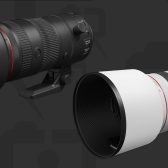
The new 35-100 was sorely missing until now (28-76mm Full-Frame Equivalent). Up to this point, On a shoot, I've been switching between the 55V and 90V prime lenses. There was an existing 35-75 that wasn't exactly up to the 100mp sensor, this new lens is both faster aperture, sharper, and cheaper...kind of insane they were able to do this and I don't know why. I believe this is the must have lens on the X System now without question.
Virtually all the lenses are stellar. They're currently broken down into the P, V, and E series. The older lenses are not my first choice and my only experience with the older designs is the 45P, which I didn't like. All of the new lenses I've rented/used/owned have been incredible.
My personal favorite is the 55V followed closely by the 90V.
Ok, Thank you 👍
Be interesting to see where the mkI model will settle in terms of 2nd hand price next year