

When you purchase through links on our site, we may earn an affiliate commission. Here's how it works. |
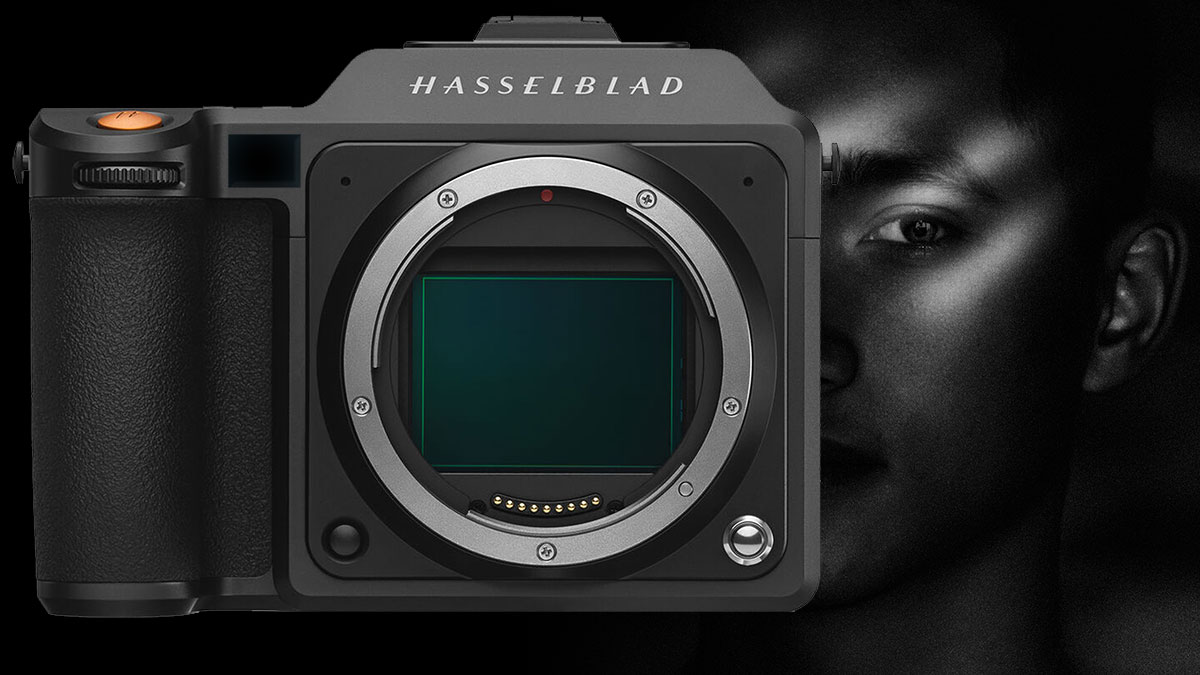
There are some new specifications and rumors about the upcoming Hasselblad X2DII. According to the rumor from MirrorlessRumors, the Hasselblad X2DII will feature;
- Integrated LiDAR AF system with performance on par with Sony
- New joystick and additional customizable buttons on the back of the camera
- Monitors with improved resolution
- The monitor can be tilted downwards
- Improved User Interface
It's expected to be announced on August 26th. What, of course, interests me is the LiDAR AF system. DJI, the owner of Hasselblad, has done LiDAR before for some of its camera systems and even has this add-on for cameras.
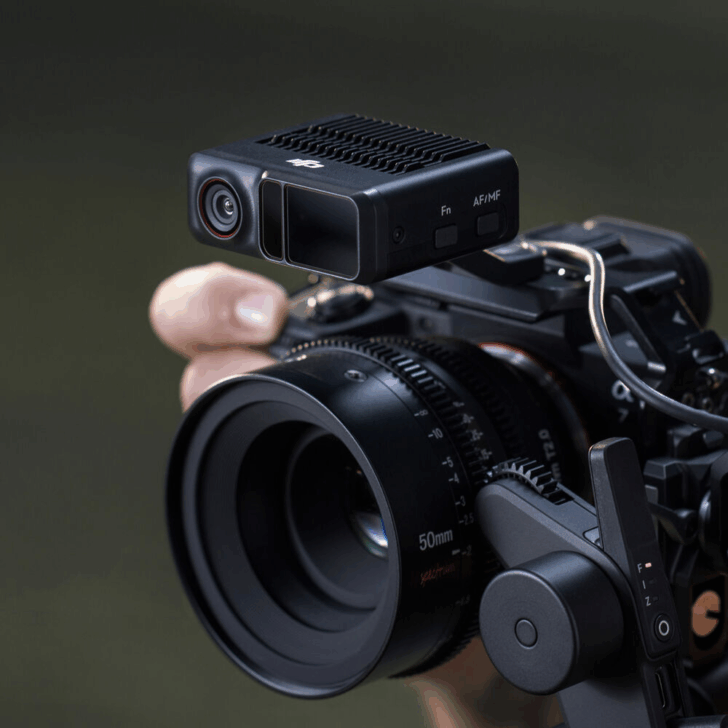
So, it stands to reason that the next Hasselblad may include a LiDAR sensor borrowing from DJI's fairly extensive knowledge in this field.
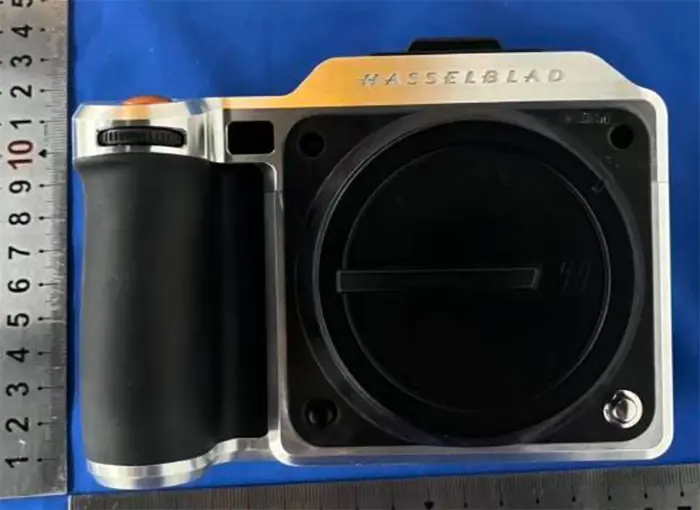
Note that the little square on this image, to the top and left of the lens mount, is the LiDAR sensor. Now, this could be all wrong, and this may not be a LiDAR sensor at all, especially when you consider that many cameras have a window port in that location that is anything BUT a LiDAR sensor port.
That window also looks small to be a LiDAR sensor, as it has to have the illuminating laser and also the ToF sensor, and it appears to be relatively close to the body and even the hand grip that one or the other would tend to block the laser or sensor.
If this were a Canon Rumor, I'd give it a CR0 based upon Craig's old rating style from years gone by. But this has come up many times in rumors that one camera or another is going to have a LiDAR sensor, so let's dive into that and see if it even would make practical sense.
What is LiDAR?
Essentially, LiDAR is a ranging device which measures the distance to a target. The distance is calculated by sending a short laser pulse and recording the time lapse between the outgoing light pulse and the detection of the reflected (back-scattered) light pulse. This has been used with great success in a variety of fields, such as our smartphones and also automotive sensors.
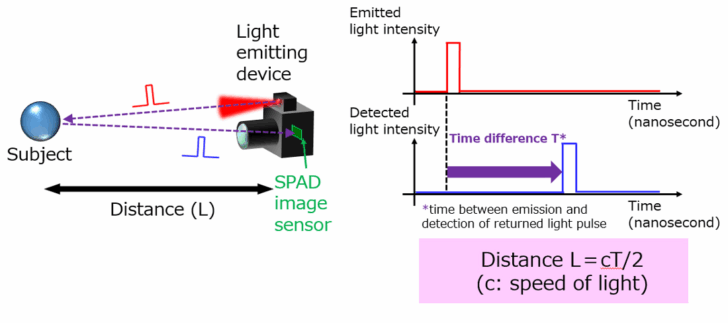
LiDAR operates in a variety of lighting applications, which makes it ideal for small sensors that perhaps don't have large enough pixels to do phase detection on the actual sensor itself.
Sounds great, yes? So what does Richard think about it? I find it kind of cool. From a Canon perspective, I have written a lot about it as Canon has done extensive research in this field, but it's not all sunshine and rainbows.
It is a Separate Sensor
LiDAR would have to be a separate sensor, which would then lead us back to the days of calibration issues between the primary image sensor and the autofocus sensor from the DSLR days, especially if you are using a significantly fast lens. This may be more of a problem with fast lenses, as these require accurate measurements in the mm range and would be especially prone to miscalibration between the LiDAR sensor and the image sensor of the camera.
It has a potentially more limited range and fewer autofocus features.
Because LiDAR works by target illumination, the range is dependent on the power of the laser and the reflectivity of the surface. If the power of the laser is limited or the target is not reflective, then the range is much shorter. Focus aids that we have grown accustomed to, such as eye detection and eye focus, would be significantly more difficult because the depth mapping may not have the precision to determine what is an eye or not.
Why could they be putting LiDAR on the X3DII?
Let's assume the rumor is real. I do believe that they could be thinking that when you are shooting images in a studio, and for the most part, the studio is dark with a very close range to focus. In this application, LiDAR will greatly enhance studio auto focus. Phase detection always struggles a bit in the dark, and this way, fewer modelling lights and or continuous lighting will be necessary in a studio environment. It will also be beneficial for video shooting as you don’t typically use autofocus. LiDAR, in this case, could tell you how far away the subject is with decent accuracy, and allow you to adjust your cini lens to the distance to match.
It would be an interesting addition to the Hasselblad cameras, and I will be very interested to see how it would work in the field with an ILC, because it isn’t a prevalent combination.
What does this mean for Canon?
Canon has introduced many SPAD or Single Photon Avalanche Diode patent applications, and I've discussed many of them here.
LiDAR uses SPAD sensors (also known as ToF or Time of Flight sensors), which work in a quirky fashion of forcing a reverse voltage into a photodiode and forcing it to work in “avalanche” state. This allows the diode to count the photons as they reach the photodiode by generating a pulse for each photon. Crazily sensitive, but can also run into problems if too many photons arrive at the same time.
Canon, for the most part, has been interested in the automotive applications for these sensors, as being able to determine how far away something is from the car very quickly is, for obvious reasons, a little crucial for self-driving applications, and also collision warning.
While I can’t see Canon necessarily adding LiDAR to its cameras, they may decide to add it onto their cinema cameras as a distance ranging device if it turns out to be popular with the X2D II. Still, if Canon is to do a LiDAR sensor, I see them doing an addon similar to the DJI Focus Pro LiDAR for their CINI cameras. But even then, DPAF (Dual Pixel Auto Focus) is so mature that it seems entirely unnecessary.




Then my wife will remind me that we can do a complete heatpump conversion of our house for that kind of money and the camera won’t keep us cool the right way during heatwaves 🙂
It's certainly not the Hassy that I lust over, but they are certainly pricey cameras!
I'm quite annoyed that they may have great autofocus now. I price out a kit at least once a month. I have no reason to own one, other than they're cool.
I don't think there's a risk of the brand dying now. It felt like it could have 4-5 years ago.
Yes, the location of the rumored LiDAR sensor looks like the same location as the colour temperature sensor. Which struck me as odd and a little unworkable.
That's why I wondered if it was just a "CR0" and someone running away with the rumor, but it gave me a chance to talk about LiDAR and cameras and that's always cool.
Better than talking about the R100 😉
He makes a compelling case for lidar and the colour sensor moving to a different spot. But the proof of the pudding is in the eating, so we’ll need to wait 2 weeks for the proper announcement.
But .. it'll be interesting - I doubt, though, it will be as good as Canon / Sony phase detection in all circumstances.