


When you purchase through links on our site, we may earn an affiliate commission. Here's how it works. |
For quite some time, we have seen the rise of Chinese manufacturing in a variety of fields, where when they first started, their products were rather amusing, but then suddenly, if you blink, they caught up in terms of engineering and quality. A good example of Chinese lens manufacturing and optical capability at the beginning would be 7artisans, who made fun lenses, but it was like putting vaseline in front of your lens when you shot with them. But all the lenses were under $100, so you get what you pay for. 7Artisans has also quietly improved and added autofocus lenses and a “PRO” lineup that deserves some watching as well, but they have stuck with the standard lens lineup.
Laowa has been filling out some niches that include manual focus tilt shift lenses that look monstrous and some incredibly unique macro lenses. But the big optics that demand optical excellence have mostly been out of the reach of Chinese lens manufacturing.
Until Now.
Now first, we don't know how good this lens is, but if anyone is making a 200mm F2.0 – and going through the trouble of grinding 100++ millimeter elements, I think it's safe to say – it's not going to be Quantaray quality. While I would not expect them to reach the quality and optical capability of Sony, Nikon, and Canon, just the fact that they are coming out with an AF 200mm F2.0 is quite impressive.
Also, they are elegantly getting around the RF problem. They are releasing this lens on the Canon EF mount. So get out your RF adapter (especially one that uses drop-in filters), and you can enjoy this lens on your RF cameras as well. This gets around the fact that there's no way that Canon would approve Laowa coming out with a native RF mount 200mm F2.0 when Canon themselves doesn't even have one. None. Never. Ever.
Suppose Laowa and other Chinese lens manufacturers can push the traditional vendors and come out with high-end optics that we expect from, say, a Tamron or a Sigma. In that case, this may be worrisome to the Japanese vendors, because we all know that the Chinese can build things to scale. As a photographer, this may be exciting for us – especially if Laowa will continue to support Canon cameras and push the boundaries of what Chinese manufacturers have been able to accomplish.
A Brief Look at the History of the 200mm F2.0
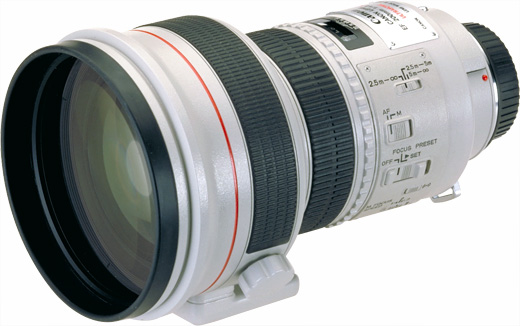
Canon has made exceptional EF 200mm F2.0 lenses. The original, the Canon EF 200mm F1.8L, was considered one of the finest lenses made during that era. Nothing could match it in terms of optical quality. Not even the legendary Zeiss was that good. Craig had a Canon EF 200mm F1.8L, and I don't know if that makes me irrationally jealous, but it's up there.
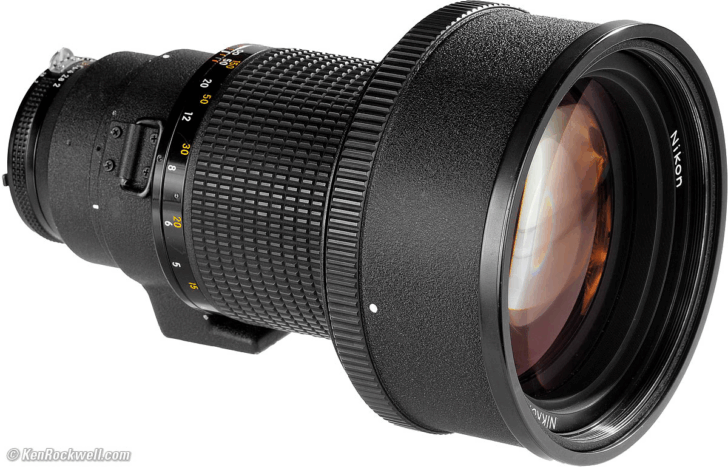
Nikon wasn't far behind them either, with the optically excellent Nikkor 200 mm F2.0 AF-S VR in 2004 that also had matched up teleconverters designed explicitly in conjunction with the lens. Nikon, back in the AI-S days, also had the Nikkor 200mm F2.0 AI-S ED, which was the first 200mm F2.0 developed. I can't imagine trying to focus this accurately wide open, but life was different back then in the film era.
The Rumor: Laowa AF 200mm f2.0
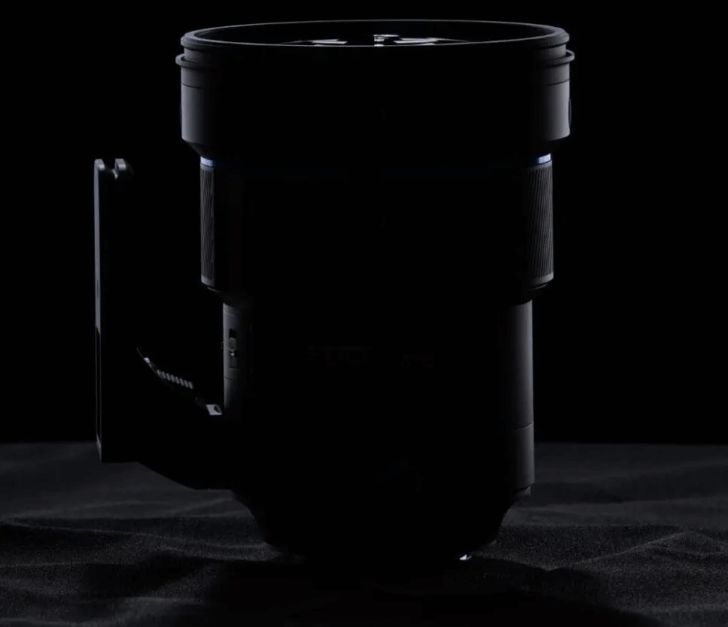
Now, about that Laowa lens, we don't know much, but we do have a silhouette image of the monster.
Another image has also appeared, which is unverified but looks “legit” from what you'd expect from a 200mm F2.0
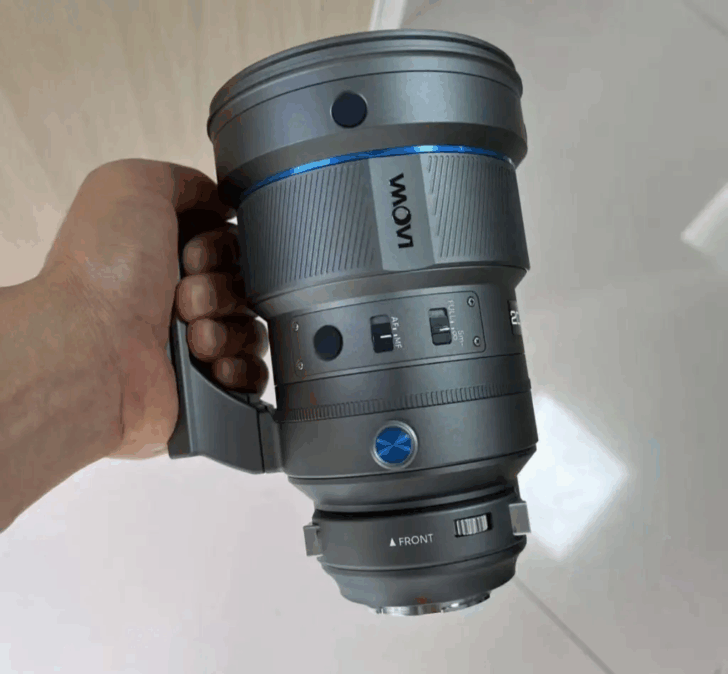
From this picture, we can see MF/AF switch and focus limiters – and no image stabilization. There appears to be a drop in filter adapter at the back with knurled control for circular polarizers. I would expect that the EF version would have a more simplistic drop-in filter adapter at the back to free up that 20mm or so that they need for the EF mount versus mirrorless mounts. They may have designed enough room if they “cut off” the lens right after the filter adapter.
Closing Thoughts
With the Sigma 200mm F2.0 coming out, featuring image stabilization and a price expected to be lower than OEM brands from Canon, Nikon, and Sony, it will be interesting to see what the pricing of this lens is when it hits the market. If this lens is competitive, and frankly, I can't see any lens company releasing such a halo product if it wasn't, then this will change what we think about the lens market, and also force the Japanese vendors to be far more cognizant of Chinese engineering and manufacturing that can undercut the OEMs significantly.
Time will tell, but I'm very interested in seeing what they have done with this lens. Also: What's with the 200mm F2.0 lenses this year?






Outside the GAS-obsessed forums there are a huge number of photographers in the real World still shooting on EF bodies so it's great to see Laowa addressing that market, even if it is a workaround for the RF closed-garden. And no worse than Canon's cynical welding of an RF adapter on the back of its big telephoto primes.
This isn't the first time we've seen blue accents. OM system uses them on their PRO lenses. Mind you, seems Laowa has gotten a little overboard with it.
it could have pink polkadots for all I care if the optical performance is there.
Then I realize how much I'm addicted to the image stabilization on the 100mm macro.
The required amount of extension explains the long barrel length of the EF 180mm macro lens.
See: https://shuttermuse.com/ultimate-guide-to-extension-tubes/ or https://www.scantips.com/copycalc2.html for details on using extension tubes.
Or, for entertainment: https://www.youtube.com/watch?v=Mi_3cCLOFSU