
When you purchase through links on our site, we may earn an affiliate commission. Here's how it works. |
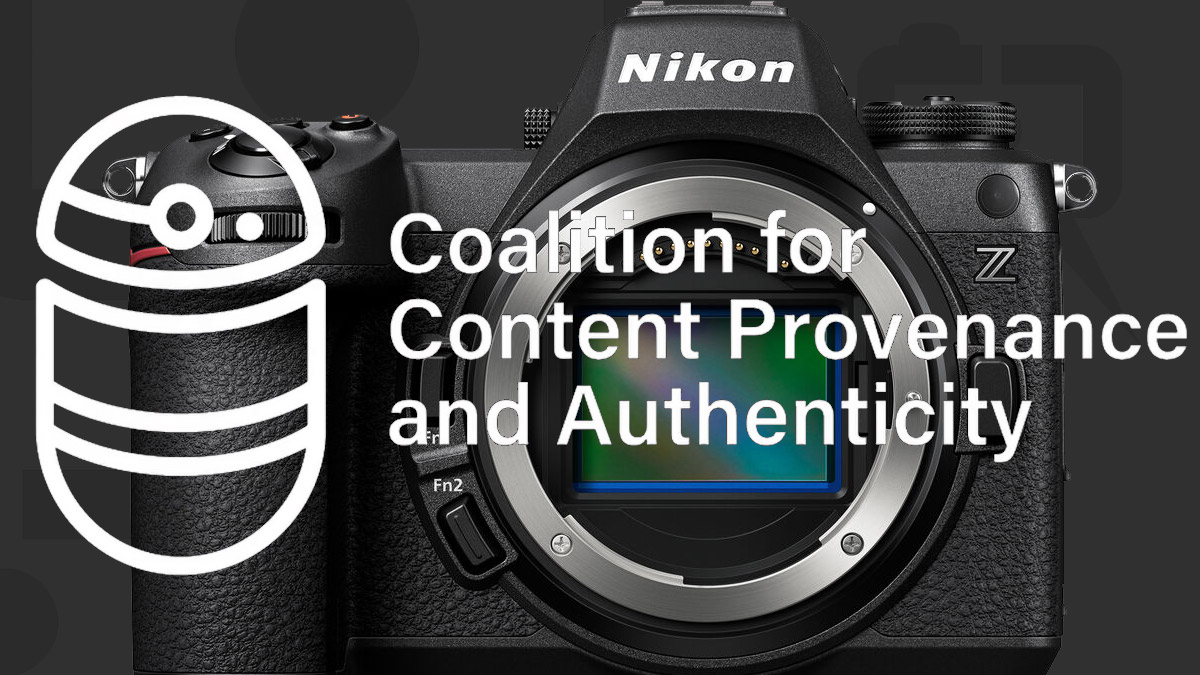
Nikon has announced a new firmware update for its Z6 III camera that adds Content Authenticity Initiative (CAI) credentials via firmware, based on the Coalition for Content Provenance and Authenticity (C2PA) standard.
Including C2PA-compliant credentials on the mid-tier Z6III is a welcome step, as C2PA-compliant credentials are typically available on higher-tier models, such as professional models. Nikon's recent update demonstrates a commitment to further combating misinformation and facilitating trust in visual content, while also increasing its efforts to establish verified digital provenance alongside other industry participants.
Nikon's adoption of C2PA credentials marks a significant step forward for the entire industry in its commitment to authenticity for digital content. With misinformation becoming a considerable concern, tools like this will allow photographers to maintain their authenticity and credibility.
Nikon details this in their press announcement.
Nikon is committed to developing an image provenance function that supports confirmation of image authenticity, aiming to protect individuals and enterprises in the imaging industry from any unfavorable results caused by falsification and/or image manipulation, and to realize a society in which creative and business activities can be conducted with greater peace of mind. Z6III firmware version 2.00 includes an image provenance function that complies with the C2PA standard and is part of the Nikon Authenticity Service. By making a prior request through Nikon Imaging Cloud, users can load the digital certificate necessary for recording provenance data onto the Z6III.
The image provenance function adds metadata – such as information about the equipment used and data that makes it easy to verify whether the image has been tampered with, including a digital signature – to captured image files. This enables users to prove that a photo was taken with a Nikon camera.*2 If the image is then edited repeatedly using C2PA-compliant editing software, additional provenance information can be embedded in the image alongside the original shooting data, making it possible to prove that no misleading edits have been made.*3 In addition, image provenance data can be viewed in Nikon Imaging Cloud.
About C2PA
In the era of deepfakes, the camera industry needs to step up and defend what is real from what is imagined. We can't depend on AI messing up fingers forever.
We are witnessing extraordinary challenges to trust in media. As social platforms amplify the reach and influence of certain content via ever more complex and opaque algorithms, mis-attributed and mis-contextualized content spreads quickly. Whether inadvertent misinformation or deliberate deception via disinformation, inauthentic content is on the rise.
How does C2PA work? This is a good short video on what C2PA is and how it works. It should also be noted, as they state, that it's not entirely foolproof; however, the absence of a manifest would indicate that either the image has been tampered with or created with a device that doesn't generate the manifest in-camera. This is why the industry needs to adopt this not only in professional cameras, but also in prosumer cameras.
Sony and Adobe are part of the C2PA steering committee, while Canon, Leica, Fujifilm, and Nikon are general members of the organization. Notable news organizations, such as the BBC, NHK, and AP, are represented in both the steering committee and as general members.
I personally applaud Nikon for its efforts and hope Canon considers a similar approach, extending C2PA-compliant options beyond professional cameras to its EOS R6 class and comparable models. The more creators have access to these tools, the more those creators can support a more authentic visual environment and emphasize the need for transparency in photography.
You can read more about content credentials at https://contentcredentials.org/.