

When you purchase through links on our site, we may earn an affiliate commission. Here’s how it works. |
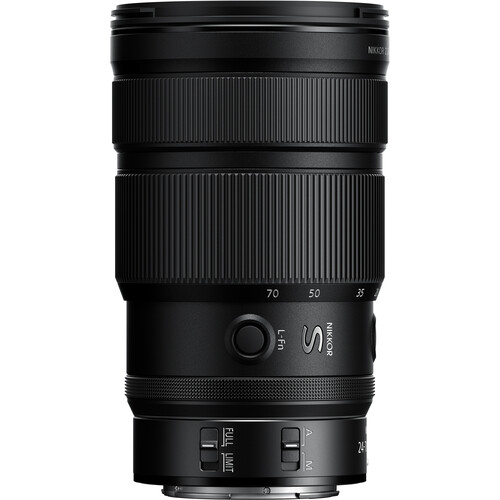
Nikon has announced the upgrade to the very good Nikkor Z 24-70 f/2.8 S today, touting internal focus and internal zoom, and upgraded focusing, lighter weight, shorter minimum focus distance, and countless other upgrades. It’s honestly worthy of the Mark II moniker.
The new lens is available for preorder for $2796.95, which is a pretty big jump from the $2096.96 ($300 savings) of the original version. However, this version will have tariff increases packed into the MSRP, so consider that – especially when Nikon has stated that prices are going to increase again in the USA.
Basically this lens is better all around, lighter, faster to focus, smaller, internal zoom, smaller filter size, click or clickless control rings, focus limiter and quite probably the best 24-70 that Nikon (or even Canon) has ever made. I think Nikon can be forgiven that it’s a little more expensive than the prior model.
It’s curious that Nikon did this after releasing the first one in 2019, making it only 6 years old. That signifies to me that Canon just may do the same.
| Nikkor Z 24-70mm f/2.8 S II | Nikkor Z 24-70mm f/2.8 S | |
|---|---|---|
| Mount | Z mount | Z mount |
| Zoom Mechanism | Internal Zoom | Extending Zoom |
| Weight | Approx. 675 g | Approx. 805 g |
| Filter Size | 77mm | 82mm |
| AF Drive System | Silky Swift Voice Coil Motor | Stepping Motor |
| AF Drive Noise | 50% Quieter than Predecessor | Near Silent |
| Minimum Focus Distance | 9.4 in. | 15 in. |
| Max Reproduction Ratio | 0.32x | 0.22x |
| Control Ring | Click/Clickless | Clickless |
| Focus Limit Switch | Yes | No |
| Diaphragm Blades | 11 | 9 |
| Anti-Reflective Performance | Arneo Coat & Meso Amorphous Coat | Arneo Coat & Nano Crystal Coat |
| Filter Access from Lens Hood | Yes | No |
| Lens Elements | 14 | 17 |
| L-Fn Buttons | 2 | 1 |
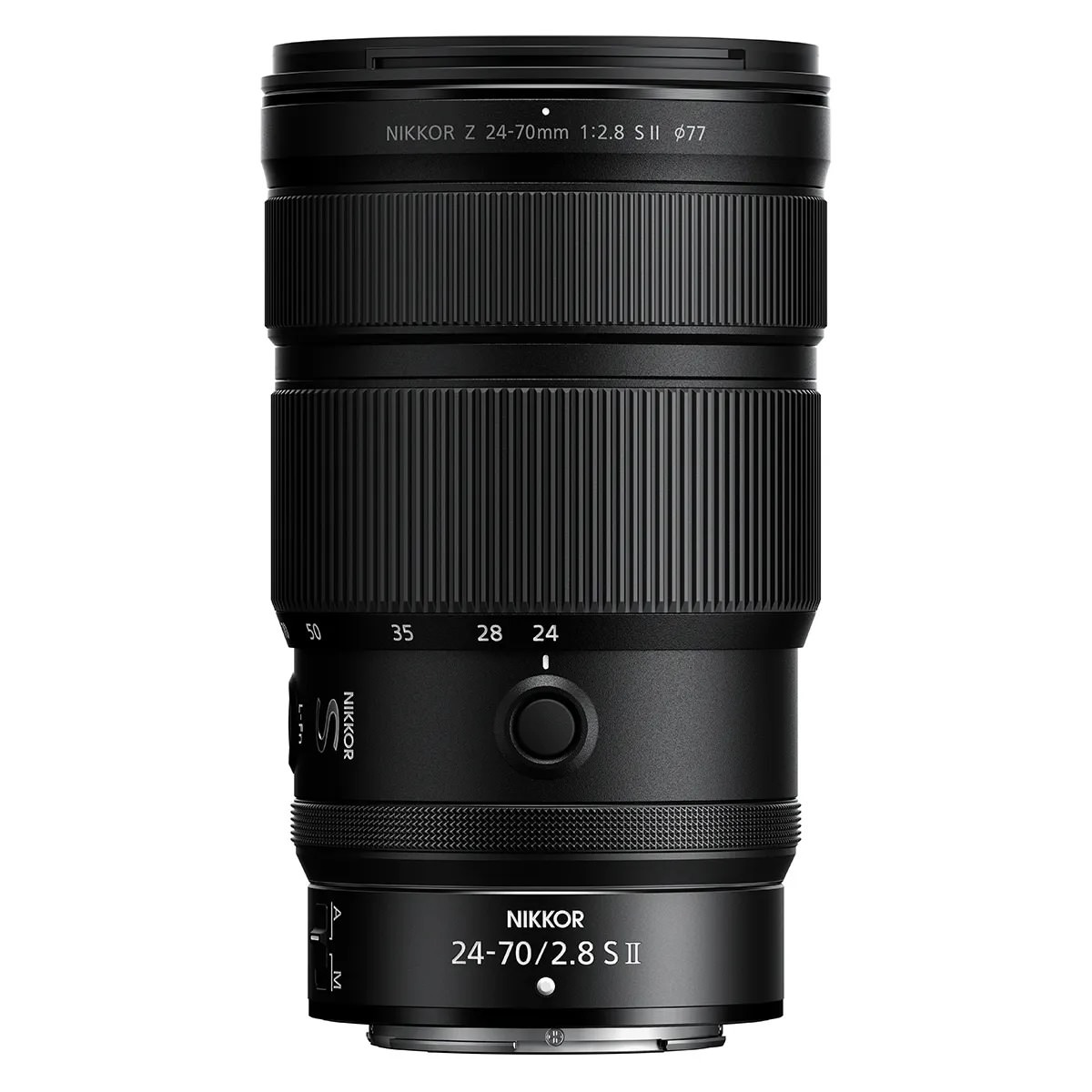
- Full-Frame | f/2.8 to f/22
- Versatile, Fast Standard Zoom
- First Internal Zoom 24-70mm f/2.8
- 16% Lighter + Upgraded Weather-Sealing
- Silky Swift VCM Multi-Focus AF System
- Two ED and Three Aspherical Elements
- Meso Amorphous and ARNEO Coatings
- Control Ring with Click/De-Click Switch
- Dual L-Fn Buttons, Focus Limiter Switch
- Rounded 11-Blade Diaphragm
Lens Construction and MTF
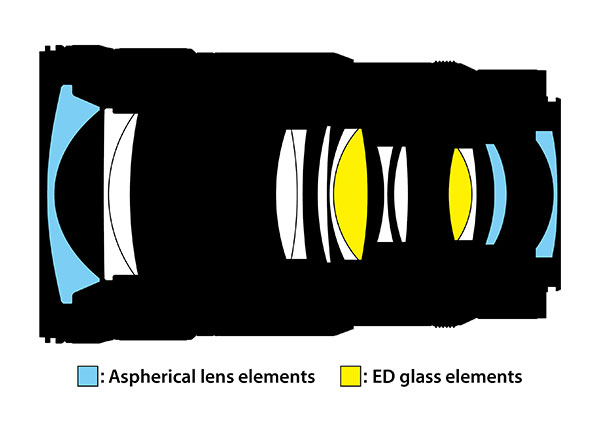
The Nikkor Z 24-70mm f/2.8 S II features 14 elements in 10 groups, down from 17 elements of the original version. This is perhaps where they shaved off some of the weight of the new lens as it’s 130g lighter than the original. The lens features two ED glass elements, and 3 apherical elements making up the optical arrangement.
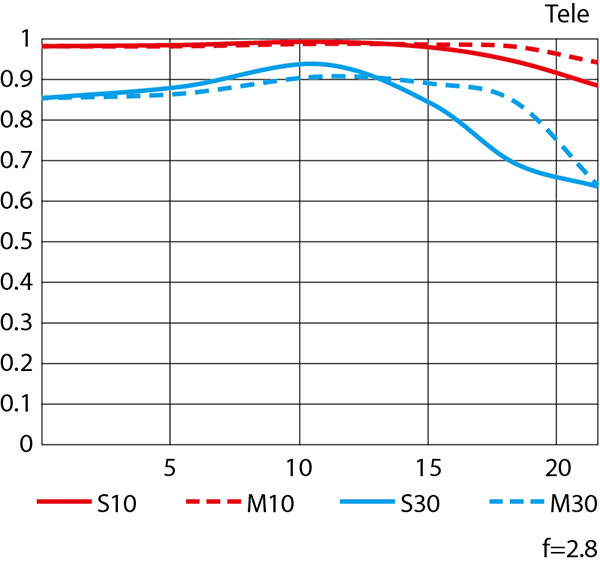
The MTF looks decent from the wide to telephoto, and as long as there’s no resolution or contrast dips throughout the zoom range, it should have excellent consistent performance.
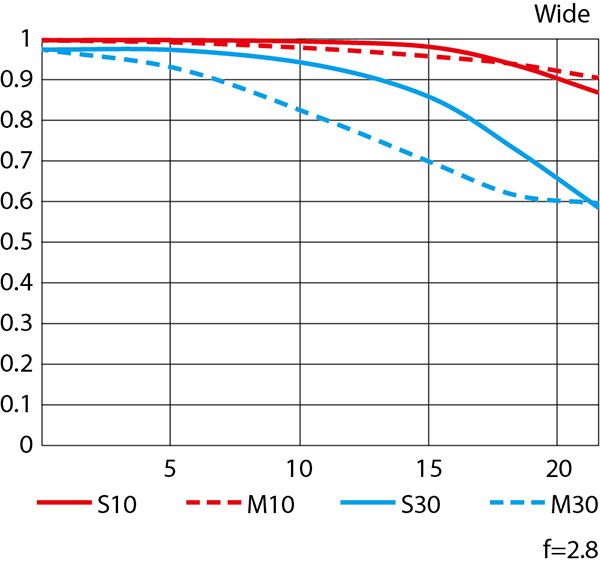
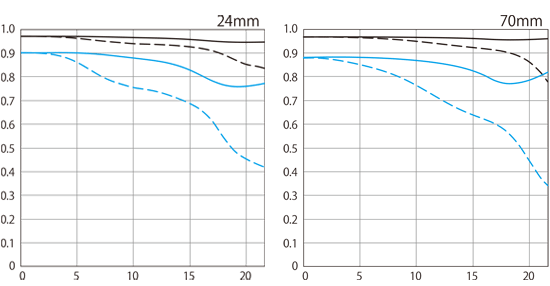
It’s always difficult to compare MTF charts between manufacturers, but doing a eyeball glance at the RF 24-70 f/2.8L IS USM MTF and this lens, it seems as if the new Nikkor is the lens to beat in terms of contrast and resolution across the frame.
Reviews
Below is some of our favorite youtubers reviewing and previewing this lens. Enjoy.
Press Release
NIKON ANNOUNCES THE NIKKOR Z 24-70MM F/2.8 S II LENS DELIVERING THE FASTEST AF AND LIGHTEST WEIGHT IN ITS CLASS
Engineered for Reliability and Agility, This Next-Generation Zoom Lens Sets a New Benchmark for Performance in the NIKKOR Z Lineup
MELVILLE, NY (August 22, 2025) – Nikon Inc. has announced the release of the new NIKKOR Z 24-70mm f/2.8 S II, a standard zoom lens that is compatible with full-frame/FX format mirrorless cameras. This second generation of the acclaimed NIKKOR Z 24-70mm f/2.8 S brings enhancements to image quality, speed and handling, further improving upon a lens that was already a popular choice for all types of imaging professionals.
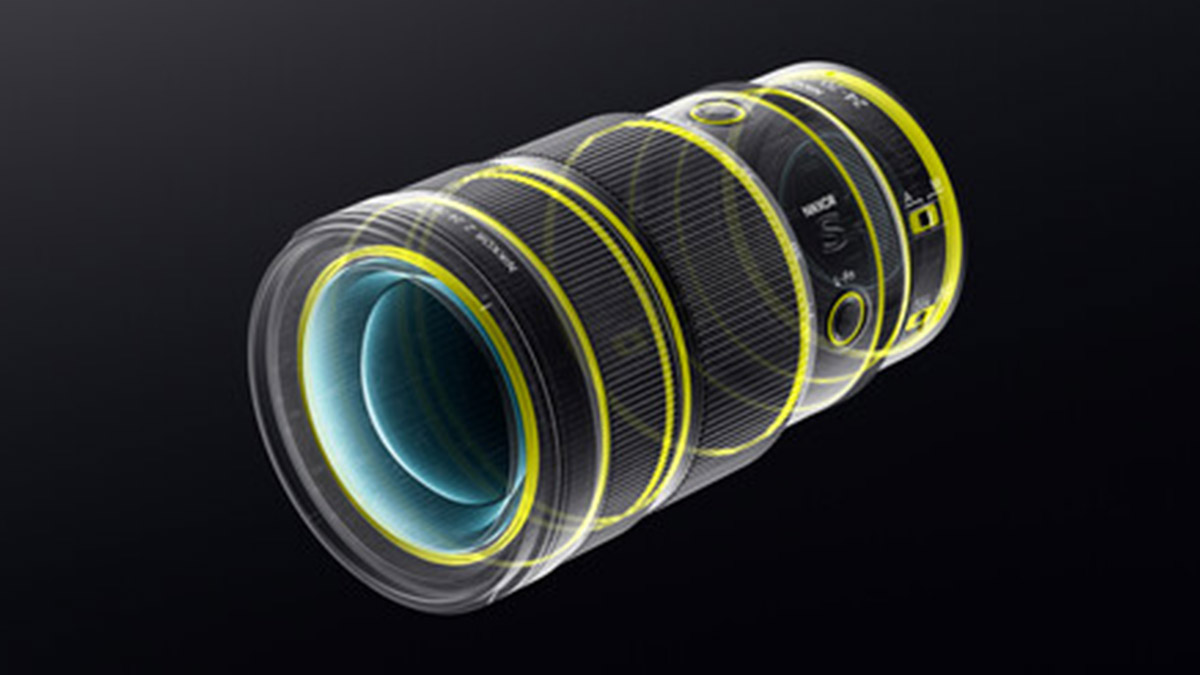
As part of the S-Line*1 of NIKKOR Z lenses, the NIKKOR Z 24-70mm f/2.8 S II is a standard zoom lens with a constant maximum aperture of f/2.8, covering the versatile focal length range from wide-angle 24mm to medium-telephoto 70mm for full-frame/FX format cameras. It features a first in its class*2 internal zoom mechanism, and it’s also the lightest in its class*2, weighing approx. 675g (1.49 lbs.). Additionally, the internal zoom mechanism increases zooming stability as well as dust- and drip-resistant performance.
It is the first zoom lens to adopt Silky Swift VCM (SSVCM)*3 motors for the AF drive, achieving the fastest*4 autofocusing in Nikon history with extremely precise and quiet AF control. Autofocus is approximately 5x faster than that of the NIKKOR Z 24-70mm f/2.8 S, and AF tracking performance during zooming has been enhanced by approximately 60%, making it even easier to capture decisive moments with fast-moving subjects such as athletes in action.
As a new-generation f/2.8 standard zoom lens that combines outstanding image quality and superior agility, the NIKKOR Z 24-70mm f/2.8 S II is the lens for those seeking high levels of performance in both still image and video recording, even when shooting in a variety of conditions or harsh environments.
Primary features
- The multi-focusing system*4, incorporating Silky Swift VCM (SSVCM) technology for the first time in a zoom lens, achieves the fastest*5 autofocusing in Nikon history, delivering extremely precise and quiet AF for both still image and video recording.
- A compact design with the lightest weight (approx. 675g) in its class*6 and a 77mm filter attachment size makes it easy to carry and reduces fatigue when shooting handheld.
- The first lens in its category*6 to feature an internal zoom mechanism that prevents dust and debris from entering the lens during zooming, providing superior dust- and drip-resistant performance*7. Even when zooming, it maintains its balance for flexible use of a variety of video accessories.
- A newly developed 11-blade diaphragm enables very circular bokeh.
- Optimized for video recording with a design that suppresses focus breathing.
- Equipped with a control ring clicking switch, allowing the tactile “click” of control ring operation to be turned on or off as needed.
- The lens supports a minimum focus distance of 0.24 m at the wide-angle end and 0.33 m at the telephoto end, with a maximum reproduction ratio of 0.21× at the wide-angle end and 0.32× at the telephoto end, allowing users to get closer to their subjects for dynamic expression.
- Includes Meso Amorphous Coat, which offers the best anti-reflection performance in Nikon history, and ARNEO Coat for effective suppression of ghosting and flare, resulting in clear images.
- The lens hood features a filter adjustment window, enabling users to adjust circular polarizing and variable ND filters without removing the lens hood.
Price and Availability
The new Nikon NIKKOR Z 24-70mm f/2.8 S II lens will be available in mid-September for a suggested retail price of $2,799.95*. For more information about the latest Nikon products, including the vast collection of NIKKOR Z lenses and the entire line of Z series cameras, please visit nikonusa.com.
1 The S-Line is a grade of NIKKOR Z lenses that demonstrate outstanding optical performance, adhering to a high standard of design principles and quality control.
2 Among interchangeable zoom lenses for full-frame/FX format mirrorless cameras with a focal-length range from 24mm at the wide-angle end to 70mm at the telephoto end, and a constant maximum aperture of f/2.8, available as of August 22, 2025. Statement based on Nikon research.
3 An AF drive actuator that combines a Voice Coil Motor (VCM) and a guide mechanism developed by Nikon. The VCM is a motor in which a coil reciprocates in a strong magnetic field created by a powerful magnet.
4 Multiple AF drive units work together to control the position of multiple focus lens groups with great precision for superior image formation performance regardless of shooting distance.
5 When used with a camera equipped with the EXPEED 7 image-processing engine. Measured in accordance with Nikon standards.
6 Among interchangeable zoom lenses for full-frame/FX format mirrorless cameras with a focal length range from 24mm at the wide-angle end to 70mm at the telephoto end, and a constant maximum aperture of f/2.8, available as of August 22, 2025. Statement based on Nikon research.
7 Thorough dust- and drip-resistance is not guaranteed in all situations or under all conditions.
*SRP (Suggested Retail Price) listed only as a suggestion. Actual prices are set by dealers and are subject to change at any time.
Specifications
| Principal specifications | |
| Lens type | Zoom lens |
| Max Format size | 35mm FF |
| Focal length | 24–70 mm |
| Image stabilization | No |
| Lens mount | Nikon Z |
| Aperture | |
| Maximum aperture | F2.8 |
| Minimum aperture | F22 |
| Aperture ring | No |
| Number of diaphragm blades | 11 |
| Optics | |
| Elements | 14 |
| Groups | 10 |
| Special elements / coatings | 3 aspherics, 2 ED |
| Focus | |
| Minimum focus | 0.24 m (9.45″) |
| Maximum magnification | 0.32× |
| Autofocus | Yes |
| Motor type | Linear Motor |
| Full time manual | Yes |
| Focus method | Internal |
| Distance scale | No |
| DoF scale | No |
| Physical | |
| Weight | 675 g (1.49 lb) |
| Diameter | 90 mm (3.54″) |
| Length | 150 mm (5.91″) |
| Zoom method | Rotary (internal) |
| Power zoom | No |
| Zoom lock | No |
| Filter thread | 77 mm |
| Hood supplied | Yes |
| Tripod collar | No |
Gallery
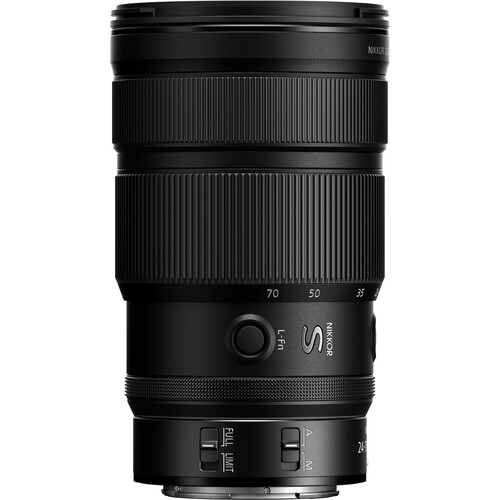
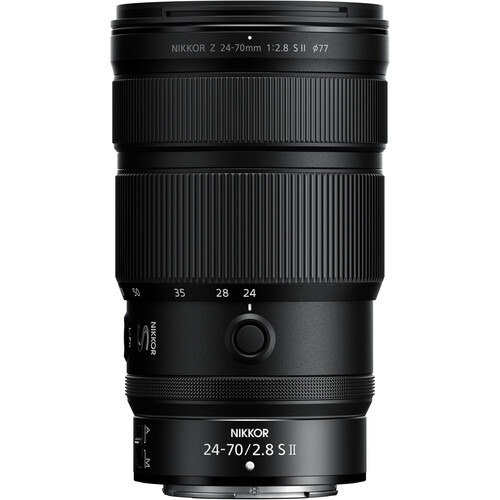
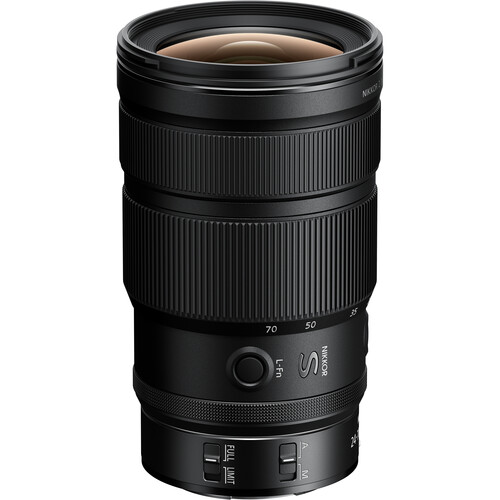
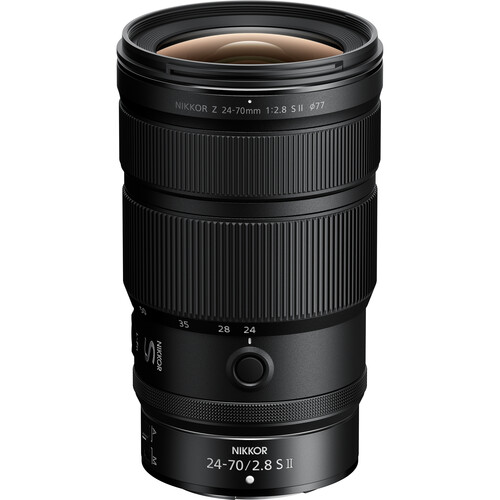
Preorder
- Full-Frame | f/2.8 to f/22
- Versatile, Fast Standard Zoom
- First Internal Zoom 24-70mm f/2.8
- 16% Lighter + Upgraded Weather-Sealing
- Silky Swift VCM Multi-Focus AF System
- Two ED and Three Aspherical Elements
- Meso Amorphous and ARNEO Coatings
- Control Ring with Click/De-Click Switch
- Dual L-Fn Buttons, Focus Limiter Switch
- Rounded 11-Blade Diaphragm






Or: Maybe a huge surprise in form of an f2 24-70?
Canon, please, make my day!
But IF, please! And $3500 max.
Of course, Nikons mkii did more than that and it really looks like a great upgrade.
Ahh, and Canon, if you're reading this: 24-105mm F4 L could benefit from a mkii as well or even more (focal length).
...my two cents.
And I would certainly not trade in my RF 15-35 f/2,8 for a lighter one without OIS, unless the new one were so much better (which I doubt).
All we have to do is to wait, hopefully for an f/2 24-70.
Is IBIS alone not enough for the lower focal lengths?
Nikon is fighting for survival and Sony, well, is Sony... 😉
Anyway, I didn't imply a 15-35 or 24-70 without OIS was useless, just that I prefer +200gr. and OIS to -200gr no OIS.
But I already have the RF 24-70 L anyway now so I don't care. I know it has its flaws but all in all it's the best zoom lens I have ever owned, I'm really happy with it.