


When you purchase through links on our site, we may earn an affiliate commission. Here's how it works. |
We're not big fans of “zero-day” camera or lens reviews, or really any review of significant cameras or lenses that come out within a month of release. There aren't may publications or reviewers out there that take their time with a product for reasons that one could consider obvious.
One publication that we do love here at Canon Rumors is ePHOTOzine. Their reviews are always extremely thorough, appear for the most part to be unbiased and tend to hit how the market eventually ends up feeling about a product.
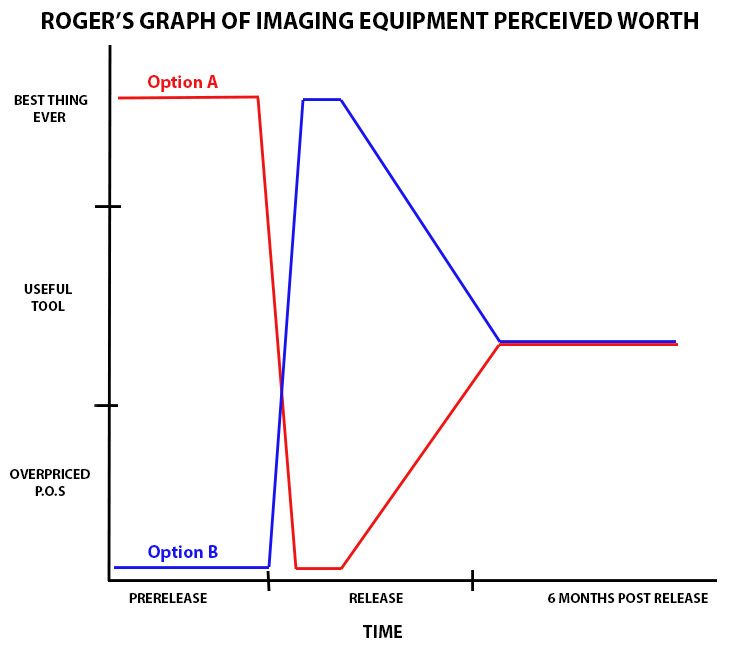
We always look back on Roger’s Law of New Product Introduction, which has been and will always be true.
If you're looking into the Canon EOS R5 Mark II as your next camera sometime down the road, this is probably one of the reviews you should read in full to help with your purchasing decisions
It'll be worthwhile for those DSLR shooters that haven't made the move to mirrorless yet, and there are a lot of you out there, or others that haven't decided if they want to move on from an R6 or R5 series camera, or even R3 shooters that want some more resolution and the latest and great autofocus performance.

There's also the question of saving a pile of money and just buying the Canon EOS R5 instead?
John Riley does a thorough review of the camera and doesn't really have many negative things to say about it, beyond it's $4299 USD pricepoint. In the USA at least, as we're already seeing refurbished EOS R5 Mark II cameras being offered just over $400 below retail, along with a few discount programs, such as the B&H Photo Winter Trade-in Event.
The rest of the planet? It's still a camera that can be hard to come by and we haven't seen any movement on price at this time, though we can't know pricing at every retailer.
One knock on the EOS R5 Mark II from John, and it's a minor one for a lot of people, is that cold performance is officially limited to 0c. Which I think is just Canon simply protecting themselves with things like warranty costs and battery performance.
Canon also uses LCD screens on the back of the camera, and at a certain temperature, they will freeze dead. So it's best to just not use them and turn the screen around, which may help keep it a bit warmer from the camera heat. I didn't keep track of what the temperature was, or how long it took for the LCD to die.
The OLED EVF won't have any issues operating in cold temperatures, at least I haven't been somewhere cold enough to cause an issue.
The LCD screens will thaw and come back to full functionality.
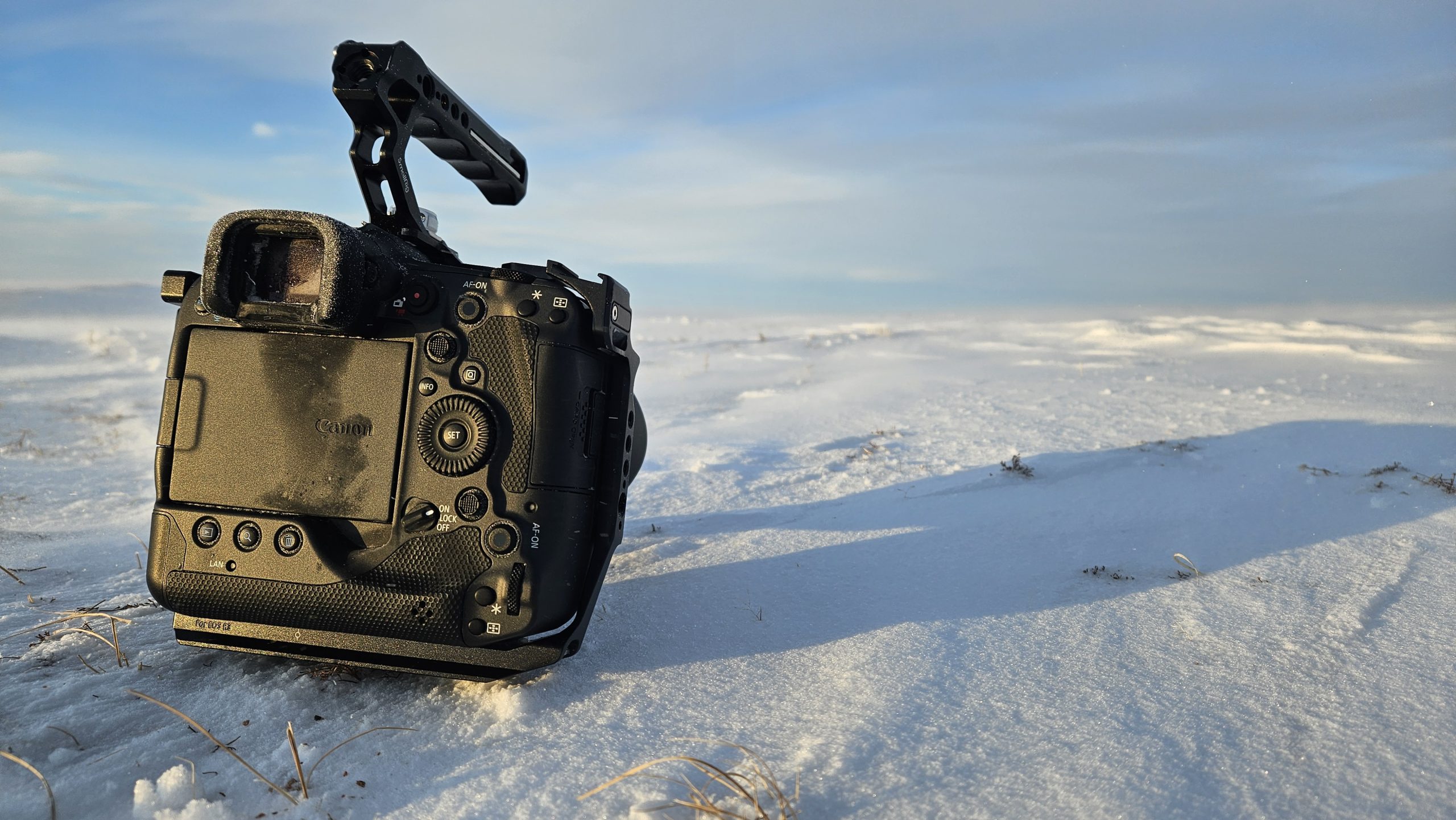
There is also the issue of acclimating cameras and lenses properly, which can cause failure and other issues. It's no different if it's cold outside, or warm outside. One must take some care in that regard.
The temperature rating of the EOS R5 Mark II is the same as the Canon EOS R5 and shouldn't worry any potential customers.
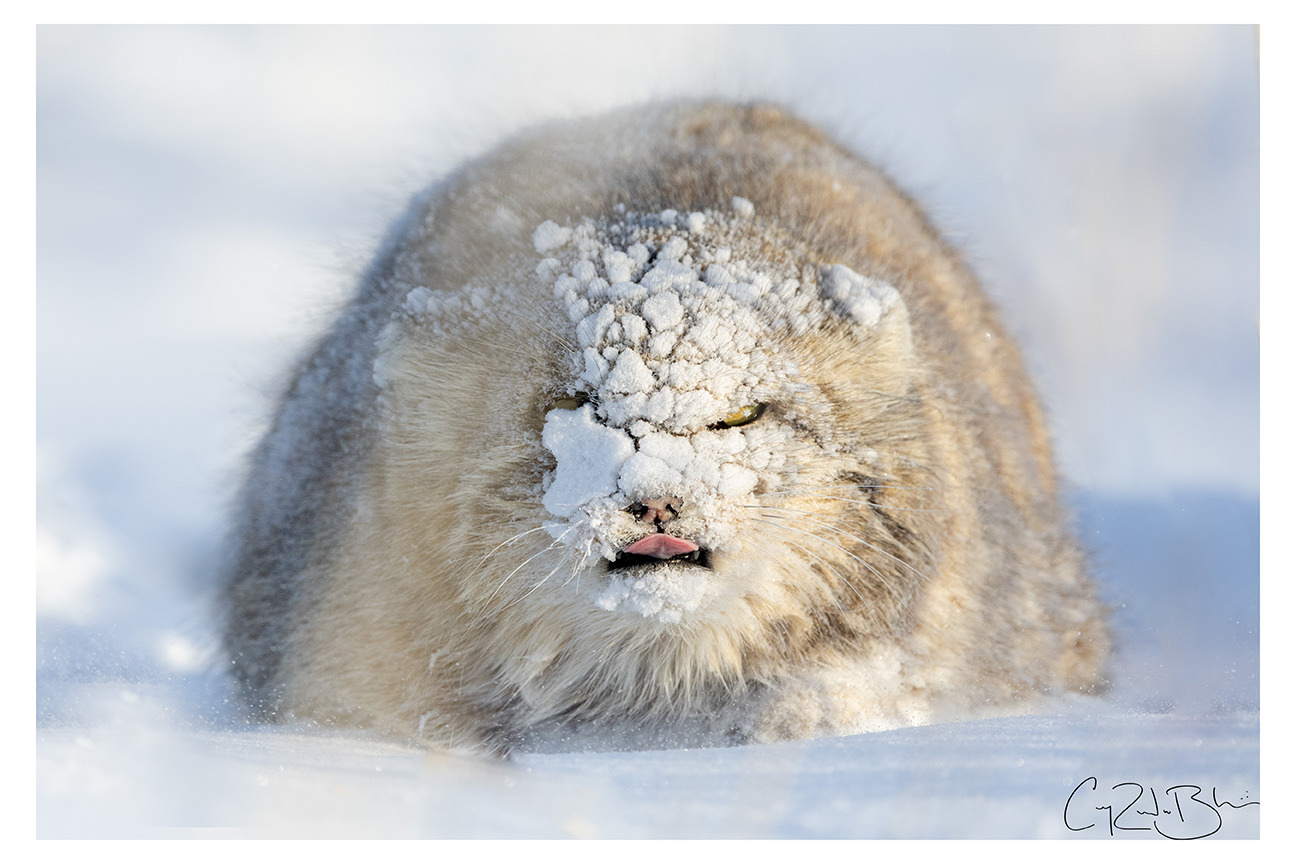
I spent last January in -30c weather chasing Pallas's Cats in Mongolia over 6 days, and there were plenty of EOS R5 cameras on that trip that didn't miss a beat.
The Canon EOS R3 is also rated to 0C.
The same can't be said for the A1's used by a couple of people, as they all failed numerous times in the extreme cold. I will note, the Nikon DSLRs that some friends had didn't miss a beat..
My process with gear in extreme cold (from a Canadian)
- Put your gear in your bag and close it up.
- Remove the batteries from the camera
- Place your bag outside of your accomodation for 60-90 minutes before your shoot.
- Always have silica packs in your bag, as your accomodation can get humid from drying clothing and using a shower for example.
- Do the same process when coming back into your accomodation. Don't open your bag for 60-90 minutes.
A -30C environment is extreme for a lot of us, so I wouldn't worry too much about shooting in cold weather with the EOS R5 Mark II. Just make sure that you have a dozen batteries. :)
The new Canon R5 Mark II is an impressive all rounder. The price point may be a tad high, but Canon users wanting to upgrade will not be disappointed if they take the plunge.
Performance is excellent, features covering the whole gamut of photography and videography.
Ergonomics are a personal thing, but some features are universally useful and the outstanding EVF is one of them.
The EVF has come of age and rivals the best optical pentaprism viewfinders. The offset here is the price, so although the performance is there it does not come cheap.
John Riley – ePHOTOzineYou can read the full review by John Riley at ePHOTOzine.





That is, until I bought the R5 II and looked through an R1's fantastic 😍 EVF.
Now, I couldn't imagine turning back to DSLRs. Focusing precision and MFAing every few months with every single lens etc...
The only - for me - annoying thing about the R5 II is the too easily accessible stills/video switch. If only it could be locked or customized...
I know of 6 R5 Mark II's currently in Mongolia chasing Snow Leopards, it been between -16c to -32C. There have been no issues outside of the battery dying fairly quickly... but even my LP-E19 lasted for less than 500 shots. I have asked the tour lead to keep me updated on the performance of both the R1 and R52 on the trip.
In those conditions, how you bring the camera and batteries down to temperature is extremely important. We'd leave our bags outside the gyr for 60-90 minutes before we headed out. Also, leave the batteries outside of the camera and also have silica in the bag.
We also had some good discussion about batteries when in the field when it's well below zero C. I am of the belief to not keep the batteries in an inner pocket where your body heat will warm them up again. Up, down, up and then down again, they'll be colder in the camera than on your persons. Bring them down and leave them down.
The R1 EVF is so good, but I have had to get used to actually looking around in the viewfinder.. It's so big. That took a bit of time, but the 0.9x and resolution is killer. Now I'm efficient with it.
The camera proudly shows a red square around the kingfisher when reviewing, but we can all see it picked the closes object in the AF frame, not the actual subject.
R5II + 100-500L, the EXIF reports that it focused at about 56 meters.
This was with -4C, but the I used the camera only for a few minutes.
Canon F1 SLR was specified starting at -20°C, the question was the film not to rip in those temperatures. You could shoot those without any power beside your fingers.
Canon EOS1 SLRs were specified starting at -20°C, the question was the film not to rip in those temperatures again. The power source were batteries, standard type or Canon' rechargeable pack. This was specified 0°C min, especially while charging.
Canon EOS1D DSLRs were specified starting at 0°C, The new thing was the rechargeable battery pack to come with the camera. This generated the 0°C in the specification. But those cameras were widely used far, far below without any issues. We carried some extra battery packs held warm in our pockets.
With sitting to mirrorless nothing changed regarding min temperatures, we are able to shoot in the Arctic winter/on the mountains as we were used to. We simply have to carry some extra battery packs held warm in our pockets.
Regarding temperature range there is just one special topic: The 1-series are specified to 45°C max, the 5 series and others are specified to 40°C max. This matters in some cases as we know ....
Canon directly tell us what the settings are meant for. For those complaining about the eye tracking option, Rudy gives a great tip that no reviewer I know ever did on how to make it work great.
Apologies if we can't post links, I'm just trying to help more people like this helped me.
- YouTube
I've shot only a few times in cold-enough conditions to be a problem (around -20f) when staying out for too long. The thing that worked for me was using a dummy battery hooked up to a 100wh video battery tucked in my inner pocket through a d-tap connection. I've seen frozen LCDs, but the battery kept everything working throughout.
Later, I used those batteries in six-pack coolers, along with a lizard tank heater (1w heater, essentially) to keep cameras going all night outdoors for some weird wildlife remote stuff.
You can get the 100wh batteries for about $80 now, not far from an LP-e6p.
Canon Australia has a AUD300 cash back until 31-Jan and still includes the 5 year warranty.
Digidirect and Georges had R5ii at AUD5515 a couple of days ago (including 10%GST but excluding the AUD300 cash back) ie AUD5215 to buy. Both authorised retailers moved back to AUD5870 today. The $300 cashback is separate. There is no set "list price" or recommended retail price locally.
If my calculations are correct... equivalent USD @0.62 exchange rate excluding 10% gst.
Last week AUD5215 => USD2940
Currently AUD5570 => USD3140
https://www.georges.com.au/collections/shop?q=r5+mark+ii and is in stock and they throw in a Canon backpack.
https://www.digidirect.com.au/canon-eos-r5-ii-mirrorless-camera
For comparison, the R5 pre-order price was AUD6588
Nothing rational besides feeling that constant extreme temperature changes to a battery would/could implede performance or lifespan. I have absolutely zero science to back it up. I have no desire to be in the extreme cold long enough to actually test the theory.
An update from Mongoia though, R52 batteries in the camera were functionally lasting about 4 hours in -20C to -30C. There was one blip in which the battery died after about two hours, but the camera was turned off and back on and lasted about another 30 minutes.