

When you purchase through links on our site, we may earn an affiliate commission. Here's how it works. |
CP+ 2026 concluded with me feeling a bit different about the sense of what is happening in the photography world. Part of me felt we have perhaps reached a turning point at which the market has reached maturity, and the manufacturers are looking to generate excitement in different and perhaps interesting ways.
CP+ 2026 was the largest show ever, with 58,924 visitors over the four days at Pacifico Yokohama, lured by a record 149 exhibitors, of which 45 were new, as well as a host of international brands. This certainly indicates that the passion for photography is still there.
The message seemed to be very clear: this is the Show of the Lens. No new flagship camera models, no new high-resolution mirrorless, no new game-changing pro models from the top camera manufacturers. I had suspected that Sony or Nikon would have released something, and perhaps even Canon, but nothing.
The Lenses
There were, however, plenty of lenses and plenty of lens news.
Now, much of this will be like us looking at a restaurant hungrily through a window because of the RF mount, but there was a fair amount of lens news from almost all manufacturers either during or just before the show.
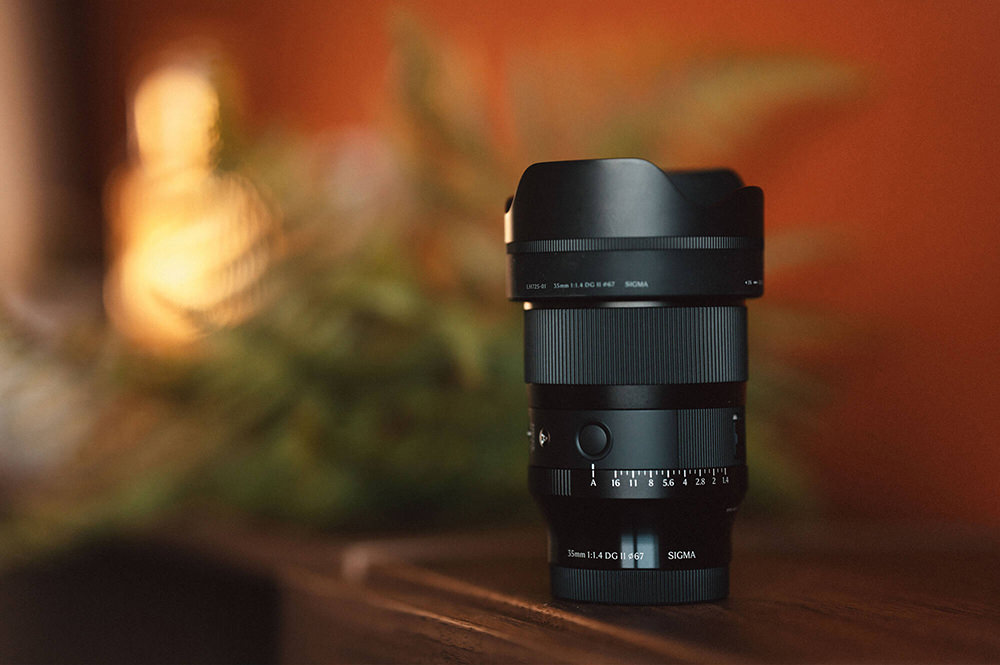
Sigma launched the new and improved 35mm f/1.4 DG II Art, a lighter, sharper iteration of their iconic starting point, as well as the fast 15mm f/1.4 DC Contemporary (for the Canon RF mount and others), and the development announcement of a new 85mm f/1.2 DG Art.



In an exclusive interview at CP+ 2026 with Yahoo Tech, published shortly after the show, Sigma CEO Yamaki Kazuto was candid about the changing photography world.
I’ve honestly been amazed by the progress that these manufacturers from China have made. I have a lot of respect for them. Overall, however, we believe there is a significant difference in quality while we also offer a huge range of lenses.
Sigma CEO Yamaki Kazuto
Tamron was equally active, touting the new lightweight 35-100mm f/2.8 Di III VXD for the Nikon Z and Sony E mount. As well as plans to announce as many as 10 new lenses this year, with its proposed roadmap (that includes one lens for the Canon RF mount too, the Tamron 18-300mm f/3.5-6.3 VC VXD). However, with it starting at 18mm on Canon's APS-C, it's dead to me, and it's not even out yet.
Nikon also refreshed the tried-and-true 70-200mm f/2.8 VR S II, if its latest 24-70 II that we looked at back in August of last year is any indication, this is certainly going to be one of the best 70-200 on the market.
More Lens News
Samyang (LK Samyang / Schneider Kreuznach collab)
Featured the AF 60-180mm f/2.8 constant aperture telezoom lens, initially designed for the Sony E-mount, but with L-mount versions teased. They also had L-mount versions of existing lenses, like the AF 14-24mm f/2.8.
In addition, they had 3D printed versions of some very ambitious lenses: 20-50mm f/2, 28-85mm f/2-2.8, 200mm f/1.8 OIS, and 300mm f/4. Voting was available to attendees on which lenses they considered their favorites.
Chinese Lens Manufacturers were Busy
The Chinese are certainly not slowing down, as seen at CP+ 2026 with Viltrox, 7Artisans, Brightin Star, Samyang, and others showing off their affordable AF primes, character lenses, telezooms, and more, all of which are looking increasingly competitive in the enthusiast space.
We are going to go into details on some of the more interesting vendors, but there were others as well. For instance, TTArtisan unveiled a 24mm f/3.8 prototype, with very little information on what mounts it would be released on. Meike also launched an 85mm f/1.4 II full-frame upgrade for multiple mounts. Another brand, Songraw, presented high-speed primes, such as 50mm f/1.2 and 85mm f/1.2.
Viltrox
Viltrox released the 35mm f/1.8 EVO and 55mm f/1.8 EVO primes (full-frame, apochromatic/”Hyper APO” designs for optimal correction of chromatic and spherical aberrations). They sported 58mm filter threads and close focus distances of 0.34m (35mm) and 0.43m (55mm).
They were launched in several mounts (E, Z, and L), with considerable focus placed on performance that was claimed to be at least on par with Sony's offerings in certain aspects. Viltrox also emphasized its recent alliance with the L mount.
7Artisans
One of the more popular Chinese companies at the show. They showed the small AF 40mm f/2.5 (Lite series, full-frame only, 90g weight, and $159 price tag. Initially available in Sony E mount, with Z and L versions coming soon.
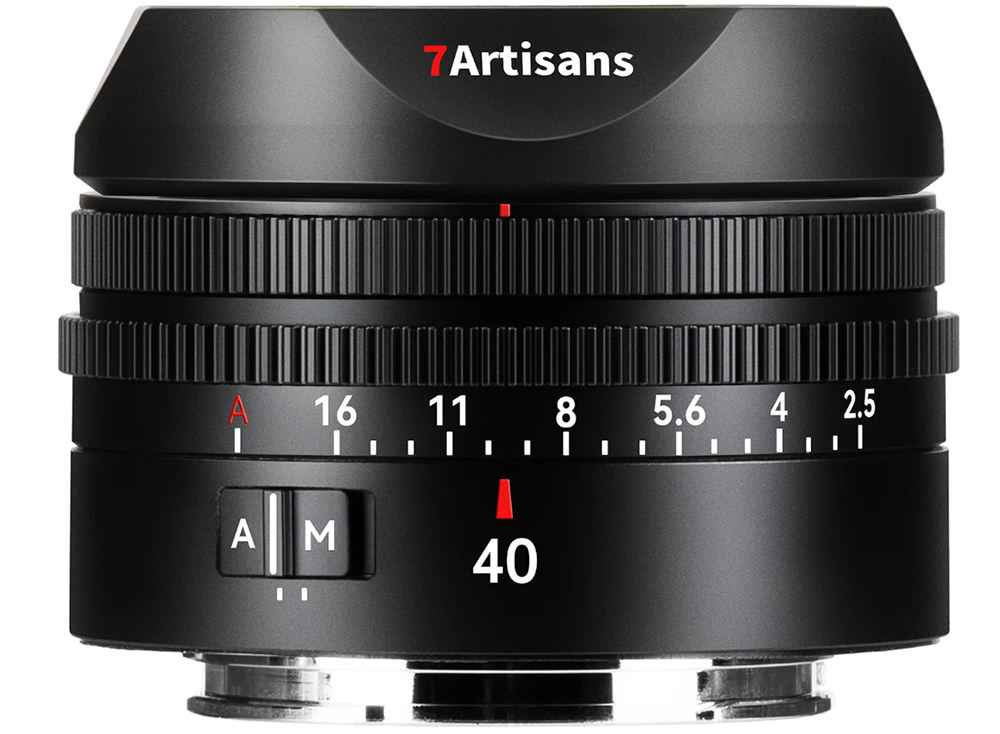
They also announced the upcoming release of the AF 135mm f/1.8 (telephoto lens for E, Z, and L mounts, with a late 2026 release and an $800 price tag. A strange addition was the 18mm f/6.3 APS-C format Dionysus (with a decorative photo-taking lens cap and engravings).
Brightin Star
Introduced the 35mm f/1.7 APO compact manual prime for Leica M-mount, and the creative 50mm f/2 Tri-Sight full-frame mirrorless camera with three interchangeable front elements for unique rendering styles, similar to Lensbaby or Lomography effects.
I honestly never thought I'd be saying that about 7Artisans or Brightin Star, but here we are. What is to me, incredibly shocking is just how quickly they have come into their own, with I believe, the Mitakon 50mm f/.95 was one of the first “true” Chinese developed lenses, released just 12 years ago.
Even 7Artisans is one of the “oldest” Chinese lens manufacturers at 11 years of age. Even more impressive given the releases, is that Chinese lens manufacturers only started releasing auto focus lenses 5 years ago.
While it's easy to think that age means nothing, you have to realize that Canon and other longer term manufacters have a library of IP to work from when it comes to new lens designs. The Chinese manufacturers (and Samyang in South Korea) were at nothing a decade ago.
The Age of Good Enough or Last Camera Syndrome
I have to give Tom Hogan credit for starting the term of the “last camera syndrome”, and I do believe the camera companies have been struggling with this for quite some time now. Mirrorless has hit a plateau where bodies are “good enough” for the masses, as evidenced by modest growth in CIPA statistics.
For many users, the current camera bodies from the various manufacturers offer sufficient autofocus performance, dynamic range, frame rates, and video capabilities without compromise in almost all cases. Incremental improvements are just that, incremental. We've reached diminishing returns on chasing the next codec, subject-detection autofocus method, or a fraction of a stop of dynamic range we'll hardly ever need.
This is where Last Camera Syndrome kicks in, the tendency to think your current body will suffice forever until it breaks or until your needs significantly change. For the enthusiast and semi-pro markets, the desire to upgrade seems to have been significantly diminished.
The camera competition has had increasingly longer upgrade cycles, and CP+ 2026 seems to have reflected this market maturity with more focus on what keeps users interested rather than the next camera body.
Compact Cameras
Interestingly, we can see this in compact cameras, with the latest generation of photographers reaching back to the past to find camera and imaging solutions that are not “perfect” as what we have today, and also retreating even further back into film photography.
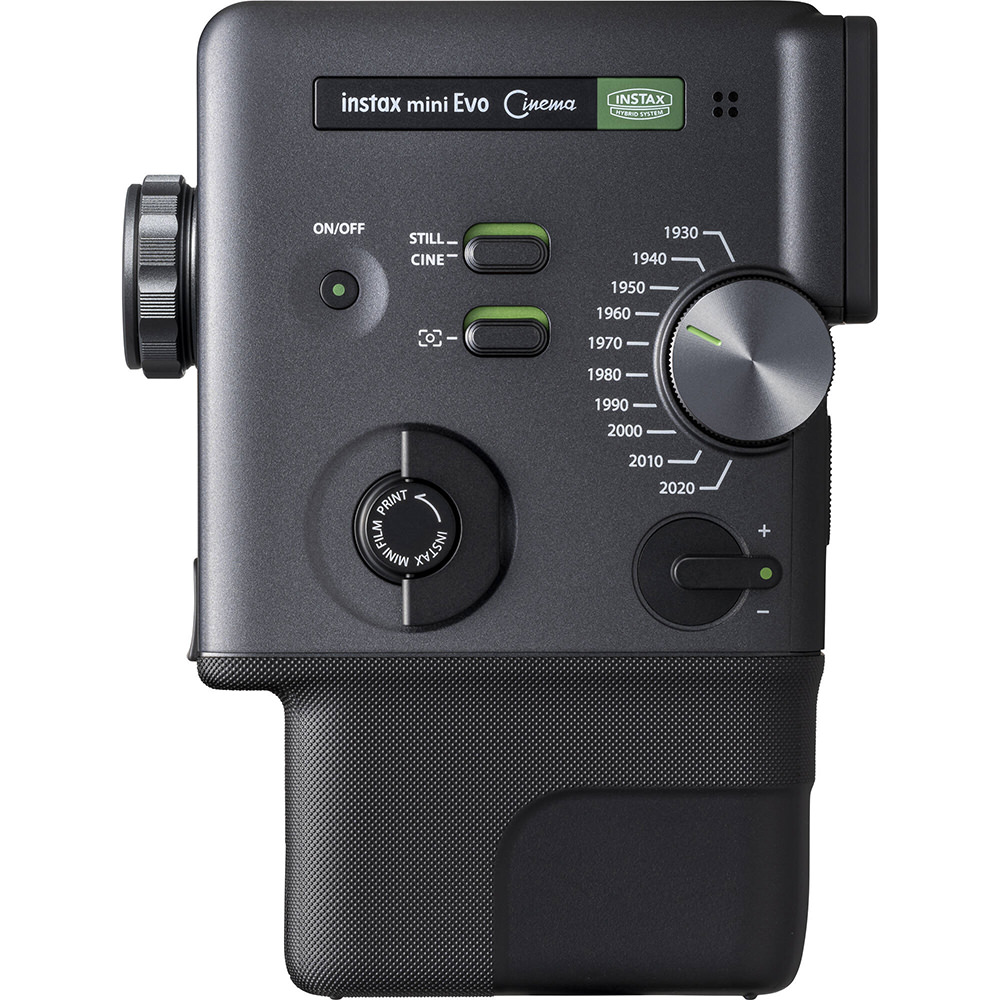
Fujifilm’s Instax Mini EVO Cinema was very popular as a hybrid and fun device, showing how analog-digital hybrids and experience-based products seamlessly work well together for a consumer base that demands “fun” solutions over raw imaging performance. This is especially important among younger generations of creators looking for something more than just the convenience and ease of their smartphones.
Canon's Concept Cameras
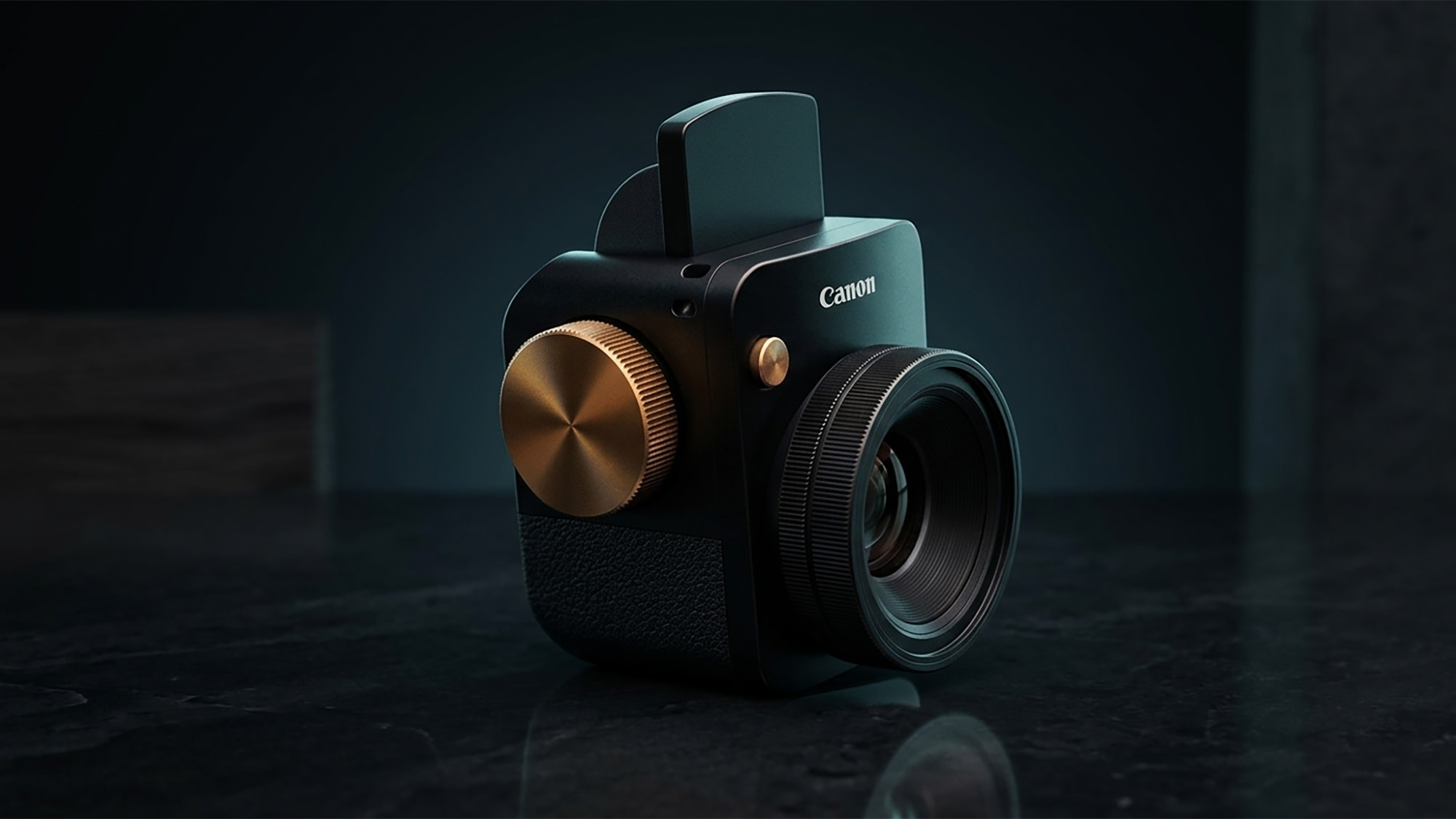
Canon took a different approach and arguably became the talking point of the show. They unveiled two prototypes of the Analog Concept Camera, which featured boxy and retro designs with waist-level optical viewfinders, manual focus fixed lenses with an equivalent focal length of about 50mm and an aperture of f/1.8, and a unique dual mirror system that projects the scene onto a focusing screen and then captures it with the small Type 1 sensor. One is the rugged retro “Model A,” and the other is the sleeker and more modern “Model B.”
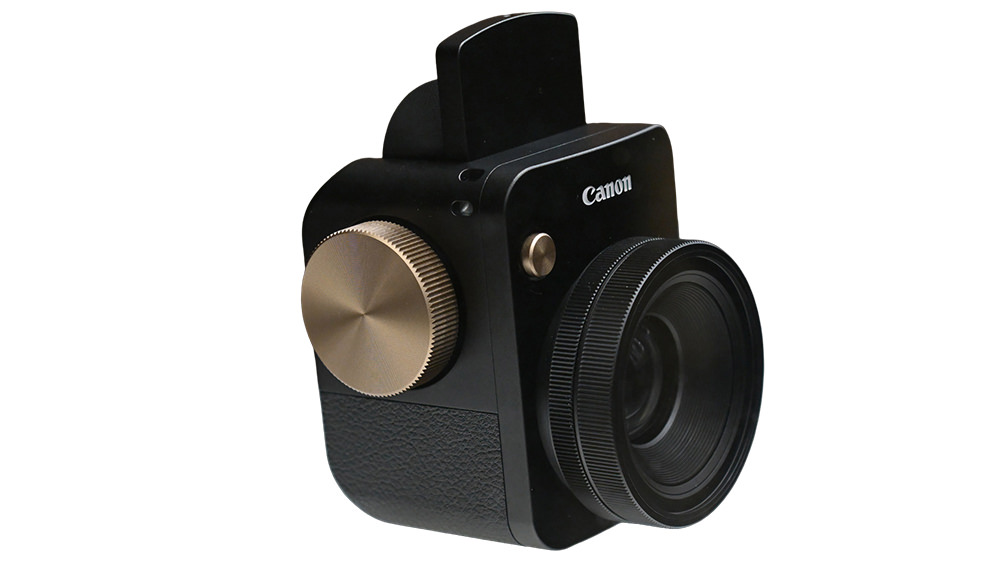
It’s a deliberate approach to reach back into history to a time when slowing down to take a photograph was far more mainstream than what we have today. This is a unique look at what the compact camera market, especially in Japan, China, and other Asian markets, has been demanding for a few years now. This is an approach that connects with the rise of film cameras and the tactile experience as a way to escape the modern digital photography era.
Could Canon release one or both of these cameras? Absolutely, and with the show excitement from showing off these models, I would rate it as a near certainty that we will see them in some form. Keep in mind that even if Canon is unsure about the market. They have in the past crowd-funded fringe cameras before. The IVY REC clip-on and PowerShot PICK were two such cameras that went through this development path.
This is also part of the larger strategy to ramp up compact camera production significantly in 2026, as much as 1.5 times the volume, as the popularity of the G7 X III and other models is joined by hopefully the new cameras on display.
According to reports from Japan's News Switch (Nikkan Kogyo Shimbun), the imaging giant plans to increase its compact camera production to 1.5 times last year's volume in 2026.
DigitalCameraWorld
And to show that the market is still very mixed, hopefully we'll also see an entirely new high-end compact camera that will define a “flagship” PowerShot camera, such as what we have had in the past.
Closing Thoughts
It certainly feels that the major manufacturers are focusing more on lens technology than the camera, because there's a lot more variety to lenses that can be developed. As we see in patent applications, Canon is still dreaming up lenses we've never seen before, and I suspect we'll see more novel lenses pushed out by the manufacturers. I still have a laundry list of lenses that I've discovered in patents that I want Canon to make.
The elephant in the room is that the Japanese companies must do this. They see the writing on the wall, where if they don't, the up-and-coming Chinese lens manufacturers have momentum and could one day overtake the OEM lens manufacturers.
While this is all happening, it feels as if the camera manufacturers are also focusing on more inventive / lifestyle camera systems – such as Canon's concept cameras, and Fuji's Instax. I hope the camera companies truly use this time to seek out innovative solutions and ideas. Clearly, though, they aren't listening to me – if they were, they would have replaced the abomination called the Canon EOS R100 by now.




One must respect something to be respectful. 😎
Another example of Canon knowing the camera market better than all of us posting on Internet forums.
to be fair Canon could create a bar of 💩 and call it a camera, and it would be in the top 10 on amazon.
The R100 doesn't sell that well anywhere else - and it's one of those - it should. The lowest priced DSLR's always sold well in multiple regions, including Japan, not so much these days with the R50 carrying the load.
I have always stated that Canon needs affordable cameras for developing nations or those nations where the cost of living is far lower than that of the United States. However, a lack of a touchscreen on a mirrorless camera is a poor judgment call to make on a entry level camera, if they are attempting to convert people from smartphones - IMO of course, but I'd be surprised if they didn't correct that oversight on the next version.
Quite honestly, if it had a touchscreen, I'd probably like the little thing from an entry-level perspective.
Also, just to head off the "Canon knows best" claim: Canon has made odd decisions in the past, but the momentum of the brand name usually covers that.
So if Canon's bar of 💩 uses swappable lenses and takes pictures then I'm happy to have that person come along. (OK, I'm happy for them to come along anyhow but they'd be hard to ignore sitting on their stump of sad shame after a while.)
But, at the same time, I'd much prefer if Canon would at least polish the 💩. 😜 Just so the Sony and Nikon crowd keep quiet. Dignity, after all.
there is still a huge amount of non existing RF lenses from the EF system!!
What I wished they would even show or announced on CP+:
- new long tele lens (like the "cheap" Nikon primes!!)
- 300-600
- RF TS-E
- new macro with TC compatibility!
- new 28-70 2.0
- 50-150 2.0
🤐😢I hardly thinking about to get a Sony or Nikon to adapt my EF lenses...and have the option for their nice lens choices!
The R100 doesn't sell that well anywhere else? The Americas are 22% of the market (much of that is the US) and the R100 sells well in the US. Europe is 21% of the global market, and the R100 seems to sell very well there.
I'd say being the best-selling Canon MILC in France and the UK and the second-best in Germany, and being in the top 5 overall MILC sales in all three of those European markets means it's selling very, very well. You're correct that the R100 doesn't sell well in Japan, but that's only 7% of the global MILC market.
My 2nd one as a surface / back up I got off Canon's Refurb site for peanuts and both work flawlessly. Would I prefer it had a touch screen, CMOS DPAF II and Digic X like my Canon R50? Sure, but then cost would increase sifgnificantly.
Being a long term Canon user spanning the one control dial and buttons I fly this puppy easily......I'll likely pass them on to my two grandchildren if they show an interest in photography when I house teh R50 or whatever other model comes along.
Just a 40+ year Canon user's opinion still enjoying photography everywhere....
David Haas
Article I wrote on new UW strobes and my Canon R100.....
Shooting the Ikelite Ecko Fiber Strobes in Roatán
At $1,899.00 for that lens I'm not sure I'd jump and buy one but still.....Even the lowly R100 can mont tons of great Canon R optics which is why I jumped to mirrorless....
The lens in many photographic genres rules in my book.....
Your mileage may vary....
DH
I find myself editing jpegs off my iPhone way more now than I thought I would. The software is just getting better and better at editing even jpegs so the phone is "good enough" in more and more situations.
😂😂😂