

When you purchase through links on our site, we may earn an affiliate commission. Here’s how it works. |
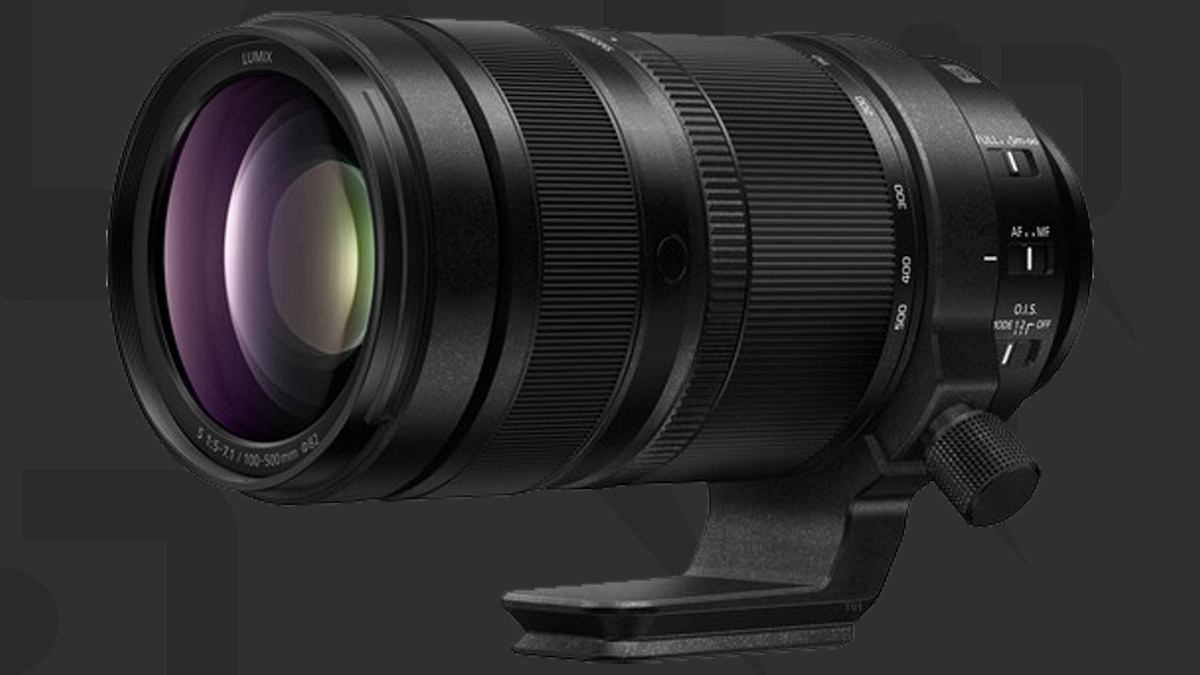
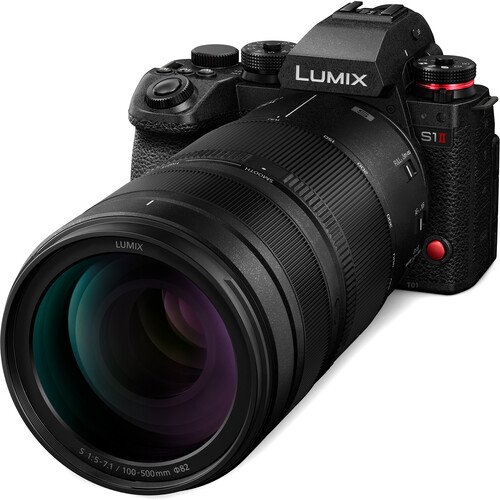
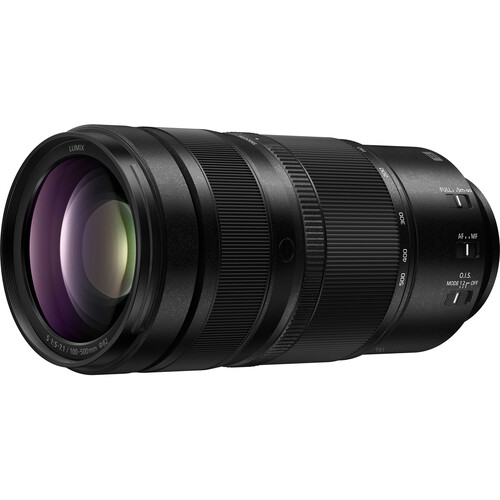
Today, Panasonic has announced the Panasonic Lumix S 100-500mm F5-7.1 OIS. This is Panasonic’s entry-level offering in super telephoto zooms for those who have never owned one before. It’s a perfect entry into longer focal lengths without breaking the bank.
This lens matches up almost identically to the Canon variant of the lens, the Canon RF 100-500mm f/4.5-7.1 L IS USM, which Canon released on July 9, 2020, as its first super zoom for the Canon RF mount.
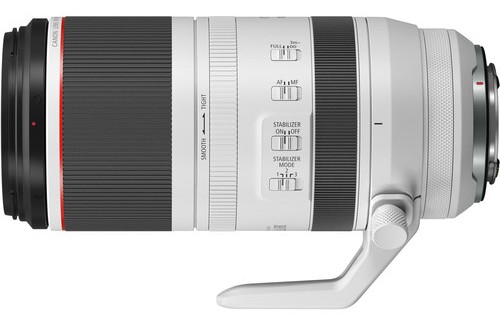
Specification-wise, the Canon starts at f/4.5, instead of f/5 for the Panasonic, but both lenses slow down to f/7.1 at 500mm. Physically, the Panasonic is also very similar to the older Canon lens, as it’s slightly smaller and lighter. The Canon is a somewhat more complex lens optically, with 20 elements in 14 groups versus the 16 elements and 12 groups in the Panasonic lens.
| Canon RF 100-500mm f/4.5-7.1 L IS USM | Panasonic Lumix S 100-500mm F5-7.1 OIS | |
|---|---|---|
| Dimensions | ø: 3.7 x L: 8.2″ / ø: 93.8 x L: 207.6 mm | ø: 3.6 x L: 7.7″ / ø: 92 x L: 196.1 mm |
| Weight | 3 lb / 1365 g | 2.8 lb / 1.3 kg |
The Panasonic Lumix S 100-500mm F5-7.1 OIS will go on sale September 25th for a retail price of $2099.
Lens Construction and MTF
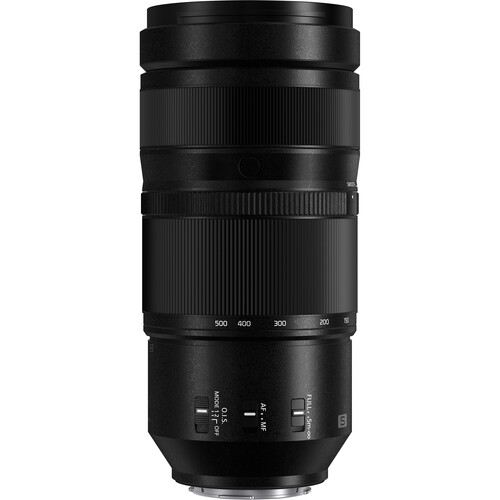
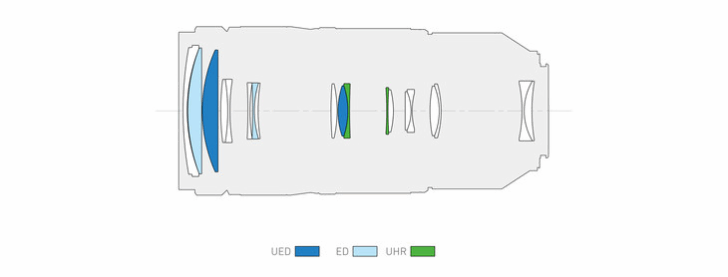
The lens is constructed of 19 elements and 12 groups, and appears to have a large number of elements in the front end. I wonder how front-heavy this is, especially when extended to 500mm. The lens contains two Ultra Extra-low Dispersion (UED) elements, one extra-low dispersion (ED) element, and two Ultra-High Refractive (UHR) elements.
Panasonic has added a high-resolution optical encoder, which assists with autofocus accuracy that may be affected by varying temperatures. With the optical encoder, Panasonic felt it was okay to make this lens all black, instead of the traditional light color of super telephotos, which aids in decreasing thermal expansion and contraction.
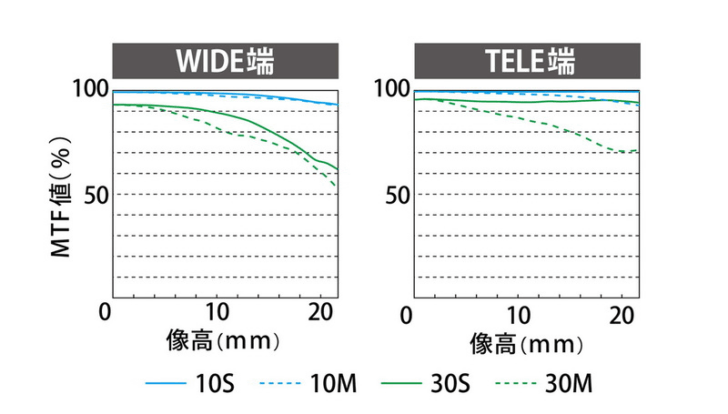
The MTF appears decent, with slightly less performance on the wide end and slightly better on the telephoto end. However, both offer a 5x zoom range, and the price point appears very reasonable. There’s nothing glaringly wrong with the MTF. At 100mm, there’s less astigmatism, and there may be more coma at the long end. Contrast is excellent at both extremes.
Press Announcement
Panasonic Introduces the First*1 Ultra-Telephoto Zoom Lens in the LUMIX S Series
LUMIX S 100-500mm F5-7.1 O.I.S. (S-R100500)
Newark, N.J. (September 24, 2025) – Panasonic is proud to introduce the new LUMIX S 100-500mm F5-7.1 O.I.S. (S-R100500) interchangeable lens based on the L-Mount system standard.
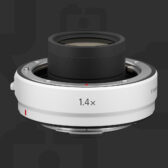
As the first*1 ultra-telephoto zoom lens in the LUMIX S Series lineup to cover a focal length of up to 500mm, this lens supports lens teleconverters*2 (sold separately), enabling ultra-telephoto shooting with a combined focal length of up to 1000mm. It delivers high resolution and beautiful bokeh across the entire zoom range, enabling photographers and videographers to capture stunning images and footage in a wide variety of shooting scenarios, including wildlife, motorsports, and landscapes.
With an optimized lens element arrangement and Dual Phase Linear Motor, the lens achieves a remarkably compact design with an overall length of just 196.1mm, while delivering impressive ultra-telephoto performance. High-speed, high-precision, and silent autofocus, combined with Dual I.S. 2 image stabilization supporting up to 7.0 stops*3, ensures exceptional portability and handheld shooting support, expanding creative possibilities in the field.
The lens is also designed for intuitive operation, featuring a customizable focus ring and a focus button. The focus ring can be used as a control ring, by assigning preferred settings such as aperture or other customizable parameters*4, while the focus button allows users to assign their preferred functions, enabling a highly personalized and responsive shooting experience. To meet the growing demand for video production, the lens also incorporates features such as focus breathing suppression and micro-step aperture control for smooth exposure transitions, supporting high-quality video performance.
With this product, Panasonic aims to expand the creative scope by providing a compact yet powerful ultra-telephoto shooting experience for both enthusiasts and professionals.
Main Features
1. The First*1 Ultra-Telephoto Zoom Lens in the LUMIX S Series Covering Up to 500mm
- Maintains high resolution across the entire zoom range, delivering sharp detail and beautiful bokeh even at maximum aperture
- Covers focal lengths from 100mm to 500mm; compatible with lens teleconverters*2 (sold separately) for ultra-telephoto shooting up to 1000mm
2. Powerful 7.0-stop Dual I.S. 2 for Unshakable Stability and Enhanced Mobility
- Achieves highly effective image stabilization with 7.0-stop*3 Dual I.S. 2
- Ultra-telephoto zoom reaches in a remarkably compact 196.1mm design
- High-speed, high-precision AF powered by a Dual Phase Linear Motor
3. Intuitive Operability for Focused Shooting
- Focus ring can be assigned to control shooting settings such as aperture (Control Ring function) *4
- Focus button can be assigned to support intuitive operations such as Hybrid Zoom*5
Price and availability
The new LUMIX S 100-500mm lens will be available for pre-order on September 25th for $2099.99 at valued channel partners.
*1 As of September 24, 2025. Among interchangeable lenses for AF compatible full-frame mirrorless cameras.
*2 With optional teleconverter DMW-STC20 attached. The maximum aperture becomes two stops slower. When a teleconverter is attached, the focal length of this lens is limited to 150–500mm.
*3 Based on the CIPA standard [Yaw/Pitch direction: focusing distance f=500mm. When LUMIX S1RII is used.]
*4 Compatible cameras: DC-S1M2, DC-S1M2ES, DC-S1RM2 (Firmware version 1.2)
*5 This function combines optical zoom and crop zoom, allowing you to extend the telephoto range using only the zoom ring without changing the focal length at the wide end.
Specifications
| Principal specifications | |
| Lens type | Zoom lens |
| Max Format size | 35mm FF |
| Focal length | 100–500 mm |
| Image stabilization | Yes |
| CIPA Image stabilization rating | 7 stop(s) |
| Lens mount | L-Mount |
| Aperture | |
| Maximum aperture | F5–7.1 |
| Minimum aperture | F29–40 |
| Aperture ring | No |
| Number of diaphragm blades | 11 |
| Optics | |
| Elements | 19 |
| Groups | 12 |
| Special elements / coatings | 2 UED, 2 ED, 2 UHR |
| Focus | |
| Minimum focus | 0.80 m (31.5″) |
| Maximum magnification | 0.36× |
| Autofocus | Yes |
| Motor type | Linear Motor |
| Full time manual | Yes |
| Focus method | Internal |
| Distance scale | No |
| DoF scale | No |
| Focus distance limiter | 5m-Infinity |
| Physical | |
| Weight | 1285 g (2.83 lb) |
| Diameter | 92 mm (3.62″) |
| Length | 196 mm (7.72″) |
| Sealing | Yes |
| Colour | Black |
| Zoom method | Rotary (extending) |
| Power zoom | No |
| Zoom lock | Unknown |
| Filter thread | 82 mm |
| Hood supplied | Yes |
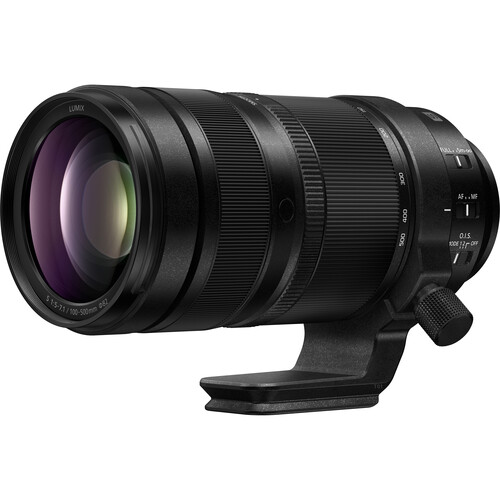
| Tripod collar | Yes |
Image Gallery
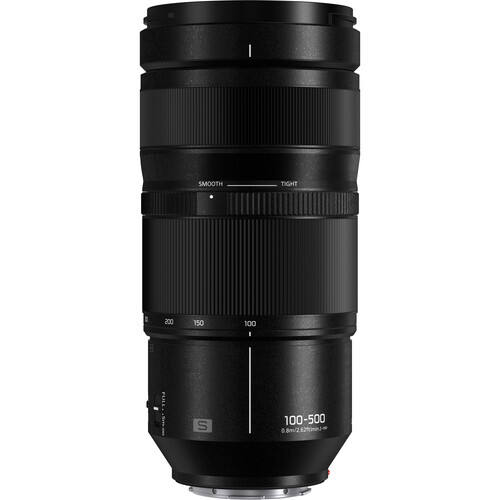
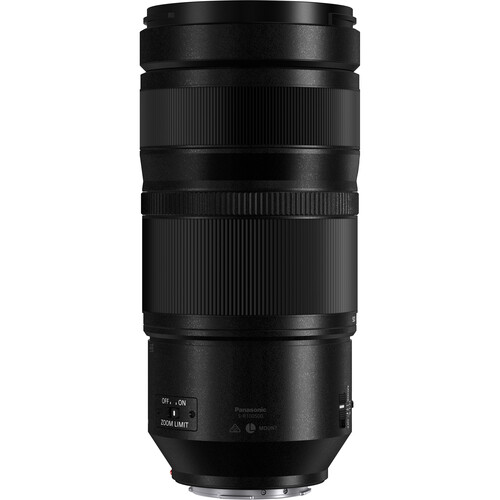
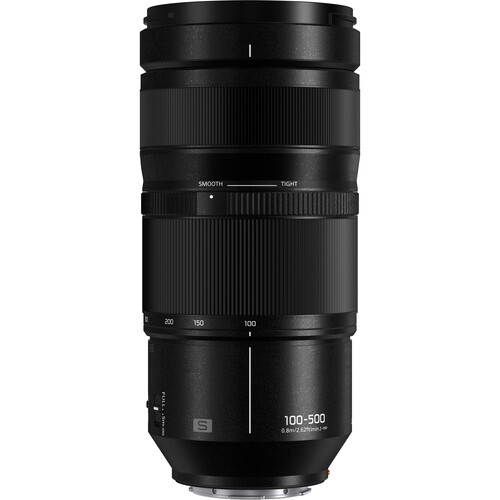
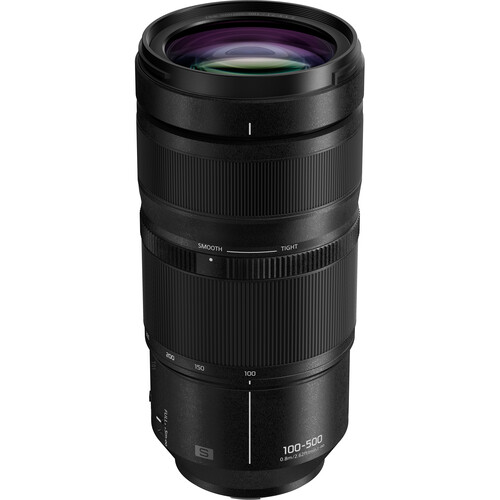
Preorder








I love my 100-500mm (one of two or three lenses I´d never ever sell!) but I could imagine Canon could try for:
- weight at 1.2 kg
- TC throughout the zoom range
- may f6.3 at the long end
I wouldn't expect a mkii before 2030. There are lenses in need of a mkii before this great lens 🙂
See: https://www.lensrentals.com/blog/20...ement-a-canon-rf-100-500mm-f4-7-7-1-teardown/