


When you purchase through links on our site, we may earn an affiliate commission. Here’s how it works. |
I’m going to write up mine a bit differently from Craig, just because Craig cheats. So mine is going to be a combination of wishlist and what I think Canon is going to do in the near future in terms of technologies.
I’m also going to branch out and talk about more than just cameras, because that’s sort of my thing here, too, at Canon Rumors.
Canon’s Opportunity to Become a Major Lithography Player
We just got through talking about the mess that AI is doing to memory components, and while the main lithography equipment from ASML is always in the news, it should be noted that flash memory is around 12 to 20nm, and even DDR5 is around 12nm. It doesn’t take ASML’s EUV machines to do this, especially with Canon’s NanoImprint machines have already reached trial production stages and a fair amount of maturity. With fabs unwilling or unable to create more lines to create more memory, much of that comes down to the fact that ASML can’t produce the machines fast enough, making only around 60 machines per year.
Flash memory is actually one of the markets that nanoimprinting is suitable for, as Canon explains.
Canon developed technologies that ensure nano-level defect control, overlay accuracy and the elimination of foreign particles. Even compared with the latest conventional lithography technology—Extreme Ultraviolet, or EUV—our nanoimprint systems can significantly reduce manufacturing costs. Expectations are high that this equipment will serve to manufacture the next generation of flash memory.
https://global.canon/en/business/group/industry/2018.htmlBecause memory is simply repeating patterns on a die, this is 100% in nanoimprinting’s wheelhouse.
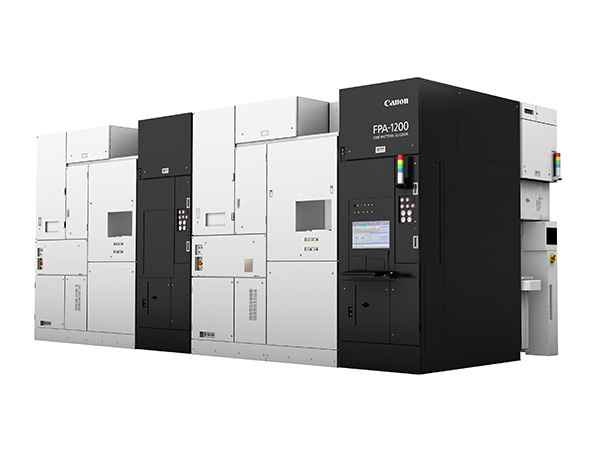
This may end up being an unexpected growth market for Canon, as the industry races to create more and more memory for AI and the rest of us poor peons. The only potential problem with this is that the technology itself is broadly understood and faces far fewer technical challenges than a traditional EUV machine, making it far similar for other countries to mimic and reverse engineer versus purchase from Canon. Presuming this doesn’t happen, nanoimprint can produce flash memory at scale using less water, power, and fabrication plant footprint, making it ideal to augment current fabrication plants stretched to the limit already.

Of course, the other really out there idea would be that Canon decides not to be the Lithography system provider, and decides to reuse one of their existing fabrication plants to manufacture flash memory themselves. Canon makes both lithography systems that we just talked about and also the die and wafer bonding machines for advanced packaging. While I don’t know if Canon has the IP rights in their existing portfolio to manufacture memory, I would not be surprised if Canon didn’t stop all patent research into both flash and dynamic memory.
Could this be something that Canon actually does? I don’t know, but it would shock me if no one in Canon hasn’t explored the idea lately.
Canon Will Participate in the Race to the Bottom
With news of Canon branching back out of Japan for camera manufacturing, I think that Canon is positioning itself to once again go back into the low-cost manufacturing of cameras in the bottom end of the lineup, which used to be well served by the EOS-M and EF Rebel lineup.

Assuming this factory comes online relatively quickly, and it should since Canon already has facilities in Thailand, Malaysia, and other countries, then I suspect that Canon will come up with one or more “cheaper” cameras once again, that serve the market better than my arch-nemesis, the EOS R100, as well as at least one new lower-cost PowerShot camera.
We know that Canon is most likely going to do at least one prosumer / professional camera this year, so there’s a lot of room remaining for Canon to come up with more lower-cost cameras, especially near the end of the year.
I did like the fact that in 2025 that Canon finally decided that ditching the EVF isn’t such a bad thing, but we are still missing out on the EVFless main APS-C camera, such as what we saw with the EOS-M lineup, and with cheaper manufacturing, I would be surprised if Canon doesn’t move into this direction far more. Let’s face it. Selling more cameras than anyone else is certainly a Canon thing to do. So what do I think we’ll see? I think Canon will finally be embarrassed enough about the Elph-180A release to come up with an entirely new Elph camera, still though with a small sensor. No surprise there, but the smartphone crowd wants a small sensor. I don’t get it either, but I’m hoping they get something with the connectivity chops of 2026 to match their creative needs. I think it’s also about time that the R100 is retired. Did anyone actually buy that camera anyways?
New Prosumer Compact Cameras
I would like to see a G7X Mark IV come out, and it’s long overdue. Given that Canon had to relent and start manufacturing again on the G7X Mark III, you would think it would indicate to the bean counters inside of Canon that the world wants the G7X series to continue. There’s a lot that Canon could do with this, as we talked about before in our article (aka whining opinion) about the subject.
Read More

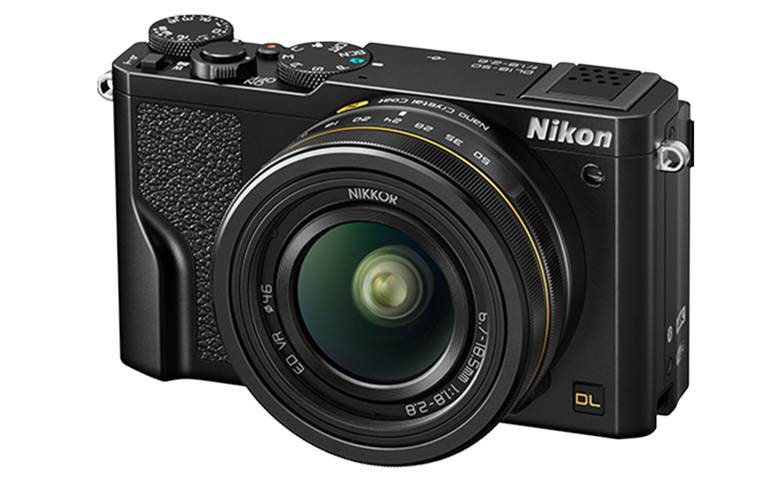
In Richard’s perfect unicorn-filled world, I’d want a G7X with a wide-angle lens similar to the one in the existing Powershot V1, and another one with a more traditional focal length zoom range. Similar to the defunct Nikon DL compacts that Nikon gave up on. Canon, please steal this idea and run with it.
New Lenses and Related Technologies
Canon was still doing patent applications on tilt-shift lenses in 2025, but not nearly as many as in 2024. This sounds to me as if Canon is reaching a level of maturity that they need to see the technology released.
In case you haven’t followed, these new tilt-shifts are all shifting, tilting, and focusing, with all control done via the camera. Instead of shifting or tilting the lens barrel, the same effect is achieved by moving elements. This makes it so that the camera can control all aspects of the movement and focus. It’s a wild technology that will change how the world looks at tilt-shift lenses for good.
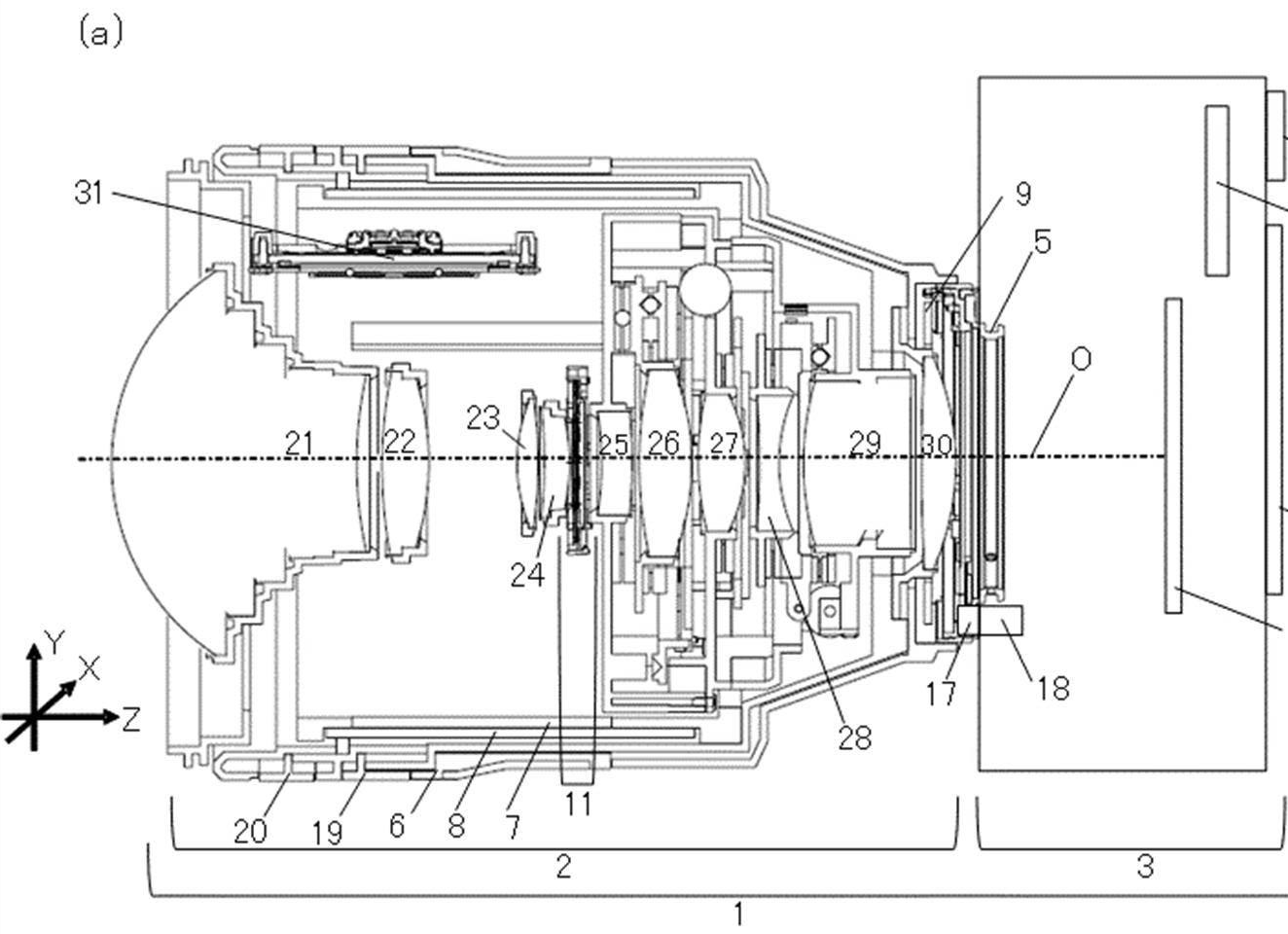
The reason I don’t think it was released yet, was it’s complex, and the math and control logic in the camera is even more incredibly complex. Things like this, Canon doesn’t necessarily rush into – we saw this with IBIS’s release in Canon. Nikon beat them to it, but Canon took their time and got it right from the start. That all being said, with no tilt shift lenses released, and Canon having done nearly a complete professional line of cameras out the door, I would be very surprised if Canon didn’t make it so the R1, R5 Mark II, R6 Mark III, and upcoming R3 Mark II and R7 Mark II all supported the ability of tilt shift control.
The timing makes sense that Canon would have put the hooks into all the cameras and all of them simply get one mass firmware update once the lenses are released. If Canon did it, for instance, last year, there would be a likely problem that the R3 and R7 cameras would not support the lenses, and people would be mad.
Read More about some of the Patent Applications
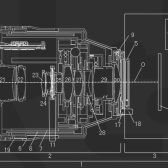

We’ve been predicting this now since last year, and while there’s always the adage about a broken clock being right twice a day, I really do think that Canon will do this sooner than later. Simply because tilt-shift lenses are about the only professional lens line entirely missing from the RF mount, especially after the VCM line is completed.
Super-Telephotos
Canon bridged the gap on the RF mount with the 400, 600, and 800mm super telephotos and released them on the RF mount in 2021. If you look closely at them, they are basically the same as the last generation of EF mount lenses that came out in 2018. From a technology point of view, this is usually the time that Canon starts to look at super telephotos as something they need to replace, and this may start with the two conspicuously missing lenses, mainly the 300mm and the 500mm super telephoto, both of which are missing from the lineup.
Now, Canon did do a patent application for an impressive Canon RF 300mm F2.0, which would be an amazing halo lens, and I could see this lens coming out for the RF mount.

Canon also around the middle of last year also published a patent application (2025-114982) for the more traditional 300,400, and 500mm supertelephoto primes, so Canon could relent and take pity on the rest of the industry and just do a normal 300mm f/2.8 as well.
If Canon is indeed coming out with an R3 Mark II and an R7 Mark II next year, having a new never-done-in-mass-scale super telephoto, such as a Canon RF 300mm f/2.0L IS USM, would be something that Canon loves to do to the industry.
The above 300mm f/2.0 patent also mentioned another lens that even Canon’s competitors (Sigma and Laowa) have done, which is the 200mm f/2.0, but in Canon’s case, they went ahead and did a new design for a Canon RF 200mm f/1.8L IS USM. This would signify a full circle to the market, which started with the legendary Canon EF 200mm f/1.8L USM and simply upstages everyone.
Closing Thoughts
It’s always hard to predict what Canon will do, especially with every year it seems something different seems to have occurred to toss a wrench into the best laid plans. No one could have predicted the supply chain, tariffs, and all the issues that have plagued the manufacturers over the last 4 or so years. I can imagine that somewhere in Canon at the end of last year, when memory prices were going up, up, and more up, that someone was looking up at the sky and going, “Really? Again?”
Through all of that, Canon (and the other manufacturers) have made some incredible advances, which we got to talk about here, and regardless of whether my thoughts actually happen or don’t, one thing that I can safely predict is that we’ll continue to talk about Canon, rumors, and the industry in 2026.









The I think they're a "given" category:
1.) R7mkii
2.) Retro camera
3.) A "v" designated camera... either R8V or R10V
4.) R10mkii
The I have serious doubt about it:
4.) R3mkii
the very long shot:
5.) R8mkii in Q4
Lenses:
given:
1.) RF 70-180mm F2.8 STM
2.) RF 300-600mm L
possible and wished by many category:
3.) RF 35mm F1.2 L VCM or RF 28mm F1.4 VCM --> Canon won´t release both in one year
4.) RF-S 22mm F2 (along with the R10ii or R10V)
5.) RF 24-70mm F2 L --> yeah, they can't just copy Sony for the mkii... they gotta go up and beyond
6.) RF 70-150mm F2 L --> a double headed annoucement? In this case 28-70mm F2 would be ok.
7.) RF 14mm F1.8 VCM
The I wildly guessing category:
8.) RF-S 30-80mm PZ (or something similar) zoom lenses to complement the RF-s 14-30mm/ R10V
9.) a consumer RF lenses nobody had on their radar...
10.) retrodesigned RF prime lenses (35mm F1.8?)
My personal wishlist concerning new lenses:
1.) RF 24-70mm F2 L --> yeah, they can't just copy Sony for the mkii... they gotta go up and beyond
2.) RF 70-150mm F2 L
--> I would start saving for either one of these lenses.
3.) RF 24-70mm F4 L in a very compact and light way or a RF24-130mm F4 L as a successor to the 24-105mm L
highly probable
24-70mm f/2.8L Z
35mm f/1.2L
14mm f/2L or 16mm f/1.8L
400mm f/2.8L
300-600mm f/4-5.6L
20-50mm f/4 PZ
possible
600mm f/4L
200-500mm f/4L
TS-R 24mm f/3.5L
70-150/180mm f/2.8
very unlikely
500mm f/4L
800mm f/5.6L
180mm f/3.5L macro
200mm f/2L or f/1.8L
70-150mm f/2L and 24-70 f/2L
20-135mm travel zoom
100mm f/1.8L VCM
You may pick 5-6 models from the first and second category and give up hope for the "very unlikely" lenses in 2026.
My take is 4-5 lenses from group 1 and hopefully 1-2 more lenses from group 2.
Anyways, I wish for a new version of the 24-105 f/4 L (smaller lighter maybe a bit sharper) but there is no sign and probably no need for Canon to update it (the current one still sells well), and I know, there is the 28-70 f/2.8 but that's just doesn't work for me.
Also, is an RF 24-70 f/4 L coming? Not that I want it but I expected that and I'm sure they can make it very small now.
Else, as always: give me a small fish-eye lens (size of RF 16mm).
I thought 2025 was the year of the never before seen, technological marvel, halo product Macro lens? Where did that go to? The RF 100mm is very nice but something longer, maybe zoom, would be very interesting. I’m waiting, and so is my wallet…
It's hard not to be an **** and start dropping whishlists, but whatever...
- The predicted 300-600/5.6 sounds great, I'm in.
- 70-300/4L (80-300 or whatever) optimized for travel (weight and size). The 100-500 is a brilliant lens and a great upgrade after the EF 100-400 II (which was already great), but still too heavy. The 70-200/4 is also brilliant but 200mm is often not enough. The 70-200/2.8 does not accept 1.4X.
- _Great_, non-L 28mm and 50mm lens. (No, the 45/1.2 does not qualify, having the usual STM motor...and I'd also choose 55mm instead of 45mm if not 50mm)
- The predicted 28-70/2 mk2. I'm in! Just make it lighter and better balanced.
- Actually, a non-L 28-70/2 (or 28-55/2 or actually anything between 28-70/2 and 30-50/2) would kick ass. For me at least.
- An awesome macro lens. Let's say 150/2 with 1.5x max magnification.
- An awesome tele zoom to match the (hopefully mk2) 28-70 and to answer Sony's 50-150/2.
- Fullframe compact milc. Come ooooon!
*In general, better AF for non-L lenses. Make that STM better or invent something new, or introduce mid-tier lenses which are non-L but incorporate nano-USM. Just do something 🙂
I promise to buy each and every piece of the above, should Canon come up with any of them. 🙂
From a camera body standpoint, I would love to see the "retro" AE-1 camera as my fun travel camera. I sold nearly all my Fujifilm gear to get a Nikon Zf and it's really nice...but I sorely miss Canon cameras just all around being better at basically everything - menus, AF, colors, lenses, ergonomics, etc.
An R7II is on my radar and so it an R3 if it's a global shutter, which I believe is incredibly unlikely. With the R7II, I hope we get a true 7D replacement we've been clamoring for that shares ergonomics more with the R6/R5 bodies. The R3...if they went global shutter then I would jump all over it. I shoot several gun events a year and have captured some very cool photos of frozen bullets with the R1, but there is still distortion in some of the images with higher muzzle velocities. We're renting an A9III to see how well it does. I imagine it will do a magnificent job without distortions. The R3 body is still my favorite camera body of all time, so I hope they wouldn't deviate too much from that like the R1 did.
Lenses: let's please finish the "Affordable Trinity" and get us a 70-180 or 70-200 that's smaller/lighter and cheaper than the current options. I would also like a nice lens that would compliment the 100-300, so the 300-600 sound interesting indeed. Finally, an ultra-wide Z lens is an instant purchase for me. The Z lenses have totally reshaped my kit and how I work. I think they're totally brilliant and the 24-105 is the most important professional lens Canon makes - in my opinion.
It’s also about time for 24mm and 35mm f/1.2 lenses, as well as new 50mm f/1.2 and 85mm f/1.2 versions.
If all of these come out, it’ll be a crazy expensive but awesome year.
If none of them—or maybe just one—gets released (which is also totally realistic), it might end up being the cheapest Canon year in a long time.
That's a safe bet.
ANYTHING that starts with 24mm equivalent, I hate the 28-150 focal length
a RF-S 15-85mm F2.8 would be ideal but i'll take anything starting with 15mm instead of 18mm. A F4 lens would be ok too!
They made the 50-300mm f/4.5L in the FD mount, but they never ported that focal length and constant aperture to EF.