

When you purchase through links on our site, we may earn an affiliate commission. Here's how it works. |
The internet seems to be abuzz with some Leica rumors. Yes, I know this is Canon Rumors, but who doesn't want to drool over the latest Leica camera, or snort with derision and wonder why people spend an ungodly amount of money on that red dot.
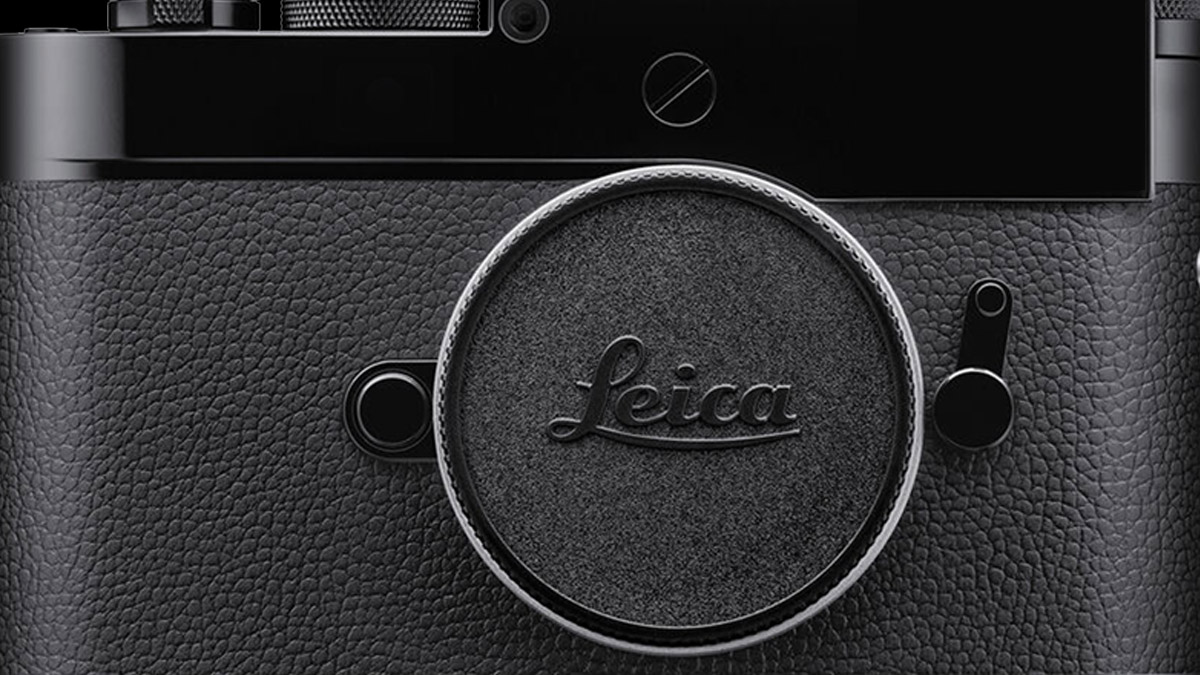
Leica Q3 Monochrom
First up is the Q3 Monochrom, a replacement for the Q2 Monochrom, which was announced on November 10, 2020.
Monocrhome cameras (at least real monocrhome sensor cameras) are a different beast altogether. Instead of having a color filter array in a Bayer arrangement of Red, Green, and Blue filters, there are no filters, and all of the sensors receive the same wavelengths of light. This leads to a much finer resolution, as no interpretation or demosaicing is required from the raw file, which estimates the color at each pixel based upon its neighbours. After you demosaic the RAW data into a viewable form, you would then convert it to monochrome. But in the case of a monochrome sensor, what you record from the camera is precisely what is contained in the raw file.
This allows you, when paired with an excellent lens, to produce images with finer details, texture, and resolution than what you can achieve with an equivalent color sensor. Of course, the downside is that you can't easily take a color image (you could swap R, G, and B front lens filters and then combine them in post).
The Q2 Monochrom had impressive specifications and was a very well-reviewed camera.
The Leica Q2 gives me everything I enjoyed when I got into photography. It gives me a simple, pleasurable experience unhindered by technology. A tool that feels good to hold, that oozes craftsmanship and quality, and is built to last.
https://fstoppers.com/documentary/one-year-leica-q2-monochrom-my-story-680960
The Leica Q2 Monochrom core features, just so we have something to judge what the Q3 Monochrom will have.
- 47.3MP Full-Frame B&W CMOS Sensor
- No Color Array or Low Pass Filter
- Maestro II Image Processor
- Summilux 28mm f/1.7 ASPH. Lens
- 3.68MP OLED Electronic Viewfinder
- 3.0″ 1.04m-Dot Touchscreen LCD
- DCI 4K24p, UHD 4K30p, Full HD 120p Video
- ISO 100-100,000, up to 10-fps Shooting
- 35mm, 50mm, and 75mm Crop Modes
- Bluetooth LE and Wi-Fi
I would expect better 4K video, possibly a rear LCD upgrade from 1.04 million dots; the rest of the specifications, I wouldn't expect to see much change, except maybe the sensor.
Leica may decide to use the M11 Monochrom already existing 60.3MP sensor as the basis for the Q3, providing a significant upgrade from 47MP to 60MP. While the sensors differ, the color filter array to monochrome swap steps in the sensor fabrication process. The M11 Monochrom is priced around $10,000, and it's unknown how much of that is due to the sensor. It may be too expensive a sensor to put into the lower-tier Q3.
Leica M-V / Leica M-EV1
We've talked about this camera before, as it seems that Leica is making an M camera without the optical viewfinder and simply including an EVF.
The new tidbit on the Leica M-V is that it will have a price tag of around 8,000 euros, or approximately $ 10,000 in U.S. dollars.
There appears to be some confusion regarding the name of this camera. Still, according to one source, the official name is now the Leica M-EV1, which is as unoriginal as it gets and sounds like something Tamron would name (in Tamron's defense, they would likely name it something like the Leica M EVF 1 II MF). The rumors also confirmed that the camera will feature an electronic viewfinder, but not a hybrid electronic and optical viewfinder, as found in the Fujifilm X100 series.
Announcements
The rumors circulating on the internet also suggest that this camera will be announced on October 23rd, which is quite specific, and the Q3 Monochrom will be announced on October 16th. These are pretty particular dates, so I suspect this information was leaked from a dealer. On the other hand, it wouldn't surprise me that both cameras get announced on the same day, but anything is possible.






0 comments