

When you purchase through links on our site, we may earn an affiliate commission. Here's how it works. |
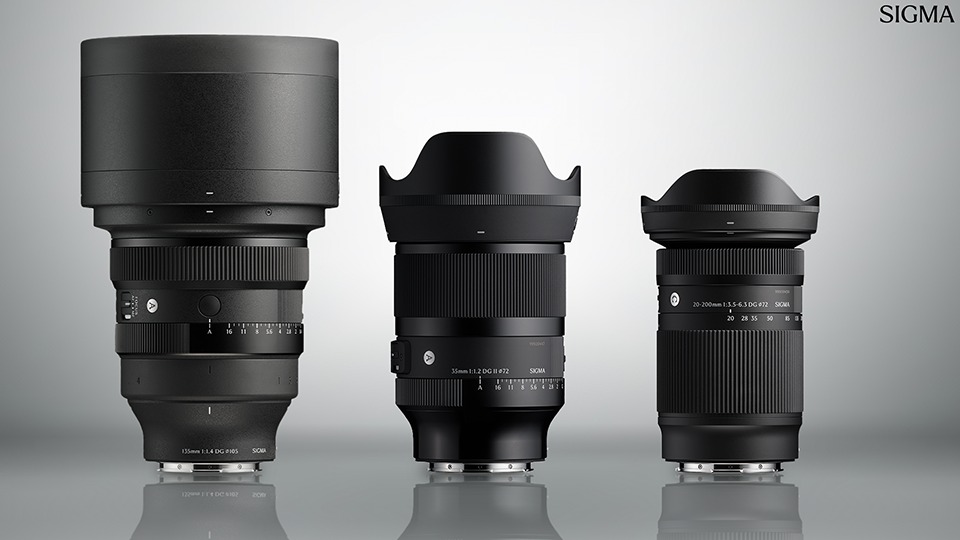
SIGMA continues their aggressive rollout of new lenses for Sony's E-Mount and their own L-Mount by announcing three new photography focused lenses and a new autofocus Cinema lens.
The SIGMA 20-200mm f/3.5-6.3 DG Contemporary is the first 10X full-frame zoom lens that starts at 20mm wide. They have also released another “World's First” with the release of the SIGMA 135mm f/1.4 DG Art, somewhat of a follow-up to the highly-regarded SIGMA 105mm f/1.4 DG Art.
SIGMA has also updated their 35mm f/1.2 DG Art series lens with a version II.
All three of those lenses begin shipping near the end of this month.
Rounding out the announcements is a new autofocus cinema lens, the SIGMA 28-45mm T2, which will be available in November.
Preorder
- Sigma 20-200mm f/3.5-6.3 DG Contemporary $999
- Sigma 35mm f/1.2 DG II Art $1549
- Sigma 135mm f/1.4 DG Art $1899
- Sigma 28-45mm T2 Cine Zoom Lens $3399
Sigma Announces World’s First 20-200mm 10x Zoom Lens for Full-Frame Mirrorless Cameras
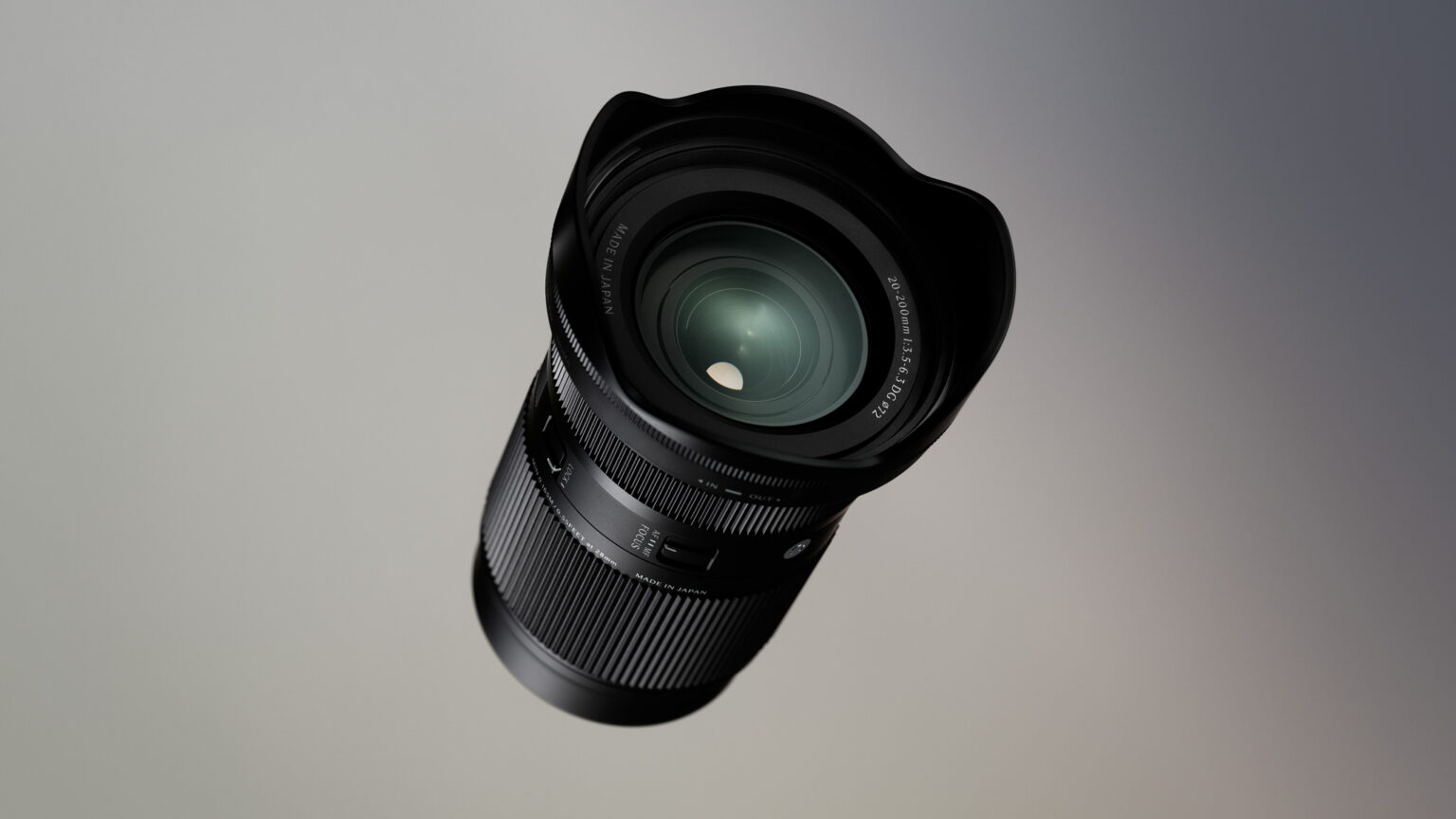
Sigma Corporation of America, the US subsidiary of Sigma Corporation (CEO: Kazuto Yamaki. Headquarters: Asao-ku, Kawasaki-shi, Kanagawa, Japan), is pleased to introduce the Sigma 20-200mm F3.5-6.3 DG | Contemporary lens for full-frame mirrorless cameras, available in late September 2025. It is the world’s first 10x zoom lens to begin with an ultra-wide 20mm focal length designed for full-frame mirrorless.
The Sigma 20-200mm F3.5-6.3 DG | Contemporary is a unique all-in-one zoom lens covering ultra-wide to telephoto in a single compact lens. Given its compact size, it’s rare to have a focal range that allows the photographer to shoot quickly and easily between expansive landscapes and establishing scenes, to close-up details or action shots. This lens’s 20mm starting range is much wider than the average high-power zoom lens, and is a feat of engineering weighing in at only 550 grams* in a 4.5 inch body. Ideal for travel photography and everyday documentation of life’s moments, this lens is the perfect all-around lens for any photographer.
* Measurements are for L mount.
A maximum magnification ratio of 1:2 is achieved at a focal range of 28mm to 85mm. At 28mm, one can capture a broad background to emphasize depth, while at 85mm the background can be blurred extensively for a clean look. Even at the telephoto end of 200mm, a magnification ratio of 1:3.3 still enables close-up shooting.
Swift, accurate autofocus is driven by Sigma’s HLA (High-response Linear Actuator) motor, allowing for fast subject acquisition and tracking.
The optical design, which properly positions four aspherical lenses, one FLD glass element, and three SLD glass elements, combined with an internal mechanism that precisely maintains each zoom group, enables high performance across the entire zoom range despite the high zoom ratio. Aberrations are thoroughly corrected, and flare and ghosting are kept to a minimum.
The Sigma 20-200mm F3.5-6.3 DG | Contemporary lens will be available in late September at authorized Sigma dealers in the US for Sony E-mount and L-Mount for a retail price of $999 USD.
Sigma Announces 35mm F1.2 DG II | Art Lens, a New and Improved Successor to its High-Performance Prime
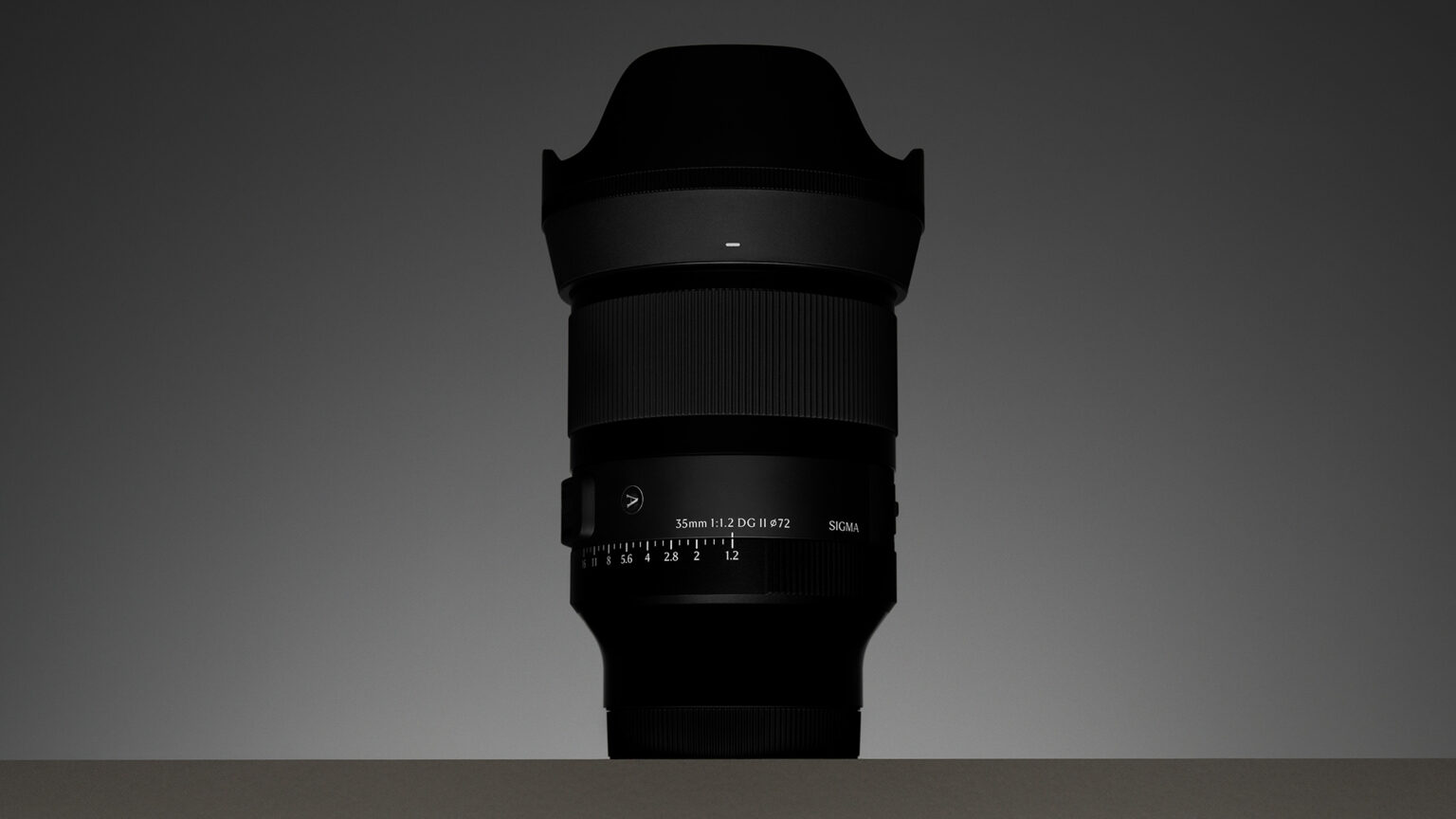
Sigma Corporation of America, the US subsidiary of Sigma Corporation (CEO: Kazuto Yamaki. Headquarters: Asao-ku, Kawasaki-shi, Kanagawa, Japan), is pleased to introduce the Sigma 35mm F1.2 DG II | Art lens for full-frame mirrorless cameras, available in late September 2025. It is designed as the successor to the Sigma 35mm F1.2 DG DN | Art released in 2019, and follows in the footsteps of the ultra-fast, high-performance 50mm F1.2 DG DN | Art lens released last year.
The Sigma 35mm F1.2 DG II | Art, evolving from the original 35mm F1.2 and answering the need for a more compact lens to pair with mirrorless cameras, now features a much smaller footprint, comparable in size to the 35mm F1.4 DG DN | Art. Autofocusing performance has been upgraded, and overall optical quality has also been improved. With its bright F1.2 aperture, the lens is ideal for nightscape photography in addition to portraiture, landscapes, street photography, and many other genres that embrace the 35mm focal length.
Thorough correction of axial chromatic aberration and sagittal coma flare contributes not only to the sharpness of the image plane, but also to the bokeh effect. The lens delivers beautiful bokeh without color fringing, double-line bokeh, or any other irregularities from its maximum aperture. The 11-blade rounded diaphragm maintains a circular bokeh shape even when the aperture is stopped down.
As a result of the optical and mechanical design incorporating the latest technology, the new 35mm F1.2 DG II | Art is significantly smaller and lighter than the previous model. The filter diameter has been reduced by two sizes from 82mm to 72mm; the overall length of the lens has been shortened by approximately 20%, and the weight has been reduced by approximately 30%.
Additionally, focusing performance surpasses that of the previous model by adopting a floating focus configuration that moves two focus groups independently. Adopting the dual HLA (High-response Linear Actuator) system, this lens has two focus groups that are each driven with individual linear motors. The floating focus system also minimizes focus breathing, making the lens suitable for video recording.
The Sigma 35mm F1.2 DG II | Art lens will be available in late September at authorized Sigma dealers in the US for Sony E-mount and L-Mount for a retail price of $1,549 USD.
Sigma Announces World’s First Autofocus 135mm F1.4 Prime Lens for Full-Frame Mirrorless Cameras
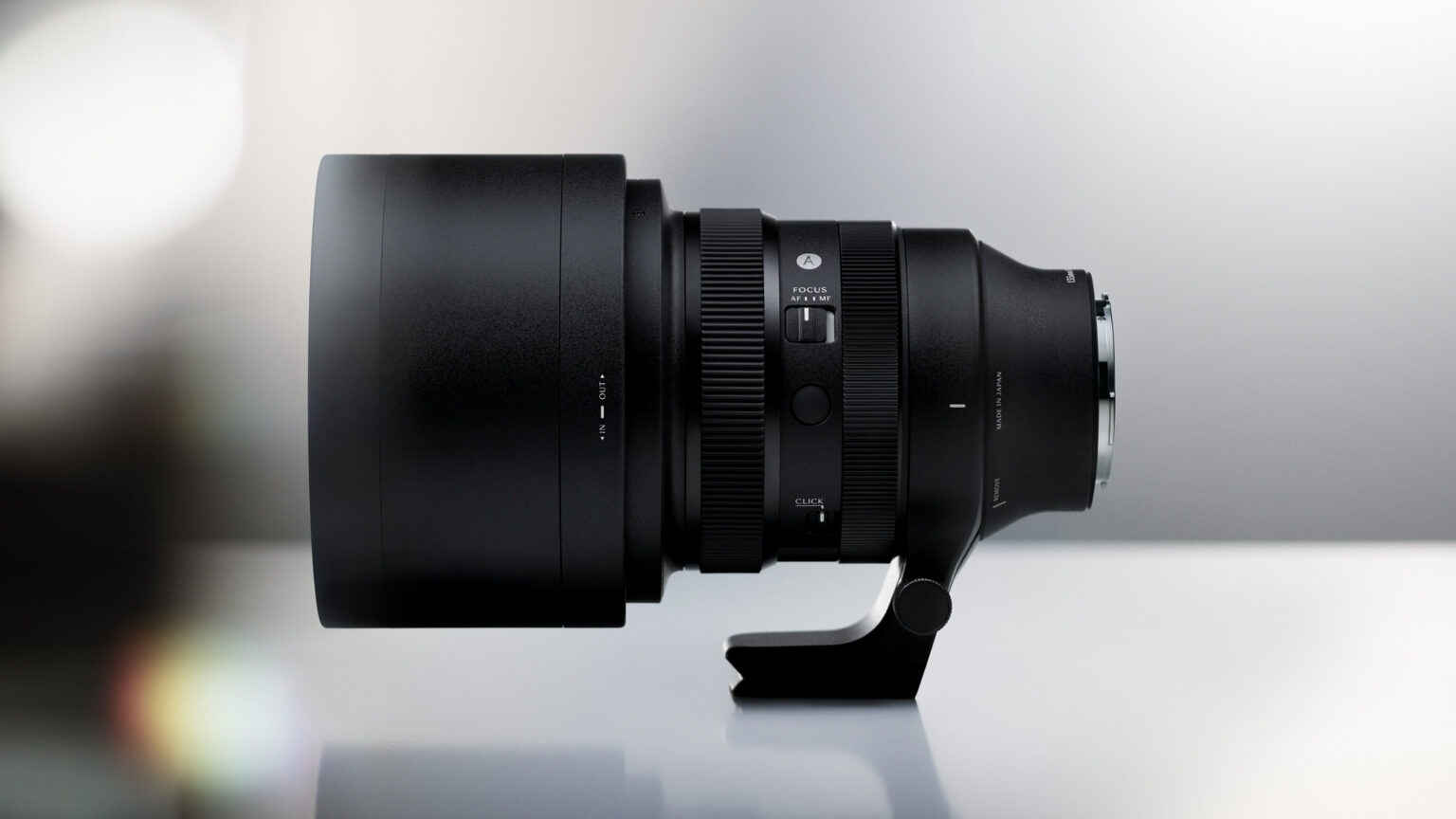
Sigma Corporation of America, the US subsidiary of Sigma Corporation (CEO: Kazuto Yamaki. Headquarters: Asao-ku, Kawasaki-shi, Kanagawa, Japan), is pleased to introduce the Sigma 135mm F1.4 DG | Art lens for full-frame mirrorless cameras, available in late September 2025. It is the world’s first autofocus 135mm F1.4 prime lens designed for full-frame mirrorless.
The Sigma 135mm F1.4 DG | Art is a large-aperture, medium telephoto lens with uncompromising resolution for a crystal-clear image and exceptional bokeh for a smooth, blurred background. As the longest focal length prime lens in the Art F1.4 series for full-frame mirrorless cameras, this lens is ideal for professional photographers specializing in wedding and fashion portraiture, and for photographers aiming to produce portraits of the highest overall quality. The fast F1.4 aperture is designed to create exceptionally smooth, beautiful bokeh, while the 135mm focal length will provide an immersive sense of depth. This compression effect, characteristic of telephoto lenses, enhances the composition by helping the subject stand out against the background, making this lens ideal for portrait photographers aiming to take their work to the next level.
Swift, accurate autofocus is driven by Sigma’s HLA (High-response Linear Actuator) motor, allowing for fast subject acquisition and tracking. Several features support a variety of shooting styles, such as an intuitive de-clickable aperture ring, and customizable AFL buttons located on the side and top of the lens.
Outstanding edge-to-edge resolution is achieved, even at maximum aperture, by adopting an optical design of 17 elements in 13 groups, including 4 FLD and 2 aspherical glass elements. Aberrations are thoroughly corrected, and flare and ghosting are kept to a minimum.
Build quality is exceptional, as is characteristic of the Sigma Art line. The lens features a gasketed mounting surface, water and oil-repellent coating on the front element, and an overall dust and splash-resistant structure that helps maintain lens performance in challenging environments.
The Sigma 135mm F1.4 DG | Art lens will be available in late September at authorized Sigma dealers in the US for Sony E-mount and L-Mount for a retail price of $1,899 USD.
Sigma Announces Pricing and Availability of First Lens in New AF Cine Line: 28-45mm T2 FF
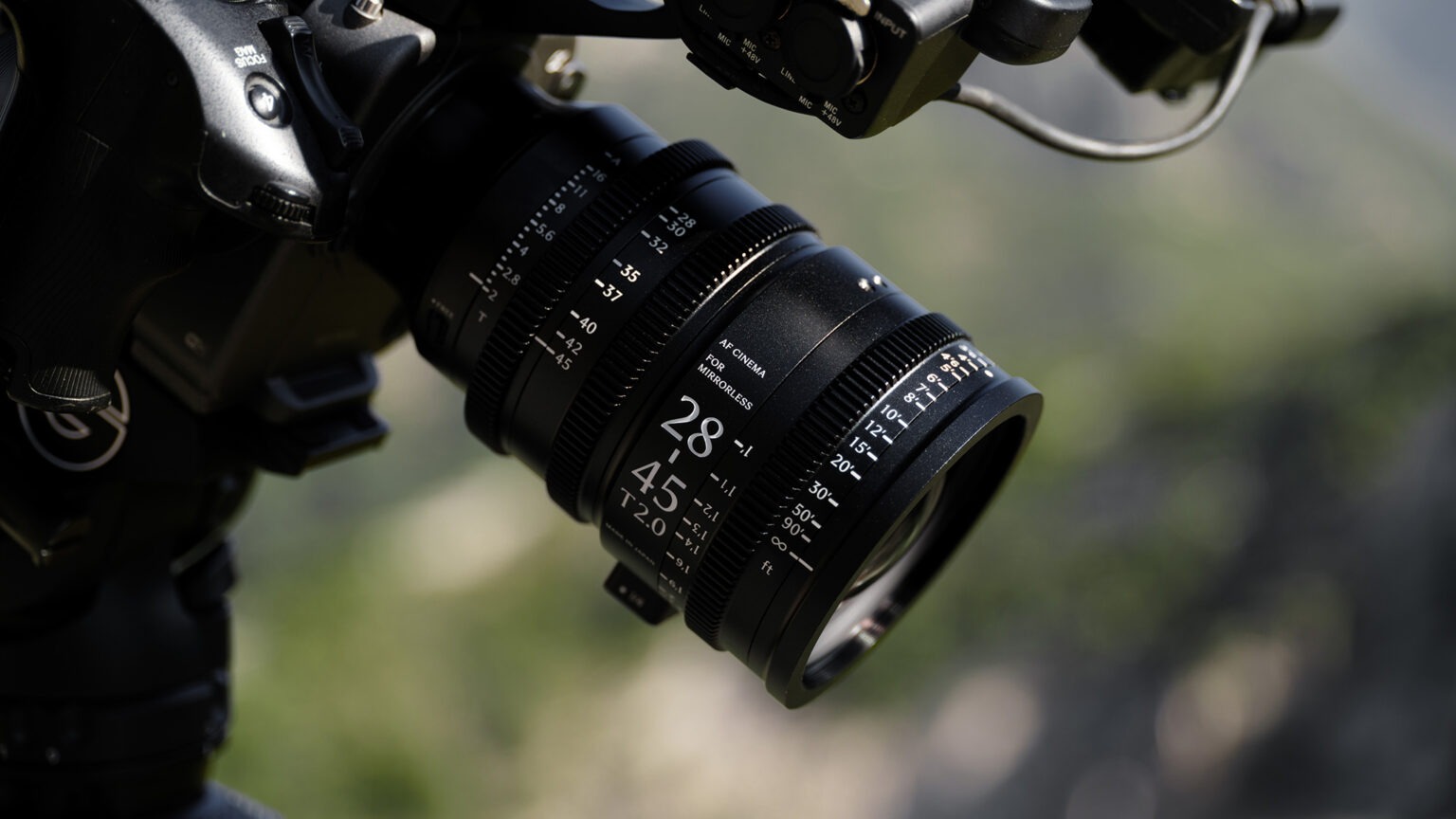
Sigma Corporation of America, the US subsidiary of Sigma Corporation (CEO: Kazuto Yamaki. Headquarters: Asao-ku, Kawasaki-shi, Kanagawa, Japan), is pleased to introduce the Sigma AF Cine Line 28-45mm T2 FF, the first lens in the AF Cine Line and first Sigma Cine lens to feature autofocus capabilities.
Based on the optical formula of the 28-45mm F1.8 DG DN | Art lens, the 28-45mm T2 FF is designed to support full-frame camera sensors with completely redesigned electrical and mechanical parts to provide the focus and aperture drive features required for use with cinema cameras. In addition, the appearance and build quality are representative of a premium cinema lens, with exceptional dust- and splash-resistant performance for use in varied environments.
Similar to the 28-45mm F1.8 DG DN | Art, the autofocus of the 28-45mm T2 FF is driven by a High-response Linear Actuator (HLA) motor. For manual focus operation, this lens features a focus ring with a distance scale and fixed rotation range. It is compatible with DMF (Direct Manual Focus) and AF Assist on Sony E-mount, as well as the AF+MF function on L-Mount.
Weighing in at 960g*, the 28-45mm T2 FF is only 60g heavier than the 28-45mm F1.8 DG DN | Art, and both lenses are the same length. The 28-45mm T2 FF is also compatible with 82mm front filters, as well as commercially available matte boxes with the addition of the optional clamp-on ring (sold separately).
The Sigma AF Cine 28-45mm T2 FF lens will be available in early November at authorized Sigma Cine Lens dealers in the US for Sony E-mount and L-Mount for a retail price of $3,399 USD.








If only Sony would have updated the A7 with the body now used on the A1 and A9, in 2022...
BTW: A patent for something like the RF-mount is usually valid for 20 years and Canon started with RF in 2018 ....
Though, I saw some samples from the 135 f/1.4 that you could make lemonade with. Not quite the "Bokeh Master" from the images.
I imagine a work around would be for such a lens or adapter to just 'speak' the EF language.
I've already spent a bunch on a Mavic 4 Pro (awesome drone) and I have my eyes on the X2D 100c II... so my money is spent already 😵
At this FL f/1.8 or f/2 should deliver enough creamy bokeh.
I m Full into Canon, but won’t buy anything new since last year. And if this slow and pricy movement is going on - I will leave the ship. Let’s see what the next alpha will get! I hope for a decent 30+Mp stacked sensor without compromises 😀..
Then they have me… or Nikon when they lower their weight of the Z8 II or pump the MP of a Z6 IV to 30+
A quote from the conclusion (emphasis is mine): “Canon was accused of walling off the garden when they began controlling RF mount access. Critics predicted market share losses, user defection, and ecosystem stagnation. Photography influencers proclaimed Sony's third-party friendly approach the obvious future. The consensus was clear: Canon had made a strategic error that would cost them dearly.
In hindsight, it may have been the construction of a remarkably profitable fortress. With minimal competition for their high-margin premium glass and a comprehensive stable of budget lenses that preempted third-party alternatives, Canon transformed a widely reviled approach into one of the most successful plays of the mirrorless era. The company didn't just survive the transition from DSLR to mirrorless; they maintained strong profitability while commanding premium pricing across their lens lineup.”
See: https://fstoppers.com/business/genius-canons-rf-mount-lens-lockdown-711104