

When you purchase through links on our site, we may earn an affiliate commission. Here's how it works. |
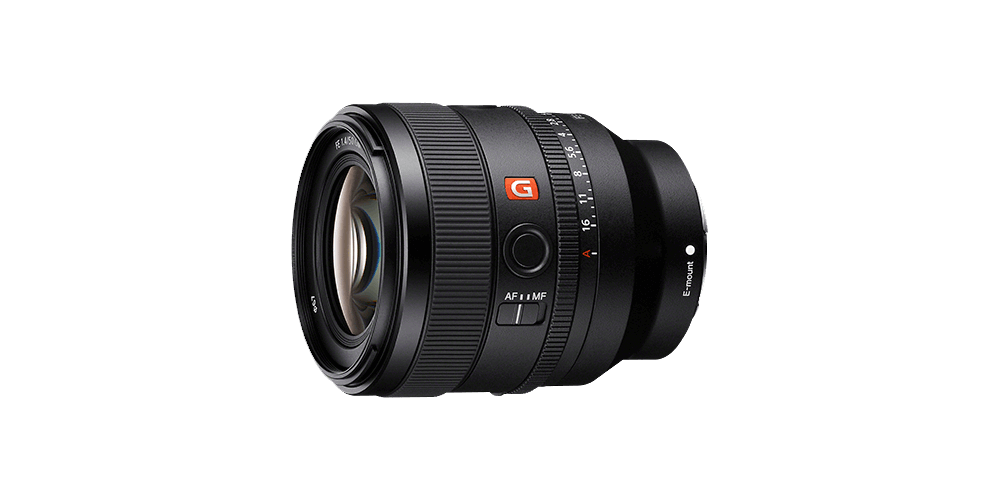
SAN DIEGO, CA – Feb. 21, 2023 – Sony Electronics has announced the 50mm F1.4 G Master (model SEL50F14GM) as the newest addition to its acclaimed G Master full-frame lens lineup. This e-mount lens expands the Sony lineup with a premium 50 mm prime lens packed into a remarkably compact and lightweight design. The 50mm F1.4 G Master delivers first-class image quality, including high-resolution and naturally rendered bokeh known to Sony’s top-tier G Master™ series. When paired with the latest Sony cameras, it is an ideal option for a wide variety of uses in both still and video including portraiture, landscapes, travel, and weddings.
“At Sony, we are continually listening to the needs of today’s content creators and are proud to announce the newest innovative option with the 50mm F1.4 G Master lens, the latest addition to the E-mount lens line-up,” said Yang Cheng, Vice President, Imaging Solutions, Sony Electronics Inc. “This prime lens is a great option for both photography and videography use and delivers excellent image quality at 50mm, one of the most popular focal lengths. Being able to pack our latest G Master technology into such a compact form factor brings ultimate versatility to a 50mm for Sony.”
Sharp Imagery and Beautiful Bokeh
The advanced optical design and elements unique to Sony’s top-of-the-line G Master series brings outstanding image quality to the 50mm F1.4 G Master. Spherical aberration control at both the design and the manufacturing stages contributes to beautiful bokeh. The lens offers naturally rendered bokeh with an 11-blade circular aperture and sharp realism is offered throughout maximum aperture range. Deep, creamy bokeh at F1.4 is ideal for a variety of shooting scenarios including making portrait subjects stand out from their surroundings.
The 50mm F1.4 G Master is packed with two XA (extreme aspherical) elements that effectively correct field curvature and most types of aberration. This lens is also designed with one ED (extra-low dispersion) glass element that suppresses chromatic aberration to maintain clear and sharp images without color bleeding. The design combination of the XA and ED elements help achieve high-resolution throughout the entire frame. Sony’s original Nano AR Coating II on the lens suppresses reflections even in a backlit scene.
In addition, the minimum focusing distance of the 50mm F1.4 G Master is up to 0.41 meters and maximum magnification is up to 0.16x when autofocus is used i. This level of close-up performance provides extra flexibility when shooting both stills and videos.
Remarkably Compact Design for Maximum Versatility
The 50mm F1.4 G Master has Sony’s most advanced optical design technology including the precisely positioned XA elements, high-thrust XD (extreme dynamic) linear motors, and the latest compact circular aperture unit. These elements are critical for realizing a large-aperture, high-resolution lens that is only 80.6 mm in diameter, 96.0 mm in length, and approximately 516 grams in weight. These measurements allow for a lens that is up to 33% lighter and 15% less volume when compared to conventional models with the same specifications ii.
The compact size of the 50mm F1.4 G Master paired with a Sony camera body makes this lens extremely versatile in both still and video shooting situations. With this type of mobility and low-light performance, this lens is a great choice for everything from portraits, landscapes, weddings, and travel. The compact size also makes it an ideal lens selection for gimbal and drone operation.
Fast, Precise, and Reliable Autofocus
The 50mm F1.4 G Master’s autofocus is extremely fast and precise, making it an ideal choice for reliable content creation. The autofocus is as much as 1.9x fasteriii than conventional models with the same specifications ii. The lens’s focus group is driven by Sony’s high-thrust XD linear motors and incorporates an advanced control algorithm for smooth, responsive focus drive. When paired with the latest Sony’s Alpha cameras, this lens can quickly acquire focus and track subjects, even when using the shallow depth of field available at F1.4.
The XD linear motors and control algorithm optimize response to control signals so that focusing is precise, and vibration is minimized for refined, quiet AF operation. This is extremely advantageous when shooting movies allowing movie subjects to be smoothly captured and tracked even when shooting at 120 fps or other high frame rates. The ability to leave focusing to the camera when shooting solo or with a small team can dramatically enhance efficiency and creative flexibility. Also, the 50mm F1.4 G Master features the latest lens technology to reduce focus breathing to ensure that the highest quality images are captured. In addition, the 50mm F1.4 G Master supports the breathing compensation iv function provided in compatible Sony’s Alpha cameras.
Intuitive Operability and Outstanding Reliability
The lens has been designed intuitively to help provide creators maximum workflow efficiency while shooting.Linear Response MF ensures that the focus ring responds directly and repeatably to subtle control when focusing manually. As an exciting evolution to the premium G Master line-up, the 50mm F1.4 G Master also features an iris lock switch, which is the first to ever be offered on a Sony prime lens. Additionally, this lens features a 67 mm thread mount, allowing for a filter to be interchangeable with the FE 24mm F1.4 G Master and FE 35mm F1.4 G Master lenses.
Focus hold buttons and a focus mode switch provide extra shooting versatility for content creators. Customizable focus hold buttons are present in two locations, which can be further assigned to several other functions from the camera’s menus. The focus mode switch makes it possible to switch between autofocus and manual focus on the fly, to quickly adapt to changing shooting conditions.
The 50mm F1.4 G Master’s front lens element features a fluorine coating that repels and allows for easy removal of fingerprints, dust, water, oil, and other contaminants v. A dust and moisture resistant design provides extra reliability for outdoor use in challenging conditions. These additions allow creators to use the lens with confidence in almost any shooting environment.
Pricing and Availability
The new 50mm F1.4 G Master lens will be available in May 2023 for approximately $1299.99 USD and $1799.99 CAD. It will be sold at a variety of Sony’s authorized dealers throughout North America.
Notes:
i. 0.38 meters and 0.18x when manual focus is used
ii. Such as the Planar T* FE 50 mm F1.4 ZA
iii. Sony test conditions.
iv. Compatibility info at: https://www.sony.net/dics/breathing/ Available in movie mode only. Angle of view and image quality may change slightly when this function is used. Compensation may not be able to cover all situations.
v. Not guaranteed to be 100% dust and moisture proof.



The long wait continues…
I've considered an 50/1.4, which was always IN THEORY a great lens on EF film cameras in the 90s.
But there's basically two ways to design such a thing:
1. Old school double-Gaussian, which hasn't really advanced much since like 1970. They're small, simple, cheap, but just not that sharp. The EF 50's were pretty soft and low contrast even in the day and are worse yet given both 1) advancing technology, and 2) low-noise, high ISO, fantastic MP count, perfect autofocus all moving the ball so far ahead that the shortcomings of the relatively soft lenses of yesteryear are far more obvious than before. You used to not be able to blame the lens TOO much when film grain and focus were iffy, hand-shake and subject movement adding extra unsharpness as well.
2. New school computer design like the Otus 55/1.4 or Canon 50/1.2. Great image quality even wide open, but huge and expensive: the 50/1.2 is twice the size of the old one.
So, WHICH 50/1.4 would you want? A 50/1.2 down-rated to 50/1.4 is going to be nearly as heavy and expensive. Or, a 50/1.4 that is borrowed from EF, more or less, just as the 50/1.8 isn't that different from the EF 50/1.8's that for 30 years were pretty much the same as the preceding FD 50/1.8's?
The third choice might be something like the 50/1.4 but modernized just enough to add IS (and I'm not sure that's even possible in a double-Gaussian; I don't think I've ever seen one). But again even the 50/1.8 isn't cheap. Would a 50/1.4IS cost $1500? And if it did who'd buy it?
Finally I come to the question of: what is the need? In film days you needed every 2/3 stop you could get. You needed 1600 speed film to shoot 1/30th at f/1.4 in a restaurant with moody lighting. It made the viewfinder substantially brighter too. In such a shot the camera shakes, people move, there's no DOF, and grain made it look like you were louping a bowl of Rice Crispies. But today you can laugh and turn it up to ISO10,000 and shoot at f/4 and shoot 100 frames and be sure that people were still enough in some of those. IS takes care of camera shake too. Arguably if you only had f/4, you'd like the option of f/1.4. But we have the 50/1.8. Meanwhile, do you really need f/1.4 for shallow-DOF shots? I don't think so. Again the pictures are so much better we can present them in 1500x1000 on computer screens, instead of handing around 3x5"s. The lack of other photo flaws lets the shallow DOF have center stage, and the far greater enlargements mean the bokeh is also an order of magnitude plainer. 50/1.8 is quite shallow already in any subject where 50/1.4 would also be shallow. Meanwhile, subjects so far away that they don't pop from the background at f/1.8 aren't going to at f/1.4 most of the time either: just a very very narrow range where f/1.4 gives pop and f/1.8 doesn't. In summary I don't think there's a strong need, even the question of people who want the artistry of shallow DOF.
And if you really just gotta, gotta, gotta have that shallow DOF, the 50/1.2 is right there in the catalog. So now you're not just talking about someone who absolutely needs that shallow DOF of 1.4 where 1.8 is simply not acceptable; you're also limiting sales to those who haven't bought or can't afford the 50/1.2.
Anyway, coming back to 50mm lenses, I can understand people being happy with f/1.8 but equally I can see some people wanting the wider aperture to help in low light (so as to limit ISO required for a given shutter time) and/or to allow more blur / shallower DOF. I don't know enough about lens design to comment on what design options there might be, but I note the RF 50 f/1.2L is 950g and 10.8cm long, the Sony 50 f/1.2 GM is 768g and 10.8cm long, and the Sony 50 f/1.4 GM is 516g and 9.6cm long. Further, from what I have seen so far, the IQ of the 1.4 seems to be right up there with the f/1.2 lenses (subject to the fact it only goes to f/1.4 of course). So, as much as I like some of the photos I have seen coming out of those f/1.2 lenses, I have no interest in buying one. However, the 50 f/1.4 GM is much more interesting to me, because of its lighter weight. That reflects the circumstances in which I usually use my camera and my personal preferences, of course, so YMMV.
Looking at the 50mm f/1.8 lenses though (Canon RF or Sony), I am not too interested in them. At one stage I owned by a Sigma 50mm Art and a Canon EF 50mm f/1.8 STM, and I knew someone with the Canon EF 50mm f/1.8 II. The little f/1.8 lenses just weren't in the same league for IQ. To be fair, with simple backgrounds and particularly stopped down, they were OK. A portrait of someone with trees / foliage in the background? The 50 Art was just so much better in that sitution, and even when the lenses were shot at the same aperture.
However, in Sony land, there is the Sony Zeiss 55mm f/1.8. That lens is 281g and about 7cm long, and it seems to have a reputation for being sharp although a mixed reputation for bokeh, and it is known for having quite a bit of longitudinal CA. I haven't used one, unfortunately, so I cannot speak from personal experience. From what I have seen online, the 50 f/1.4 GM seems maybe a little better (cleaner, slightly nicer bokeh) but personally I would be more likely to try the 55mm I think. In other words, I would be willing to trade the wider aperture and better IQ for smaller and lighter given I think I probably could be happy with the IQ of the 55mm (although I'm sure I wouldn't like the LoCA when it showed up). That also reflects where a 50mm lens would fit in my kit though (I already have a 35mm f/1.4), and the fact I like the idea of the focal length being slightly longer than 50mm. Obviously, again, YMMV. (In fact, I can see myself picking up a 55mm, or perhaps the Sigma 65mm f/2, at some point. Or I suppose I could switch my 35mm f/1.4 for a 35mm f/1.8 or 35mm f/2, in which case I would be very keen to get the Sony 50 f/1.4 GM. Given I like 35mm as a general purpose walk around prime, having a smaller, lighter, 35mm would not be silly. I just don't think I can bring myself to sell my 35mm f/1.4 GM though, especially since it weighs 524g which isn't too bad.)
Anyway, my primary point is that in many ways the 50mm f/1.4 GM does seem to occupy a middle ground between the 50mm f/1.2 and f/1.8 lenses but with IQ pretty close to the 50 f/1.2 lenses. I can see that middle ground being very attractive to some people (although what proportion of buyers, I can't say).
Something to match the EF-M32mm 🙂
Of course that was what I was talking about, no rule you gotta talk about the same thing :-D
And likewise a much sharper 1.8 would ALSO be big and huge and expensive.
And let me add one more point: the Canon 50/1.2 has so much mechanical vignetting (darkening in the corners), and starting so close to the center, you could argue it's really an f/1.4 lens anyway, but just brighter in the center.
Really, after giving it yet more thought, the Canon pair is probably the best you can do: maybe they should have made the old-school lens an f/1.4 instead of f/1.8 but then it wouldn't be the tiny lens it is, and would still be unsharp (even more unsharp than the 1.8). And for the reasons I gave above, f/1.4 just doesn't buy you much of anything you actually need. I think most people want it just as they've been habituated into having one in the lineup for 50 years and have a hard time getting used to no longer having it. In the same way I think trinity zooms are now really the f/4 zooms with today's ultra-high, low-noise ISO, IS, really high MP counts, lack of necessity for f/2.8 to enable AF, lack of necessity for big aperture to make viewfinder bright, etc. etc. They only make the f/2.8 zooms to sell to people who haven't gotten the message.
I don't expect it to be half the price, the MSRP of the RF50L is €2700 nowadays. I wouldn't mind it being €1350 🙂
The issue with the RF 50/1.8 is that it is very blurry at close focusing distances. See https://www.opticallimits.com/canon_eos_ff/1108-canonrf50f18?start=1
Sigma 50mm F1.4 DG DN Art Lens Image Quality
Canon 50/1.4 - 290 grams
Sony 50/1.4 G master - 516 grams
Sigma 50/1.4 DG DN Sony mount - 660 grams
Canon RF 50/1.2 - 950 grams