

When you purchase through links on our site, we may earn an affiliate commission. Here's how it works. |
It seems the last little while all I have been talking about is megapixels. Over the last few days, rumors have surfaced from both the Fujifilm camp and now the Sony camp about Sony Semiconductor Solutions Group (SSSG) making a new 180MP medium-format sensor.
These types of high-resolution sensors are actually quite complicated. You'd think it would just be a matter of shoving pixels onto a sensor wafer and calling it a day, but the density can cause timing issues. One of the reasons why Canon experimented with so many bonkers resolution APS-H sensors was to work out the kinks in reading the sensor in terms of timing, heat, noise, and other factors that can come about in reading hundreds of millions of very tiny pixel values.
Canon's 250MP APS-H was, I believe, their largest sensor that they developed in terms of megapixels. This would equate to around 675MP in Medium format scaling – just to give an idea of how far Canon went down that rabbit hole.
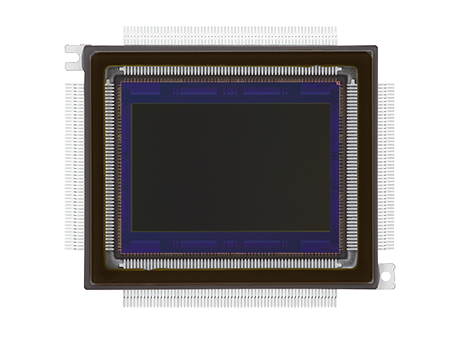
As well, in early 2024, Sony announced the new IMX811 BSI sensor, which was a massive medium format-sized sensor with 247MP in resolution.
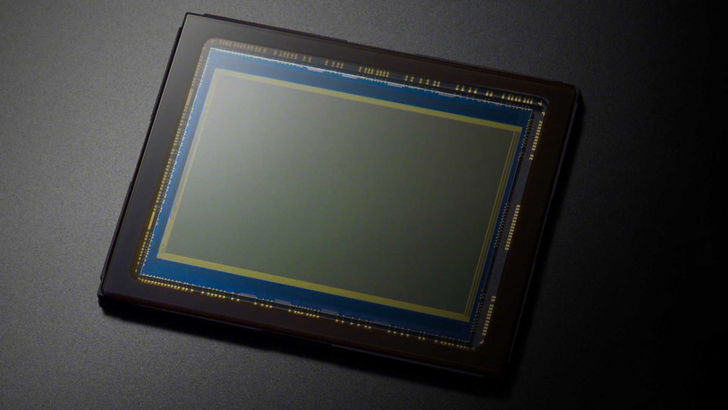
The IMX811-AAQR is a diagonal 64.84 mm (Type 4.1) CMOS active pixel type image sensor with a square pixel array and 247.04 M effective pixels. This sensor incorporates maximum 24 dB PGA circuit and 16-bit A/D converter. 16-bit digital output makes it possible to readout the signals of 247.04 M effective pixels at high-speed of 5.3 frame/s in all-pixel readout mode
Future Sony CMOS Sensors for Nikon, Fuji, and Sony?
Considering that the Sony A7R's maximum resolution has been “stuck” for a while at 61MP, it would make sense to increase the pixel density on the camera, which is usually purchased for the pixel density.
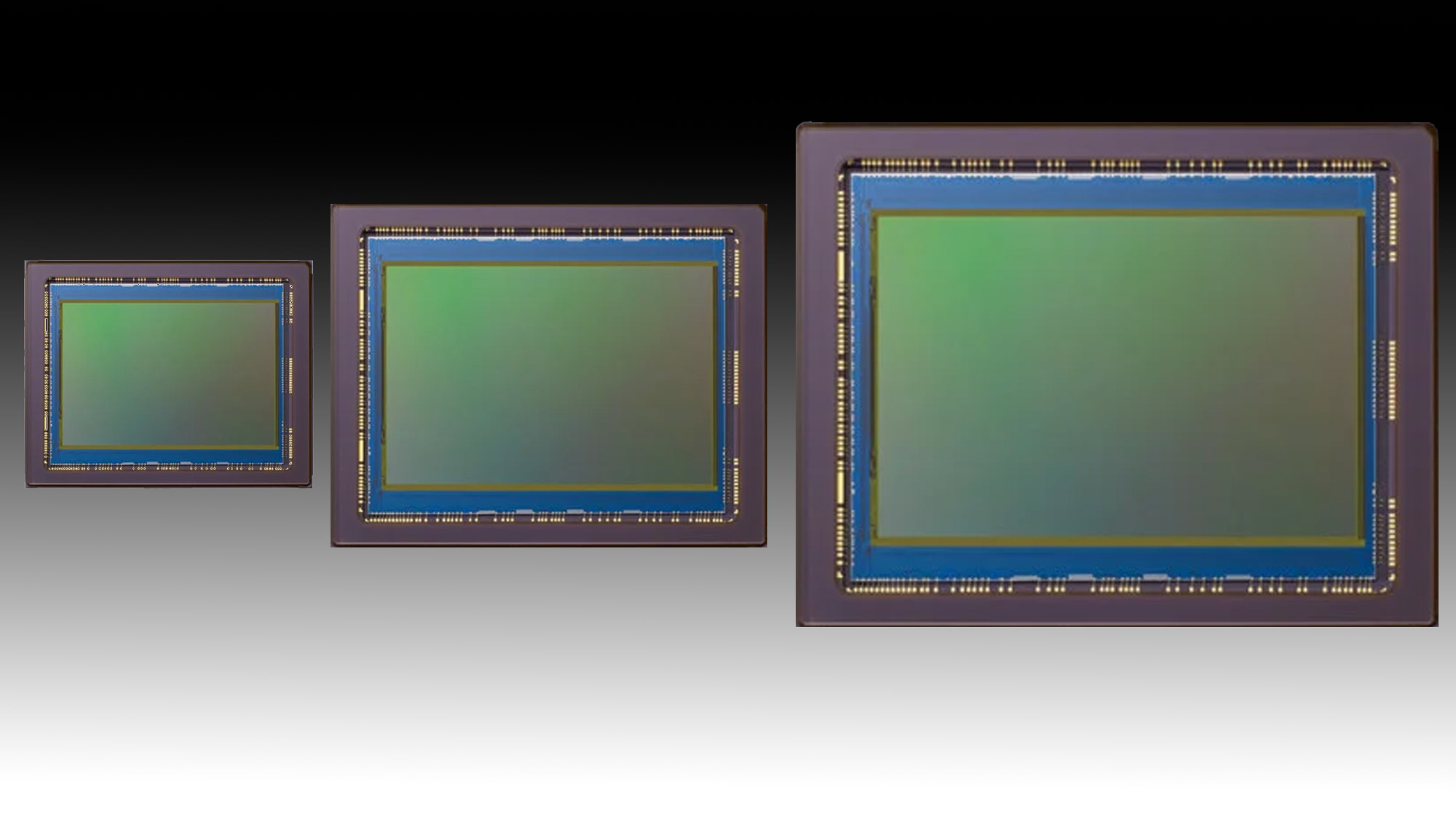
Comparatively speaking, the 44×33, while not a “true” medium format sensor, is quite large. While this won't be to your viewing scale, the scale relative to each other is accurate, and you can see that the medium format sensor is quite large.
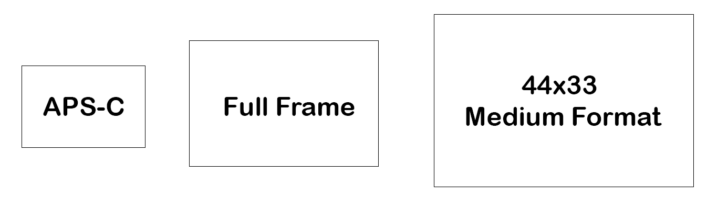
But now, let's look at sensor sizes and relative crop factors so we can determine what the same pixel size (or pixel pitch) would equate to for the two other sizes (APS-C and Full Frame)
| Diagonal | Width | Height | Aspect Ratio | Area | Crop Factor | |
|---|---|---|---|---|---|---|
| APS-C | 28.2–28.4 | 23.6–23.7 | 15.6 | 3:2 | 368–370 | 1.52–1.54 |
| Full Frame | 43.3 | 36 | 24 | 3:2 | 864 | 1 |
| Medium Format | 55 | 43.8 | 32.9 | 4:3 | 1452 | 0.79 |
So, taking that information and using the 180MP medium format sensor as a baseline, we get these other resolutions for the APS-C and full frame sensors.
| MP | Sensor Size |
|---|---|
| 180MP | Medium Format |
| 112MP | Full Frame |
| 47MP | APS-C |
While this would be a significant jump in resolution for full-frame sensors, it should be noted that Sony already has a very good production 40MP APS-C sensor, so coming out with a 47MP or perhaps rounding it to 48MP to sound better wouldn't be that extraordinary.
However, what would get me excited (or whining) would be a 112MP full-frame sensor delivered from the same pixel pitch. Is this unlikely? No, it's not. Sony already has smaller pixel pitches in sensors for phones, and 1″ sensors are much smaller than that.
Closing Thoughts
Resolution increases aren't really stopping. Canon and Sony have both designed high megapixel sensors in recent years, which makes 180MP for Medium Format seem like yesterday's technology. Regardless of the sensor, something has to read the sensor fast enough, and also keep cool enough as not impact image quality.
However, for Sony Semiconductor Solutions Group, this just seems like a “when” and not an “if”.








The 180mpix sensor is almost certainly going to be featured in the successor to Fuji GFX 100 II, making a significant jump from 100 mpix to the new 180 benchmark. I'm guessing that's at least 2 years down the line.