

|
When you purchase through links on our site, we may earn an affiliate commission. Here’s how it works. |
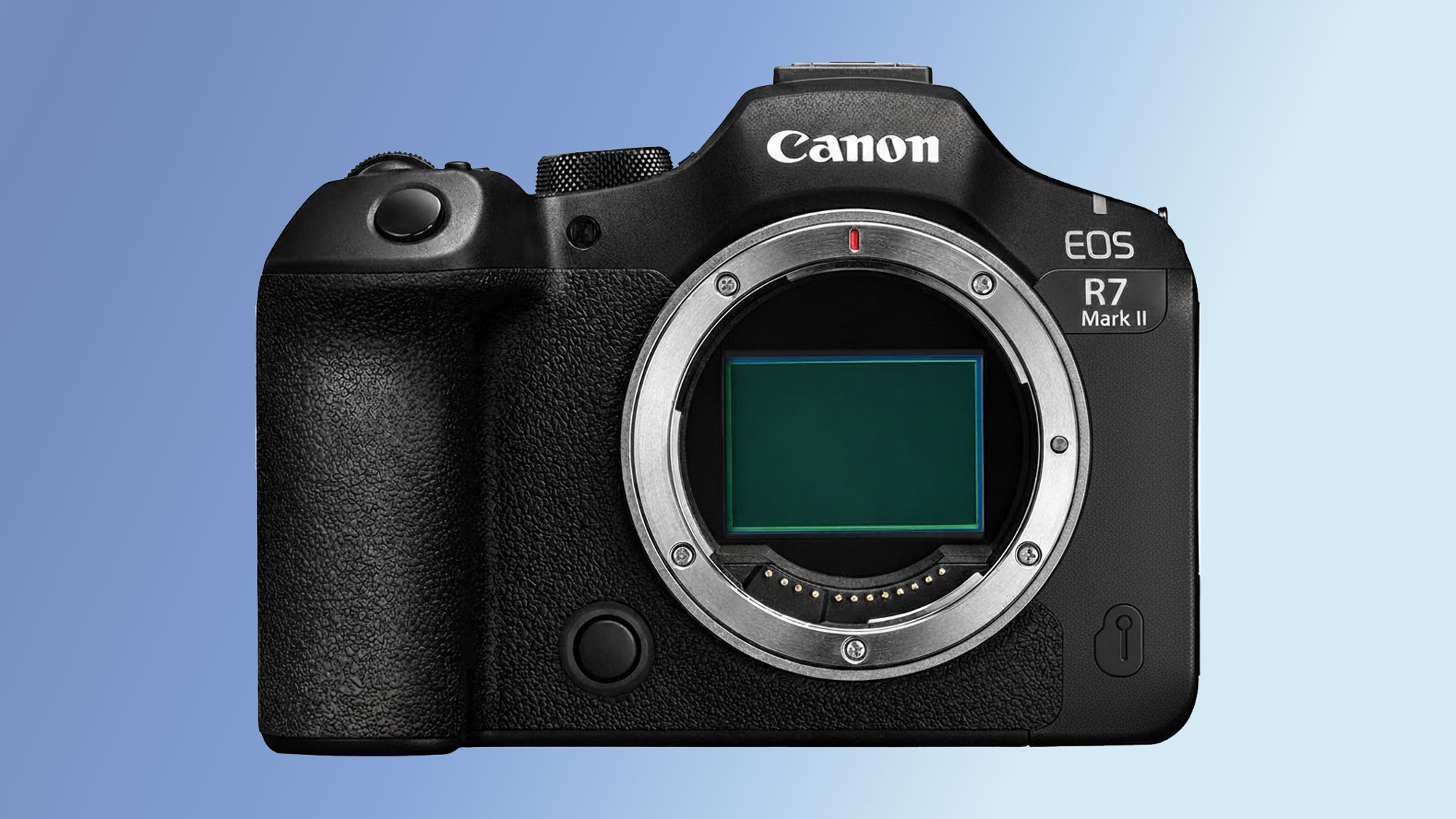
Okay, so the rumors are sounding as if it appears that the Canon EOS R7 Mark II is indeed set to arrive in the first half of 2026 with a new 39MP APS-C sensor of BSI variety, either stacked or unstacked. As someone who enjoys delicious megapickles, I’ll be happy with 39 versus 32.5, even though the competition has 40.
For the rest of the article, we are going to assume that the current rumors are true, that Canon is going to release the R7 Mark II with a 39MP sensor.
Fujifilm is Already There
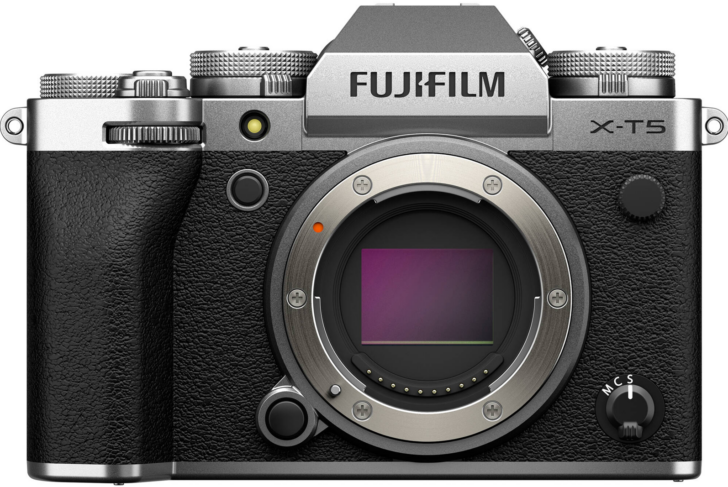
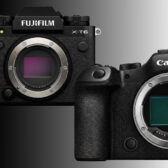
The elephant in the room is that other brands are already pushing 40MP cameras out into the market, so Canon’s move to 39mp at this time is mostly defensive and not class-leading, especially with the 40MP Fujifilm cameras being out for around 3 years now. But, while the X-T5 suffered from supporting the throughput of that sensor with sluggish autofocus and slow sensor readout, Canon seems to be waiting until they seem to have gotten the mixture correct.
Now I know a lot of people out there are probably thinking, “Why mess with the 32.5MP of the original R7? Why raise it at all when full-frame sensors are 45MP, and if you need the resolution, then go to the R5 series?”
There is still a fundamental difference in cost. An APS-C sensor costs less to manufacture than a full-frame sensor, and if that sensor is stacked, then it costs significantly less for an APS-C stacked sensor. Some people are also, are just generally happier with APS-C cameras. The lenses can be smaller and less expensive. The kit is easier to travel with. Sigma makes primes and zooms for RF-S.
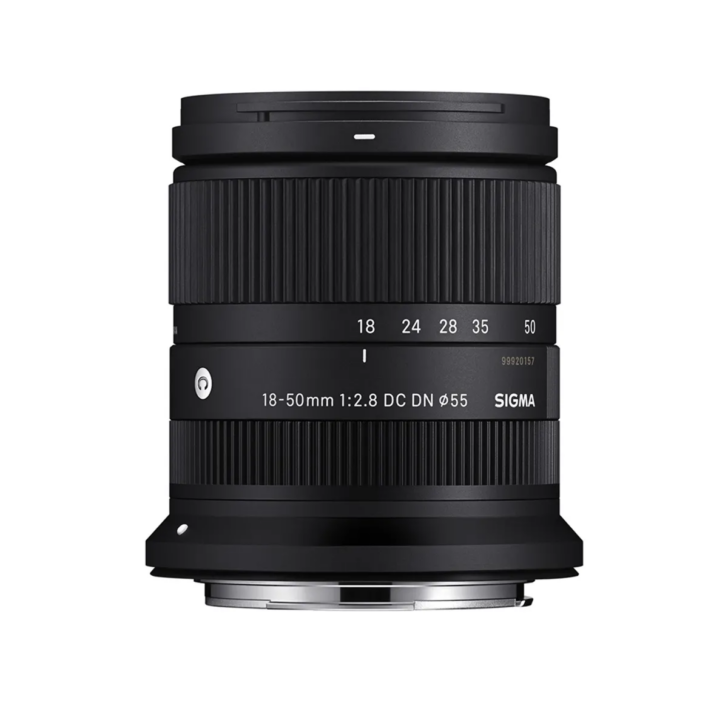
Yes, I really want this lens for my next APS-C camera, as Canon doesn’t think we deserve a modern fast kit zoom.
Why Megapixels Matter
Photographers whose lenses are limited in focal length and who simply cannot walk closer (Craig, don’t read this) may need to maximize the amount of pixels they have on their subject so they can crop in tighter. The higher megapixel count here helps. This isn’t a really significant amount of pixels. The actual resolution difference between 32.5 and 39MP is only around 11% greater. For most applications, the difference will not be profound. Your lenses will suddenly not turn into trash.
With more pixels, you can capture much more information straight from the camera. This leads to more lifelike, less pixelated pictures that give the impression of the organic, film-like quality of the objects in nature. With higher resolution, and lenses of any type that you put on the camera will be able to render that information at a higher sampling, simply due to the fact that there are more pixels to record the information.
Yes, you end up losing a little on the worth of “per pixel” in terms of per-pixel image quality or noise performance, but overall, with better sampling, your images should look as good, and in most cases, should look slightly better.
The lenses aren’t going to become “not good enough” simply due to the increase in resolution; in fact, they provide you with much more, much in the same way that the Photozone tests proved when increasing resolution from 8MP to 15MP APS-C.
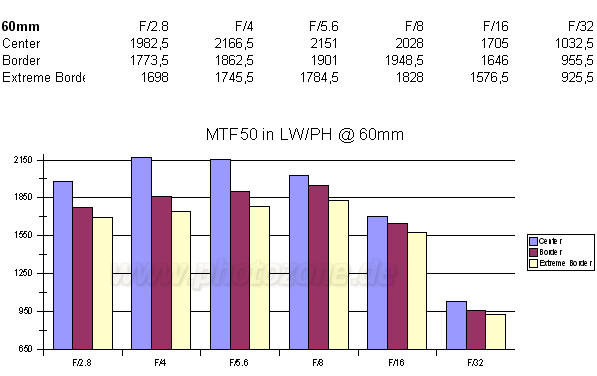 | 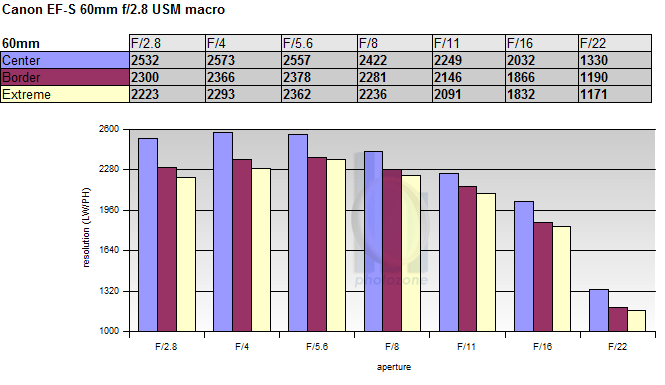 |
While pixel peeping the pictures at 100% may have revealed the inadequacies of some of the older lenses, in practical use, the resolution difference is a huge advantage that doesn’t require optimal lenses to take advantage of.
Is an EOS R5s Or R3 High Megapixel Camera Next?
So, let’s begin with the most obvious point: the 39MP APS-C sensor is equivalent to 100MP when you factor in the difference in pixel density for a full-frame sensor. This is in the same league as the medium-format sensors or the high-resolution dreams I’ve been chasing for the past few years. And, as I’ve been going on and on about in the context of a hypothetical R5s (or whatever we’d end up calling the 100MP+ full-frame sensor), but this was really Canon’s fault for doing a development announcement on a 120MP DSLR. So don’t blame me, Canon caused this.
We’ve long thought of where the R3 may fit in with a new Canon landscape that includes the R1, and perhaps a very high MP camera would be the positioning. It’s not going to sit close enough to the do-it-all professional R5 Mark II, and it’s not going to go for the speed of an R1. It would be akin to the older 1D and 1Ds timeline. Canon had two professional camera bodies, one with low resolution and the other with high resolution.
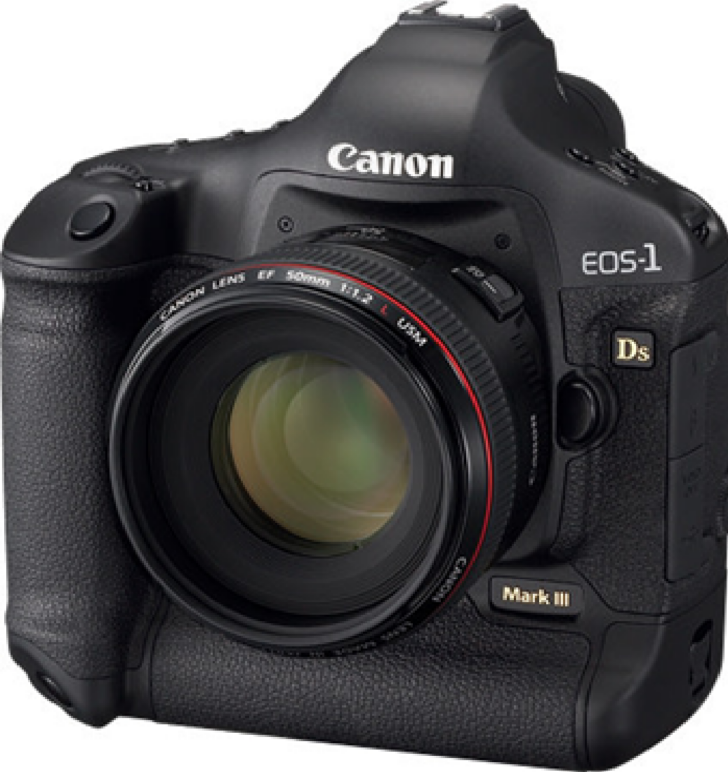
Though amusingly, at the time, 21MP was considered stratospherically high resolution. So here we are, and Richard is complaining that 32.5MP isn’t enough. But I digress.
Difraction Limitations
Whenever someone mentions high MP, the Diffraction Limited Aperture statements always come out. But the bottom line? It doesn’t matter nearly as much as people seem to think it does. Diffraction is only a problem if you’re actually looking for it. And interestingly enough, in a lot of cases, how we are looking for it, is part of the problem. If you are looking at it using a monitor, comfortably 18 inches away from your face, viewing at 100%, then that’s going to give you a difference of appearance for diffraction than a 40″x60″ print when viewed from 4 feet away. Basically, diffraction limitation is when the airy disc caused by diffraction is larger than the circle of confusion. But to calculate the circle of confusion accurately, you have to take into account the person’s eyesight and viewing distance. Something that is never done in the simple calculators.
That’s why we did this calculator to come out with this article.
With 39MP on the APS-C sensor (or 100MP on the full frame, for that matter), you’re looking at f/11 and even f/16 for landscape shots, and printing them huge enough that you’re standing 2 meters back and diffraction isn’t even a concern. Back up some more, and you’re looking at even smaller apertures before it even shows up.
Data Rates May Suffer – but not much
Now, on the data rate side of things, there are reasonable concerns that a 32.5MP to 39MP jump may hurt burst speed or readout performance. However, let’s run the numbers quickly with the R5 Mark II as our example. It shoots 30 fps in electronic shutter burst mode at 45MP. If we scale strictly on MP, we can say that the R7 Mark II at 39MP should be able to shoot around 35 fps in electronic shutter burst mode (30 x 45/39 = 34.5 fps). With a modern DIGIC X processor and current-generation sensor, there’s no reason that the R7 Mark II cannot be as quick or quicker than the R7 with a 32.5MP sensor.
As well, the data rate is arguably more limited by the number of rows, so in this case the sensor shouold have a faster readout rate than the R5 Mark II of around 5152 / 5464 * 6.3ms or around 6ms (assuming the R7 Mark II sensor is stacked).
Closing Thoughts
All this assumes the rumors are correct, but if they are, it’s a camera I’m looking forward to.
Canon could have played it safe and left the resolution alone, but increasing it to 39MP shows that they are still advancing APS-C sensor technology by increasing the density. Hopefully, at the same time, following the trend of increasing the readout speed of the sensor as well.
This also leaves the door wide open to my eventual dream camera, the R5s.
If the R7 Mark II is a 39MP stacked sensor, they are giving those who want the pixel density, such as sports and wildlife photographers, the ability to put even more pixels on distant targets, while increasing the speed of the sensor to be more adept at a variety of shooting disiplines including video.
So, Canon, if you’re listening, hopefully you are going to decide to do this.








Can't wait what readout speed and what DR and s/n it will deliver. I hope your predictions are right @Richard CR.
And I can tell you, you will love the 18-50 DC DN. At least I do.
*assuming stacked sensor*
The efficiency gained by going stacked from front side illumination should be enough to offset the small efficiency loss by slightly smaller pixels.
In theory, of course.
Even if it does, it is considerably easier to replace than in a DSLR. Apart from the EOS R failing sometimes (first one with sensor protector), I don't know of other issues with Canon mirrorless regarding shutter wear.
Agreed - sort of.
the mirrorbox assembly was extremely complex but that was usually seperate from the shutter assembly outside of timing.
but I think Canon and others have done alot of work around mirrorless to make it smaller and easier to manage.
and yes, it must be certainly easier to replace as well.
If our lenses could resolve at a higher MFT level, then diffration becomes less of an issue too. The only solution is sharper and brighter lenses.
The only camera test site that has sensor resoluton test charts is this polish site https://www.optyczne.pl/testy_aparatów.html and it makes for interesting opservations between brands and specific cameras. it gives is a sensor based MFT value and is roughly comparible to our lens MFT charts. if your sensor is lower than your lens MFT the you are probably going to see sharp results.
For example, my R6ii has a tested MFT of .64 lpmn. The R5 has .82 lpmn and the R7 a lofty .92 lpmn.
According to Canon's MFT charts, the RF 200-800's highest value is about .78 lpmn at 800mm. Where as the RF 100-500L has a value of about .83 lpmn at 500mm.
If we campare a very sharp lens like the RF 135mm f1.8 LIS, it measures a very high value of around .95 lpmn, which is rated at f1.8 and has a lot of stopping down sharpness potential until sensor diffraction starts to rob the optical sharpness. Many of the big whites fall into this super resolution and high brightness category.
The other big question is how many megapixels does the scene that we are photographing actually require. I get the whole "45mp gives me more cropability", but that only holds true if the scene has that much detail (heat haze etc) and if the lens can also resolve that level of data too. landscapers are always asking for more observable blades of grass and the current stae of the art is never enough. I think even the legendary Ansel Adams with is massive plate camera used to comment on "counting enough ants". But for a lot of photography there are limits in terms of useful reach and limits in the amount of detail that our phtotgraphable subjects can present to us in average light.
Sure you can use AI and LR sharpening routines, but we are talking about sensors and optics here, not post processing tweaks. Post Production can re-generate and hide a multitude of issues.
Granted, and I understand that a camera's shutter mechanism should be considered a replaceable part with finite life. But in my case, with my Sony a6700, I feel like I'm wearing it out too quickly. I got it in Oct 2024, and have used only on a relatively few real outings.
1 day at the Davis-Monthan AFB to learn to use the camera taking pics of aircraft flying overhead during a training exercise weekend.
2 days planespotting at Tucson International Airport (shared with AZANG base).
4 days (3 1/2 really) photographing the Heritage Flight training at DM.
2 days at the airshow.
My shutter count is over 25K, which is 1/10th the rated life of the shutter mechanism. I feel like I hit that mark way too quickly, even though, with that math, it still means many years of life left in the camera. A fast enough electronic shutter readout that could replace the majority of my shutter actuations would extend the life of the camera. More to the point, maybe, it'd alleviate the anxiety/guilt I feel when I click away. I realize that I simply need to "get over it" and not worry about the mechanical shutter, but that doesn't mean I wouldn't feel better firing off bursts of 100+ with an electronic shutter instead just to maybe get 1 or 2 keepers. Know what I mean?
Perhaps the way wings bend when they flap mask a bit of warping due to rolling shutter, and it still looks natural rather than artificially distorted.
Nikon gives 2 almost identical cameras with the choice of body which seems to be well received.
Canon brings out 3 grips for the R5ii rather than standard and integrated body versions.
Same for R3. Is it a baby R1 or a souped up R6. Will it become a high mp sensor but only in integrated body?
Will the new R7ii come in both standard and integrated body? My guess is not as they didn't release a native grip for the R7.
Canon have done some weird marketing in the past but it isn't clear to me how they can find their way out of these choices.
The extra cost of a stacked sensor is way more than a shutter replacement.
This wouldn't be anywhere near the price of a R7 or A6700.
And to contradict that, you might end up with way more pictures than you need, and it needs way more time to cull through, reducing time spent on taking good pictures, which is not the same as spending time actually taking pictures. It's of course different for sports photographers, etc.
Seeing that I can use a film camera and end up with a fairly ok rate of keepers, I have cut down massively on digital, and yet I still feel I end up taking more than I actually need with new cameras - just too easy. And I rarely use burst mode to begin with, pretty easy to make multiples in single-shot (even if I do, it's most likely at the lowest setting).
I use my old DSLRs in a way that is somewhat closer to film, since I need to watch that focus instead of just firing away, but I do have a lag-free viewfinder so have some chance with the timing.
Same with my Leica SL2 with vintage lenses and no AF. I do use it a handful of times, but not take a lot of shots (and always turning it off, since that pretty finder eats batteries).
So my point is: yes, it may get more convenient is some ways but also more complicated in others as well as being arguably unnecessary for most people and more expensive.
Personally, for photography, I'd value a good EVF more than electronic shutter performance (although they are interconnected since the sensor provides the live feed). Canon's are ok, but not the best.
But it is reasonable to assume that Canon's legacy statements about needing sharper lenses wasn't arbitory but had a specific MFT value in mind that would match their MFT sensor targets.
I've always considered the Electronic shutter to be completely useless with action shots on the R7. It's fine ofr static objects, which is anathema...who needs 30fps on a static object? The AF can't really keep up with the 30 fps, the complaints about the R7's AF are notorious and the general advice from Canon is to slow the frame rate in lower light. The R7's buffer is too small to consistently use 30fps and the sensor is nearly 30ms readout. the camera has a relly good electronic first curtain shutter of 15fps, which has a fantastically fast readout speed of 2.4ms (which is the fastest readout speed of any current Canon camera).
When you consider the AF latency, the buffer and the sensor readout, the R7 is really good upto 15fps in 1st curtain, only 5fps slower than the original R5's 20 fps ES.
I've not seen many of these read out artifacts on my R6ii with my visits to Sri lanka, but then again, I used 1st Curtain shutter a lot and not many Electronic Shutter mode. So I was seeing a readout speed of 3.4ms, only beaten by the R1's stacked sensor readout speed of 2.7ms.