


When you purchase through links on our site, we may earn an affiliate commission. Here's how it works. |
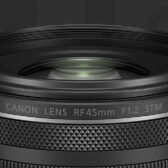
The Canon RF 45mm f/1.2 STM, which was announced towards the end of 2025, brought a fresh outlook to Canon's RF mirrorless system. With a price tag of about $469, this small lens (78 x 75mm, 346g) promised to deliver shallow depth of field, beautifully blurred backgrounds, and nighttime performance without the high-end price tag of its L-series siblings, such as the Canon RF 50mm f/1.2L USM. It entered the market positioned between Canon’s budget offering, such as the RF 50mm f/1.8 STM, and high-end models. Now the internet has responded with different reviews of the Canon RF 45mm f/1.2 STM, so it's time to revisit this.
I, of course, weighed in with the MTF inspection of this lens, and left the conclusion that it really depends on your use case for the lens. I personally wasn't a fan.
Since that time, the reviews for this lens are divided into two camps, and they form a fascinating narrative of scientific versus real-world reviews. Usually, the two meet in the middle and more or less agree on the lens's worthiness, but then there's this lens where they are far apart from each other.

On one side of the fence, a serious and very clinical assessment was conducted by OpticalLimits that examines optical performance. Then there are the “real-world” reviews on photography websites like PhotographyBlog and PetaPixel that focus on usability, value for money, and the enjoyment factor of using the lens for photography.
The OpticalLimits' Harsh Judgment
At OpticalLimits, the approach to lenses is that of examining the technical characteristics of the lens under test. A little background on opticallimits. Klauss has been doing this for longer than I know, back when OpticalLimits was named photozone.de. He has a wealth of experience in lens testing, and I doubt there are too many people on the planet with his level of experience in instrumental lens testing across various brands. He subjects the lenses to standardized tests for sharpness, distortion, vignetting, and various aberrations. If you are looking to purchase a lens and you know you will demand the most out of its optical performance, OpticalLimits is really the place to go to see how it performs.
For those who love this little Canon RF 45mm f/1.2 STM, the Optical Limits review of the RF 45mm f/1.2 STM is perhaps not something you should read.
At f/1.2, sharpness in the center is “okay” but tapers off significantly towards the edges, deemed “rather terrible” until f/2.8, where sharpness jumps significantly. Optimal image quality is obtained starting at f/4, rated “very good to great” across the image. The lens suffers from strong barrel distortion in RAW images (corrected by camera profiles), severe vignetting (in excess of 5 stops at f/1.2, though reduced to 2 stops after correction).
To add insult to injury, the lens exhibits strong lateral CA, strong axial (longitudinal) CA. The Longitudinal CA shows up with fairly significant purple or green fringing in the bokeh. Focus shift is “very pronounced,” while field curvature is wavy, reminiscent of designs from the 1960s-1970s.
Bokeh performance is a mixed bag: it produces a great central blur at f/1.2, but exhibits “cat's eye” corners, which is to be expected for a fast prime. The bokeh also appears more harsh in the foreground, and a greenish haze from longitudinal CA.

The verdict from OpticalLimits is that it's optically borderline passable and a decent budget f/1.2 option. However, it becomes problematic at wide apertures, relying too heavily on firmware correction and stopping down. Its performance is reminiscent of vintage prime designs, but not quite up to high-end optical performance. It is better suited to stopped-down photography than pixel-peeping shots taken at wide apertures.
Sure, f/1.2 is nice on paper, allowing very shallow depth-of-field photography. However, the fact that it has an f/1.2 setting is almost the only glorious aspect of this lens – and for some, this may be enough, and that's perfectly fine. In terms of performance, it resembles lenses from the 1960s or 1970s. At f/1.2, the center quality is passable by today's standards, but the corners fall completely apart. Things do get better the more you stop down.
https://opticallimits.com/canon/canon-rf/canon-rf-45mm-f-1-2-stm-review/To be fair to Klaus here, all the lenses that pass through his testing are tested with the same rigour. He's not going to change his tests because the lens's intention is different.
The User Perspective and Praise
By contrast, Photography Blog and PetaPixel offer more user-centric experiences where the photography experience takes precedence over charts.
Photography Blog appreciates the compact and lightweight design (all-plastic construction but sturdy with a metal mount), fast STM autofocus (smooth in stills, almost silent, with little hunting), and full-time manual focus capability. While preferring different designs for some features, such as the control ring that adjusts the camera's assignable function, the 9-blade aperture provides “quite nice” Bokeh for a 45mm lens.
if you can buy into the amount of digital correction that Canon is automatically applying in-camera, then we can highly recommend the RF 45mm F1.2 STM as a classic fast prime that every Canon full-frame and APS-C owner should seriously consider adding to their kit-bag.
https://www.photographyblog.com/reviews/canon_rf_45mm_f1_2_stm_review/conclusionDisadvantages in the form of the lack of weather sealing and in-lens stabilization are mentioned, but the street price of “just” 469 dollars provides “bright f/1.2 aperture in a compact package” that rivals the quality of the legendary EF 50mm f/1.2L after correction.
This is agreed upon by PetaPixel, which describes the lens as “affordable and usable.” At only 346g, the damped focus ring and strong control ring make this lens a pleasure to use, even in the absence of a hood or protection against the elements. Autofocus speed is “acceptably fast,” accompanied by an audible buzz, while bokeh in f/1.2 portraits results in “beautiful, soft backgrounds,” whose creamy bokeh is especially pleasant in terms of cat's eye highlights, though LoCA demands occasional stops.
Long have the Chinese lens houses specialized in ultra-fast aperture optics at a low price but you won’t find many of these options available with compatible autofocus and full-frame coverage for the Canon RF mount. This makes the new $479 Canon RF 45mm f/1.2 a very smart play, both on the part of Canon and as a good decision for the consumer. I hope Canon make many more of these fast-apertured options for the consumer at an affordable price. Especially if the optical performance holds true in the future. Consider this 45mm lens for general-purpose photography and as a shallow depth of field portrait option.
https://petapixel.com/2025/11/27/canon-rf-45mm-f-1-2-stm-review-affordable-and-usable-wide-aperture/To this end, sharpness is merely okay, with decent contrast wide open, favoring center-focused subjects, but excellent from f/2.8 on.
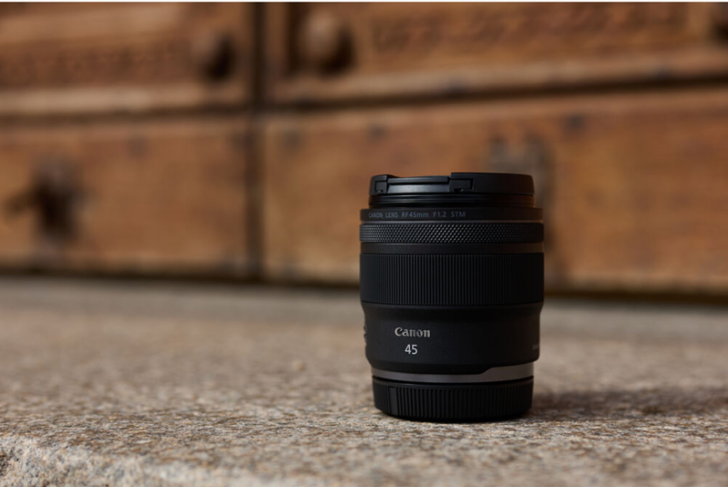
These reviews all tend to highlight Canon's intention of the lens, excellent subject separation of an f/1.2 lens, and leave the rest to the image processing pipeline in software or the camera's JPEG engine.
My Thoughts
I could say I wasn't surprised by the reviews, because we mentioned the divide between the artistic and the clinical aspects of lens designs that this one was going to cause.
As many of you know, I’m pretty huge on the bang for the buck lenses, but this lens, I think, prioritizes “character” a little too much to make it a general-purpose lens that would have a greater utility. If you are the type of photographer who loves candid portraits, in the studio, or even street shooting, then this may be an incredibly wonderful bargain lens to add to your kit. For me, I don’t shoot those disciplines much anymore, and if I did want to have that option, I’d probably find the RF 50mm F1.8 STM perfectly suitable as a substitute at 50% of the price.
For those seeking to reclaim the magic of the Canon EF 50mm f1.2L USM in a lighter, smaller, and more modern lens, this is a lens absolutely for you.
https://www.canonrumors.com/a-closer-look-into-the-canon-rf-45mm-f-1-2-stm/Conclusion
These review differences are not disparities but reflect compromises in design and the intended user of the lens. To be fair, Canon did warn us about this before the lens was even available for reviews.
OpticalLimits' lab testing reveals what the optical compromises of an affordable compact f/1.2 are. Severe vignetting, fringing, and significant softness in the corners are there by design because the lower cost and weight were the main drivers of the lens from a design criterion. You simply are not going to get $2000 worth of optical performance for under $500.
On the other hand, it is shown by Photography Blog and PetaPixel (and others), is that these issues don't necessarily impact images enough to be problematic, basically the proverbial “get out there and shoot”. Canon's corrections will work to suppress distortion and vignetting. LoCA and Bokeh issues can be corrected in post if needed (or turn on DLO in camera for JPEGS or use DPP with DLO for RAW images). And also don't forget that at f/1.2, it allows great subject separation with a center-focused target, and that does not usually require crisp corner performance, especially for portraiture.
In other words, embrace the aberrations and lack of resolution and use them to your advantage. What this really indicates to me, through the reviews and my own thoughts, is that this lens matches the target audience, with perfect alignment.




R7 destroys that lens wide open - on FF with 24MPix it is very usable wide open. What I like is that the older EF version has low distortion and moderate CAs without any correction.
Now about the RF 1.2 45: It is close to these older designs in IQ, suffers from strong distortion and it has AF which is not the case for 3rd party lenses, a huge advantage!
Now my opinion about IQ wide open etc:
If you can use f/2.8 or f/4.0 and the lens is sharp, contrasty, gives good colors you can use it for landscape, lots of portrait situations, nature, architecture.
With f/1.2 or f/1.4 you have the option for low DOF or night shots which are not accessible with e.g. a f/4 or f/2.8 zoom. Some degradation in sheer sharpness is traded in to get the photo which is not possible with f/4 or f/2.8.
I am considering to get it, knowing that its IQ is limited.
I am not using f/1.x that often to justify the prices of the much better L lenses.
It was clear to me from the start that its sharpness wide open would be only good in the center to mid frame.
It was clear to me that the bokeh wide open exhibits “cat's eye” corners.
I thought, Canon could do a bit more about aberrations.
I am sure, I'll have to take a personal look at it. 🤔
Just to make it clear for me:
Your opinion is based on hands on experience or theoretical thoughts form MTF and the reviews in the web?
Thanks in advance for your clarification
If you can't get eyes in perfect focus at f/1.4 - f/2 on an R5 autofocus, the lens is absolutely a no go.
I did not like it at all.
If this lens is similar, then it is a no-go, regardless of the price. If I wanted something soft and quirky I'd buy a lens baby...
The RF 50 1.2 (which I have) may be much more expensive and heavier, but it delivers with almost no compromises.
On the other hand, the old 50/1.2L produces a creamier, smoother bokeh regardless of the harshness of the background. It is essentially a portrait lens. So 2 different animals with a similar purpose, perhaps, but one is considerably less expensive than the other is (or rather, was).
If I wanted ultimate sharpness, I'd get either the RF 50/1.4 or RF 50/1.2L lens - both appear to be spectacularly sharp and very well designed. But for my purposes, what I have now (along with the inexpensive 50/1.8 RF) will do the trick. I lean in favor of the RF 45 because of its size and weight, but I can't really say that I don't like what the EF 50/1.2L does for me either.
On focus shift, I hadn't paid a lot of attention to this issue, but I will be. Since I have the older R5, I don't have the ability to use "Display simulation" or whatever setting it is that people use to force the lens to autofocus with a smaller aperture than f/1.2. Whether this is a problem or not will be the subject of future testing and comparison to manual focusing.
But then they'd have 2 50/1.2 lenses.
I ended up with both lenses as well. I did a quick comparison (not very scientific) using an R5 II with a link to the CRAW files for those interested:
OK, then, according to O.L, the RF 28-70 is absolutely miserable at 70mm (corners). TDP's "Optical Quality" results being also underwhelming at 28mm.
What or who shall I believe now? Meanwhile, many forum members or moderators seem to really like it...
Reliability of reviews, no matter by whom, is very relative.
I'll never base a buying decision on reviews, good or bad, but on my own testing of a rented lens with the option to buy it if satisfied.
To the article's point, I love the fact that both types of reviews are available. I feel strongly that hardware should first be evaluated on the merit of the hardware, and then next on the merit of the purpose with the vendor's pipeline considered.
Why? Because it's nice to know a) what the software is doing for me, so that I can plan for it; and b) so that I know what I can expect in a nominal situation with all of the pipeline included. The fact that Canon's software portion of the pipeline might need to correct for a) 5 (!) stops of darkness on the edge (noise bump?) and potentially multiple planes of sharp focus (wavy field) is really important to know. But, just like the EF 1.2, at the end of the day a killer shot is a killer shot. If the 45mm gets me there...
Given that most images are viewed on smaller screens and most prints are smaller as well, the lenses should be evaluated in that regard. I recently made Christmas pics of my students (4th grade) in challenging lighting conditions with the 85mm F2. In Lightroom, some images looked "slightly blurry" or not perfectly sharp at 100-300%. The prints (20cm x 30cm which is 8x12 inches) turned out perfectly. One couldn't tell if anything wasn't sharp or "the edges fell apart". Good lenses don´t necessarily have to be super sharp and great at 300% crop.
I just wished lenses reviewers would acknowledge that fact. But I'm ultimately guessing, not clinging to test-charts and actually reviewing the lenses for the purposes they are made for and forming a judgment without intensive chart-testing would require a skill most reviewers don't have: knowing how to shoot and what to shoot.
Funnily, some of favorite lenses have gotten bad reviews such as the 85mm F2, 100-400mm F5.6-8 and RF 16mm F2.8. The 85mm was recommended to me by a people photographer on a German camera website and it is a bargain. The 100-400mm was recommended to me by AlanF (among others) here at CR and it is great. It even produces great images with the TC attached. The 16mm was praised by photographer who hikes in the alps and so far, almost every time I used it delivered. All recommendations came from photographers who actually used the lenses, know their value despite their caveats. But the caveats don´t really matter if know how to work around them or know how theses lenses were intended to be used.
To me, that would be like judging a car for an article for a magazine by only looking at a picture of it. Take it out for a spin, would you please?!
Basing an opinion about a camera lens solely on an MTF is fundamentally flawed imo because an MTF chart measures only one narrow aspect of performance under artificial conditions or sometimes - afaik are just simple calculations. (not sure about the calculations part, I've read some contradicting information). Real-world image quality depends on many factors it can’t show—such as color rendering, contrast, bokeh, distortion, autofocus behavior, and practical usability.
Basing a lens purchase on chart testing alone is misguided imo because test charts evaluate lenses in controlled, artificial conditions that rarely reflect how they are actually used. Charts emphasize measurable sharpness and contrast at specific distances, but they ignore critical real-world factors such as rendering style, color and micro-contrast, flare behavior, bokeh, autofocus reliability, handling, and how the lens performs across varied lighting and subject matter. A lens that excels on a chart can still produce uninspiring images in practice, while one that tests “worse” may deliver more pleasing and usable results in real photography.
- First of all: they want lenses and cameras to fit their budget.
- furthermore, they want good, sometimes great images, that are better than their SP. Otherwise why buy a camera...
- secondly: they want creative control (not all, some just shoot in automode)
A lot of customers don't demand "clinically perfect" images and lenses. But most reviewers don't get that...
Just to be clear, I absolutely do not mind you liking it, but I reserve my right to loathe it 🤮