

When you purchase through links on our site, we may earn an affiliate commission. Here's how it works. |
With rumors of new APS-C cameras on the horizon, possibly a R7 Mark II and an update to either the R10 or R50, let’s take a look at my filmmaking and content creation Wish List for 2026.
2025 was already an exciting year for videographers with Canon throwing everything they have into their new releases. From the feature-rich EOS R6 Mark III and new cinema line gem EOS C50, to the surprising creator-friendly EOS R50V and Powershot V1; it’s clear that this new era of Canon releases are going all-in on the hybrid creator.
Now that it’s looking like we’re going to see some replacements in Canon’s APS-C lineup, let’s have some holiday fun and talk about what we’d like to see in these new releases, whether it’s a R7 Mark II, R20, or some kind of pro-sumer upgrade to the R50V.
Also, I’m not going to speculate on the R3 Mark II rumors for now, because Canon could [and should] take a bold swing in rebranding the R3 as a unique alternative to the R1. High res sensor? Global shutter? Who knows what they’re gonna do. I certainly don’t.
More Open Gate
Let’s get this out of the way right now. Yes. It would be cool to see Open Gate in the R7 Mark II. With Canon recently adding the feature via firmware to the C400 and C80, it’s obvious they’re aware of how in-demand this recording option is.

Seeing as how they can do it for a full frame sensor, there’s no reason they couldn’t do it for an APS-C sensor. The current rumors suggest a 40mp, 8K downsample sensor in the R7 Mark II, so this should be possible. I also wouldn’t hate to see some flavor of Open Gate in a 4K resolution, even if its sub-sampled.
I would argue that Open Gate would be more useful of a shoot-once-crop-twice tool on an APS-C camera instead of a full frame due to how limited Canon’s APS-C lens lineup is, especially on the wide end. Speaking of…
Fast RF-S Lenses
Canon’s R50 and R50V are great gateway cameras for shooters looking to take a step up from their smartphones, and the question I get asked most often by newer videographers is “how can I get portrait mode?” Yes, I can feel your nausea at that sentence from all the way over here. It’s no surprise though, given how prevalent computational photography with artificial background blur has become for phone shooters. Unfortunately though, for those getting their first camera—often times for a perceived “increase” in image quality—it’s actually rather difficult to achieve a shallow depth of field with Canon’s relatively slow RF-S line of lenses.
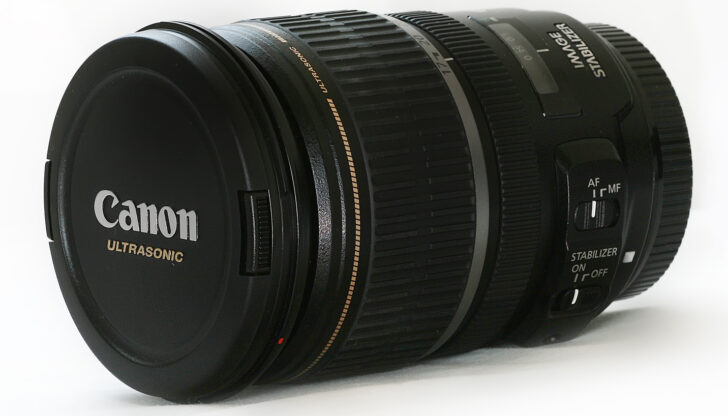
I would love to see, at minimum, Canon recreate something similar to their EF-S 17-55 f/2.8. That was a great always-on lens for my 7D back in the day, and similar lens for RF mount might not have to be that large and bulky with how much image correction in-camera is factored into lens construction nowadays.
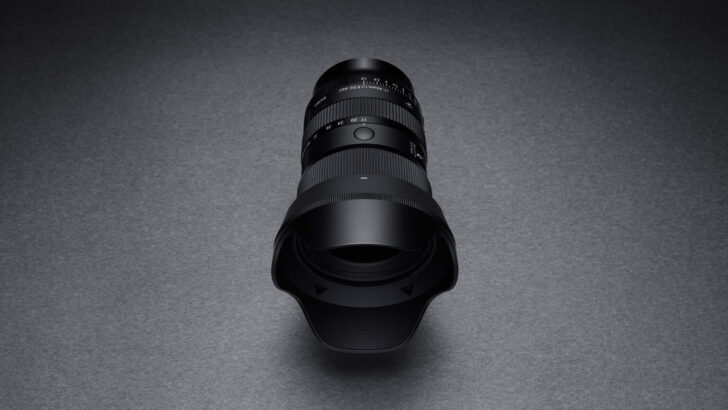
That said, Canon does have the opportunity to wow us with something like Sigma’s 17-40 f/1.8 (and the lens that shot an entire generation of DSLR indie film before it, the Sigma 18-35 f/1.8). Canon has historically always reserved fast-aperture lens designs for more expensive, professional L-series lenses (with the notable exception of the various iterations of the Nifty 50).
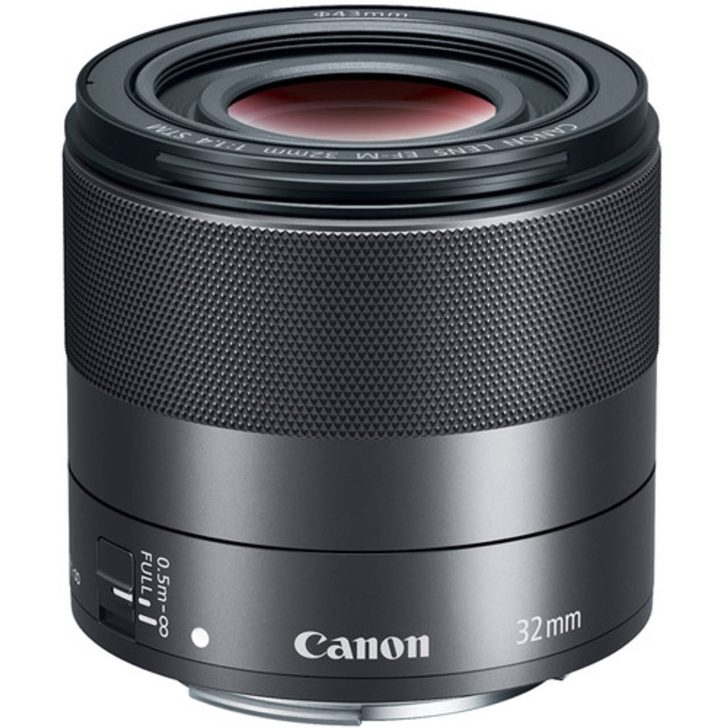
But with Canon’s recent (and surprising) 45mm f/1.2, maybe there’s room for bringing some of those fast EF-M primes over to the RF mount.
Low Megapixel Super 35 Sensor
This one is definitely a reach into unlikelihood, but it would be a lot of fun. I would love to see Canon release a low megapixel sensor for video, similar to the C300 or C70, in a mirrorless body. Maybe even a RV body.
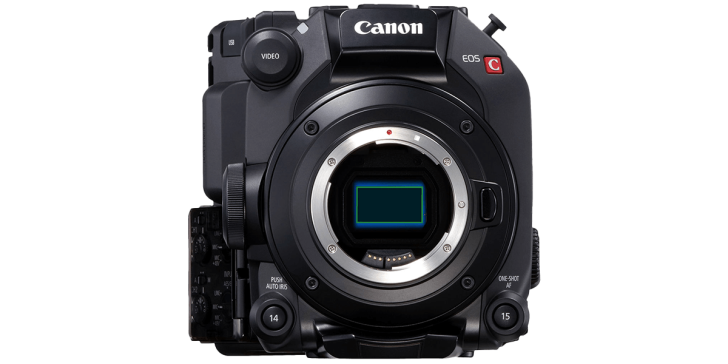
The current trend of sensor design has been seeing higher and denser megapixel counts. This results in the possibility of sharper images and better-detailed down video down-sampling, but all comes at the expense of low light performance.
The reason for this is physics: the more pixels you include in a fixed sensor size, the smaller each pixel has to be in order to fit. A pixel’s size determines how much light it is able to gather. Think of them like tiny containers. A larger pixel is able to gather more light than smaller ones.
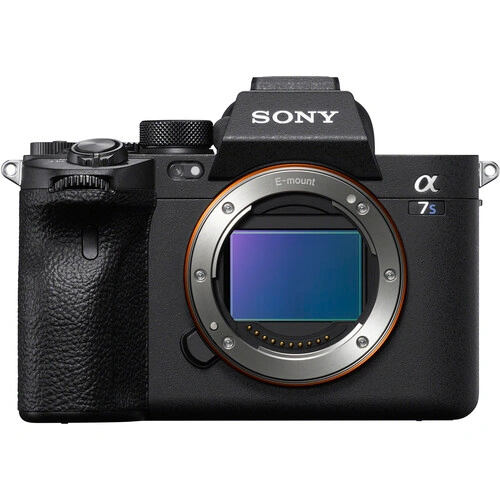
A recent example of this: the Sony A7S and FX3. The reason the camera can “see in the dark” is because it’s only using a 12mp image sensor. While that would be relatively low for a photography camera, there are amazing benefits in ISO, dynamic range, and readout speed performance for video work.
There’s a common misconception among camera enthusiasts that “pro video” uses full frame. When I directed my television pilot Canusa Street, my DP shot on the Arri Amira with its (beautiful) Super 35 sensor. Sure, it meant recalibrating in my brain to what a 23mm and 30mm lens were going to look like, but it got the job done, and we rarely shot wide open. Just some food for thought for the comments section…
Like I said, I don’t think Canon is going to do this, but something like this in a “R7C” or “C30” would be incredible. Remember, 4K footage only uses 4 megapixels.
Continuing the current video menu design language
Back to reality. One of the largest improvements this year in my opinion as a video shooter is Canon finally rebranding the video settings in their standard EOS menu system to industry standard terms. On newer releases like the R5 Mark II, R6 Mark III, and R50V; gone are the proprietary “All-I” and “IPB” in favor of standard terms like “Intra” and “Long GOP.”
Canon has also improved its codec and color profile choices as well. In the original R5 & R6, the codec you chose was tied to your color profile. Shooting in standard Rec 709 meant an unspecified flavor of 420 8 Bit in h.264. Likewise, shooting in C-Log or C-Log 3 forced you into an h.265 codec at 422 10 Bit. Early adopters learned quickly that computers and NLE programs at the time couldn’t quite handle the added compression of h.265, but that was the trade off for the high dynamic range.
Fast forward and in 2026, Canon is letting users set each of these independently of each other. This kind of flexibility is not only a huge improvement overall in the general user experience, but it’s a vote of confidence from Canon in respecting us as consumers (and video professionals). I’d rather have options and not need them than have arbitrary limitations.
I talked about a few other menu annoyances in my R6 Mark III review. Here’s hoping Canon continues to improve the overall user experience.
A professional body for the R7 Mark II
Finally, the R7 Mark II is likely to be one of the hot releases this year. I bought one back in 2022 for its (novel at the time) limitless runtime video recording, in addition to hoping to recapture the versatility alongside my R5 that I loved having when I used to run a 5D and 7D on shoots.
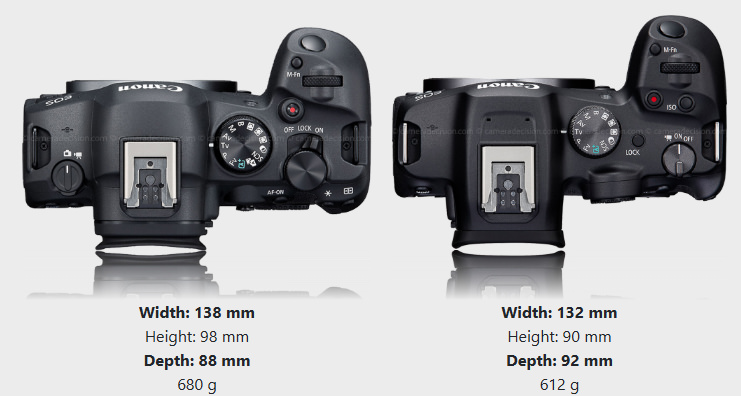
However, unlike the 7D that came before it, I was disappointed when I picked up the R7. It felt like a toy in comparison to my R5, let alone any DSLR. The control wheel around the joystick was such an odd choice. I sort of get what they were going for—theoretically requiring less thumb motion to operate the camera could lead to faster shooting for sports and wildlife pros. But it just didn’t cut it.
It also couldn’t accept a battery grip, which felt like such a wasted opportunity. I thought Canon allowing the R5 and R6 to use the same grip was a brilliant move. Big lenses on a small body don’t balance well, and a grip could have been an easy way to mitigate that ergonomic disaster.
Combined with some horrendous rolling shutter and poor ISO performance from a sensor that was, probably, in part at least, borrowed from the 90D; overall Canon’s first venture into APS-C on the RF mount felt half-baked.
Now that Canon has finally settled on a design language for its R5 and R6 bodies, I would love to see Canon use a similar—if not the same—body for the R7 Mark II. Take the R5 Mark II, swap out the sensor, and call it a day. Pros will thank you.
One Can Dream
As I said above, this is just a wish list. However, Canon has such a great opportunity here to take big swings (and continue taking big strides) in its camera pipeline. I hope Canon keeps the full court press going on its competition like the R6 Mark III and R50 V instead of the oft reactionary, tempo-keeping releases of the past.
What would you like to see in the upcoming rumored releases from Canon? Comment below!







Thank you for your summary!
I am not a videographer, so I can't argue about video features needed or wanted.
But one thing I would like to add
When you said:
I fully agree that I'd prefer a Canon OEM APS-C (RF-S) zoom like that.
But you also mentioned the Sigma (and I add the Tamron) offering.
And I wouldn't bet any amount on any kind of f/2.8 RF-S zoom from Canon.
And having the R50 for a light gear and for hiking or travelling, I bought the Sigma 18-50/2.8.
It's so small and great, I don't know if I would think about buying an RF-S 17-55/2.8, even if it has the extra mm FL on both ends.
I am more interested in the Sigma 10-18/2.8 offered with some good discount. And then I will get that one.
Does anything speak against the Sigma f/2.8 zooms for video?
Well, I don't remember ever using 4:1 ratio for 4k. ;-)
May also having a hard time going along with requests for open gate.
And this makes me jump to "You can dream" section. I'm missing requests for a square sensor!
Also, I loved the on/video switch of the R7: for hybrid shooters it's just the flick a thumb to switch between stills and video, and I definitely don't want that awful left side switch of the Full Frame bodies.
I almost got an R7 for IBIS during home/travel video. But all the footage I've seen in video reviews looks jerky, like its framing for still shots repeatedly instead of video.
***
As for my input on this, I basically want an R50V with open gate and better, not bigger, IBIS. And unborked connectivity software. I adore everything the R50V has, like encoding .cube LUTs on the fly (which the R7 MKI apparently can't do?) but no IBIS *hurts*.
I can live without an R6 body. I can live with 32MP or even 24MP. But I wouldn't want a wobby R7 MKII.