

When you purchase through links on our site, we may earn an affiliate commission. Here’s how it works. |
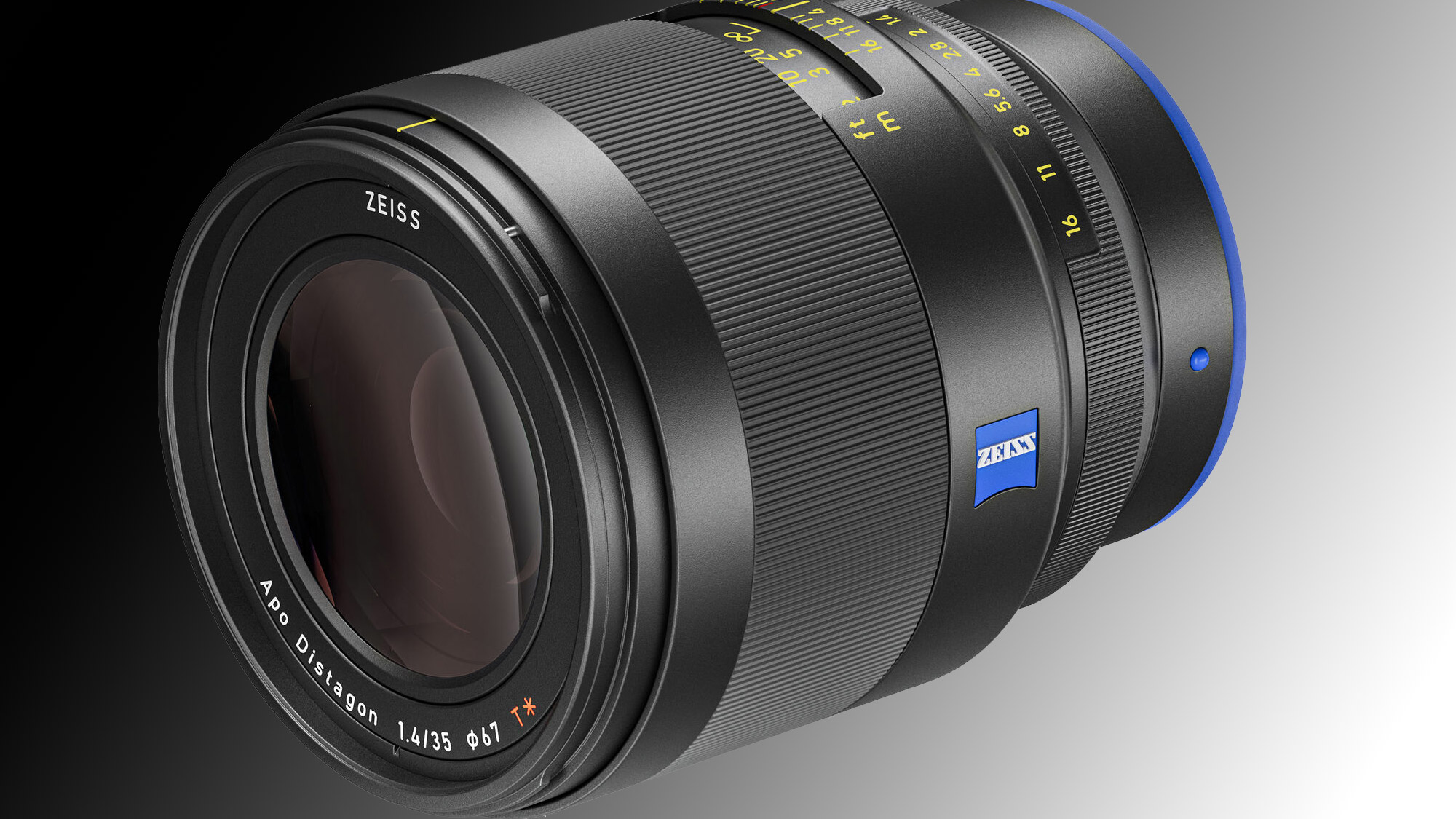
ZEISS has released its ZEISS Otus ML 1.4/35, or Otus ML 35mm f/1.4, a high-end manual-focus prime lens for full-frame mirrorless cameras. Building on its Otus ML range, which had already included the 50mm and 85mm f/1.4 primes, this lens was announced today and is available for Sony E, Canon RF, and Nikon Z mounts. It is positioned as a “storyteller’s lens” for street, travel, and documentary photography, environmental portraiture, and cinematic applications. It’s expected to be shipping sometime in Spring 2026.
According to Zeiss, it features edge-to-edge sharpness, high micro-contrast, and natural color rendition, plus reduced flare and ghosting due to ZEISS T* anti-reflective coating. It boasts a fast maximum aperture of f/1.4 for good subject isolation and with it’s 10-bladed aperture, there’s the promise of excellent bokeh as well. The close focusing capability is 0.3 m or about 11.8 inches, which gives a maximum magnification of about 0.17x or 1:5.72. There is no autofocus or image stabilization.
The ML series has evolved from the original Otus lenses introduced for DSLRs to be smaller and lighter while still being optimized for mirrorless camera mounts, ensuring the same optical excellence as we have come to expect from Zeiss. This lens isn’t meant to be used by the casual user, and it has a fairly high price of admission with the price of $2,299 USD.
Key Features
- Full-Frame | f/1.4 to f/16
- Fast Manual-Focus Prime Lens
- Distagon Optical Design
- 10-Blade Diaphragm
- Compact & Portable Form Factor
- ZEISS T* Antireflective Coating
- De-Clickable Aperture Ring
- Full Metal Construction
Features: Rounding out the Otus ML series with a classic focal length, the Otus ML 35mm f/1.4 Lens from ZEISS is a well-rounded prime designed for Canon RF-mount camera systems. Offering a bright f/1.4 aperture, this lens can provide a shallow depth of field for smooth bokeh and impressive subject separation. |
Construction and MTF
The build quality is top-notch, with full-metal body durability, weather sealing against dust and moisture, a smooth helicoid focus ring with long throw for precise focus adjustment, and a de-clickable aperture ring (which requires the included tool to switch) for silent video shooting capability. It also has distance and depth of field scales. The RF version has a diameter of around 77mm and a length of 101mm, weighing around 717g. It has a 67mm filter diameter and comes with a petal-style lens hood.
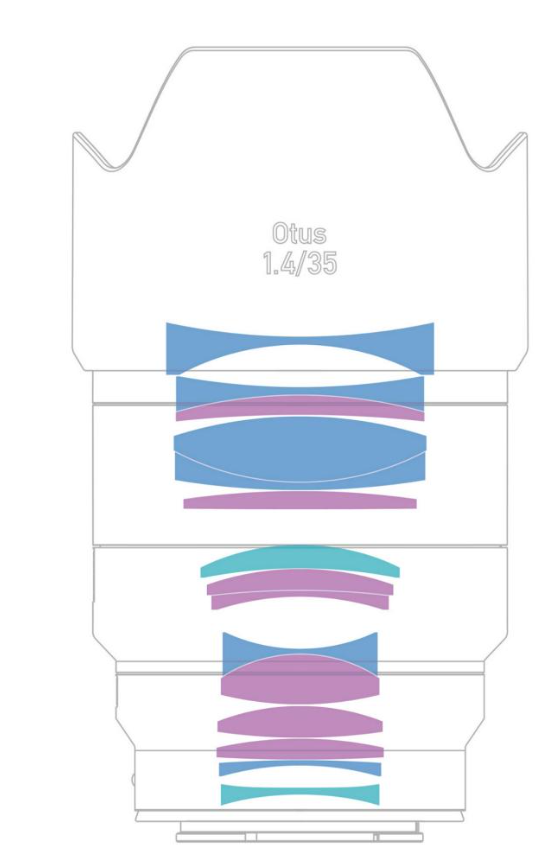
The lens features an aspherical Distagon design with 15 elements grouped into 11, with special elements to suppress distortion, chromatic aberrations, and sagittal coma flare. Looking at the image below, the purple elements are what Zeiss calls “elements made of special glass of anomalous partial disperson”. I’m not sure what to make of that, but it does sound rather impressive. The green elements are aspherical elements, and the blue ones are “normal”, if anything is actually normal about a Zeiss Otus lens.
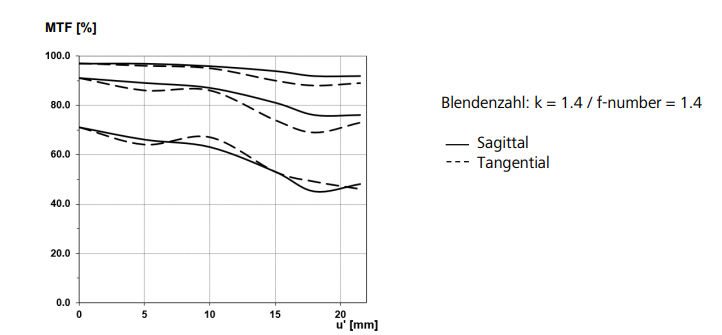
The MTF shown below shows the response at 10, 20, and 40 line pairs per mm. This is different than what the other manufacturers usually do, which is why if you look at it and the bottom lines look “weak” to you, that’s because they are with a much tighter measurement than what the normal lenses have. We can assume that 30 line pairs per mm would fall between the 20 and the 40, and give an excellent performance, with very little astigmatism.
Press Release
ZEISS Expands Otus ML Lineup with the New 1.4/35
A new storytelling lens for mirrorless cameras, bringing the distinctive ZEISS look to Sony1 E, Canon 2 RF and Nikon 3 Z Mount.
ZEISS is expanding its Otus ML lens family with the introduction of the new ZEISS Otus ML 1.4/35. This manual-focus lens is designed for photographers who live to tell visual stories with deliberate narratives – from street and travel to documentary work. Inspired by the legendary Otus lineage, the ML generation brings ZEISS’ renowned optical excellence and mechanical precision to the latest mirrorless systems, with mounts available for Sony1 E, Canon 2 RF and Nikon 3 Z.
The ZEISS Otus ML series continues to deliver natural color rendition, exceptional sharpness, and signatured micro contrast. A fast f/1.4 aperture provides accurate depth of field control, directing the viewer’s attention with clarity while producing a soft, elegant bokeh that separates subjects from the background. An advanced aspherical Distagon lens design minimizes distortion and chromatic aberrations, further enhancing image fidelity. Combined with the legendary ZEISS T* coating, reflections are reduced, flare is minimised, and both contrast and color accuracy are elevated.
Manual focus as a creative tool
Manual focusing with the ZEISS Otus ML series is not just a technique – it is an artistic process. Photographers can make precise adjustments that ensure each shot is captured with intention. True to the ZEISS legacy of precision optics, the Otus ML 1.4/35 features millimetre-accurate control. The tech becomes invisible, giving you more creativity to tell the stories that matter.
Building on the 1.4/50 and 1.4/85, the new ZEISS Otus ML 1.4/35 expands a compelling range of storytelling tools for photographers who create across different genres. From vibrant street scenes to immersive documentary environments, this focal length offers the perfect balance: wide enough to set the scene, yet tight enough to isolate key subjects.
Optical excellence for the finest details
Engineered for exceptional performance even at f/1.4, the ZEISS Otus ML lenses reveal remarkable detail and texture, especially in low-light environments where the human eye begins to struggle. Distortion and chromatic aberrations are effectively reduced, resulting in sharper images and cleaner color transitions.
The ZEISS T* anti-reflective coating further ensures clarity by reducing stray light and ghosting, enabling photographers to maintain full control across challenging lighting conditions.
The distinctive ZEISS Look: Vivid. Sharp. Nearly three-dimensional
Otus ML lenses deliver the unmistakable ZEISS visual language. Their combination of true color reproduction, outstanding sharpness, and unparalleled micro-contrast creates images with an almost three-dimensional character. Subjects stand out with powerful presence, separated smoothly from the background by a beautifully rendered bokeh shaped through a 10-blade aperture.
This shallow depth of field when shot on fast aperture not only enhances storytelling but guides the viewer’s eye to what truly matters.
Precision engineering, purpose-built for mirrorless systems
The ZEISS Otus ML series carries forward the craftsmanship of the legendary Otus family, known worldwide as best-in-class manual prime lenses. The new ML design features a smooth metal focus ring with helicoid mechanism, providing a precise rotation range that enhances focusing accuracy. An aperture de-click option allows seamless and quiet transitions—ideal for both photography and videography.
Built with a full-metal construction, the lenses deliver exceptional durability and a premium tactile feel. Optimized for modern mirrorless cameras, they offer a uniquely connected shooting experience. Clearly marked yellow scales ensure quick, accurate adjustments in any environment
A legacy reimagined
ZEISS’ heritage in optical design, decades of pioneering research, innovation, and precision engineering, forms the foundation of the Otus ML line. The distinctive quality of the classic Otus family has been carried to Otus ML for the needs of the modern mirrorless era, combining tradition with cutting-edge performance.
The ZEISS Otus ML trio
ZEISS Otus ML 1.4/50 – Explore your story.
A foundational tool in every photographer’s kit. Its smooth manual focus enables images with exceptional depth, emotion, and nuance—perfect for portraits, streets, and cinematic visuals.
ZEISS Otus ML 1.4/85 – Portray your story.
The portrait specialist. With its ability to isolate subjects beautifully, the 1.4/85 captures detail, character, and emotion with powerful clarity.
ZEISS Otus ML 1.4/35 – Compose your story.
A storyteller’s lens. Ideal for street, travel, or documentary work, it transforms fleeting moments into intentional compositions, bringing geometry, light, and expression together in a single frame.
Prices and availability
The new ZEISS Otus ML 1.4/35 will be available from specialist retailers from Spring 2026 at an RRP of €2,399 (incl. 19% German VAT) / $2,299.
Further product and application images are available for download here.
- Product exterior with lifestyle and studio images: Click here to download (the download starts automatically).
- Images shot on ZEISS Otus ML 35: Click here to download.
1 Sony is a registered trademark of Sony Corporation.
2 Canon is a trademark or registered trademark of Canon Inc. and/or other members of the Canon Group.
3 Nikon is a registered trademark of the Nikon Corporation.
Specifications
| Principal specifications | |
| Lens type | Prime lens |
| Max Format size | 35mm FF |
| Focal length | 35 mm |
| Image stabilization | No |
| Lens mount | Canon RF, Canon RF-S, Nikon Z, Sony E, Sony FE |
| Aperture | |
| Maximum aperture | F1.4 |
| Minimum aperture | F16 |
| Aperture ring | Yes |
| Number of diaphragm blades | 10 |
| Optics | |
| Elements | 15 |
| Groups | 11 |
| Focus | |
| Minimum focus | 0.30 m (11.81″) |
| Maximum magnification | 0.17× |
| Autofocus | No |
| Distance scale | Yes |
| DoF scale | Yes |
| Physical | |
| Weight | 698 g (1.54 lb) |
| Diameter | 77 mm (3.03″) |
| Length | 101 mm (3.98″) |
| Sealing | Yes |
| Filter thread | 67 mm |
| Hood supplied | Yes |
| Tripod collar | No |
Gallery
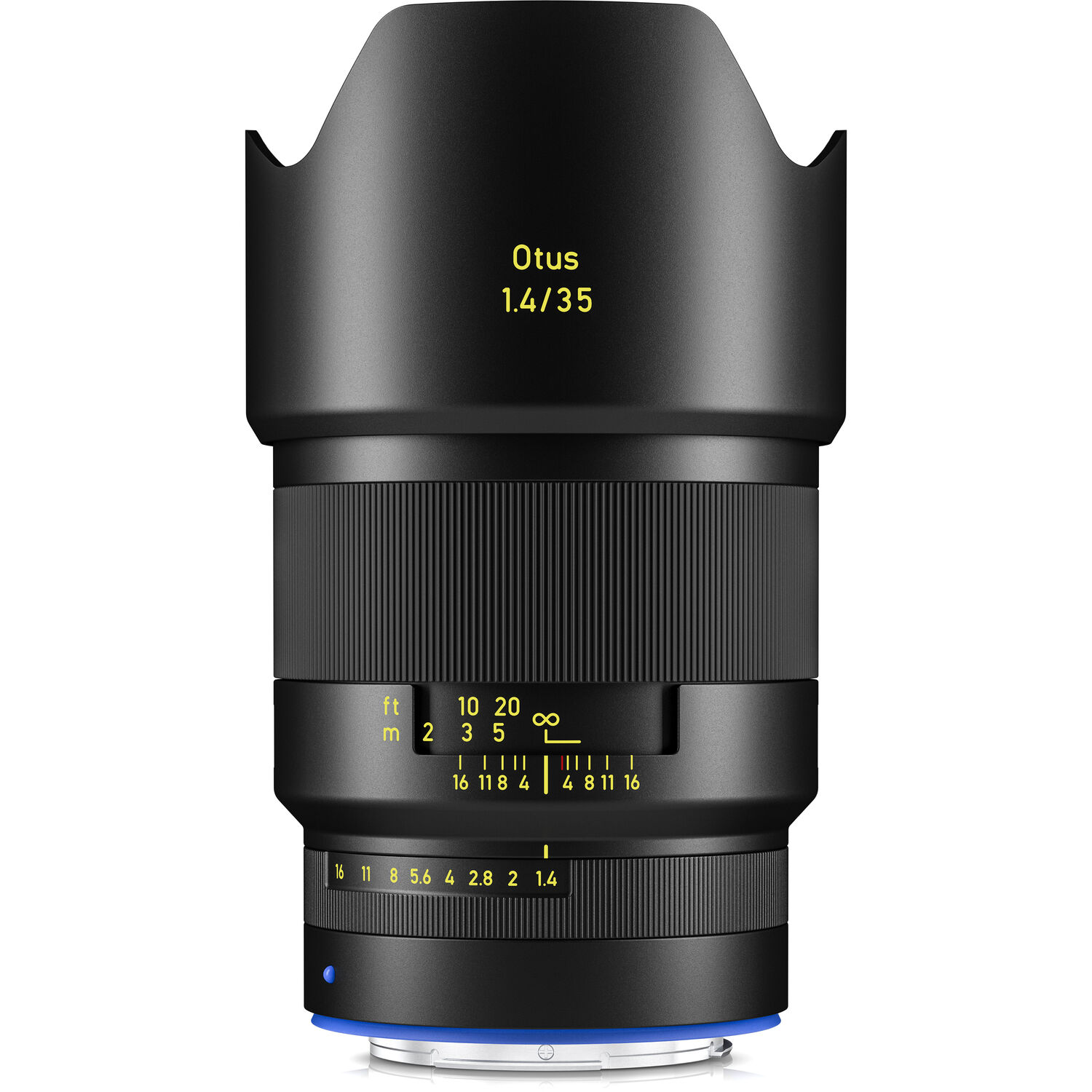
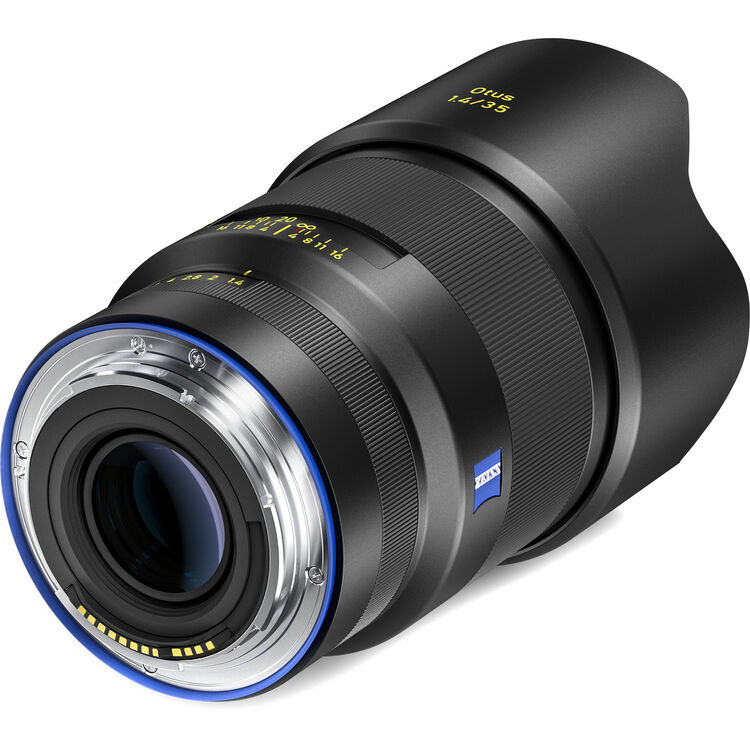
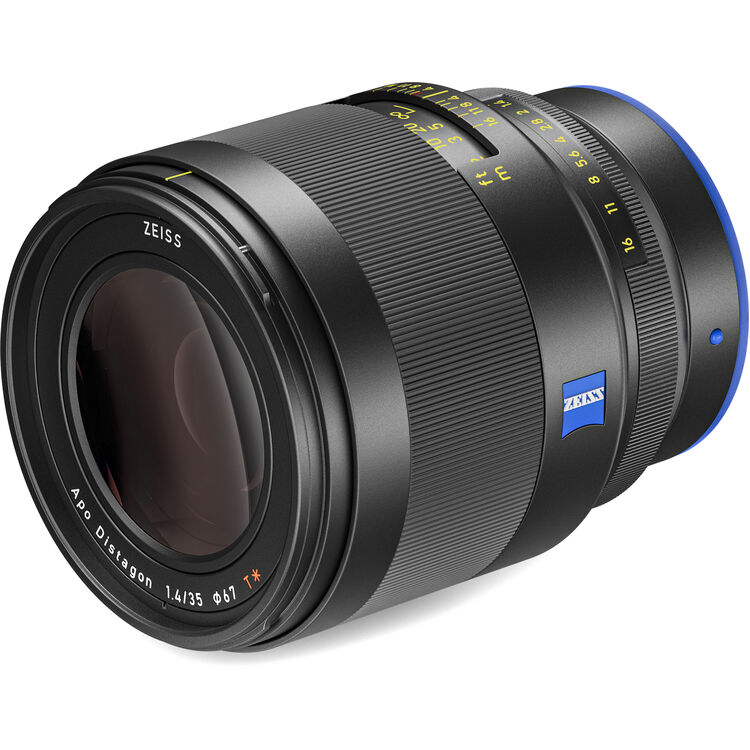
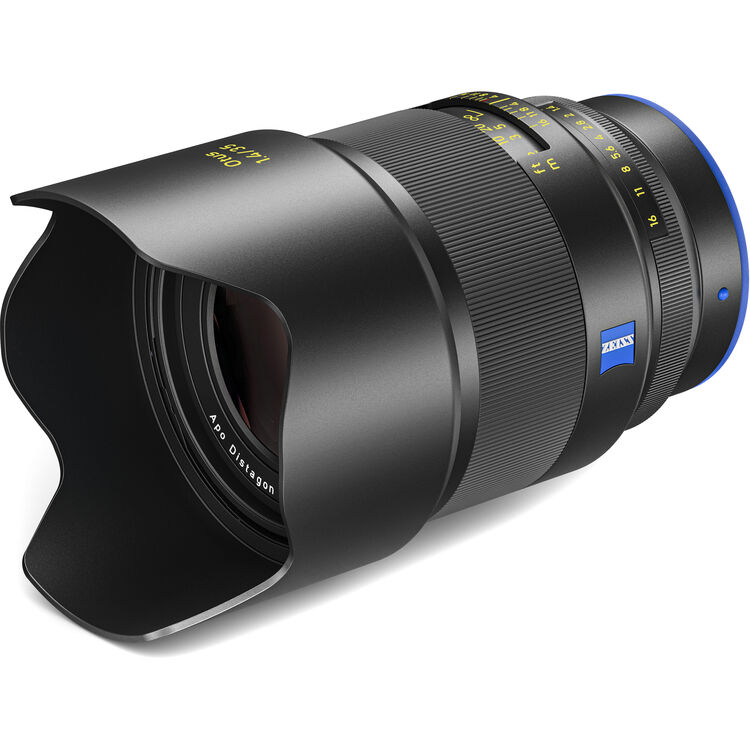
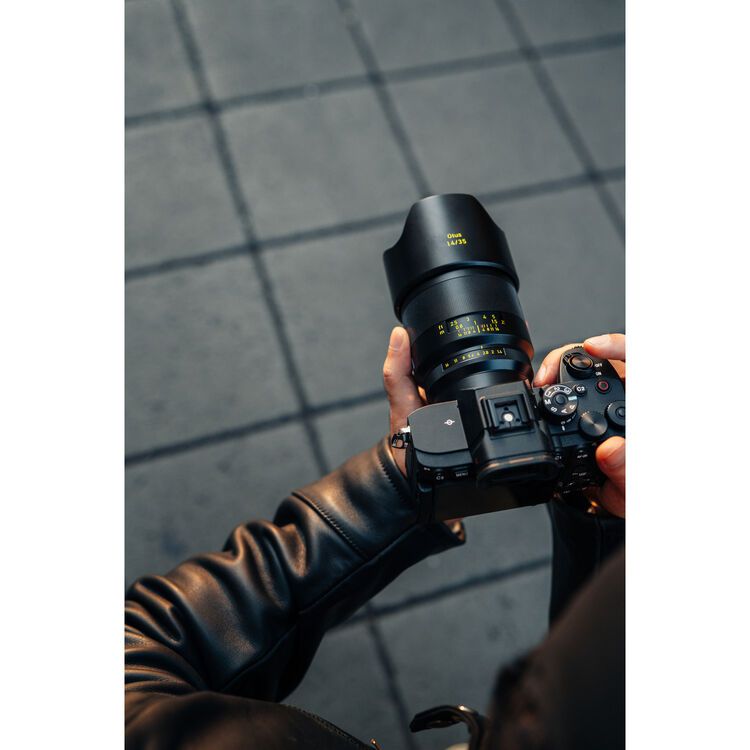
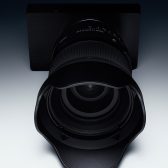
Features: Rounding out the Otus ML series with a classic focal length, the Otus ML 35mm f/1.4 Lens from ZEISS is a well-rounded prime designed for Canon RF-mount camera systems. Offering a bright f/1.4 aperture, this lens can provide a shallow depth of field for smooth bokeh and impressive subject separation. |




But a 35mm Apo sounds interesting, provided it is visibly better than Canon's VCM or EF 35mm f/1,4.
And, above all, if it doesn't cost more than the expected RF 35mm f/1,2 L AF. Otherwise, the Zeiss will be in a very precarious situation.
The usual - Chinese - 3rd party manufacturers are focusing on the budget user, so there might be an attractive 'niche' for Zeiss.
And the MTF curves are looking impressive, especially for my focus on 'astro'. But that has to be proven with a real review.
The new Otus lens is increasing the limited selection of RF lenses which is always nice. With the Canon VCM 35/1.4, this new Otus 35/1.4 and a rumored Canon RF L 35/1.2 (?) lens, we would get a decent selection of fast 35mm lenses. And there are more 3rd party fast 35mm budget lenses.
Based on the available information, the new Sigma 35/1.4 lens is looking very attractive as it has AF, is lighter (500 versus 700g), cheaper (1200 EU versus 2400 EU) and also has impressive MTF curves, but that has to be confirmed by hands-on reviews. So Canons restrictive 3rd party politics is making the Otus look more attractive. Mmmmh ....
These have all metal tight tolerance construction. The resultant lens group mass precludes a practical implementation of either auto focus or image stabilization. IBIS only.
Also, the necessary movement required for image stabilization will slightly degrade the optical correction.
And don't forget the Leica SL AF lenses, did you ever test their 20mm f/2 Apo?
Canons 3rd party politic is recently supporting Zeiss as they are the only high-quality 3rd party lens manufacturer for the RF mount (full-frame).
I would like to see the New Sigma 35/1.4 lens on my Canon camera as manual-RF or adapted EF, but Sigma is obviously not going into that direction. 🙁
Sigma would happily sell their FF AF lenses to Canon RF users, if Canon would have allowed that.
As someone that wants to finally have non adapted Astro primes on my R5 - I was hoping for something in the realm of 20 mm. Or even 28. sigh. But 35? Not sure.
How are you dealing with it?
I'm looking a little into the VCM lenses, but they cannot convince me for 'astro' (strong vignette, very strong distortion correction).
It's a little bit a shame that Canon shooters have to look for work-arounds to get good lenses for astro photography. Many modern Sigma A lenses are looking very interesting, but Canon .......
Concerning Otus lenses: There is now a 85/1.4 a 50/1.4 and a new 35/1.4. In the 'old ' Otus line for DSLR there was also a 28/1.4 (with more coma than the 'old' Sigma A 28/1.4) and also a Distagon 14/2.8. So Zeiss might extend it's Otus line further in the future.
I just raise the question why Sigma is not offering it's excellent - Art - lenses as MF or with an EF mount. But that's Sigmas decision and we don't know what Sigma has signed to get a permit for APS-C RF lenses.
I agree that autofocused-disabled RF mount 14mm or 135mm 1.4 would have a market. It would be a pretty sad workaround, but sadder yet: it won’t ever happen!